The Lost Colony of Roanoke: 117 People Who Vanished Without a Trace
The lost colony of Roanoke vanished in 1587-1590 with no bodies, no struggle, and one cryptic word carved into wood: CROATOAN. America's oldest cold case.
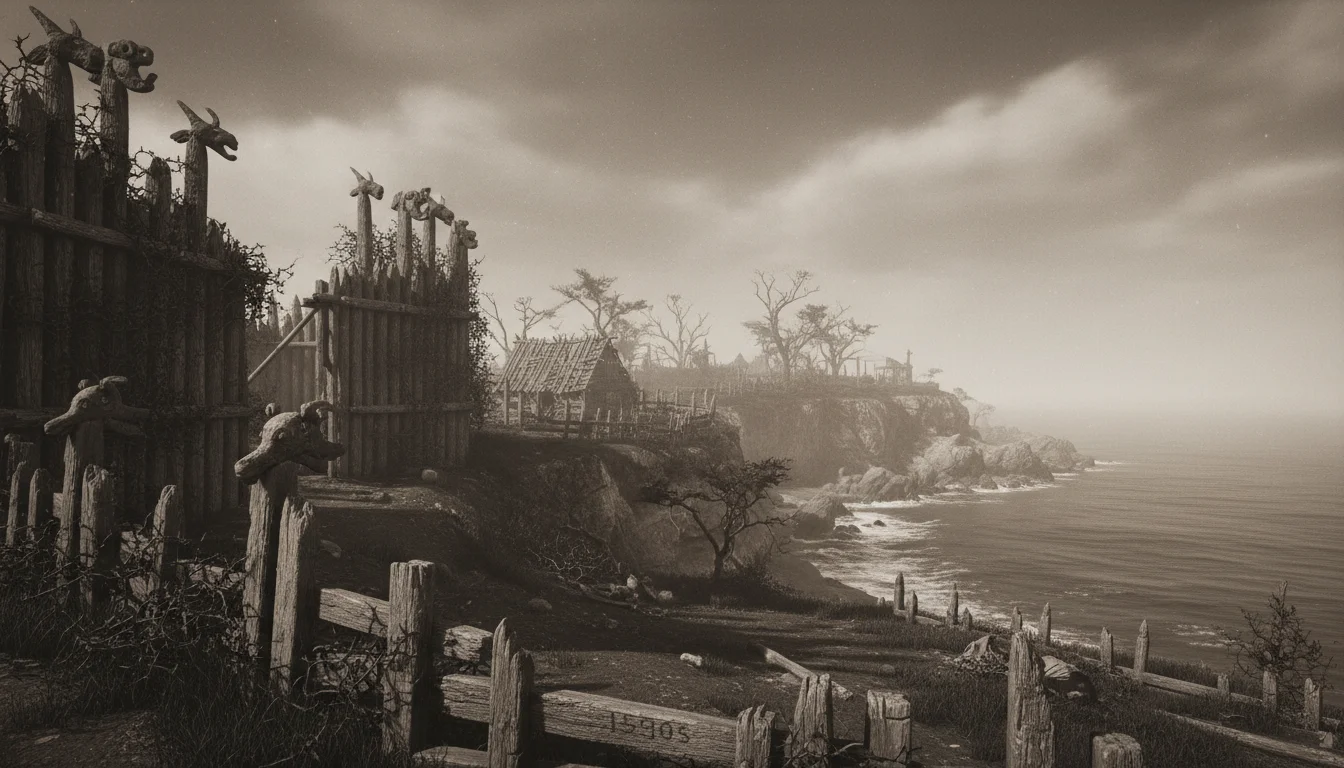
In August 1590, John White stepped off his ship and onto the shore of Roanoke Island, off the coast of present-day North Carolina. He had been away for three years, delayed by war and storms and the grinding bureaucracy of Elizabethan England. He had left behind 117 colonists, including his daughter Eleanor and his granddaughter Virginia Dare, the first English child born in the Americas.
What he found was nothing.
The settlement was abandoned. The houses had been dismantled, not destroyed. The palisade fence was still standing. There were no bodies, no graves, no signs of violence. The only clue was a single word carved into a wooden post at the entrance to the fort.
CROATOAN.
And on a nearby tree, three letters: CRO.
The Colony That Shouldn't Have Been
The Roanoke colony was England's second attempt to establish a foothold in the New World. The first attempt in 1585, a military expedition led by Ralph Lane, had ended in failure. The soldiers alienated the local Algonquian peoples, ran low on supplies, and eventually hitched a ride home with Sir Francis Drake.
Two years later, in 1587, Sir Walter Raleigh organized a different kind of expedition. This one would be a proper colony: families, not soldiers. Women and children. People who intended to stay.
John White, an artist who had accompanied the 1585 expedition, was appointed governor. The plan was to settle in Chesapeake Bay, further north. But the ship's pilot, Simon Fernandes, refused to take them beyond Roanoke Island. Some historians suspect he wanted to get on with more profitable privateering.
So the colonists were dumped on Roanoke, an island their predecessors had already poisoned with bad relations. Within weeks, a colonist named George Howe was killed by local warriors while crabbing alone in the shallows. The colony's relationship with the indigenous Croatoan people on a neighboring island remained friendly, but tension with other groups was rising.
White realized he needed supplies. The colony convinced him to sail back to England personally. He left in late August 1587, promising to return quickly.
He would not set foot on Roanoke again for three years.
The Lost Years
White arrived in England to find the country consumed by its showdown with Spain. Queen Elizabeth had commandeered every seaworthy vessel for the defense against the Spanish Armada. No ships could be spared for a tiny colony across the Atlantic.
White managed to secure two small boats in 1588, but they were intercepted by pirates and he was forced to turn back. It was not until March 1590 that he finally secured passage, and even then only as a passenger on a privateering voyage that treated the Roanoke stop as an afterthought.
By the time White reached the island on August 18, 1590, his granddaughter Virginia would have been three years old, if she was still alive.
The Scene
What White found defied easy explanation. The settlement had been carefully taken apart. This was not the aftermath of an attack. The colonists had left deliberately, methodically.
Before his departure, White and the colonists had agreed on a signal system. If they needed to relocate, they would carve their destination on a tree or post. If they had left under duress, they would carve a Maltese cross above the name.
There was no cross.
The word CROATOAN pointed to Croatoan Island (modern-day Hatteras Island), about 50 miles to the south, home to the friendly Croatoan people. White was desperate to investigate, but a storm was bearing down. His ship's cables snapped. The crew, eager to head south for Caribbean plunder, refused to make another attempt.
White never returned. He spent his final years on Raleigh's plantation in Ireland, painting watercolors of the New World he would never see again.
The Theories
For over four centuries, historians, archaeologists, and amateur sleuths have proposed explanations for what happened to the 117 colonists.
Assimilation
The most widely accepted theory is that the colonists, running low on supplies and unable to sustain themselves, dispersed and integrated with local indigenous groups. The word CROATOAN suggests they first moved to live among the Croatoan people on Hatteras Island.
In the decades after the colony's disappearance, English explorers reported encountering indigenous people with gray eyes and light hair. In the 1700s and 1800s, the Lumbee people of Robeson County, North Carolina, claimed English ancestry and used surnames matching those on the Roanoke colony roster, including Dare, Berry, Harvie, and Sampson.
DNA studies of the Lumbee have been inconclusive, partly because centuries of intermarriage make it impossible to pinpoint a specific 16th-century origin.
Disease and Starvation
Tree-ring data tells a grim story. The period from 1587 to 1589 saw one of the worst droughts in 800 years across the region. The colonists arrived with limited supplies, little farming experience, and deteriorating relations with the groups most likely to trade food.
If the colony fragmented under the pressure of starvation, small groups may have scattered across the mainland, some dying of hunger or disease, others being absorbed into indigenous communities.
Violence
Some researchers point to accounts from the Jamestown colonists, who arrived in Virginia in 1607. Chief Powhatan reportedly told Captain John Smith that he had ordered the killing of Roanoke survivors who had been living with the Chesepian people at the southern tip of Chesapeake Bay. Smith was even shown what were claimed to be English artifacts.
If true, this would mean at least some colonists survived for nearly 20 years before being killed in an inter-tribal conflict. But Powhatan's account was delivered through translators and may have been political posturing.
The "Dare Stones"
In 1937, a tourist in North Carolina found a carved stone purporting to be a message from Eleanor Dare, White's daughter. It described attacks by "savages" and the deaths of her husband and daughter. Over the next few years, 47 more stones turned up, tracing an elaborate journey inland.
Most historians now consider all but possibly the first stone to be an elaborate hoax, likely manufactured by a stonecutter named Bill Eberhardt who collected the finder's fees.
Modern Archaeology
In recent years, technology has offered new leads.
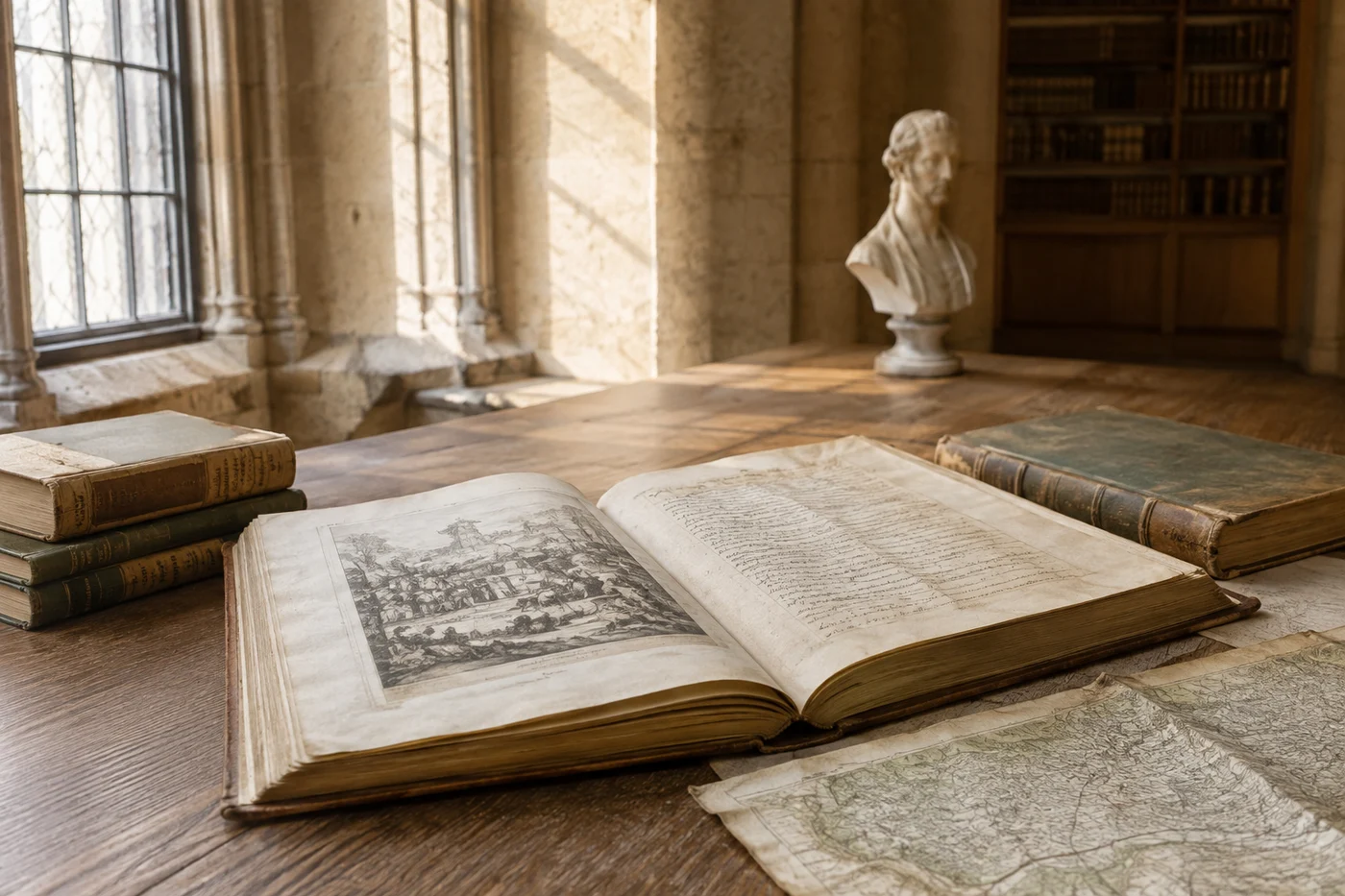
In 2012, researchers at the British Museum re-examined one of John White's original watercolor maps of the region. Using X-ray imaging, they discovered a patch covering a symbol that appeared to mark an inland site at the junction of the Chowan River and Salmon Creek, about 50 miles west of Roanoke.
Archaeological digs at this "Site X" have uncovered fragments of Elizabethan-era pottery and other European artifacts, suggesting some colonists may have relocated to the mainland. Excavations are ongoing.
Meanwhile, on Hatteras Island, the Croatian Archaeological Society has found English artifacts, including a rapier hilt and pieces of a slate writing tablet, at a site dating to the late 1500s. These finds are consistent with colonists living among the Croatoan.
The Enduring Mystery
The most likely explanation is also the least dramatic. The lost colony of Roanoke probably did not die in a single catastrophic event. The colonists fractured. Some went south to the Croatoan. Some went west to the mainland. Some may have eventually joined the Chesepian or other groups. Some certainly died of hunger and exposure during those brutal drought years.
But "probably" is not "certainly," and the gaps in the record are large enough to keep the mystery alive.
We know 117 people landed on a small island off the coast of North Carolina in 1587. We know their governor left and could not return. We know the settlement was found empty three years later.
Everything else is carved in wood and washed away by time. Like Amelia Earhart's disappearance three centuries later, the Roanoke case produces evidence without resolution. The Flannan Isles lighthouse mystery offers the same haunting pattern: people gone, scene intact, no answer.

Want to Interrogate the Suspects?
Chat with historical figures and uncover the truth behind history's greatest mysteries.
Start Your InvestigationJoin the HistorIQly Club
Get smarter about the past.
Weekly stories, deep dives, and exclusive content straight to your inbox.