The Black Dahlia: Hollywood's Most Gruesome Unsolved Murder
In January 1947, Elizabeth Short's mutilated body was found in a Los Angeles vacant lot. The Black Dahlia case remains one of America's most haunting unsolved murders.
Read Wikipedia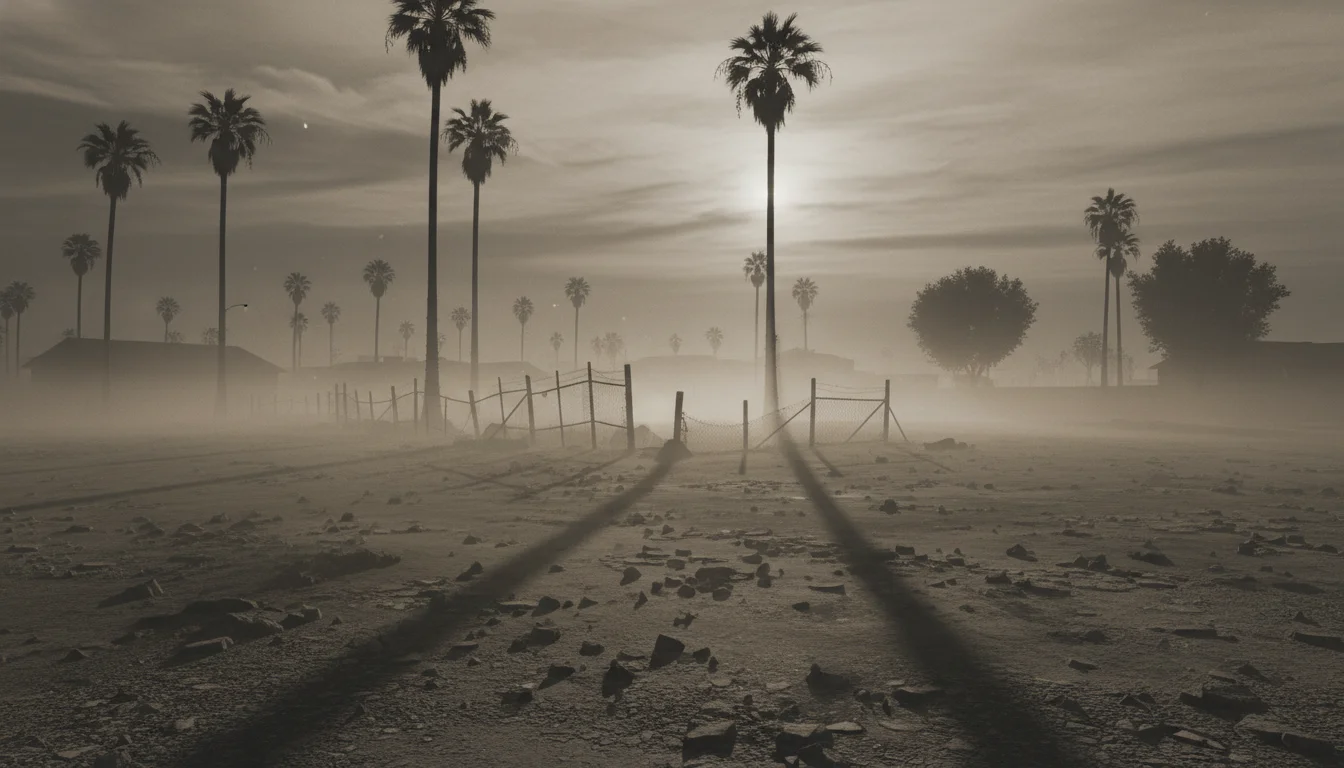
On the morning of January 15, 1947, a young mother named Betty Bersinger was walking with her three-year-old daughter along Norton Avenue in the Leimert Park neighborhood of Los Angeles. Something white caught her eye in a vacant lot. At first, she thought it was a broken store mannequin. Then she looked closer and started screaming.
What Betty Bersinger had found was the body of a 22-year-old woman, severed completely in two at the waist, drained of blood, and posed with her arms above her head and her legs spread apart. The body had been meticulously cleaned before being placed there. There was no blood at the scene. Whoever did this had taken their time.
The victim was Elizabeth Short, and her murder would become the most sensationalized unsolved case in Los Angeles history - a crime so bizarre, so theatrical, that it still generates theories, books, and obsessive investigation nearly eight decades later.
The Girl From Massachusetts
Elizabeth Short was born in Boston in 1924, the third of five daughters. Her father, Cleo Short, faked his own death during the Great Depression, abandoning the family when Elizabeth was six. Her mother raised the girls alone on welfare.
Elizabeth suffered from severe asthma and bronchitis, and doctors recommended she spend winters in a warmer climate. At 19, she moved to Florida, where she was briefly arrested for underage drinking. At 20, she headed to Hollywood.
She was, by all accounts, strikingly beautiful - pale skin, blue-grey eyes, dark hair. She favored black clothing and a dahlia flower in her hair. She wanted to be an actress but never landed a role. Instead, she drifted through Los Angeles, staying with various acquaintances, dating servicemen, working occasional waitressing jobs.
In the months before her death, Elizabeth had been living a nomadic existence. She had no permanent address, no steady income, no close friends. She was last seen alive on January 9, 1947, at the Biltmore Hotel in downtown Los Angeles. Six days later, she was found in that vacant lot.
The Crime Scene
The details of what was done to Elizabeth Short are difficult to read. The body had been bisected at the waist with surgical precision - the cut passing cleanly between the second and third lumbar vertebrae. This was not a frenzied attack. It was the work of someone with anatomical knowledge.
Her face had been slashed from the corners of her mouth toward her ears, creating a grotesque grin known as a "Glasgow smile." There were rope marks on her wrists and ankles. Her body showed evidence of torture that had lasted for hours, possibly days. Small cuts covered her torso.
And yet, despite the brutality, the scene was oddly controlled. The body had been washed, the blood drained. The two halves were placed about a foot apart in the grass, carefully arranged. The killer had even pressed her body face-down into the ground to create lividity marks on the front, then flipped her over for display.
This wasn't just a murder. It was a presentation.
The Investigation
The LAPD assigned their best homicide detectives, Harry Hansen and Finis Brown, to the case. The investigation would eventually involve more than 750 suspects.
Initial leads went nowhere. Fingerprints identified the victim quickly - Elizabeth had been fingerprinted during her Florida arrest and when she worked briefly at an Army base. But finding her killer proved impossible.
Then the letters started.
On January 24, someone sent an envelope to the Los Angeles Examiner. The message was assembled from cut-out newspaper letters, reading: "Here is Dahlia's Belongings. Letter to Follow." Inside were Elizabeth's birth certificate, business cards, photographs, and an address book with one page torn out. The items had been soaked in gasoline, destroying any fingerprints.
A second note arrived days later: "Had my fun at police. Black Dahlia Avenger." More letters followed. The sender seemed to be taunting the investigators, enjoying the spectacle.
The press, meanwhile, had gone into a frenzy. The name "Black Dahlia" likely came from journalists, possibly inspired by the 1946 film "The Blue Dahlia" and Elizabeth's preference for black clothing. The case sold newspapers at a rate not seen since the Lindbergh kidnapping.
The Suspects
Over the decades, dozens of suspects have been proposed. Some are more credible than others.
George Hodel is perhaps the most widely discussed suspect today. A wealthy Los Angeles doctor, Hodel had surgical training that could explain the precise bisection. His own son, Steve Hodel, a retired LAPD detective, spent decades building a case against his father. George Hodel had been investigated at the time - the LAPD even bugged his Hollywood home. Transcripts suggest he made incriminating statements: "Supposing I did kill the Black Dahlia. They couldn't prove it now." He fled to the Philippines shortly after. Steve Hodel's books present circumstantial evidence that many researchers find compelling, though no physical evidence ties George directly to the crime.
Walter Bayley, a surgeon who lived one block from the body dump site, was proposed by author Larry Harnisch. Bayley had degenerative brain disease that could have triggered violent behavior, and his estranged wife knew Elizabeth's sister. He died in January 1948 - almost exactly one year after the murder.
Leslie Dillon, a bellhop and true crime enthusiast, wrote suspicious letters to a psychiatrist about the case. He was detained and interrogated extensively but ultimately released. A grand jury later criticized the LAPD's handling of Dillon as a suspect.
Mark Hansen, a nightclub owner whose address book was among the items mailed to the newspaper (with a page torn out), had known Elizabeth. He was investigated but never charged.
Why It Remains Unsolved
The Black Dahlia case suffered from problems that plagued mid-century investigations. Forensic science was primitive by modern standards. The crime scene was contaminated almost immediately by reporters and onlookers. The LAPD was riddled with corruption in the 1940s, and evidence went missing.
The case also attracted an astonishing number of false confessions - more than 60 people claimed to have killed Elizabeth Short. Each one had to be investigated and eliminated. The sheer volume of tips and confessions overwhelmed the detective unit.
Perhaps most critically, Elizabeth's transient lifestyle meant there were huge gaps in her timeline. She had no permanent address, no regular contacts, no diary that survived. Reconstructing her final days required piecing together scattered witness accounts, many of which contradicted each other.
The LAPD officially closed active investigation of the case in 2006, though it remains technically open. No one was ever charged.
The Enduring Mystery
What makes the Black Dahlia case so persistent isn't just the brutality - it's the theatricality. The killer didn't simply murder Elizabeth Short. They created a spectacle, posed the body for discovery, sent taunting letters to the press. The crime had the quality of a performance, which is perhaps why it has inspired so many novels, films, and TV shows.
There's also the uncomfortable symbolism. Elizabeth Short came to Hollywood chasing the same dream that drew millions - fame, glamour, reinvention. Instead, she found anonymity, poverty, and a death so spectacular it gave her the fame she never achieved in life. Her story has become a dark parable about the gap between Hollywood's promise and its reality.
The vacant lot where her body was found is now covered by houses and a sidewalk. There is no marker, no memorial. The name "Black Dahlia" lives on in popular culture, but Elizabeth Short - the real person, the girl from Massachusetts who moved west looking for something better - remains as enigmatic as her killer.
The case file sits in the LAPD archives, still technically open after 79 years. Unless new physical evidence emerges, it will likely stay that way forever.
For other murders where the theatrical staging of the crime overshadowed the investigation, the Hinterkaifeck murders is a German farmhouse case where the killer's behavior before and after was as baffling as the crime itself, and the Lizzie Borden axe murders remains the most famous American murder case to end without a satisfying verdict.
Quick Answers
Common questions about this topic
Who was the Black Dahlia?
Elizabeth Short was a 22-year-old woman originally from Boston who moved to Hollywood hoping to become an actress. On January 15, 1947, her body was found bisected at the waist in a vacant lot in Leimert Park, Los Angeles. The body had been drained of blood and meticulously posed, suggesting careful preparation by the killer.
How was Elizabeth Short killed?
Her body was surgically bisected at the waist between the second and third lumbar vertebrae with unusual precision. Her face was slashed into a 'Glasgow smile,' and there was evidence of torture lasting hours or days, with rope marks on her wrists and ankles. The body was washed and carefully arranged before being placed in the vacant lot.
Was George Hodel the Black Dahlia killer?
George Hodel is one of the most discussed suspects. He was a wealthy Los Angeles doctor with surgical training that could explain the precise bisection, he made incriminating statements, and he fled to the Philippines shortly after the murder. His son Steve Hodel, a retired LAPD detective, spent decades building the case against him. However, no physical evidence definitively ties George Hodel to the crime.
Why is the Black Dahlia case still unsolved?
The investigation suffered from primitive 1940s forensics, immediate contamination of the crime scene by reporters, police corruption, and over 60 false confessions that overwhelmed investigators. Critically, Elizabeth's transient lifestyle left huge gaps in her timeline - she had no permanent address, no regular contacts, and no surviving diary - making it nearly impossible to reconstruct her final days.

Want to Interrogate the Suspects?
Chat with historical figures and uncover the truth behind history's greatest mysteries.
Create your free account →No card required. Some figures and features require a paid plan.
Join the HistorIQly Club
Get smarter about the past.
Weekly stories, deep dives, and exclusive content straight to your inbox.