The Bob Crane Murder: Hogan's Hero, Scottsdale, 1978
The Bob Crane murder shocked Hollywood: the Hogan's Heroes star was bludgeoned to death in his Scottsdale apartment in 1978, and the case remains unsolved.
Read Wikipedia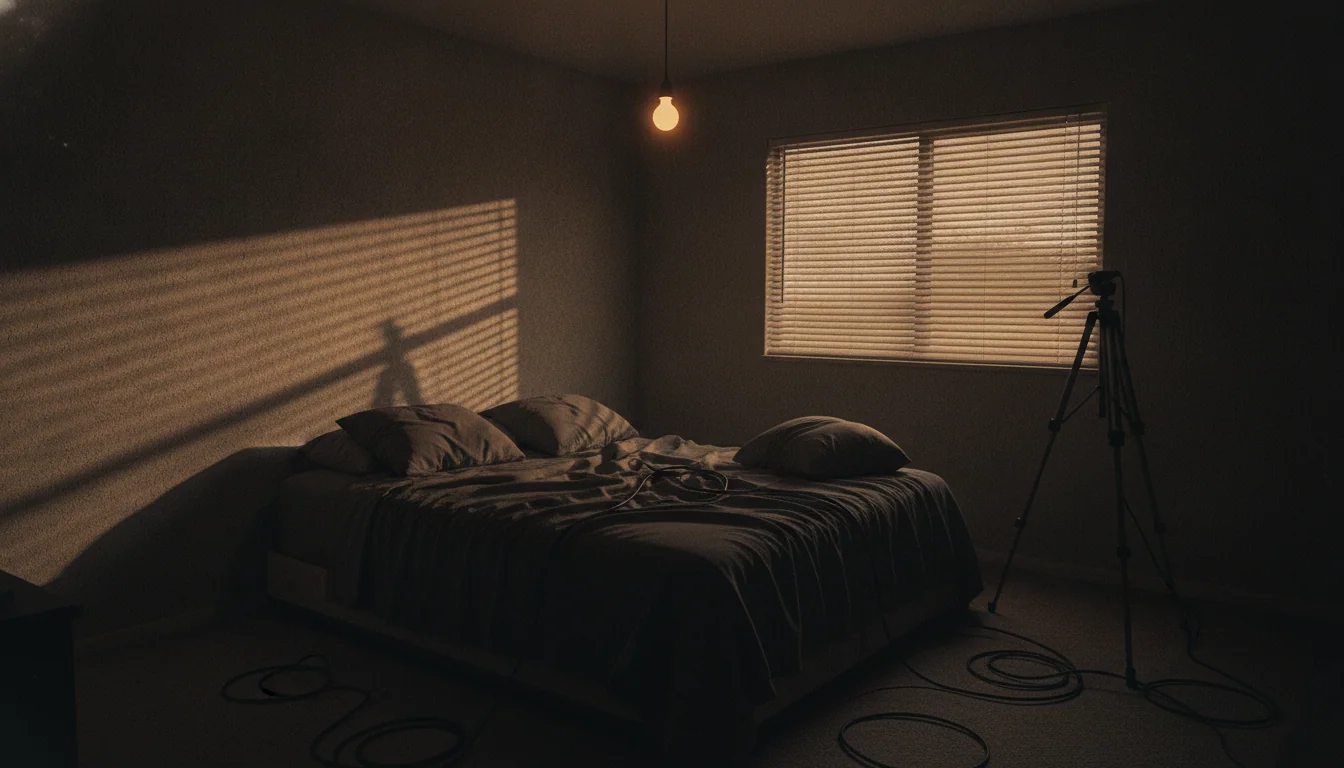
On the morning of June 29, 1978, a woman who had spent the previous night with Bob Crane tried reaching him by phone and got no answer. She asked a neighbor to check. The neighbor found Crane in his bed, his skull crushed, a camera cord knotted around his neck. The man who had made sixty million Americans laugh as the clever, unflappable Colonel Hogan was dead at 49, and the investigation that followed has spent nearly five decades arriving at no satisfying conclusion.
The Bob Crane murder is unusual in the annals of American celebrity crime because the most damaging piece of evidence against the leading suspect took fourteen years to surface, reached the courtroom, and still wasn't enough to convict.
Who Bob Crane had become
At the peak of his fame, Crane was one of the most recognizable faces on American television. Hogan's Heroes ran on CBS from 1965 to 1971 and became, improbably, one of the most-watched sitcoms of its era despite being set in a World War II German prisoner-of-war camp. Crane played Hogan with effortless ease: deadpan, resourceful, eternally calm. The show was a hit. Crane had no idea what to do when it ended.
The years after Hogan's Heroes told a story common to actors whose fame arrives at a single concentrated moment and then retreats. He worked steadily - television guest spots, dinner theater, regional stage productions - but nothing approached his earlier prominence. By the late 1970s, he was spending most of the year touring Scottsdale, Phoenix, San Diego, and similar markets in comedies and musicals aimed at retirement-community audiences.
He had also developed a compulsive sexual life that he documented with unusual thoroughness. Crane was an early adopter of video equipment at a time when the technology was still awkward and expensive, and he used it to tape his encounters with women he met on the road. Investigators later found hundreds of tapes and photographs stored at his Scottsdale apartment. The habit was an open secret among people close to him.
John Henry Carpenter
The man who had introduced Crane to video equipment was John Henry Carpenter, a salesman for companies including Sony and Akai who worked the entertainment-industry circuit. The two became close in the mid-1960s when Hogan's Heroes was in production. Carpenter traveled with Crane frequently, helped him acquire and operate the video gear, and participated in or facilitated many of the encounters Crane documented.
People who knew both men described their relationship as oddly dependent. Carpenter, by many accounts, had organized much of his social life around Crane's world. Crane's star had given Carpenter access to women and situations he could not have reached on his own. By 1978, however, the dynamic was shifting. Multiple witnesses told investigators that Crane had been pulling back from Carpenter in the weeks before his death, telling friends that the relationship had run its course and that he wanted distance.
On the night of June 28, 1978, Carpenter drove Crane from the theater where Crane was performing to his apartment at the Winfield Place complex in Scottsdale. The two men spent the evening together. Early the next morning, Carpenter flew back to Los Angeles.
Later that morning, Crane was found dead.
The investigation and its problems
Scottsdale detectives quickly focused on Carpenter as the most plausible suspect. He had been one of the last people to see Crane alive. He had access to the apartment. He had a documented motive, or at least an emotional trigger, if Crane had been moving to end the relationship. The weapon - believed to be a heavy tripod or similar cylindrical object - was never found.
But the physical evidence from the crime scene in 1978 was not enough for a prosecution. Investigators found no usable fingerprints. Fibers and trace materials were catalogued but not conclusive. The case went cold.
It was reignited in 1990 when a journalist researching a book on Crane prompted Scottsdale detectives to reexamine the case. Investigators went back to photographs taken of Carpenter's rental car in 1978, photographs that had always existed in the case file, and noticed something that earlier examination had missed. On the door panel of the car, barely visible, was a small stain of organic material that appeared to include human tissue.
In 1992, that material was sent for DNA analysis. The testing was inconclusive. The sample had degraded, the laboratory techniques available at the time had limits, and the result could not establish that the material was brain matter or that it matched Crane. What the examiner could say was that the material was consistent with human tissue and could not be excluded as significant. It was not the clarity prosecutors needed.
The 1994 trial
Maricopa County prosecutors charged Carpenter with first-degree murder in 1994 - sixteen years after the killing. The trial became a genuine courtroom contest between the weight of circumstantial evidence and the standard required for conviction.
The prosecution argued that Carpenter had killed Crane in a fit of rage after Crane rejected him, that the biological material on the car door was transferred from a bloody weapon or from Crane's body, and that Carpenter's behavior in the hours after the murder - his early-morning flight, his failure to report concern about his friend - pointed to guilt.
The defense argued that the biological evidence was scientifically inconclusive, that the prosecution had no murder weapon, no eyewitness, no forensic connection between Carpenter and the crime scene that met the standard of proof, and that the case had been constructed around a theory rather than facts.
The jury deliberated for approximately three and a half hours before acquitting Carpenter on all charges.
The years that followed
Carpenter returned to his life in Los Angeles and remained under no further legal jeopardy under double-jeopardy protections. He died of a heart attack in 1998 at the age of seventy-six.
Crane's case was dramatized in the 1992 film Auto Focus, directed by Paul Schrader, with Greg Kinnear as Crane and Willem Dafoe as a composite character based partly on Carpenter. The film explored the obsessive nature of Crane's sexual documentation and suggested Carpenter as the killer, though it was not a documentary. Many viewers encountered the case through the film rather than through the underlying reporting.
Scottsdale police have periodically stated that the case remains active and that new forensic techniques could theoretically produce useful results from remaining evidence. Advances in DNA analysis since 1992 have been substantial, and investigators in other cases have used modern techniques to revisit material that was inconclusive or untestable decades earlier.
What the evidence suggests and what it doesn't prove
The circumstantial case against Carpenter is not trivial. He was present the night before. He left town the next morning, which his supporters attributed to a scheduled business trip, and which prosecutors always found suspicious. The biological material on the car door remains unexplained. And the documented fraying of his relationship with Crane supplies a motive that is emotionally coherent, if far from proven.
But circumstantial coherence and proof beyond a reasonable doubt are not the same thing, and a jury of twelve people who heard all the available evidence agreed that the prosecution had not bridged that gap.
There are other possibilities that have received less attention but are not unreasonable. Crane's documented sexual activity meant that he encountered a large number of people in private, intimate settings, some of whom may have had grievances or instabilities that had nothing to do with Carpenter. Investigators focused on Carpenter early, and that focus shaped the investigation. Some detectives who worked the case expressed confidence in Carpenter's guilt; others were less certain.
The murder weapon was never found. If it was a tripod or camera stand, it could have been carried out of the apartment and disposed of anywhere in a large city. The absence of a weapon and the absence of any forensic link conclusively placing Carpenter at the scene during the killing remain the structural weaknesses of the case.
What we know and what we don't
Bob Crane was killed by someone he trusted enough to let into his apartment, or who was already there. The blow came from behind while he slept. The killer was strong enough to deliver two decisive strikes and calm enough to tie a cord around the victim's neck before leaving. The crime scene yielded no fingerprints. The killer walked out of a residential apartment building in Scottsdale in the early hours of the morning and was never identified.
The main suspect was acquitted. The main suspect is dead. The case is open.
After more than four decades, the murder of Bob Crane sits in the uncomfortable category of cases where most investigators have a theory, where the theory rests on solid circumstantial foundations, and where the gap between theory and legal proof remains exactly where it was in 1978 - a gap wide enough for a jury to walk through.
For other celebrity murders that produced acquittals and lingering doubt, see the murder of William Desmond Taylor, 1922 and the murder of Barbara Colby, 1975.
Quick Answers
Common questions about this topic
Who was Bob Crane?
Bob Crane was an American actor and disc jockey best known for playing Colonel Robert Hogan in the CBS sitcom Hogan's Heroes, which ran from 1965 to 1971. After the show ended his career declined, and he spent much of the 1970s touring community theater productions across the United States.
How was Bob Crane killed?
Crane was found on the morning of June 29, 1978, in his Scottsdale apartment. He had been struck twice in the head with a heavy blunt object - probably cylindrical - while he slept. A camera power cord was then wrapped around his neck and knotted. The cause of death was blunt-force head trauma.
Who was the main suspect in the Bob Crane murder?
John Henry Carpenter, a video equipment salesman and Crane's longtime companion, was the prime suspect. Carpenter traveled with Crane extensively and helped him videotape sexual encounters. He was tried for murder in 1994 but acquitted due to insufficient evidence. He died of a heart attack in 1998.
Was Bob Crane's murder ever solved?
No. The murder remains officially open and active for the Scottsdale Police Department. DNA testing in 1992 produced inconclusive results, the main suspect was acquitted and later died, and no new prosecution has followed. No one has ever been convicted of killing Bob Crane.

Want to Interrogate the Suspects?
Chat with historical figures and uncover the truth behind history's greatest mysteries.
Create your free account →No card required. Some figures and features require a paid plan.
Join the HistorIQly Club
Get smarter about the past.
Weekly stories, deep dives, and exclusive content straight to your inbox.