Bohemian Rhapsody vs History: How Accurate Is the Queen Biopic?
We fact-check the 2018 Queen biopic Bohemian Rhapsody, separating Hollywood drama from the real story of Freddie Mercury and the band.
The 2018 biopic Bohemian Rhapsody earned over $900 million worldwide, won Rami Malek a Best Actor Oscar, and reignited global love for Queen. But how much of what you saw on screen actually happened? Let's separate the real rock history from the Hollywood mythology.
What Hollywood Got Right
Freddie Mercury's Incredible Stage Presence
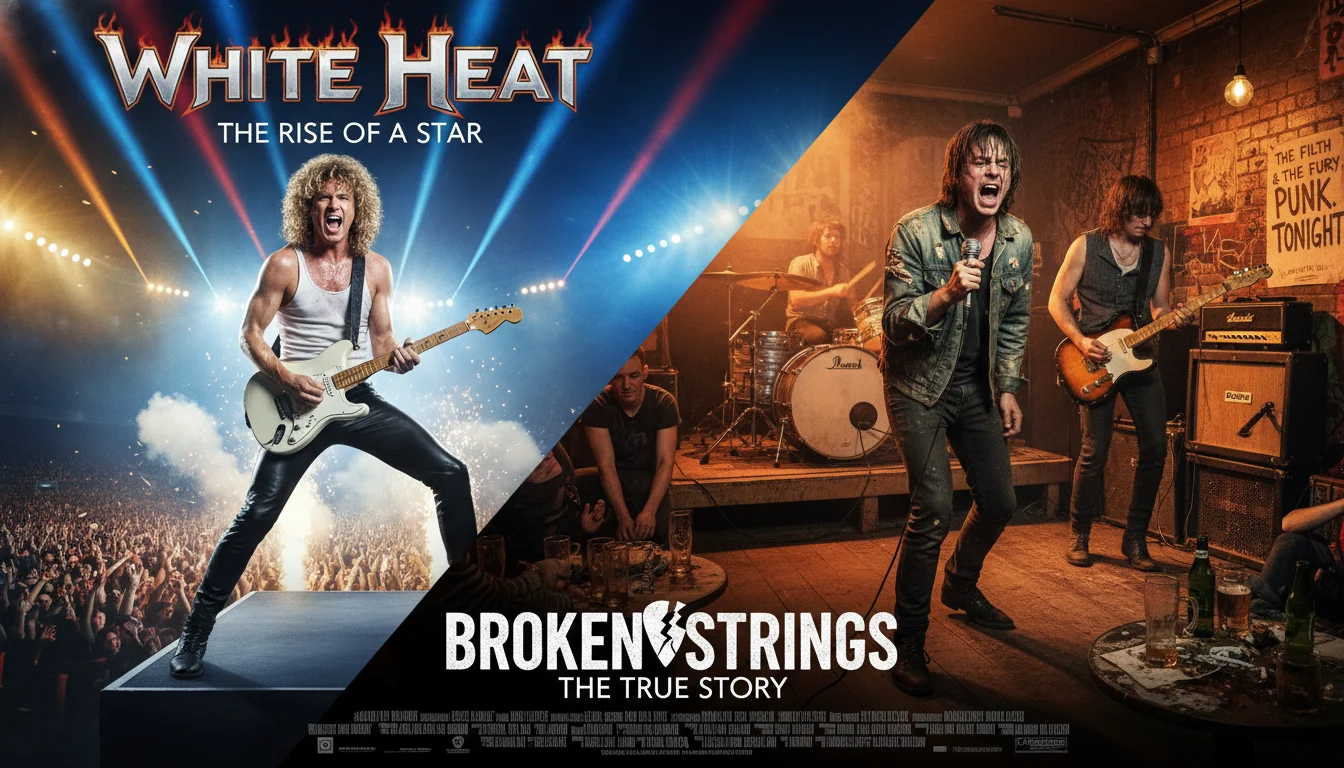
The film's recreation of Queen's legendary Live Aid performance at Wembley Stadium on July 13, 1985 is remarkably faithful. The set design, Freddie's outfit (white tank top, armband, tight jeans), and even the positioning of his Pepsi cups on the piano were painstakingly recreated. Side-by-side comparisons show Malek nailing Mercury's mannerisms and movements with impressive accuracy.
The Band's Musical Genius
The movie correctly portrays Queen as a band of unusually educated musicians. Brian May was indeed pursuing a PhD in astrophysics (which he eventually completed in 2007). Roger Taylor studied biology and dentistry. John Deacon had a degree in electronics. The film captures their intellectual approach to music - layering operatic vocals, building complex arrangements, and refusing to follow industry formulas.
The Creation of "Bohemian Rhapsody"
The song's origin story is broadly accurate. Mercury did arrive with the basic concept already developed. The recording at Rockfield Studio in Wales happened as shown, and EMI executive Ray Foster (a composite character) did initially resist releasing a six-minute song with no chorus as a single. The band fought for the track, and the rest is history.
Mercury's Relationship with Mary Austin
The film accurately portrays Mercury's deep bond with Mary Austin. He did propose to her, they did live together, and he did come out to her as bisexual (though the film says "I think I'm bisexual," and Mary responds "Freddie, you're gay" - the exact conversation is obviously dramatized). Mercury famously called Austin the love of his life and left her the majority of his estate, including his London mansion Garden Lodge. All true.
The Live Aid Performance
Beyond the visual recreation, the emotional core is real. Queen's 20-minute Live Aid set is widely regarded as the greatest live rock performance ever. They did steal the show from every other act that day, and it did revitalize their career after a difficult period.
What Hollywood Got Wrong
The Timeline Is a Mess
This is the film's biggest sin. The movie compresses, rearranges, and fabricates the chronology of major events to create a neat dramatic arc. Here are the worst offenders:
Mercury did not meet the band members at a parking lot after a Smile gig, then immediately audition by singing on the spot. While Mercury was a fan of Smile, the actual formation of Queen was a more gradual process in 1970.
The film shows Mercury going solo and the band breaking up before Live Aid, then reuniting for the concert. In reality, Queen never broke up. Mercury did release a solo album (Mr. Bad Guy in 1985), but so did Roger Taylor and Brian May. The band continued working together throughout. There was no dramatic reunion.
The AIDS Diagnosis Timing
The film shows Mercury receiving his AIDS diagnosis before Live Aid, using the concert as a kind of triumphant farewell. This is completely false. Mercury was diagnosed in April 1987, nearly two years after Live Aid. He publicly confirmed it only the day before his death on November 24, 1991. This change rewrites the emotional meaning of the entire Live Aid sequence.
The Band's Early Years Are Compressed
The movie jumps from Queen's formation to near-instant success, skipping the years of struggle. In reality, their first two albums (1973-1974) were not commercial hits. The band toured relentlessly in small venues and nearly went broke before "Killer Queen" from Sheer Heart Attack (1974) gave them their breakthrough. The film makes it look like success came almost overnight.
Jim Hutton's Introduction
The film shows Mercury meeting Jim Hutton at a party relatively late in the story. In truth, they first met in 1985 at a London club, and Hutton became Mercury's partner for the rest of his life. The movie downplays this relationship significantly compared to the Mercury-Austin storyline, partly to maintain the dramatic arc and partly due to the film's cautious approach to Mercury's sexuality.
Ray Foster Doesn't Exist
Mike Myers plays EMI executive Ray Foster, who rejects "Bohemian Rhapsody" as a single. While EMI did have reservations about the song's length, there was no single executive who served as the main antagonist. The character is a composite. The casting of Myers was a meta-joke, as Wayne's World famously featured the song in its iconic car headbanging scene.
The "Fat Bottomed Girls" Concert Scene
The film shows Mercury performing "Fat Bottomed Girls" early in Queen's career. The song wasn't released until 1978 on the album Jazz, well after the band was established. It's a minor anachronism, but it represents the film's general looseness with when things actually happened.
Historical Accuracy Score: 5/10
Bohemian Rhapsody gets the broad strokes right. Freddie Mercury was a transcendent performer, Queen was a band of geniuses, and Live Aid was their crowning moment. The emotional truth of Mercury's story is preserved. But the deliberate reshuffling of the timeline, the fabricated band breakup, and especially the false placement of the AIDS diagnosis before Live Aid cross the line from dramatization into distortion. The film is a crowd-pleasing celebration of Queen's music, but as a biography, it takes more liberties than most. If you want the real story, Jim Hutton's memoir Mercury and Me and the documentary Days of Our Lives are far more reliable guides.
For more music biopic fact checks, see our breakdowns of Rocketman and Elvis (2022).

Debate the Accuracy with the Real Figures
Ask the real people what Hollywood got wrong about their lives.
Chat with HistoryJoin the HistorIQly Club
Get smarter about the past.
Weekly stories, deep dives, and exclusive content straight to your inbox.