The Apprentice (2024) vs. History: How Accurate Is the Trump Biopic?
The Apprentice (2024) accuracy: Ali Abbasi's Trump biopic covers Roy Cohn, the DOJ housing case, and Trump Tower. We score what it gets right and what it distorts.
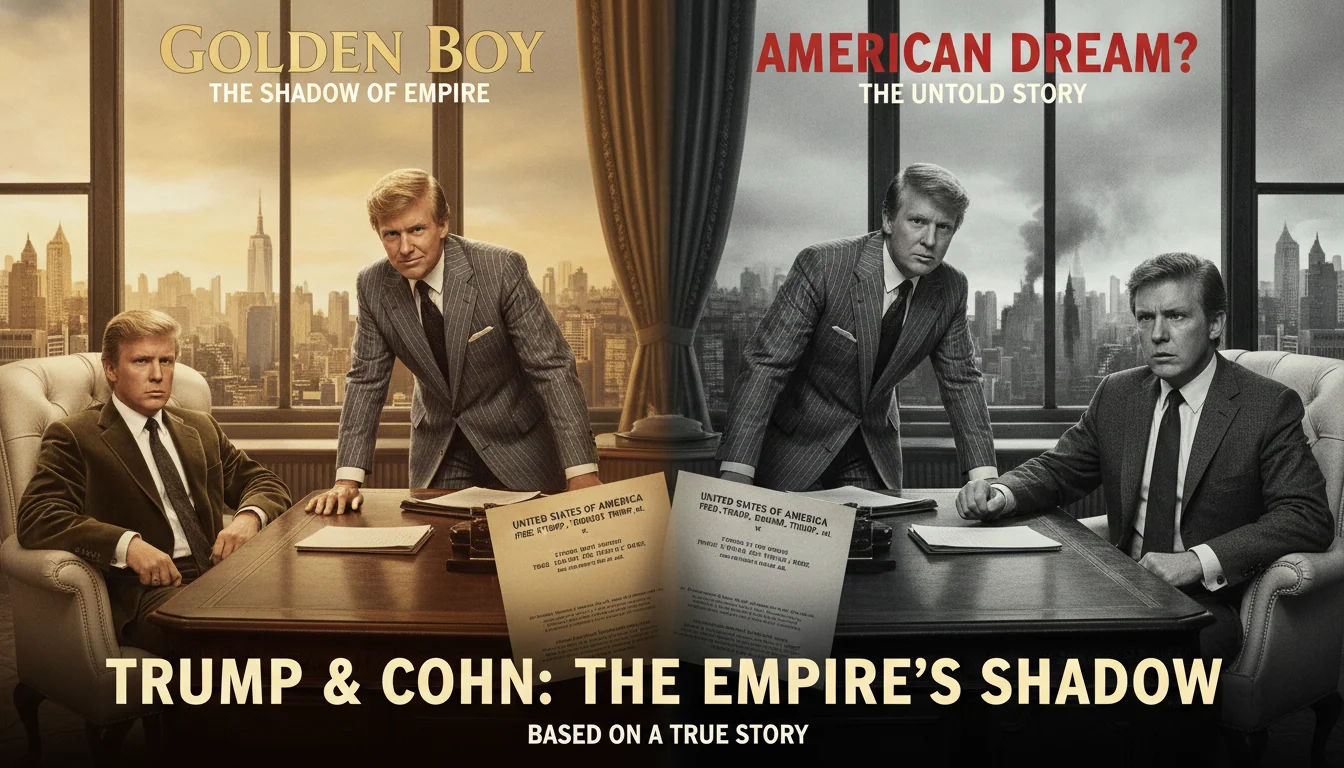
There are biopics that flatter their subjects, biopics that prosecute them, and occasionally biopics that try to understand them. Ali Abbasi's "The Apprentice," which premiered at Cannes in 2024, is firmly in the third category, and that commitment to ambiguity is both its historical strength and its dramatic limitation. Sebastian Stan plays a young Donald Trump as someone genuinely in the process of being formed - not yet the tabloid figure, not yet the television brand, just a tall outer-borough kid with a casino-floor sense of the room trying to learn the rules of a game from a master.
The master is Roy Cohn, played by Jeremy Strong with the full roster of his method skills deployed. Cohn is the film's real subject, and he is also the area where the film is most historically grounded. That is where we begin.
What Hollywood Got RIGHT
Roy Cohn was genuinely central to Trump's formation
The film's core premise - that Trump apprenticed under Cohn and absorbed his operating philosophy - is historically accurate and extensively documented. The two met in 1973 at Le Club, a private members' club in Manhattan, when Trump was 27 and building his first major Manhattan projects. Cohn, by then famous as the former chief counsel to Senator Joseph McCarthy, was one of the most feared lawyers in New York, representing clients including the Roman Catholic Archdiocese of New York and figures connected to organized crime.
Cohn taught Trump what the film condenses into three rules: attack, never admit, always claim victory. Trump has acknowledged this framework in interviews. Veteran Trump Organization executive Barbara Res, in her memoir and in subsequent interviews, described Cohn's influence on Trump's decision-making as foundational, especially in litigation. When the Justice Department came calling, Cohn's instinct was to counterattack rather than negotiate quietly. The film captures this accurately.
The 1973 DOJ housing discrimination lawsuit
In October 1973, the Nixon Justice Department's Civil Rights Division filed suit against Trump Management, the company Donald ran with his father Fred, alleging systematic discrimination against Black apartment applicants at 39 properties in Brooklyn, Queens, and Staten Island. Investigators had sent Black and white applicants to the same buildings; the pattern of responses made a strong case.
Cohn's strategy, depicted accurately in the film, was aggressive public theater: a $100 million countersuit against the government, press conferences attacking the investigators, and a defiant posture calculated to signal to the real-estate industry that Trump would not fold. The suit was settled in 1975. The consent decrees required Trump Management to place vacancies with the Urban League and advertise in minority publications. No criminal charges were filed. The film treats this episode as the moment Trump truly learns that in Cohn's world, the goal is never to admit and always to reframe - which is a fair reading of events.
Fred Trump Sr. and the inheritance dynamic
The film's portrayal of Fred Trump, Donald's father, captures something genuine about the dynamic between them. Fred was a major builder of affordable outer-borough housing in Queens and Brooklyn, deeply practical, tight with money, and not especially interested in the Manhattan market that Donald was determined to crack. The tension between Fred's Queens base and Donald's Manhattan ambitions was real. The film is particularly accurate in showing that Donald's financing for early deals including the Commodore Hotel renovation depended heavily on Fred's relationships and guarantees.
Roy Cohn's disbarment and death
The film ends with Cohn's death from AIDS-related complications in August 1986, five weeks after his disbarment from the New York Bar. Both events are documented precisely. Cohn had been disbarred on four counts including misappropriating client funds, lying on a bar application, and attempting to have a semicomatose client sign a will change naming Cohn as beneficiary. He denied being gay and denied having AIDS until the end. Trump, who had socialized with Cohn constantly for 13 years, largely stopped returning his calls in the final months. Cohn told associates he felt abandoned.
This is one of the most historically solid sequences in the film. The phone going unanswered is not something screenwriters invented. Multiple people close to Cohn described it at the time.
What Hollywood Got WRONG
The Ivana scene
The film's most disputed sequence depicts Trump forcing himself sexually on Ivana in a scene drawn from testimony she gave in a 1993 deposition during their divorce proceedings. Ivana used the word "rape" in that deposition. However, she subsequently issued a public statement clarifying that she did not use the word in a literal criminal sense and that she did not feel she had been criminally violated. She and Trump reconciled publicly enough that she appeared at his events and described him as a friend in later interviews before her death in July 2022.
The film presents the scene graphically and without the qualification that Ivana herself repeatedly applied to the same account. A biopic has the right to dramatize contested events, but presenting a disputed and subsequently retracted characterization as cinematic fact crosses the line between drama and assertion.
The liposuction and scalp-reduction sequences
The film depicts Trump undergoing liposuction and a scalp-reduction procedure, with an implication that these explain his physical appearance. These specific claims have circulated in tabloid form for decades but have never been documented by medical records, and Trump has denied them. A biopic is free to speculate, but when speculation is rendered with the visual authority of dramatic filmmaking, the audience has limited tools to distinguish documented fact from creative inference.
Cohn's historical complexity is partially flattened
Cohn in the film is a mentor and then a ghost. He is rendered clearly as a tragic figure - a gay man who persecuted gay men under McCarthy, a man abandoned by his prize student. That reading is valid. What gets less screen time is the scale of Cohn's other client work: the Archdiocese, the mob-adjacent figures, the media influence he wielded across New York. Cohn was not just Trump's Yoda. He was a central node in New York's entire interlocking world of money, law, and crime for thirty years. The film makes him primarily legible as Trump's mentor, which simplifies a genuinely strange and important figure.
The timeline compression
The film covers roughly 1973 to 1987 in two hours, which requires considerable compression. The development of Trump Tower, for example, was a years-long negotiation involving the air rights over Tiffany & Co., zoning variances, and a complicated arrangement with the city around the building's retail atrium. The film renders this as a relatively quick win. The Commodore Hotel renovation deal, which required a complex city tax abatement negotiated by Cohn and then-deputy mayor Abe Beame, is similarly smoothed. These compressions are inevitable in biographical filmmaking but they tend to make Trump's rise look more effortless and less contingent than it actually was.
Historical accuracy score
6 / 10
The Cohn-Trump relationship, the DOJ lawsuit, the broad arc of Trump's 1970s and early 1980s development, and the ending - Cohn disbarred and dying, Trump no longer answering - are grounded in documentary record. The film is at its best when Strong and Stan are in a room working through a problem. It is at its most debatable when it presents contested or unverifiable claims with cinematic certainty. As a portrait of how Roy Cohn operated and what he passed on to his most successful student, it is one of the more serious biopics of the decade. As a comprehensive account of how the Trump Organization was built, it is a sketch.
For more political biopic fact-checks, see our breakdowns of Vice (2018) and Bohemian Rhapsody.
Quick Answers
Common questions about this topic
Is The Apprentice (2024) based on a true story?
Yes. The film tracks Donald Trump's early career from roughly 1973 to 1987, focusing on his relationship with lawyer Roy Cohn, the development of Trump Tower, and his marriage to Ivana Trump. The broad strokes - the Cohn mentorship, the DOJ housing discrimination case, Cohn's disbarment and death from AIDS - are historically documented.
Was Roy Cohn really Donald Trump's mentor?
Yes, and this is the most historically solid element of the film. Trump and Cohn met at Le Club in Manhattan in 1973 and worked together for roughly 13 years. Cohn represented Trump in the DOJ housing discrimination lawsuit, advised on casino deals, and instilled an aggressive legal and media strategy that Trump has publicly credited. Barbara Res, a senior Trump Organization executive, confirmed Cohn's central role.
Did the film accurately portray the 1973 DOJ lawsuit?
Substantially yes. The U.S. Department of Justice sued Trump Management in October 1973, alleging racially discriminatory rental practices at 39 buildings. Trump's response, guided by Cohn, was to countersue for $100 million and attack the government's investigators publicly. The lawsuit was eventually settled in 1975 with consent decrees requiring Trump Management to advertise in minority publications. No admission of wrongdoing was included in the settlement.
What does the film invent or exaggerate?
The most contested scene is a depiction of Donald Trump forcing himself on Ivana sexually, an account drawn from a 1993 deposition Ivana gave. Ivana herself later said she did not mean the word 'rape' in a literal criminal sense, and she reconciled publicly with Trump before her 2022 death. The scene is presented without that ambiguity. The film also depicts Trump undergoing liposuction and a scalp-reduction procedure, claims that have circulated but not been verified.

Debate the Accuracy with the Real Figures
Ask the real people what Hollywood got wrong about their lives.
Chat with HistoryJoin the HistorIQly Club
Get smarter about the past.
Weekly stories, deep dives, and exclusive content straight to your inbox.