Braveheart: What Hollywood Got Wrong About William Wallace
Braveheart won five Oscars but got almost everything wrong about William Wallace and medieval Scotland. Our full historical accuracy breakdown of the film.
Read Wikipedia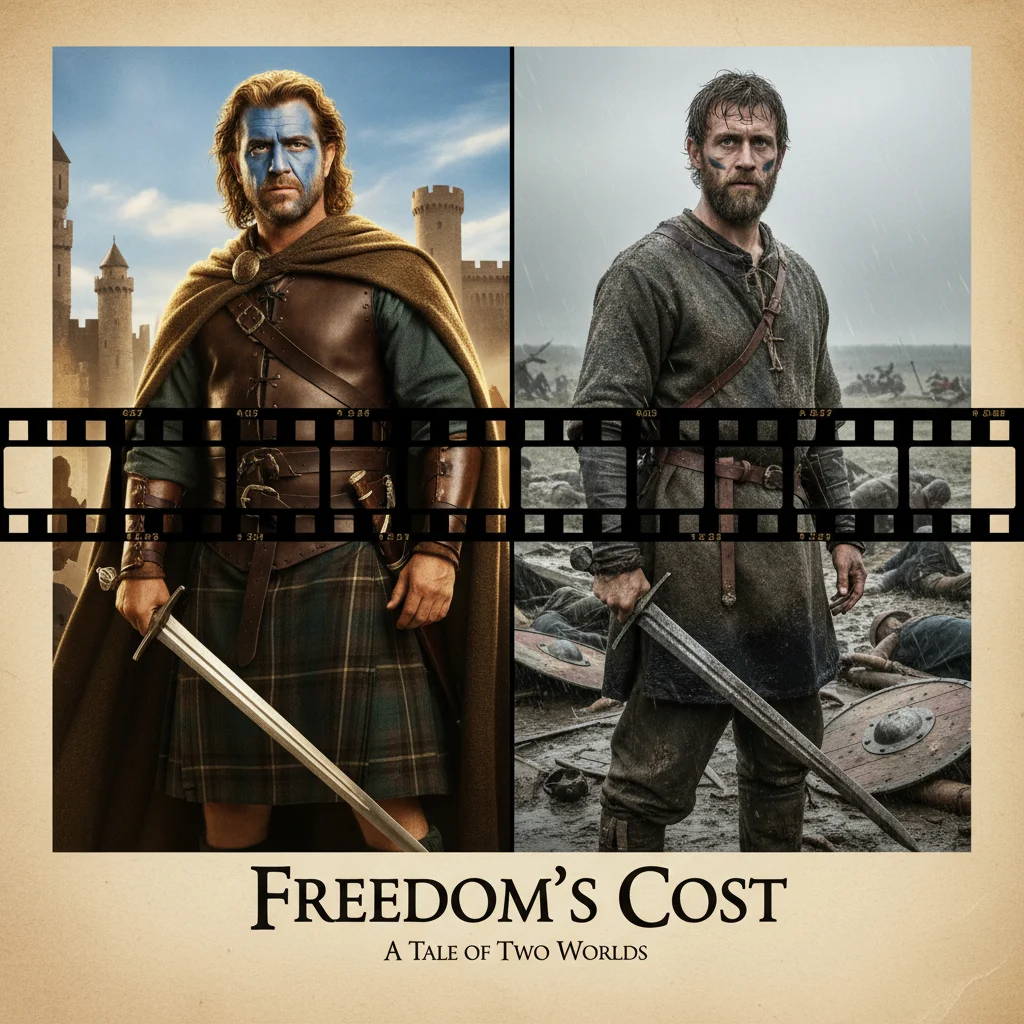
Mel Gibson's Braveheart (1995) is one of the most beloved historical epics ever made. It won five Academy Awards including Best Picture and Best Director. It made kilts cool again. It gave us "FREEDOM!" - one of cinema's most iconic battle cries.
It's also one of the most historically inaccurate films ever produced.
Let's separate Hollywood myth from Scottish reality.
What Hollywood Got RIGHT
William Wallace was real, and he was a legend. The Scottish knight did lead a rebellion against English rule in the late 13th century. He did win the stunning Battle of Stirling Bridge in 1297, defeating a much larger English force. And yes, he was eventually captured, tried for treason, and executed in London in 1305 - hanged, drawn, and quartered.
Edward I was genuinely brutal. Known as "Longshanks" and the "Hammer of the Scots," Edward I was indeed a ruthless king who sought to crush Scottish independence. His invasion and subjugation of Scotland was real, and he really did carry out campaigns of terror.
The spirit of Scottish resistance was authentic. While the details are mangled, the film captures something true about Scotland's fierce fight for independence during this period.
What Hollywood Got WRONG
The Kilts? About 300 Years Too Early
The most visible error is also the most embarrassing. Those iconic tartan kilts that Wallace and his men wear throughout the film? They didn't exist yet. The belted plaid kilt wasn't worn in Scotland until the 16th century - roughly 300 years after Wallace's time. In the 1290s, Scottish warriors wore tunics and cloaks, similar to other medieval Europeans.
The Blue Face Paint? Wrong Century
Remember that dramatic scene where Wallace paints his face blue before battle? That's woad - a plant-based blue dye the ancient Picts used... in the Roman era, over a thousand years earlier. By Wallace's time, nobody had painted their faces for battle for centuries.
Stirling Bridge Without the Bridge
The Battle of Stirling Bridge was won precisely because of the bridge. English forces had to cross a narrow wooden bridge to engage the Scots, who waited until half the army had crossed before attacking - trapping them with the river at their backs. The bridge was the entire tactical advantage.
The movie? Shows an open field battle. Why? According to director Mel Gibson, the bridge "got in the way." That's like making a film about the Titanic and removing the iceberg because it's inconvenient.
The Romance That Never Was
The film depicts a passionate affair between Wallace and Princess Isabella of France, with the implication that Isabella's son (the future Edward III) might actually be Wallace's child.
There's one small problem: Isabella was about 9 years old when Wallace was executed. She didn't arrive in England until 1308 - three years after Wallace's death. They never met. The entire romance is pure fantasy.
Robert the Bruce's Betrayal? Mostly Fiction
The movie portrays Robert the Bruce as a conflicted, weak-willed noble who betrays Wallace at the Battle of Falkirk. In reality, there's no evidence Bruce was even present at Falkirk. While Bruce's political maneuvering during this period was complex, the film's portrayal of him as a Judas figure is largely invented.
Prima Nocta - The Myth That Won't Die
The film's most disturbing scene involves English lords exercising "jus primae noctis" or "droit du seigneur" - the supposed right to sleep with any new bride on her wedding night. This supposedly motivates Wallace's rebellion after his wife is taken.
Here's the thing: there's no credible historical evidence this was ever an actual, enforced law anywhere in medieval Europe. Historians consider it a myth - one that Braveheart unfortunately popularized for a new generation.
Historical Accuracy Score: 3/10
Braveheart fails almost every test of historical accuracy. The costumes are wrong. The timeline is wrong. The battles are wrong. Key characters are invented or wildly misrepresented. Even the geography is questionable - much of it was filmed in Ireland, not Scotland.
But here's what the film gets right on a deeper level: the emotional truth of a people fighting for their freedom against a colonial power. Wallace was a real hero who inspired a nation. Scotland's struggle for independence was genuine and important.
Verdict: Worth Watching for History Buffs?
Yes - but with a massive grain of salt.
Watch Braveheart as a rousing adventure film, not a history lesson. It's excellent entertainment with stunning battle sequences and a genuinely moving story. Just don't cite it in your history essay.
If you want the real story of William Wallace, read actual Scottish history. The truth is fascinating enough without Hollywood's embellishments. The real Wallace was a brilliant tactician who exploited terrain and enemy overconfidence. The real struggle for Scottish independence continued for decades after his death, culminating in Robert the Bruce's victory at Bannockburn in 1314.
The real story doesn't need kilts, face paint, or fictional romances. It just needs the truth - which is dramatic enough on its own.
For another Hollywood epic that sacrifices accuracy for spectacle, see our review of Kingdom of Heaven. For how Mel Gibson handled another colonial struggle, see The Patriot.
Want to discuss Scottish history with the great minds who lived it? Chat with historical figures at HistorIQly.
Quick Answers
Common questions about this topic
Were the kilts in Braveheart historically accurate?
No. The iconic tartan kilts worn throughout the film are about 300 years too early. The belted plaid kilt wasn't worn in Scotland until the 16th century, roughly 300 years after Wallace's time. In the 1290s, Scottish warriors wore tunics and cloaks similar to other medieval Europeans.
Did William Wallace really win the Battle of Stirling Bridge?
Yes, Wallace did lead a stunning victory at Stirling Bridge in 1297, defeating a much larger English force. However, the film removes the bridge entirely and stages the fight on an open field. The bridge was the entire tactical point - English forces had to cross a narrow wooden span, and the Scots waited until half the army was across before attacking.
Did Princess Isabella have a romance with William Wallace?
No. Isabella of France was about 9 years old when Wallace was executed in 1305, and she didn't arrive in England until 1308. They never met, so any romantic relationship - or child - between them is entirely invented.
Was the 'prima nocta' law real?
No credible historical evidence exists that 'jus primae noctis' - the supposed right of lords to sleep with brides on their wedding night - was ever an actual, enforced law in medieval Europe. Historians consider it a myth. Braveheart is largely responsible for popularizing the legend for modern audiences.

Debate the Accuracy with the Real Figures
Ask the real people what Hollywood got wrong about their lives.
Create your free account →No card required. Some figures and features require a paid plan.
Join the HistorIQly Club
Get smarter about the past.
Weekly stories, deep dives, and exclusive content straight to your inbox.