Elizabeth (1998) vs. History: How Accurate Is Cate Blanchett's Tudor Breakthrough?
Elizabeth (1998)'s historical accuracy is uneven: Cate Blanchett's Tudor debut packs fifteen years of fact and fiction into ninety minutes.
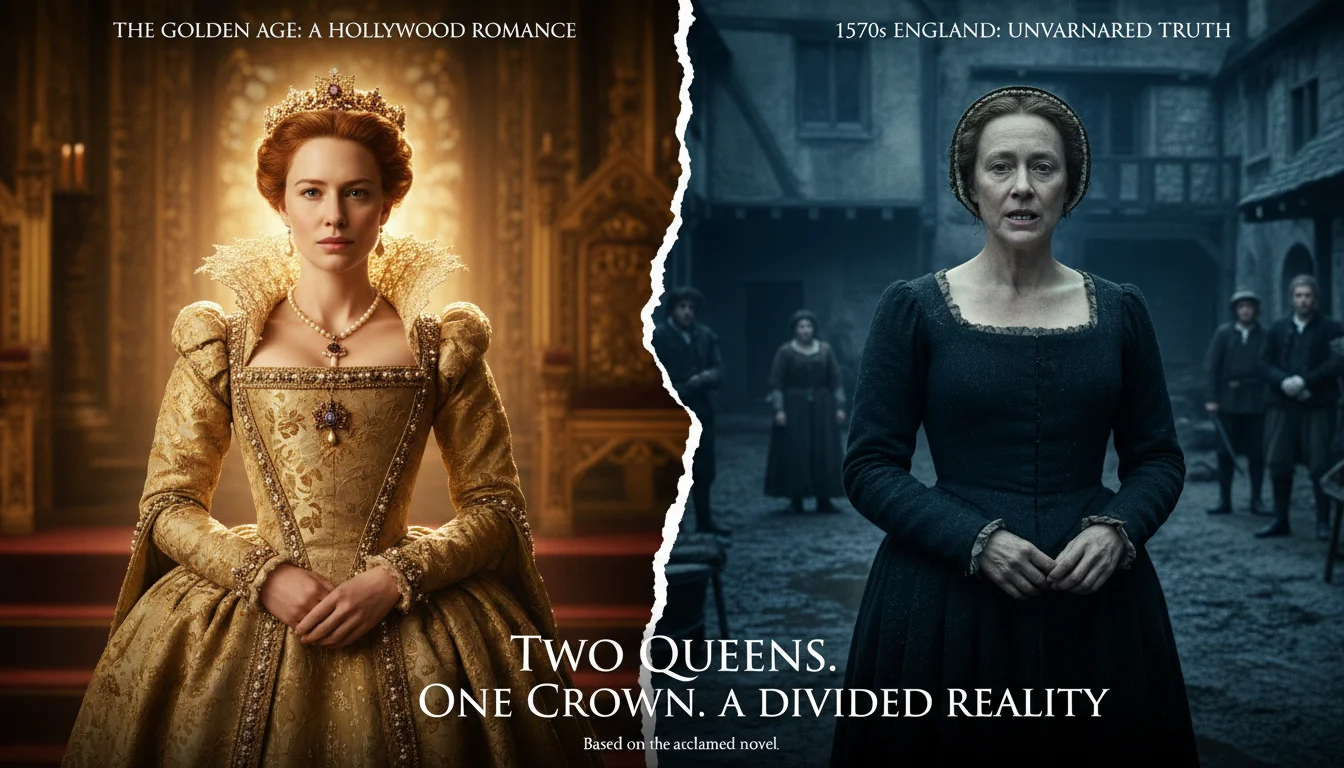
The opening shot of Shekhar Kapur's "Elizabeth" sets the tone: Protestant martyrs burn at the stake while Latin chanting fills the air. It's visually stunning, dramatically compelling - and historically murky. The 1998 film that launched Cate Blanchett into superstardom presents Elizabeth I's early reign as a condensed thriller of assassination plots, romantic betrayals, and political chess moves. But how much of this tale of transformation from nervous girl to calculating Virgin Queen actually happened?
Let's look at the Elizabeth historical accuracy by separating Tudor truth from costume drama fiction.
What Hollywood Got RIGHT
The Religious Chaos Was Very Real
The film opens during Mary I's reign, showing Protestants being burned as heretics. This is absolutely accurate - Mary earned her nickname "Bloody Mary" by executing approximately 280 Protestants during her five-year reign. The religious whiplash England experienced - Catholic under Henry VIII's later years, Protestant under Edward VI, Catholic again under Mary, then Protestant under Elizabeth - created genuine terror. People didn't know from one year to the next whether their faith could get them killed.
Elizabeth's Dangerous Path to the Crown
Elizabeth really did face imprisonment and suspicion during Mary's reign. The film shows her interrogated about the Wyatt Rebellion of 1554, and historically, Elizabeth was indeed held in the Tower of London for two months under suspicion of involvement. She came terrifyingly close to execution. Her famous line "I am no traitor" reflects the real Elizabeth's careful strategy of proclaiming loyalty while Mary's councilors urged her death.
The Marriage Pressure Was Relentless
Every scene featuring ambassadors and councilors pressuring Elizabeth to marry reflects historical reality. As an unmarried female monarch, Elizabeth was considered incomplete, even illegitimate as a ruler. The film shows French envoys proposing the Duke of Anjou - these negotiations actually occurred (though years later than depicted). The Spanish suit, the Austrian archduke proposal, even the suggestion of Robert Dudley as a candidate - all real, all used by Elizabeth as diplomatic tools.
William Cecil's Cautious Counsel
Richard Attenborough's portrayal of William Cecil as the perpetually worried advisor urging safe choices captures something true about their relationship. Cecil served Elizabeth for forty years as her most trusted minister. He was indeed conservative, genuinely concerned about her safety, and frequently exasperated by her delays on the marriage question. His dynamic with the queen - loyal but often overruled - rings historically true.
The Bishop's Act and Church Settlement
The film shows Elizabeth's parliament passing acts that established Protestant supremacy over the Catholic bishops. This happened. The Act of Supremacy (1559) made Elizabeth "Supreme Governor" of the Church of England, and the Act of Uniformity established the Protestant Book of Common Prayer. The resistance from Catholic bishops was real - many were indeed deprived of their positions for refusing to accept Elizabeth's authority over the church.
What Hollywood Got WRONG
That Ending Transformation Is Fantasy
The film's climax shows Elizabeth cutting her hair, painting her face white, and declaring herself married to England - emerging as the Virgin Queen we know from portraits. This "transformation" makes for powerful cinema but happened gradually over decades, not in a single dramatic moment. The iconic white makeup and elaborate image didn't appear until much later in her reign, developed as Elizabeth aged and needed to maintain an unchanging, almost divine appearance.
Robert Dudley's Betrayal Is Invented
The film's central romance shows Robert Dudley marrying Lettice Knollys while simultaneously pursuing Elizabeth, with Elizabeth discovering his betrayal. This is chronologically impossible. Dudley didn't marry Lettice Knollys until 1578 - nearly twenty years after the film's events. While Elizabeth was genuinely furious about that marriage when it happened, the film's compressed timeline creates a betrayal that didn't occur during her early reign. The real early Elizabeth-Dudley relationship was complicated by Dudley's first wife Amy Robsart, whose suspicious death in 1560 created scandal.
Sir Francis Walsingham Wasn't There Yet
Geoffrey Rush's Walsingham is portrayed as Elizabeth's dark fixer from the beginning, conducting assassinations and managing spy networks. In reality, Walsingham didn't enter Elizabeth's service until 1568 - a decade after the film's events. The elaborate espionage network he later built existed during the 1580s, not the 1550s. The film transforms him into a sinister Machiavellian figure orchestrating violence from the start, when historically Elizabeth's early reign relied on Cecil's careful diplomacy rather than Walsingham's spy craft.
Mary of Guise's Death Is Wrong
The film shows Mary of Guise (mother of Mary Queen of Scots) as a schemer who dies in suspicious circumstances implying assassination. In reality, Mary of Guise died in 1560 of dropsy (edema), a natural death in Edinburgh while facing Protestant rebellion. There's no evidence of assassination, and her death occurred under completely different circumstances than the film suggests.
The Norfolk Conspiracy Is Compressed and Altered
The Duke of Norfolk is portrayed as a villain plotting Elizabeth's assassination and execution. While Norfolk did later conspire with Mary Queen of Scots and was executed in 1572, the film conflates multiple conspiracies across many years into a single early plot. Norfolk initially supported Elizabeth and only turned to conspiracy after years of the Mary Queen of Scots question festered.
Those Assassination Attempts Are Dramatized
The film shows multiple dramatic assassination attempts, including a dress poisoned by contact. While Elizabeth faced genuine threats throughout her reign, these specific incidents are invented for drama. The real dangers were more prosaic - diplomatic isolation, religious rebellion, the constant question of succession - rather than poison dresses and shooting priests.
The Papal Connection Is Exaggerated
The film implies direct papal orchestration of assassination attempts in Elizabeth's early reign. While the Pope did eventually excommunicate Elizabeth in 1570 and implicitly sanctioned plots against her, this came years later than depicted. The early relationship between Elizabeth and Rome was more cautiously hostile than actively murderous.
The Bigger Picture
"Elizabeth" deliberately compresses roughly fifteen years of history into what feels like a few months. Events from the 1570s and 1580s - Walsingham's spy network, the Virgin Queen imagery, the Norfolk execution - are pulled backward to create a tighter narrative. The result is dramatically effective but historically misleading.
The film also simplifies Elizabeth's own agency. The real queen spent years carefully cultivating her image, managing her council, and navigating between religious factions. She wasn't transformed by betrayal in a single night - she was always calculating, always political, always consciously constructing the persona that would keep her alive and powerful.
What the film gets fundamentally right is the danger. Elizabeth really did survive assassination plots, religious rebellion, invasion threats, and constant pressure to marry. She really did emerge from this crucible as one of history's most successful monarchs. The transformation just took forty-five years, not ninety minutes.
The Verdict
Historical Accuracy Score: 5/10
"Elizabeth" captures the atmosphere of Tudor danger and the genuine threats facing the young queen, but sacrifices chronological accuracy for dramatic impact. The central romance, the Walsingham timeline, and the compressed transformation are all invented or altered. It's brilliant as myth-making, less reliable as history.
For viewers, it works best as a starting point rather than definitive history. The film shows why Elizabeth's survival was remarkable - it just reshuffles when and how that survival happened. Think of it as Tudor history through a dramatic kaleidoscope: all the pieces are real, but the pattern is new.
The costume drama looks gorgeous, but check your dates before citing it in your thesis.
For similar Tudor and royal historical accuracy reviews, see The Other Boleyn Girl vs. History and Marie Antoinette vs. History.

Debate the Accuracy with the Real Figures
Ask the real people what Hollywood got wrong about their lives.
Chat with HistoryJoin the HistorIQly Club
Get smarter about the past.
Weekly stories, deep dives, and exclusive content straight to your inbox.