Bridge of Spies vs. History: How Accurate Is Spielberg's Cold War Thriller?
How does Bridge of Spies historical accuracy hold up? Spielberg's Cold War thriller, Mark Rylance's Oscar-winning spy, and the real 1962 prisoner exchange.
Read Wikipedia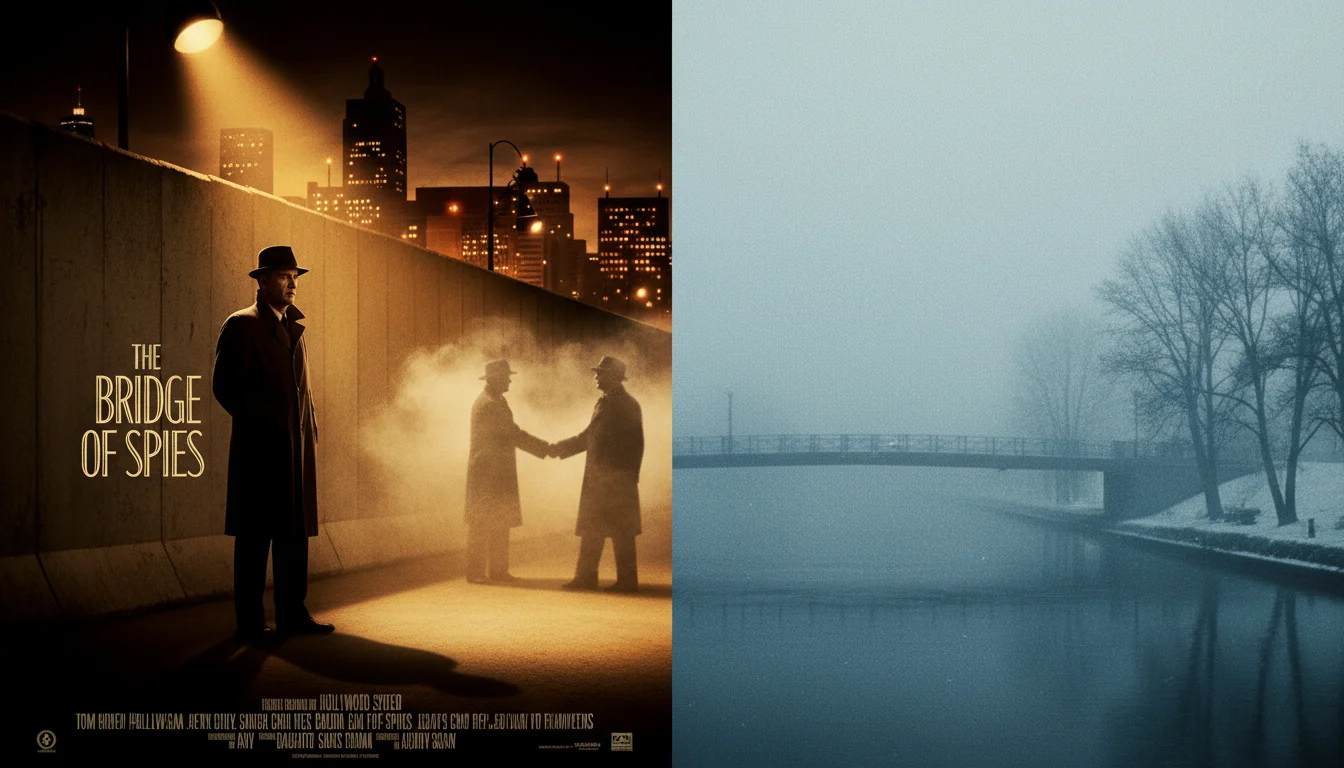
Steven Spielberg's Bridge of Spies (2015) tells one of the Cold War's most gripping true stories: the 1962 exchange of Soviet spy Rudolf Abel for downed American U-2 pilot Francis Gary Powers. With Tom Hanks playing the principled lawyer James B. Donovan and Mark Rylance delivering an Oscar-winning turn as the enigmatic Abel, the film received widespread acclaim for its historical authenticity.
Cold War historian James Hershberg called it "very accurate and faithful to the events." But like any Hollywood production, Bridge of Spies takes creative liberties. Here's what the film got right - and what it quietly changed.
What Hollywood Got RIGHT
The Core Story Is Remarkably Accurate
The fundamental narrative holds up beautifully. Rudolf Abel really was captured in 1957 after his alcoholic assistant Reino Hayhanen defected and betrayed him. Insurance lawyer James Donovan really was selected by the Brooklyn Bar Association to defend Abel, largely because of his experience at the Nuremberg trials. And Donovan really did convince the judge to spare Abel's life, arguing prophetically that the spy might someday be useful for a prisoner exchange.
Donovan's Constitutional Arguments
The film accurately portrays Donovan's defense strategy. He genuinely argued that Abel's Fourth Amendment rights had been violated when FBI agents seized him and searched his apartment without proper warrants. The case went all the way to the Supreme Court, where Donovan was granted an extraordinary 90 minutes for oral argument. In a remarkably close 5-4 decision, the government won - but four justices sided with Donovan, writing that "we must take care to enforce the Constitution without regard to the nature of the crime."
The Family Backlash
Hanks' portrayal of a man under siege from his own community rings true. The real Donovan and his family received threatening letters and phone calls. His wife Mary was asked by friends if her husband was "losing his mind." His daughter faced taunting from classmates. "My father says your father defends Communists," one eight-year-old told her.
The Glienicke Bridge Exchange
The climactic prisoner swap on February 10, 1962 is depicted with remarkable fidelity. The Glienicke Bridge really did connect Soviet-controlled East Berlin with the West, making it the perfect neutral ground. The simultaneous exchanges - Powers for Abel at the bridge, Pryor at Checkpoint Charlie - actually happened as shown.
Abel's Stoic Personality
Mark Rylance's understated performance captures something essential about the real Abel. When asked repeatedly if he was worried, the real spy reportedly gave similarly laconic responses. He maintained his silence through years of FBI interrogation, famously telling agents: "I'll talk with you about art, mathematics, photography, anything you want to talk about, but don't ask me about my intelligence background."
What Hollywood Got WRONG
The Shooting at Donovan's Home
The film shows someone firing through Donovan's windows - a dramatic scene that never happened. While Donovan's family did receive threatening phone calls and vindictive letters (forcing them to get an unlisted number), there was no gunfire incident. Hollywood added the scene for dramatic tension.
Abel's True Identity
Here's something the film mentions only briefly: the man known as "Rudolf Abel" wasn't Rudolf Abel at all. He was born William Fisher in Newcastle-upon-Tyne, England, in 1903, the son of a Bolshevik. The real Rudolf Abel was a different Soviet spy whose identity Fisher had assumed. American intelligence didn't discover this until after the Cold War ended. As one FBI agent recalled Abel saying, "American intelligence walks in baby shoes."
The Timeline Compression
The film dramatically compresses time. In reality, nearly five years passed between Abel's 1957 sentencing and the 1962 exchange. The movie makes it feel like months. The negotiations alone took several months of careful diplomatic maneuvering before Donovan ever set foot in Berlin.
Frederic Pryor's Entire Subplot
This is where the film takes its greatest liberties. The real Frederic Pryor wasn't trying to rescue a German girlfriend when he was arrested - he was returning library books. Yes, library books. The romantic subplot was invented entirely by Hollywood.
Pryor himself was never consulted for the film. After seeing it with his family, another moviegoer asked what he thought. "Parts of it were inaccurate," Pryor replied. When asked how he knew, he simply said, "I'm Frederic Pryor."
The real Pryor was a Yale economics graduate student doing research on trade behind the Iron Curtain. He was arrested because his dissertation research contained material the East Germans deemed confidential - not because of any dramatic rescue attempt.
The CIA as Adversaries
The film portrays CIA operatives as working against Donovan's efforts to include Pryor in the exchange, creating dramatic tension. In reality, while there were disagreements about priorities, the relationship was more collaborative than adversarial. Spielberg and the Coen Brothers (who co-wrote the script) heightened this conflict for storytelling purposes.
The Gang Stealing Donovan's Coat
Donovan never had his overcoat stolen by East German youths. In his memoir Strangers on a Bridge, he mentions nervously passing a group of young men but notes they gave him no trouble. He did develop a cold in Berlin - but from forgetting to turn on the heat in his lodgings, not from losing his coat.
The Verdict
Bridge of Spies Historical Accuracy Score: 8/10
Bridge of Spies earns high marks for capturing the spirit and major events of this remarkable Cold War episode. The core story - a principled lawyer defending an enemy spy, then negotiating his exchange for an American pilot - is faithfully rendered. Tom Hanks embodies the moral conviction of the real James Donovan, while Mark Rylance's Oscar-winning performance channels the enigmatic dignity of the spy who never broke.
Where the film stumbles is in its pursuit of Hollywood drama. The invented romance for Frederic Pryor, the shooting at Donovan's home, and the exaggerated CIA conflict all serve entertainment over accuracy. The real story was already compelling enough without embellishment.
Yet these changes feel minor compared to what the film gets right: the constitutional questions about defending the enemy, the courage required to stand against public opinion, and the quiet humanity possible even between Cold War adversaries. When Abel offers Donovan a painting upon their parting, it represents a genuine bond that transcended ideology.
In the end, Bridge of Spies succeeds where it matters most - reminding us that principles matter, especially when they're inconvenient. As the real Donovan said: "If the free world is not faithful to its own moral code, there remains no society for which others may hunger."
The spy exchange at Glienicke Bridge remains one of the Cold War's most dramatic moments. Spielberg captures its tension and significance, even if he occasionally colors outside the historical lines.
For another Cold War thriller tested against history, see our Argo vs. history breakdown of Ben Affleck's Oscar winner. The Munich accuracy review examines Spielberg's other Cold War-era espionage epic.

Debate the Accuracy with the Real Figures
Ask the real people what Hollywood got wrong about their lives.
Create your free account →No card required. Some figures and features require a paid plan.
Join the HistorIQly Club
Get smarter about the past.
Weekly stories, deep dives, and exclusive content straight to your inbox.