American Sniper vs. History: How Accurate Is Clint Eastwood's Controversial War Epic?
How does American Sniper historical accuracy hold up? We fact-check Chris Kyle's confirmed kills, the fabricated nemesis sniper, and what Clint Eastwood's film changed.
Read Wikipedia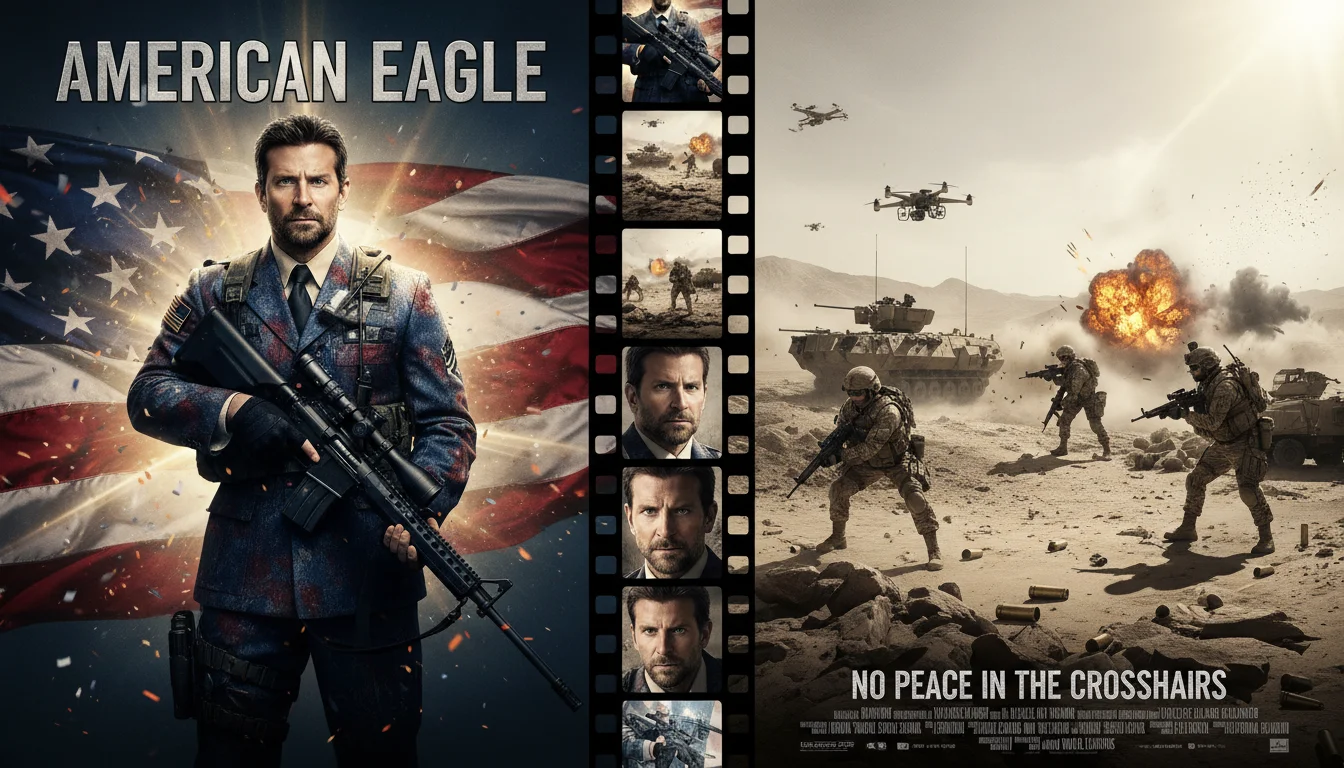
In 2015, Clint Eastwood's American Sniper became a cultural phenomenon, earning $547 million worldwide and six Academy Award nominations, including Best Picture. Bradley Cooper's portrayal of Navy SEAL sniper Chris Kyle sparked heated debates about war, heroism, and the nature of American military intervention.
But beneath the box office records and political controversy lies a more fundamental question: How accurate is the film?
The answer is complicated. American Sniper blends real events with Hollywood embellishments, creating a streamlined narrative that often diverges from Kyle's own 2012 autobiography. Here's what Hollywood got right, what it got wrong, and why it matters.
What Hollywood Got Right
The Confirmed Kill Count
The Pentagon's official count of 160 confirmed kills for Chris Kyle is accurately stated in the film. By Kyle's own account and those of his teammates, the actual number may have been closer to 255. Either way, Kyle surpassed the previous American record of 109 kills, held by Army Staff Sgt. Adelbert F. Waldron III from Vietnam.
The film correctly depicts the nature of "confirmed kills" - a witness must verify the death, and the sniper files an after-action report documenting the time, place, caliber used, distance, and circumstances.
Meeting Taya at a Bar
The romantic origin story is surprisingly accurate. Chris and Taya Kyle did meet in April 2001 at a San Diego bar called Maloney's. The drunken vomiting and dodged phone calls depicted in the movie? Those happened too.
The Marriage Strain
The film's portrayal of the toll combat took on Kyle's marriage rings true. Taya struggled to raise two children alone while living in constant fear her husband wouldn't return. When Chris came home on leave, he was often anxious and withdrawn. Taya did contemplate leaving him, and their marriage nearly ended - a fact Kyle himself acknowledged.
The Two Children
Like in the film, Chris and Taya had two children - a son named Colton and a daughter named McKenna, about a year and a half apart in age.
The Rodeo Background
Kyle really was a bronco rider before joining the Navy. A severe rodeo accident - when a bronco flipped in a chute and kicked him unconscious - ended that potential career and left him with pins in his wrists, broken ribs, a dislocated shoulder, and bruised organs.
The Bounty
Insurgents did place bounties on American snipers. The film states $180,000 on Kyle specifically, which is inflated - the real bounty was $20,000 on all snipers, though Kyle said it fluctuated up to around $80,000. His quip about not telling his wife "or she might take that number right now" comes directly from his real-life interviews.
What Hollywood Got Wrong
The Age at Enlistment
In the movie, Kyle says he's 30 when he enlists. In reality, he reported for Navy basic training in February 1999 at age 24 - a significant difference that affects the timeline of his entire story.
The Motivation to Enlist
The film shows Kyle watching news coverage of the 1998 U.S. embassy bombings in Tanzania and Kenya, then immediately deciding to join the SEALs. This didn't happen. Kyle had already been trying to enlist since 1996 but was rejected due to the pins in his arm from his rodeo accident. A Navy recruiter called him in late 1997-1998 to say they'd changed their minds. His decision to serve had nothing to do with terrorism - it was a lifelong ambition.
The First Kill
The movie's dramatic opening shows Kyle shooting both a woman and a child who were concealing a grenade. In his book, Kyle describes shooting only the woman - his first confirmed kill with a sniper rifle. There was no child. "It was my duty to shoot, and I don't regret it," he wrote, calling the woman "evil." The film adds the child for dramatic impact.
The Nemesis Sniper Mustafa
Here's the film's biggest fabrication. The movie creates an elaborate cat-and-mouse rivalry between Kyle and a Syrian Olympic marksman named Mustafa, culminating in Kyle's legendary 2,100-yard shot that kills his nemesis and avenges his fallen friend.
None of this happened.
In Kyle's autobiography, Mustafa is mentioned in a single paragraph as an enemy sniper "using his skills against Americans and Iraqi police and soldiers." Kyle wrote: "I never saw him, but other snipers later killed an Iraqi sniper we think was him."
Kyle did make a 2,100-yard kill shot - his longest confirmed kill - but it was against a random combatant on a rooftop about to fire an RPG at an Army convoy. Not Mustafa. Not revenge. Just another day in combat.
Ryan "Biggles" Job's Death
The movie shows Kyle's friend Ryan Job getting blinded by Mustafa, surviving briefly, and dying while Kyle is on his fourth tour. Kyle learns of the death in Iraq, driving him to finally kill Mustafa in revenge.
The real timeline is completely different. Ryan Job was blinded in 2006 when an enemy bullet struck his rifle and sent fragments through his face. But he didn't die soon after - he was discharged, got married, attended college, got a job, climbed Mount Rainier and Mount Hood. He died in 2009 from complications during facial reconstructive surgery, while his wife was pregnant with their first child.
The Dramatic Phone Call
The film's emotional climax shows Kyle using a satellite phone mid-battle to call Taya and tell her he's done with war. This never happened.
Kyle did use satellite phones to call home during lulls in combat. Once, fighting broke out while he was talking to Taya, and he dropped the phone without hanging up. She listened to the entire firefight for hours before the battery died. He didn't call back for two or three days. But there was no dramatic "I'm coming home" declaration after killing Mustafa - because he never killed Mustafa.
The Butcher
The film creates a theatrical villain called "The Butcher" who uses power drills to torture and kill children. While loosely inspired by the real Iraqi death squad leader Abu Deraa - who did use power drills - the character as depicted is a Hollywood invention designed to give Kyle clear-cut evil to fight.
Marc Lee's Disillusionment
In the movie, fellow SEAL Marc Lee becomes disillusioned with the war and argues with Kyle shortly before dying in combat. Kyle suggests this loss of faith caused his death.
Kyle's memoir tells a different story. He praises the letter Lee wrote to his mother and describes attending both a memorial service on base and paying graveside respects at the funeral. The film's version makes Kyle seem more callous than his actual writing suggests.
American Sniper Historical Accuracy Score: 5/10
American Sniper gets the broad strokes right - Kyle was a remarkable sniper who struggled with the transition back to civilian life, his marriage suffered under the weight of combat, and he ultimately devoted himself to helping other veterans before his tragic murder in 2013.
But the film fundamentally restructures his story for Hollywood purposes. The Mustafa subplot transforms a memoir about the grinding reality of urban warfare into a revenge thriller. The timeline compressions and invented scenes simplify complicated emotions into clear dramatic beats.
Most troublingly, the film omits Kyle's well-documented tendency toward embellishment. Claims he sniped looters after Hurricane Katrina, killed two carjackers in Texas, and punched Jesse Ventura in a bar fight all remain unsubstantiated - and the Ventura claim resulted in a $1.845 million defamation judgment against Kyle's estate.
The Verdict
American Sniper is effective filmmaking but unreliable biography. It captures something genuine about the psychological toll of combat while inventing key story elements wholesale. The real Chris Kyle's story is more complicated, more ambiguous, and ultimately more human than the myth Bradley Cooper portrays.
Eastwood's film works as a meditation on what war does to those who fight it. As historical record, it should be approached with considerable skepticism - which, given the debates it sparked, might have been the most American thing about it all along.
For more American war film accuracy, see our Platoon vs. history analysis for the Vietnam War perspective. The Zero Dark Thirty accuracy review covers America's post-9/11 wars.

Debate the Accuracy with the Real Figures
Ask the real people what Hollywood got wrong about their lives.
Create your free account →No card required. Some figures and features require a paid plan.
Join the HistorIQly Club
Get smarter about the past.
Weekly stories, deep dives, and exclusive content straight to your inbox.