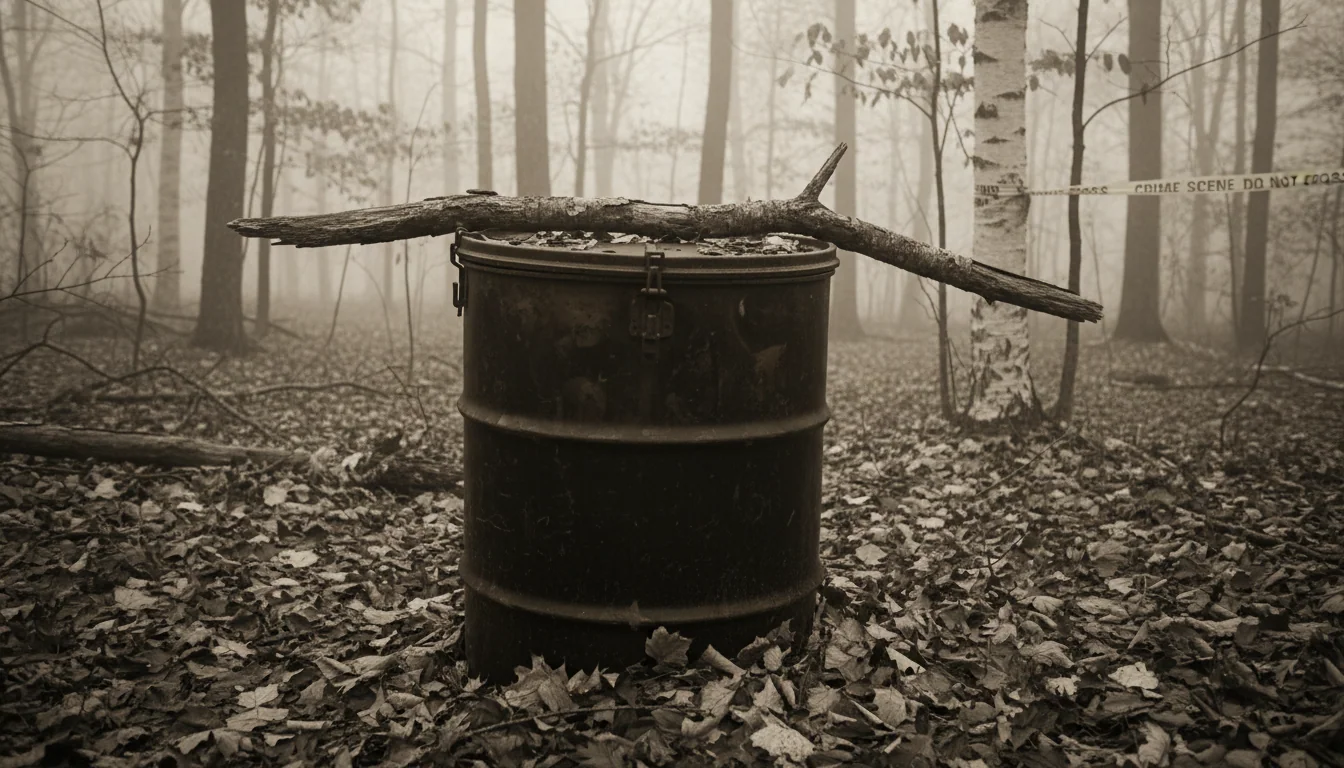
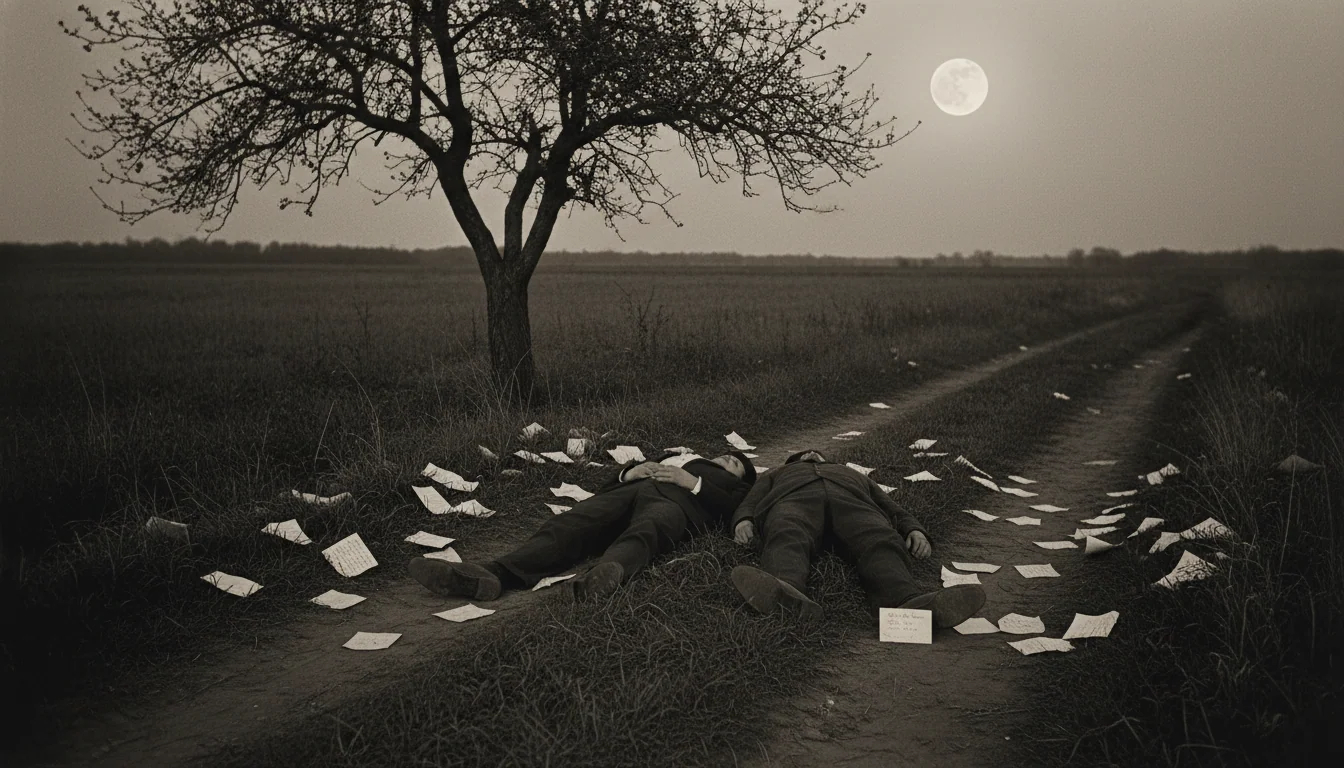
The Colonial Parkway Murders: Eight People, Four Crime Scenes, Zero Arrests
Between 1986 and 1989, four young couples were murdered along Virginia's scenic Colonial Parkway. More than 35 years later, the killer has never been found.
Read Wikipedia
The Colonial Parkway was supposed to be beautiful. A 23-mile scenic drive connecting Virginia's Historic Triangle - Jamestown, Williamsburg, and Yorktown - winding through forests and marshland, where tourists came to soak in America's colonial past.
Instead, it became a hunting ground.
Between 1986 and 1989, at least eight people died along this picturesque route. Young couples, out for a drive or parked in secluded spots, were ambushed, murdered, and in some cases, never seen again. Four separate incidents. Four double homicides. And after more than three decades, not a single arrest.
This is the story of the Colonial Parkway Murders - one of the most baffling unsolved serial killer cases in American history.
The First Victims: Cathleen Thomas and Rebecca Dowski
October 12, 1986
Cathleen Thomas, 27, was a graduate of the U.S. Naval Academy and a stockbroker. Rebecca Dowski, 21, was a college student. The two women had been dating and were found dead inside Cathleen's white Honda Civic, pushed off an embankment near the York River overlook.
Both had been strangled. Their throats were slashed. Diesel fuel had been poured over the car and set alight - but the fire failed to fully ignite, leaving behind crucial evidence.
The brutality was chilling. The location - an isolated lovers' lane spot along the parkway - suggested the killer knew the area well. But there were no witnesses. No suspects. Just two young women, dead in the dark.
The Second Attack: David Knobling and Robin Edwards
September 23, 1987
Nearly a year later, David Knobling, 20, and Robin Edwards, 14, went missing after a date. David's pickup truck was found abandoned at the Ragged Island Wildlife Refuge, just off the parkway.
Three days later, their bodies were discovered on the nearby shoreline. Both had been shot in the back of the head, execution-style. Robin's body was found first, partially clothed. David's was discovered later, fully clothed, about 50 feet away.
The killer had struck again - this time with a different method, but the same pattern: a young couple, a secluded spot, a vicious attack.
The Third Mystery: Richard Call and Cassandra Hailey
April 10, 1988
Richard "Keith" Call, 20, and Cassandra Hailey, 18, were college sweethearts. They left for a party on a Friday night and never came home.
Keith's red Toyota Celica was found abandoned along the parkway, pushed into the woods with the driver's door open, the radio still on, and Keith's wallet on the dashboard. There was no sign of a struggle. No blood. Just an empty car.
Their bodies have never been found.
To this day, Cassandra and Keith remain missing. Presumed dead, but with no physical evidence, no crime scene, no closure. Just the eerie image of an abandoned car with the door left open, as if they had simply walked away.
The Fourth Tragedy: Annamaria Phelps and Daniel Lauer
September 5, 1989
Annamaria Phelps, 18, and Daniel Lauer, 21, were siblings-in-law on their way to Virginia Beach for Labor Day weekend. They never arrived.
Their car was found at a rest area along Interstate 64, not far from the parkway. Two months later, in October, their skeletal remains were discovered in the woods near the highway. Cause of death: undetermined. Too much time had passed.
Like the others, they were young. Like the others, they were traveling in pairs. And like the others, they had encountered someone - or something - that ended their lives.
One Killer or Many?
Here's where things get complicated.
The FBI officially links only the first two cases (Thomas/Dowski and Knobling/Edwards) as definite victims of the same killer. The evidence is strong: proximity, timing, victimology.
But investigators have long suspected all four incidents are connected:
- Geographic clustering: All occurred within a 30-mile radius along or near the Colonial Parkway
- Victim profile: Young couples, late teens to mid-20s
- Isolated locations: Lovers' lanes, rest stops, secluded spots
- Time frame: All within a three-year window (1986–1989)
- No witnesses: Despite multiple attacks, no one saw anything
The differences in method - strangulation and arson vs. gunshots vs. unknown cause - have fueled debate. Could one killer have changed tactics? Or were these separate predators who happened to hunt the same stretch of road?
Most investigators believe it was one person. Someone familiar with the parkway. Someone who knew where couples went to be alone. Someone who could blend in, approach without alarm, and disappear without a trace.
The Polaroid Leak
In 2014, the case took a bizarre turn.
Crime scene photos - explicit, disturbing images of one of the female victims - were leaked online. The photos had been in FBI possession for decades. Their sudden appearance on the internet shocked investigators and devastated the victims' families.
The FBI launched an internal investigation. No one was ever charged. The leak raised uncomfortable questions: How secure was the evidence? Who had access? And why would someone release such horrific images?
The incident reignited public interest in the case but provided no new leads.
Suspects and Theories
Over the years, several suspects have been considered:
Fred Atwell
A former deputy sheriff who claimed to have inside knowledge of the murders. He passed a polygraph but provided no actionable evidence. Many believe he was seeking attention.
Daniel Plott
A convicted rapist who was in the area during the murders. DNA testing in the 2000s ruled him out as a suspect in the Thomas/Dowski case.
The Serial Killer Theory
Some investigators believe the killer may have been a law enforcement officer or someone posing as one. This would explain:
- How victims were approached without alarm
- The lack of witnesses
- The killer's knowledge of police procedures
- The ability to control crime scenes
The Copycat Theory
Others suggest the later murders (Call/Hailey and Phelps/Lauer) were not connected to the first two. Perhaps someone read about the earlier killings and decided to copy them.
The Random Predator Theory
It's also possible the killer was an opportunist - someone who prowled the parkway looking for vulnerable targets. When the killings stopped in 1989, he may have moved, died, or been imprisoned for other crimes.
Why Did the Killings Stop?
This is one of the most haunting questions.
If it was a serial killer, why did the murders cease after 1989? Serial killers rarely stop on their own. Possible explanations:
- He died or was incarcerated for another crime
- He moved away from the area
- He was scared off by increased police presence
- He changed his hunting grounds to avoid detection
Or maybe he didn't stop. Maybe there are other victims we don't know about yet.
The Investigation Today
The Colonial Parkway Murders remain an active cold case. The FBI, Virginia State Police, and local agencies continue to follow leads, though resources have dwindled over the decades.
DNA technology has advanced significantly since the 1980s. Investigators have resubmitted evidence for testing, hoping for a breakthrough. But so far, nothing definitive has emerged.
In recent years, genetic genealogy - the technique that cracked the Golden State Killer case - has been explored as a potential tool. If the killer left DNA at any of the crime scenes, there's a chance his identity could be uncovered through familial matches.
But that's a big "if."
The Families Still Waiting
For the families of the victims, the passage of time has brought no peace.
Cassandra Hailey's brother has become a vocal advocate, keeping the case in the public eye. The Call family still holds out hope that their son's remains will be found. The parents of Annamaria Phelps have passed away without ever learning what happened to their daughter.
These weren't just statistics. They were children, siblings, friends, lovers. They had futures. And someone took all of that away.
The Unanswered Questions
More than 35 years later, the questions remain:
- Was it one killer or multiple?
- Why were the victims all couples?
- How did the killer approach them without raising alarm?
- Why did the murders stop?
- Are there other victims we don't know about?
- Will advances in DNA technology finally bring justice?
And the biggest question of all: Who did this?
A Road Still Haunted
Today, the Colonial Parkway is still a scenic drive. Tourists still visit Jamestown, Williamsburg, and Yorktown. Couples still park at overlooks to watch the sunset over the James River.
But those who know the history can't help but feel a chill.
Somewhere out there - alive or dead - is the person who turned a beautiful road into a killing field. And somewhere, buried in decades of evidence, witness statements, and forensic files, may be the one clue that finally solves the case.
Until then, the Colonial Parkway Murders remain what they have been for over three decades: a mystery without an ending.
For another multi-victim unsolved case, see our Atlanta child murders breakdown. Our Long Island Serial Killer case examines similar patterns in another unsolved serial killing investigation.
If you have information about the Colonial Parkway Murders, contact the FBI's tip line at 1-800-CALL-FBI or submit tips online at tips.fbi.gov.

Want to Interrogate the Suspects?
Chat with historical figures and uncover the truth behind history's greatest mysteries.
Create your free account →No card required. Some figures and features require a paid plan.
Join the HistorIQly Club
Get smarter about the past.
Weekly stories, deep dives, and exclusive content straight to your inbox.