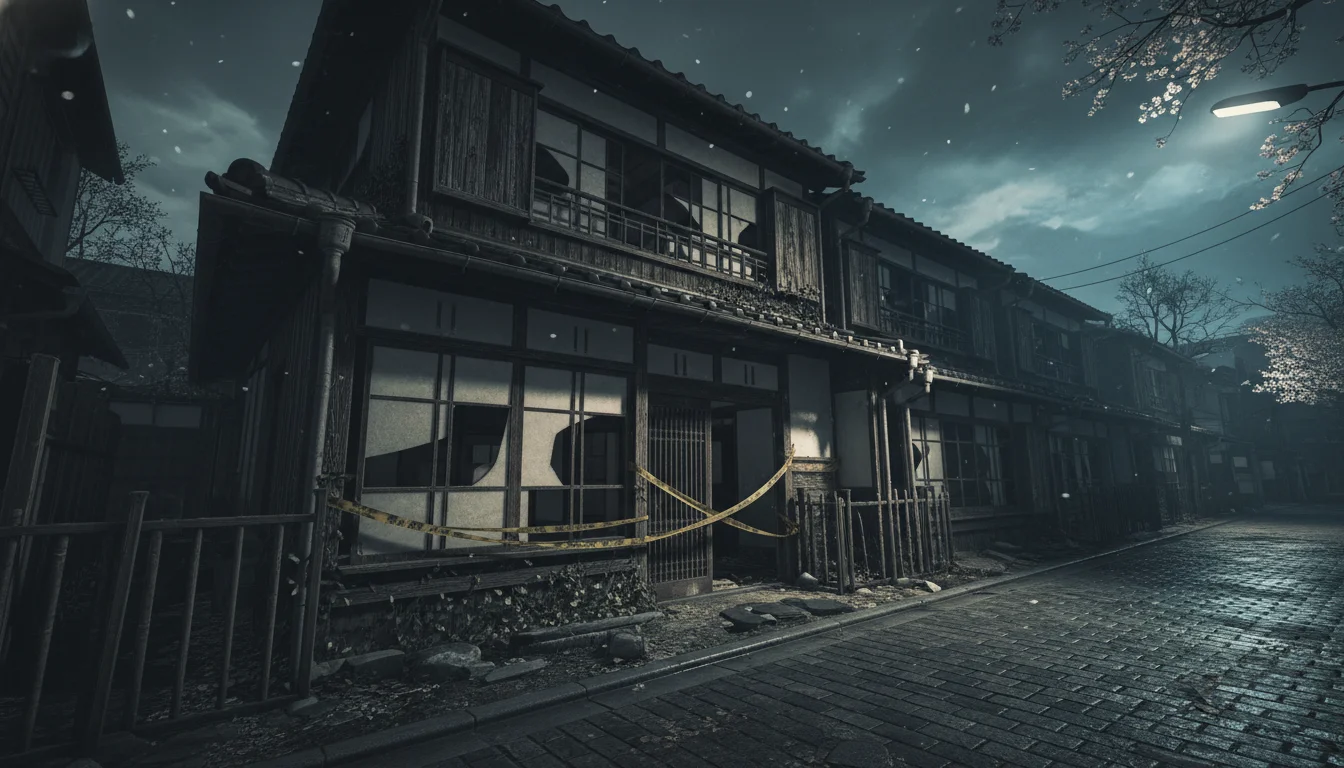
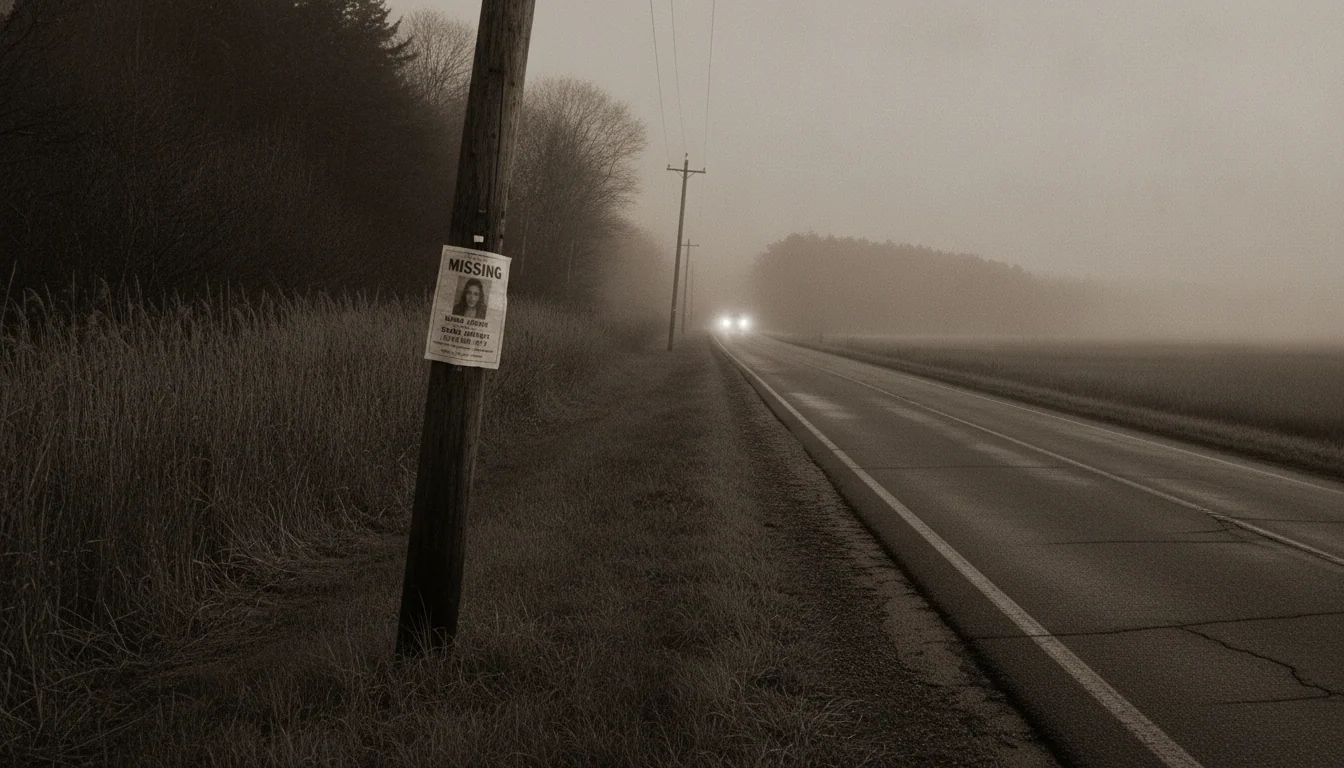
The Hall-Mills Murders: New Jersey's Most Theatrical Crime
The Hall-Mills murders of 1922 remain unsolved: a minister and choir singer found dead under a crab apple tree in New Jersey, their love letters scattered around them.
Read Wikipedia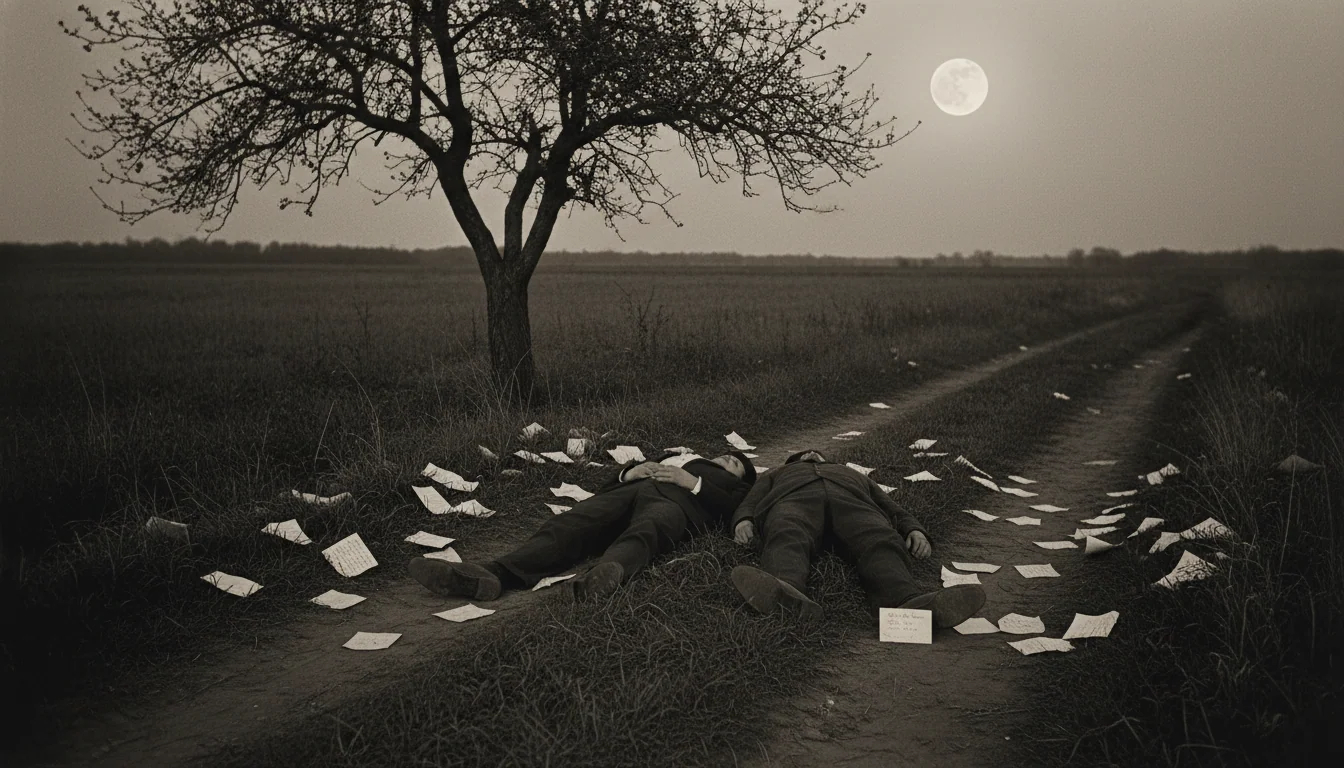
On the morning of September 16, 1922, a farm worker taking a shortcut across a weedy field outside New Brunswick, New Jersey, found two bodies arranged beneath a crab apple tree on a cart track called De Russey's Lane. They were lying side by side, almost as if placed. A man's calling card had been propped against his shoe. Love letters were scattered around them in the autumn grass - pages of passionate correspondence between a minister and a married woman who sang in his choir. Whoever killed them had turned the scene into a spectacle, and the spectacle would run for the next four years.
The Hall-Mills case became the most covered American crime of the 1920s, a decade not short of competition. It had every ingredient a tabloid editor could want: a dead clergyman, a dead choir singer, their scattered love letters, a wealthy aristocratic wife who might have ordered the killings, and a parade of witnesses who were either lying, unreliable, or both. By the time the trial finally opened in Somerville, New Jersey, in November 1926, over 300 reporters had descended on the courthouse, a film crew was set up outside, and the gallery filled to capacity every day.
The murderer, or murderers, were never identified. The case is still open.
The victims
Reverend Edward Wheeler Hall was 41 years old, the respected rector of Saint John the Evangelist Episcopal Church in New Brunswick, and the husband of Frances Stevens Hall, a wealthy woman from one of New Jersey's most prominent families. Eleanor Mills was 34, married to the church sexton, a mother of two, and by the evidence of the letters scattered around her body, deeply in love with the Reverend Hall for at least four years.
Hall had been shot once through the head. Mills had been shot three times and her throat had been cut so deeply that her head was nearly severed. The difference in manner of death has struck investigators ever since: the minister was killed efficiently, the woman with extreme violence. If both were killed by the same person or persons, there was apparently far more fury directed at Eleanor Mills.
The love letters, which newspapers would eventually publish in agonizing detail, were passionate and incriminating. In one, Mills wrote of hoping they could one day "stand before God" together. Hall wrote of his love as "a great masterpiece." The letters suggested an affair ongoing for years that was not a secret to everyone who knew the couple.
The investigation collapses
The initial investigation was a disaster. The Somerset County prosecutor, Azariah Beekman, was unprepared for a case of this scale. The crime scene was contaminated within hours: sightseers walked through the field, picked up evidence, removed items as souvenirs. A footprint was obliterated. Shell casings may have been taken. By the time proper investigators arrived, the physical evidence had been compromised in ways that proved permanent.
Frances Stevens Hall and her brothers Henry and Willie Stevens came under suspicion almost immediately. Frances was the widow of a prominent man, from a family with social connections that gave local police reason to tread carefully. Henry Stevens was an avid hunter and crack shot with no verified alibi for the night of the murders. Willie Stevens, an eccentric bachelor who later became the subject of tabloid ridicule about his intelligence, had reportedly been seen in the vicinity.
The county prosecutor declined to charge anyone. The case was effectively closed within weeks.
The Hearst reopening
The case might have faded permanently except for the New York Daily Mirror, a tabloid owned by William Randolph Hearst. In 1926, the Mirror ran a series of articles claiming new evidence and a fresh look at the Stevens family. Whether this was investigative journalism or a circulation campaign - or both - it worked. The New Jersey governor authorized a new grand jury investigation.
In July 1926, nearly four years after the murders, Frances Hall and brothers Henry and Willie were indicted for the deaths of both victims. A cousin, Henry Carpender, was indicted separately.
The prosecution's star witness was Jane Gibson, a local woman who raised pigs on a farm near the murder site. Gibson claimed that on the night of September 14, 1922, she had ridden her mule out to the field to investigate corn thieves and witnessed a confrontation near the crab apple tree. In the moonlit darkness, she said, she heard shots and screaming, a woman's voice saying "Henry," and another voice demanding someone "explain these letters." She claimed to have seen figures in the field.
The problem was that Gibson's story had shifted considerably between 1922 and 1926. Details changed. Her eyesight, tested at trial, was found to be poor. The defense dismantled her credibility methodically.
The trial
The Hall-Mills trial opened on November 3, 1926, in Somerville. It was one of the first trials to be extensively covered by radio. H.L. Mencken reported for the Baltimore Sun. Damon Runyon filed dispatches. Mary Roberts Rinehart, then one of the most popular mystery writers in the country, covered it for the New York Times. The atmosphere was closer to a theatrical event than a judicial proceeding.
The prosecution's case rested on the love letters, the Jane Gibson testimony, and a fingerprint on one of the calling cards found at the scene - later attributed to Willie Stevens, though the chain of custody was sufficiently compromised that the court treated it skeptically. The bullets could not be conclusively tied to any weapon connected to the defendants.
Jane Gibson appeared on a hospital bed, gravely ill. She pointed at Frances Hall and declared, "There she sat - that woman, Frances Hall." It was theater. The defense argued it was nothing else.
Robert McCarter, leading the defense, dismantled Gibson's credibility over several days, pointing to inconsistencies between her 1922 and 1926 statements, her poor eyesight, and the darkness of the field that night. He also pressed the prosecution on the four-year gap between the murders and the indictments, which he characterized as evidence that the case had been rebuilt around Hearst's newspaper coverage rather than genuine evidence.
On December 3, 1926, all three Stevens defendants were acquitted. The jury deliberated for less than five hours.
What we still don't know
The case has drawn serious investigators for a century, and a few alternative theories have accumulated. For other American murders that similarly resisted resolution despite intense public attention, see the Lizzie Borden case and the Villisca axe murders.
Some researchers have pointed to the Ku Klux Klan, which was experiencing a national revival in the early 1920s and had active chapters in New Jersey. The theatrical staging of the bodies, with love letters scattered around them as a form of public punishment, fits a vigilante logic at least as well as a jealous-wife motive. The Klan of this period occasionally targeted what it considered moral transgressors, and the display of the letters suggests intent to shame.
Others have examined the church community more carefully, looking at individuals who were connected to both victims but were never seriously questioned in the original investigation. The collapse of the 1922 crime scene means that several potential witnesses were never interviewed before memories faded and stories could be coordinated.
The calling card propped against Reverend Hall's shoe has troubled analysts for a long time. It was his own card, placed deliberately. If the killers were strangers, why leave it? If they were known to the victims, why advertise who had been found? The gesture reads as a signature or a message, but one without a confirmed author.
Nothing has been resolved. The crab apple tree is gone. The field became a residential neighborhood. The love letters that started everything were eventually digitized and are now accessible at the New Brunswick Free Public Library.
The Hall-Mills murders remain unsolved after more than a century: a case in which the physical evidence was destroyed before investigators could reach it, the most important witness was probably unreliable, the most credible suspects were acquitted, and the crime scene was turned into a tourist attraction before the bodies were cold.
Whether Frances Hall ordered the killings or a vigilante group executed its own punishment or someone else entirely did it for reasons never surfaced, the record contains no answer that has held up under scrutiny. The spectacle that began under a crab apple tree on the night of September 14, 1922, has simply never ended.
Quick Answers
Common questions about this topic
Who were the victims in the Hall-Mills case?
Reverend Edward Wheeler Hall, rector of Saint John the Evangelist Episcopal Church in New Brunswick, New Jersey, and Eleanor Mills, a married choir singer in his congregation. Their bodies were found on September 16, 1922, under a crab apple tree on De Russey's Lane, with Hall shot once through the head and Mills shot three times, her throat cut.
Who were the main suspects in the Hall-Mills case?
Frances Stevens Hall, the reverend's wife, and her brothers Henry and Willie Stevens were the primary suspects. A cousin, Henry Carpender, was also charged. All were acquitted at the 1926 trial after a six-week proceeding that drew more than 300 reporters.
What was the Pig Woman's role in the case?
Jane Gibson, a local pig farmer, claimed to have witnessed a confrontation near the murder scene on the night of the killings. Her testimony was dramatic but inconsistent across interviews. She appeared in court on a hospital bed, dying of cancer. The defense successfully dismantled her credibility.
Has the Hall-Mills case ever been solved?
No. All four defendants were acquitted in December 1926. No one has ever been charged since. New Jersey investigators have reviewed the file multiple times in subsequent decades, most recently in the early 2020s, without finding physical evidence capable of supporting a new prosecution.

Want to Interrogate the Suspects?
Chat with historical figures and uncover the truth behind history's greatest mysteries.
Create your free account →No card required. Some figures and features require a paid plan.
Join the HistorIQly Club
Get smarter about the past.
Weekly stories, deep dives, and exclusive content straight to your inbox.