Conclave vs. History: How Accurate Is the Papal Election Drama?
Edward Berger's Conclave delivers remarkable conclave movie accuracy for its Sistine Chapel rituals and ballot procedures, while dramatizing the politics freely.
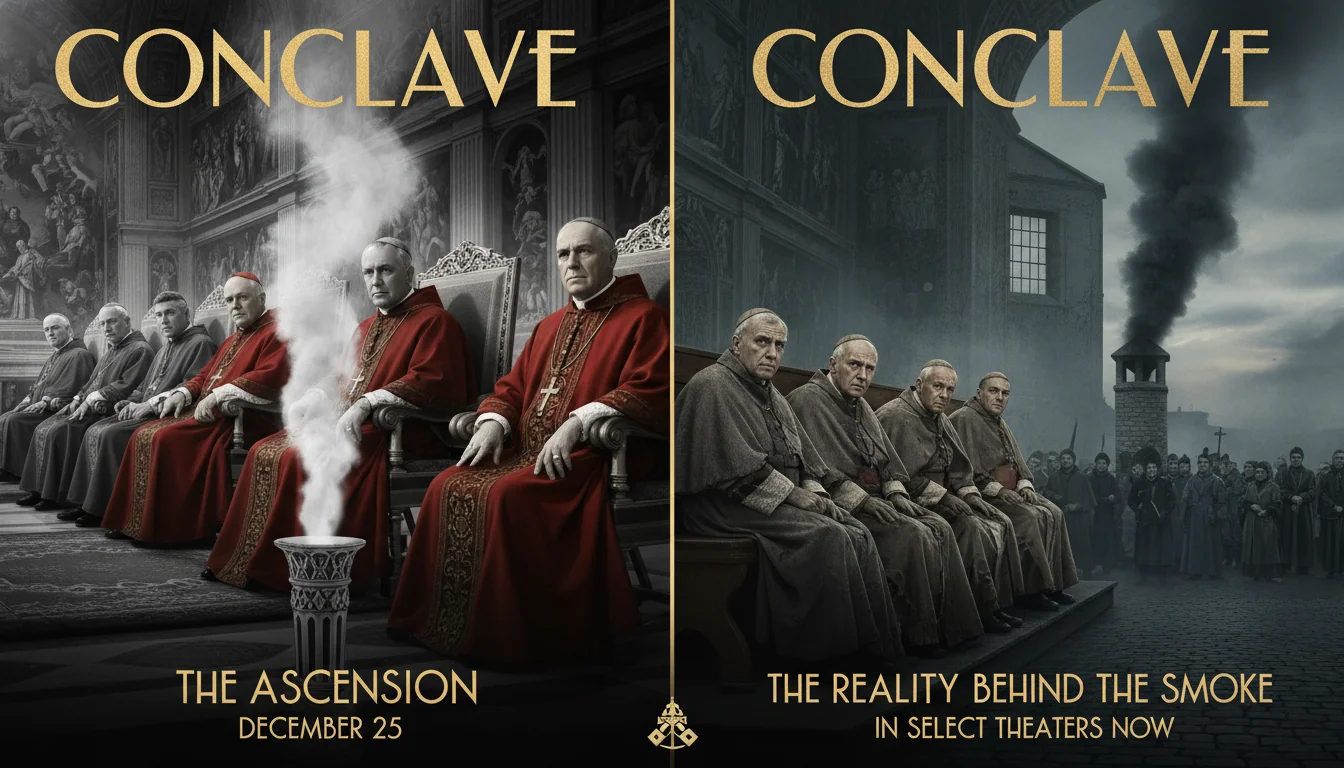
When Conclave arrived in late 2024, directed by Edward Berger and adapted from Robert Harris's 2016 novel, it surprised a lot of people by being a hit. A two-hour drama set almost entirely inside one Vatican building, in which most of the action consists of older men in red walking very slowly down very long corridors and casting paper ballots, became one of the year's most talked-about films and an Oscar contender. Ralph Fiennes anchors it as Cardinal Lawrence, the dean of the College of Cardinals, who is responsible for running the election after the death of a beloved liberal pope.
It is not based on a true story. The pope, his successor, and every cardinal in the room are fictional. But the procedure is so heavily researched and so closely tracked from the real apostolic constitution governing modern papal elections that the film functions, almost in spite of itself, as the best dramatized civics lesson on conclaves the public has ever had. Below, we go through what Conclave gets right, what it stretches, and the one major plot point that occupies a peculiar canonical grey zone.
What Hollywood Got RIGHT
The opening, the death, and the destruction of the ring
The film opens with the death of an unnamed pope. Cardinal Lawrence, as dean, takes charge. The Camerlengo (the cardinal in charge of the Apostolic Camera) verifies the death and oversees the destruction of the late pope's Ring of the Fisherman, the gold seal ring used to authenticate papal documents. This entire sequence is procedurally correct. Until 2013 the ring was physically smashed with a small ceremonial hammer; under Pope Francis the practice shifted to a deep ceremonial defacement with a chisel. Either way, the gesture is real and is meant to prevent forgery in the interregnum.
Universi Dominici Gregis
The constitution that actually governs modern conclaves is Universi Dominici Gregis, promulgated by John Paul II in 1996 and amended by Benedict XVI in 2007 and 2013. The film follows it with respectful precision. The fifteen-day waiting period between the death of a pope and the start of a conclave (extendable to twenty), the housing of the cardinal electors at the Casa Santa Marta, the morning bus ride to the Sistine Chapel, the Latin oath of secrecy taken on the Gospels, the ballot formula Eligo in Summum Pontificem, the burning of the ballots after each session: every one of these details is in the constitution and every one of them appears on screen.
The lockdown of the Sistine Chapel
After the dean recites the oath and reads the formula, the master of liturgical celebrations, Archbishop Diego Ravelli in real life, calls out extra omnes. Everyone who is not a cardinal elector leaves. The doors are sealed. The cardinals are forbidden, under penalty of automatic excommunication, from communicating with the outside world. Their phones are confiscated. The chapel itself, along with the Casa Santa Marta, is swept by the Vatican Gendarmerie for listening devices and signal jammers are installed. Conclave shows all of this almost beat-for-beat, including the ritual sweep.
The two-thirds majority and the ballot rounds
A pope must be elected by a two-thirds supermajority of the electors present. There are normally up to four ballots a day, two in the morning and two in the afternoon, with the smoke signals after each pair. If after roughly thirty-three or thirty-four ballots no candidate has reached the threshold, the cardinals can vote to enter a runoff between the two top candidates, but a two-thirds majority is still required. The film's increasingly tense progression through the rounds, the slow narrowing of contenders, and the reshuffling of factions after each vote is faithful to how real conclaves are widely reported to feel.
The smoke
Black smoke means no decision. White smoke means a new pope. The chemistry is real. Since 2005 the Vatican has used two distinct chemical mixes for the stove, plus a parallel chimney to ensure the color is unmistakable. The film shows the technician preparing the cartridges and feeding them in. It also gets the bell right: in 2013 the Vatican added the additional confirmation of ringing the great bell of St. Peter's when white smoke is produced, after the 2005 white-smoke ambiguity left the press uncertain for almost an hour.
The Casa Santa Marta and the politicking
Real conclaves are decided not just inside the Sistine Chapel but in the corridors, the dining hall, and the rooms of the Casa Santa Marta, the residence John Paul II commissioned in 1996 specifically to house electors during the conclave (and which Pope Francis later made his permanent residence). The film's quiet conversations over dinner, in stairwells, and in shared bathrooms are a faithful depiction of how the actual canvassing happens. Cardinals do not vote randomly. They sound each other out for days.
What Hollywood Got WRONG
The pace and timing of revelations
Real conclaves are very fast by historical standards. The 2005 election of Benedict XVI took two days and four ballots. The 2013 election of Francis took two days and five ballots. Conclave stretches its drama across a longer process and inserts revelations between ballots that, in practice, would be almost impossible to surface inside the Sistine Chapel's strict information lockdown. The cardinals are physically cut off; they cannot place a phone call to verify a rumor about another cardinal's past. The film smuggles its plot beats in via couriered documents and whispered scandals that the real procedure is specifically designed to prevent.
The terror attack
Without spoiling the specifics, Conclave uses an act of violence against Vatican City as a major dramatic turn that influences the final vote. There is a precedent: cardinals have on occasion received outside news during conclaves through messengers who pass written notes through the wheel-windows used for delivering meals (this method has now been replaced by direct internal service). But the idea that the College would receive, debate, and vote on a major external event in real time, while remaining sealed, runs against the whole point of the lockdown.
The atmosphere of factions
The film leans into a clean ideological division between liberal and conservative cardinals, with named candidates standing in for each camp. Real conclaves are messier. Cardinals vote on theological grounds, geographic grounds, personality grounds, and language grounds simultaneously. African and Asian cardinals do not slot neatly into European left-right binaries. The film's two-camp setup is a clarifying simplification, not a portrait of how the College actually divides.
The ending (canonical grey zone)
This is where Conclave is at its most provocative and where Catholic canonists are most divided. The film's late-stage reveal about its eventual pope is canonically possible in the narrowest technical sense, but would also trigger an immediate and serious procedural crisis. The conditions for valid election in Universi Dominici Gregis are explicit and would, by most readings, become problematic the moment the new pope's biographical facts became public. The film glides past this as if the matter were settled. It is not. It is the kind of question that would generate decades of canonical literature.
Cardinal Lawrence's freedom of action
Ralph Fiennes's character, as dean, exercises a degree of independent investigative authority during the conclave that exceeds his actual canonical role. The dean presides, administers oaths, and supervises the count. He does not have a free hand to interrogate other cardinals about scandals during the voting period. The film treats the dean as an internal detective. Real deans manage the procedure rather than direct an inquiry.
What it gets exactly right that no one will notice
A few details Conclave gets right that even seasoned Vatican watchers tend to miss. Cardinals over 80 cannot vote, but they can be present at the general congregations before the conclave begins, and the film correctly shows that distinction. The single permitted Mass each morning of the conclave is celebrated in the Pauline Chapel rather than the Sistine, and the film gets that staging right. The Latin oath includes the phrase contra quamlibet saecularem potestatem, swearing to resist secular pressure, and the film includes it. These are small but the kind of detail you only get from a production team that read the actual constitution.
Historical Accuracy Score: 8/10
Conclave is one of the most procedurally accurate Vatican dramas ever filmed. It treats the actual rules as a source of dramatic tension rather than as obstacles to be ignored, and it lets its plot turn on the same secrecy, ritual, and supermajority arithmetic that govern real conclaves. The drama is fictional, but the building, the words, the ballots, and the smoke are real.
What the film gets most right: the procedural architecture of a modern conclave, from the destruction of the ring to the chemistry of the smoke. If you want a working understanding of how a pope is actually elected, this is the best dramatized primer available.
What it gets most wrong: the porousness of the lockdown, the speed at which scandals can surface mid-vote, and the canonical neatness of its final twist.
The bottom line is that Conclave takes the most secretive election on earth and shows it with more accuracy than most viewers had any reason to expect. It bends the rules where it must to tell its story, but the bones are real. The next time you see white smoke over the Sistine Chapel, the film will have prepared you better than almost any television commentary.
For more on the world that shaped the Vatican's power, see the guide to Byzantine Constantinople in 540 and Medieval Venice in 1300.
Quick Answers
Common questions about this topic
Is Conclave based on a true story?
No. Conclave is adapted from Robert Harris's 2016 novel of the same name. The pope, the cardinals, and the storyline are fictional. But the procedure depicted, the sealed Sistine Chapel, the ballot burning, the two-thirds majority, is taken from the actual rules that govern modern conclaves, codified by Pope John Paul II in 1996 and amended by Benedict XVI in 2007 and 2013.
How accurate is the Conclave movie?
Procedurally, very. The film follows the apostolic constitution Universi Dominici Gregis with surprising fidelity. The ritual oaths, the housing of cardinals at the Casa Santa Marta, the lockdown of the Sistine Chapel, the Latin ballot formula, the daily mass, and the smoke signals are all real. The personalities and the political twists are dramatic invention.
Could a cardinal really be elected the way it happens in the film?
Technically yes, with major qualifications. The College of Cardinals can elect any baptized Catholic male, not just one of their own number, although in practice no one outside the College has been chosen since 1378. The film's late-stage reveal would be canonically possible but would also produce an immediate canonical crisis the movie does not address.
What does extra omnes mean?
It is the Latin command, meaning 'everyone out,' that the master of liturgical celebrations issues to expel non-electors from the Sistine Chapel before voting begins. After it is spoken, the doors are sealed and the cardinal electors are bound to absolute secrecy under pain of automatic excommunication.

Debate the Accuracy with the Real Figures
Ask the real people what Hollywood got wrong about their lives.
Chat with HistoryJoin the HistorIQly Club
Get smarter about the past.
Weekly stories, deep dives, and exclusive content straight to your inbox.