The Last King of Scotland vs. History: How Accurate Is the Idi Amin Drama?
The Last King of Scotland historical accuracy: the film captures Idi Amin's charisma and terror, but how closely does it follow the real history of Uganda under his rule?
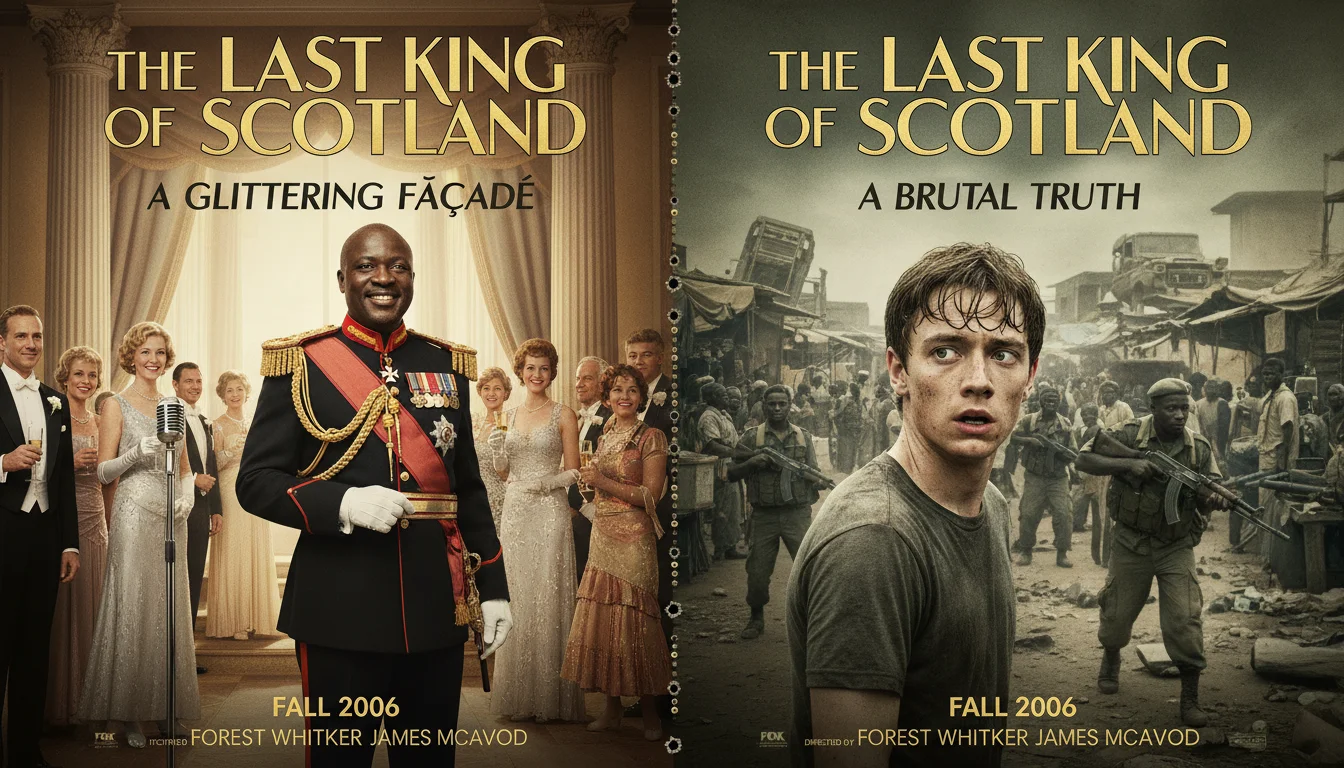
The Last King of Scotland is one of those historical films that feels disturbingly real even when you know parts of it must be fictionalized. Kevin Macdonald's 2006 film, anchored by Forest Whitaker's terrifyingly magnetic performance as Ugandan dictator Idi Amin, follows a young Scottish doctor, Nicholas Garrigan, who becomes Amin's personal physician and is gradually pulled into the orbit of a murderous regime. Whitaker deserved every bit of his Oscar, and the movie succeeds powerfully as a portrait of seduction, denial, and political horror.
But how much of it actually happened? (For another fact-check of a major film about 20th-century African violence, see our look at Hotel Rwanda; for a dictator biopic of a different era, Bonnie and Clyde.)
The short answer is that The Last King of Scotland is historically accurate where it matters most, especially in its depiction of Amin's personality, the atmosphere of fear in 1970s Uganda, and the brutality of his rule. At the same time, the film's central white protagonist is fictional, several events are compressed or rearranged, and some of Amin's actions are dramatized to fit a thriller structure.
What Hollywood got RIGHT
The film gets Idi Amin himself remarkably right. Contemporary witnesses often described him as charming, funny, impulsive, and capable of disarming warmth in private. That surface charisma was one of the reasons he remained such a dangerous figure. Amin could make journalists, diplomats, and visitors feel they were in the presence of a larger-than-life populist leader. Then, almost without warning, he could order arrests, torture, or executions. The movie captures that volatility extremely well.
It also gets the broad political history right. Amin did seize power in a 1971 military coup while President Milton Obote was out of the country. Many Ugandans initially welcomed the coup, hoping Amin would restore order after growing political repression and ethnic favoritism under Obote. That early optimism did not last. Amin's regime quickly turned violent, paranoid, and deeply unstable, relying on loyal military units and secret police while eliminating perceived rivals.
The film is also accurate in showing that Amin cultivated ties with Britain, Israel, and the West early in his rule before later pivoting toward Libya and the Arab world. That shift really happened. So did his increasingly theatrical anti-colonial rhetoric and his habit of inventing absurd titles for himself. Amin genuinely styled himself with grandiose honors, including the bizarre title that inspired the film's name: "His Excellency, President for Life, Field Marshal Al Hadji Doctor Idi Amin Dada, VC, DSO, MC, Lord of All the Beasts of the Earth and Fishes of the Sea and Conqueror of the British Empire in Africa in General and Uganda in Particular."
One of the film's strongest historical points is its depiction of state terror. Amin's Uganda was a place where disappearance, torture, and arbitrary murder became routine. Estimates vary, but somewhere between 100,000 and 300,000 people were killed during his rule from 1971 to 1979. Soldiers and intelligence agents targeted ethnic groups, political opponents, intellectuals, judges, clergy, and ordinary civilians. The film's constant undercurrent of dread is not an exaggeration. If anything, reality was worse.
The expulsion of Uganda's Asian population in 1972 is another major event the movie handles accurately. Amin ordered tens of thousands of Asians, many of whom had lived in Uganda for generations, to leave the country within 90 days. He framed it as economic nationalism and anti-colonial justice, but in practice it devastated the Ugandan economy and enabled massive looting and corruption. The film correctly presents this as one of the regime's defining acts.
What Hollywood got WRONG
The biggest invention is Nicholas Garrigan himself. He is not a real historical figure but a fictional character adapted from Giles Foden's novel. Amin did employ foreign advisers, doctors, and hangers-on, and some outsiders were indeed seduced by his charisma before grasping the full horror of his regime. But Garrigan as the intimate Scottish insider at the center of the story is a narrative device.
That fictional choice matters because it turns Ugandan history into a story filtered through a white outsider's awakening. The film is gripping, but it means Ugandan victims, officials, dissidents, and survivors often remain in the background of their own tragedy. In reality, countless Ugandans understood Amin far better and resisted him at far greater personal risk than the movie's protagonist ever does.
The movie also condenses events and personal relationships for dramatic effect. Amin's rule lasted eight years, yet the film compresses the regime's escalation into a more streamlined arc. That is understandable in a two-hour drama, but it can make Amin's collapse into chaos feel faster and more neatly patterned than it really was.
Another notable embellishment is the storyline involving Garrigan's affair with one of Amin's wives and the gruesome consequences that follow. Amin did have multiple wives, and violence within his household was real. One of his wives, Kay Amin, died under horrifying and still disputed circumstances in 1974. The film draws loosely on that history, but the specific plot involving Garrigan is fictionalized. It is designed to trap the protagonist personally inside the dictator's violence.
The Entebbe hijacking crisis of 1976 is also simplified. Amin did support the hijackers and used the crisis to posture internationally, but the film uses the episode mainly as the final stage for Garrigan's disillusionment and escape. Historically, the crisis involved a much larger web of Palestinian militants, Israeli planning, Ugandan military cooperation, and the famous Israeli commando raid at Entebbe Airport.
Finally, the film occasionally suggests Garrigan exercises a degree of influence over Amin that no foreign doctor realistically would have sustained for long. Amin listened to advisers when it suited him, but he was notoriously erratic and driven by his own instincts, fears, and resentments.
Historical accuracy score: 7/10
As a thriller built around a fictional witness, The Last King of Scotland takes real liberties. The central character is invented, timelines are compressed, and several personal plotlines are dramatized or merged. If you treated every scene as literal history, you would come away with a distorted understanding of who was central to events in Uganda.
But the film nails the essential truth of Idi Amin's regime. It captures his charisma, vanity, menace, and unpredictability. It conveys the atmosphere of complicity that lets violent rulers thrive. And it refuses to soften the scale of the human catastrophe he unleashed.
So while The Last King of Scotland is not a precise documentary retelling, it is much better than many historical dramas at preserving the emotional and political reality of its subject. Watch it for Forest Whitaker's unforgettable performance, then read further into the history of Uganda to understand the full story beyond the fictional doctor who guides the audience through it.
A historical film does not have to be perfectly factual to be valuable. It just has to point viewers toward the truth instead of away from it. On that standard, The Last King of Scotland does more right than wrong.

Debate the Accuracy with the Real Figures
Ask the real people what Hollywood got wrong about their lives.
Chat with HistoryJoin the HistorIQly Club
Get smarter about the past.
Weekly stories, deep dives, and exclusive content straight to your inbox.