The Other Boleyn Girl vs. History: How Accurate Is the Tudor Drama?
We examine The Other Boleyn Girl's historical accuracy, fact-checking the 2008 Tudor drama against what really happened to Anne and Mary Boleyn.
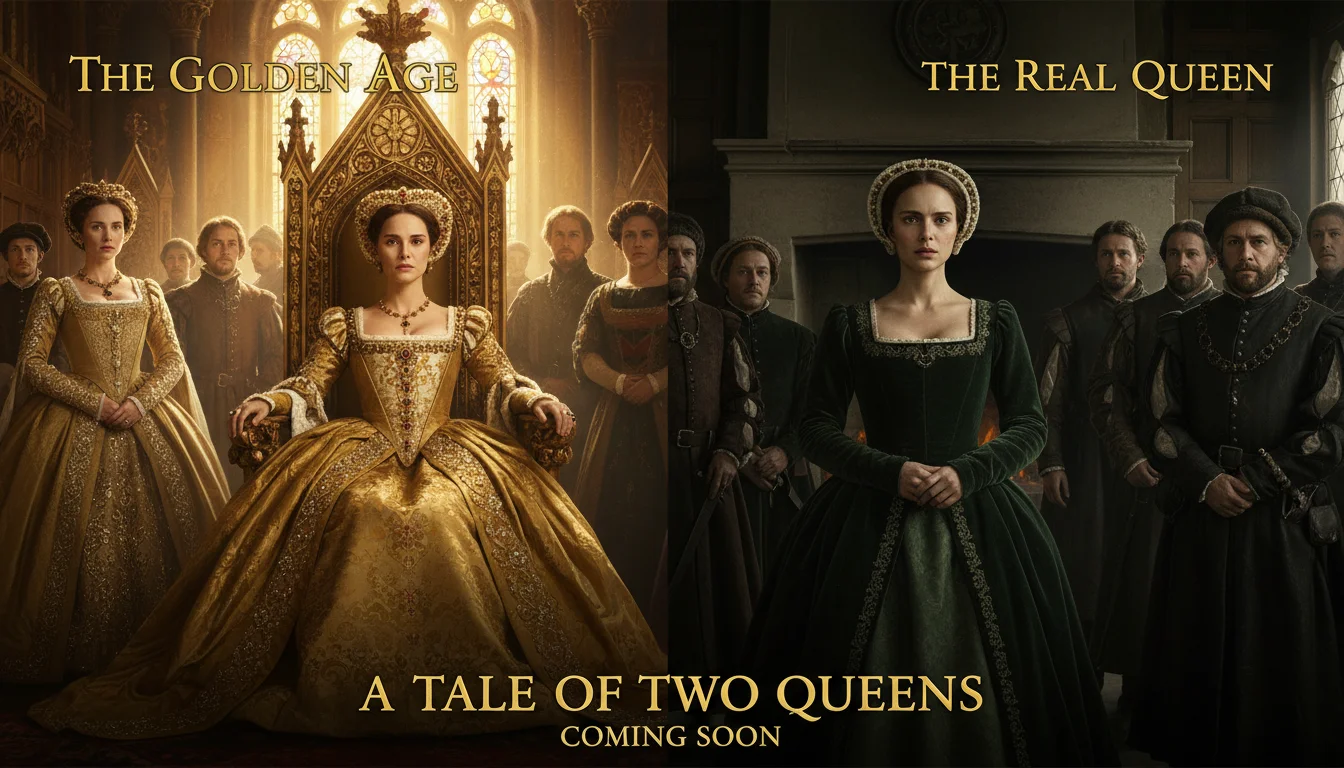
The Other Boleyn Girl (2008) raises a central question of historical accuracy: how much of Tudor England's cutthroat court politics - where two sisters competed for Henry VIII's affections - is real, and how much is invention? With Natalie Portman as the ambitious Anne Boleyn and Scarlett Johansson as the gentler Mary Boleyn, the film paints a dramatic picture of love, betrayal, and political scheming. But how much of it actually happened?
The Real Boleyn Sisters
The Boleyn family was indeed a rising force in the English court during the 1520s. Thomas Boleyn, their father, was a skilled diplomat who leveraged his daughters' proximity to the king for political gain. That much the film gets right. But the details? That's where Hollywood takes some very creative liberties.
What Hollywood Got RIGHT
Henry VIII's Obsession with Anne
The film accurately portrays Henry's consuming desire for Anne Boleyn. Historical records confirm that Henry pursued Anne relentlessly for years, writing her passionate love letters (seventeen of which survive in the Vatican archives). His determination to marry Anne was indeed the catalyst for England's break with Rome, one of the most consequential religious upheavals in European history.
The Political Scheming of the Boleyn Family
Thomas Boleyn and the Duke of Norfolk (Thomas Howard) genuinely did maneuver their family members into positions of influence at court. The Boleyn-Howard alliance was a real political faction competing against Cardinal Wolsey and other powerful courtiers. The film captures the transactional nature of Tudor court politics, where daughters were strategic assets.
Anne's Time in France
The movie briefly shows Anne's education at the French court, which is historically accurate. Anne spent several years in France, serving both Mary Tudor (Henry's sister) and Queen Claude of France. This period shaped her sophistication, her fashion sense, and her understanding of courtly politics, all of which she deployed to devastating effect back in England.
The Downfall
Anne Boleyn's arrest, trial, and execution in May 1536 on charges of adultery, incest, and treason are broadly depicted in line with historical events. The charges were almost certainly fabricated by Thomas Cromwell, and the film captures the terrifying speed with which Anne went from queen to condemned prisoner.
What Hollywood Got WRONG
The Sister Rivalry Is Mostly Fiction
The central premise of the film, a bitter rivalry between Anne and Mary for Henry's affections, is largely invented. We know very little about Mary Boleyn's personality or her relationship with Anne. There is no historical evidence of a dramatic competition between the sisters. Mary was Henry's mistress before Anne caught his eye, but the timeline and nature of these relationships were far less dramatic than the film suggests.
Mary Was Probably the Older Sister
The film presents Mary as the younger, more innocent sister. Most historians now believe Mary was actually the older of the two, though the birth order has been debated for centuries. This matters because the film uses the age dynamic to frame Anne as the domineering older sister corrupting the family's plans.
The Rape Scene Never Happened
One of the film's most disturbing scenes shows Henry forcing himself on Anne. There is absolutely no historical evidence for this. While their relationship was certainly complex and power-imbalanced, the specific scene appears to be pure dramatic invention, and a troubling one at that, since it reframes a pivotal historical relationship through a lens that the sources do not support.
Mary's Children and Their Paternity
The film suggests Mary's children might have been fathered by Henry VIII. While some historians have speculated about this (particularly regarding her son Henry Carey), there is no conclusive evidence. Henry never acknowledged either of Mary's children, which was unusual if he believed they were his, since he was desperate for a male heir.
The Timeline Is Compressed and Scrambled
The real events unfolded over roughly fifteen years (1520s to 1536). The film compresses this into what feels like a few seasons, losing the slow-burn nature of Henry's pursuit of Anne. The annulment proceedings alone dragged on for six years. The movie also rearranges key events, placing some before they actually occurred and omitting others entirely.
George Boleyn's Portrayal
The film depicts George Boleyn (the sisters' brother) as reluctantly complicit in family schemes. In reality, George was an accomplished courtier and diplomat in his own right. He was executed alongside Anne on charges of incest, charges that were almost certainly false. The film simplifies his role considerably and invents scenes between him and Anne that have no basis in the historical record.
Anne's Personality
Natalie Portman plays Anne as cold, calculating, and almost villainous. Contemporary accounts suggest Anne was witty, charming, cultured, and sharp-tongued, but not the one-dimensional schemer the film presents. She was a genuine religious reformer who promoted English translations of the Bible and supported charitable causes. Reducing her to a power-hungry manipulator does a disservice to a genuinely complex historical figure.
Historical Accuracy Score: 4/10
The Other Boleyn Girl gets the broad strokes right: the Boleyn family's rise, Henry's obsession, the break with Rome, and Anne's execution. But it invents so much drama between the sisters, distorts personalities, fabricates key scenes, and compresses the timeline so aggressively that it ends up telling a story that is more Philippa Gregory novel than Tudor history. Which makes sense, since it is based on Gregory's novel, not on primary sources.
The film works as entertainment, but anyone watching it as a history lesson will come away with a deeply skewed understanding of one of England's most fascinating periods. If you want the real story, pick up a biography of Anne Boleyn by Eric Ives or look into the letters and state papers of Henry VIII's reign. The truth is more nuanced, more political, and ultimately more compelling than anything Hollywood invented.
For more history vs. Hollywood breakdowns, explore our vs. Hollywood series at HistorIQly, including our fact-checks of The Favourite vs. history and Darkest Hour vs. history.

Debate the Accuracy with the Real Figures
Ask the real people what Hollywood got wrong about their lives.
Chat with HistoryJoin the HistorIQly Club
Get smarter about the past.
Weekly stories, deep dives, and exclusive content straight to your inbox.