The Disappearance of Elaine Park: A Cold Case at the Edge of Los Angeles
The Elaine Park disappearance began on January 28, 2017. She left West Hills at 4 AM and was found only as an abandoned car at Castaic Lake. The case is still open.
Read Wikipedia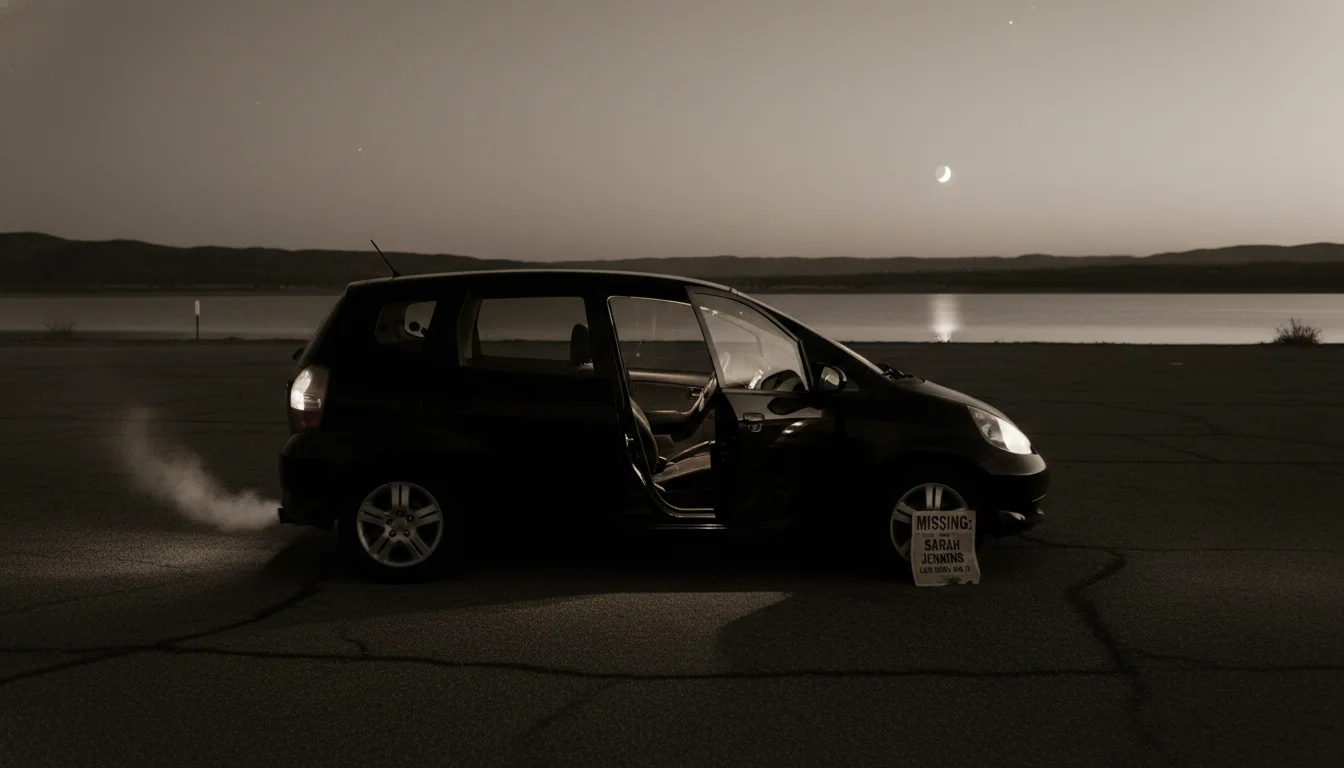
Around 4:00 AM on January 28, 2017, a black Honda Fit pulled away from a residential street in West Hills, a quiet neighborhood on the western edge of Los Angeles. The driver was Elaine Park, a nineteen-year-old nursing student from nearby Calabasas, who had spent part of the night at the home of her ex-boyfriend, Addam Reyes. She drove away in the dark. She was never seen again.
What surveillance showed
A gas station camera captured Elaine's car in the predawn hours, heading northwest on Interstate 5 toward Santa Clarita and beyond. The direction was immediately puzzling. Her home in Calabasas was southeast of West Hills. Castaic Lake, a reservoir about thirty miles north of where she had been, was the opposite direction from home.
When Los Angeles County Sheriff's deputies responded to reports later that morning, they found the Honda Fit parked near the Castaic Lake Recreation Area entrance. The engine was still running. The driver's door was open. Inside were Elaine's purse, her cell phone, her identification, and all of her personal belongings. Nothing had been packed for a trip. The only thing missing was Elaine.
Search and rescue teams swept the lake's shoreline, hiking trails, and adjacent terrain for days. Underwater dive teams searched sections of the reservoir. Volunteers, deputies, and California Highway Patrol officers covered the surrounding hills. Nothing was found.
Elaine Park
Elaine Park was born in 1997 to a Korean-American family in the western Los Angeles suburbs. Her mother, Janina Park, describes her as thoughtful, responsible, and devoted to her family. She was enrolled at College of the Canyons in Santa Clarita, working toward a nursing degree, and had no history of disappearing, running away, or leaving without notice. There was no packed bag, no cleared-out bank account, no farewell message to anyone. From everything her family knew, the night of January 27-28, 2017 was an ordinary Friday night.
She was healthy, enrolled in school, and in regular contact with her family. When she did not come home, her mother noticed immediately. By mid-morning she had learned that a car matching her daughter's description had been found at Castaic Lake. The identification confirmed it was Elaine's.
The timeline and its gaps
The public record of Elaine Park's last hours contains at least one significant gap.
What is documented: she arrived at Addam Reyes's home in West Hills in the evening of January 27. The two had recently ended a relationship but remained in contact. She left his home in the early hours of January 28. Surveillance footage from the gas station places her heading north sometime before dawn. She was seen alive by no known witnesses after leaving Reyes's house.
What is not in the public record: what happened inside that house, whether the parting was amicable or heated, and whether anything specific preceded her decision to drive north rather than south toward home.
Reyes was interviewed by sheriff's detectives in the days following the disappearance. He has not been named as a suspect or charged with any crime related to the case. His account of the evening has not been disclosed to the public. This gap has been a persistent source of frustration for Elaine's family and for the tens of thousands of online investigators who have followed the case.
The distance Elaine drove is one of the central puzzles. Castaic Lake is accessible from Interstate 5 but sits roughly thirty miles in the wrong direction from her home. It is the kind of destination someone might drive to deliberately, or might reach by mistake if disoriented or distressed at highway speed in the dark. Without knowing her state of mind when she left Reyes's house, the drive's purpose remains unresolved.
The lake problem
Castaic Lake is a large reservoir impounded by the Castaic Dam on Castaic Creek. It covers several square miles, and in its deepest sections the water exceeds sixty feet. Thorough underwater searches of a body of water this size are technically demanding, expensive, and, depending on visibility and silt conditions, can miss significant areas even with professional dive teams.
Searches conducted in 2017 and in subsequent years found no physical evidence of Elaine in the lake or its immediate surroundings. The absence of a body has made it impossible to establish cause of death or build an evidence trail. It is also the primary reason the case remains open rather than closed: without remains, investigators have no physical anchor for their theories.
The terrain around Castaic Lake includes chaparral-covered hillsides, drainage gullies, and areas that abut the Angeles National Forest, where a person who left the trail network could remain concealed for a long time. Some investigators and volunteers have argued over the years that the search, while substantial, did not cover every accessible area within walking distance of where the car was found.
What the car tells you and what it does not
An abandoned vehicle with the engine running and the door open is almost always interpreted as a sign of haste or distress - someone who got out quickly or was taken out quickly. But taken at face value, the condition of the car is genuinely ambiguous. It could mean she left in a hurry. It could mean someone else moved or searched the car after she was gone. It could mean she got out to look at the lake and something happened there.
The car was found in the morning, hours after she is believed to have passed the gas station. That interval - however long it was - is not accounted for in the public record. Were there additional witnesses on that stretch of Interstate 5 at 4 AM? Were there other vehicles in the Castaic lot when the car was found? If so, those details have not surfaced publicly.
Theories
Three explanations have circulated in the years since Elaine Park's disappearance.
The first is that she died by suicide. Her family has rejected this consistently and publicly. Elaine left no note, no message, and no communication suggesting such intent. Her phone, still in the car, was locked. Her accounts showed no unusual activity in the days before she disappeared. Nothing in her behavior or conversations, as described by those who knew her, suggested she was in crisis.
The second theory is that a third party was involved - someone who followed her from West Hills, or someone she encountered near Castaic Lake before dawn. The running engine and open door fit this scenario as well as they fit any other. The park and surrounding roads were not monitored by cameras capable of recording arrivals after Elaine's.
The third theory, widely circulated in online true crime communities, concerns what happened at Reyes's home in the hours before she drove away. Without new evidence or a change in the public account of that evening, this remains speculative.
How the case has stayed alive
The Elaine Park case received limited mainstream media coverage when it happened. The combination of factors that typically drives national coverage - very young victim, certain demographics, early-stage photogenic tragedy - was complicated enough that the story did not break through nationally in 2017. True crime platforms kept it circulating: podcasts first, then YouTube, then TikTok, where her case gained significant renewed attention in the early 2020s. Similar online communities have sustained pressure in cases like the disappearance of Maura Murray, which also generated years of amateur investigation after insufficient early coverage.
Janina Park has been an active and persistent public advocate for her daughter's case. She has given interviews, maintained social media accounts, worked with missing persons organizations, and pushed back against what she has described as insufficient investigation in the early critical period after the disappearance.
The LASD's public statements have been limited. The case remains listed as an open investigation. No suspect has been named publicly. No significant new development has been announced.
The legal record
In 2021, Elaine Park was declared legally dead. This is a civil action. It updates the administrative record and allows her family to settle her estate. It does not mean the investigation has concluded, and it does not mean authorities believe they know what happened. It means seven years passed without evidence she was alive, meeting the statutory threshold for presumption of death.
Her case sits in a large, frustrating category: missing persons where the primary physical evidence (the vehicle, in this case) tells you something happened but not what, and where the absence of remains forecloses the kind of investigation that moves from scene to conclusion. The disappearance of Brian Shaffer follows a similar structure - a young person last seen on camera, no body, no confirmed explanation. The LASD handles a high volume of missing persons cases, and the sustained public attention around Elaine Park's has not, as of 2026, produced a resolution.
Castaic Lake is still there. The car sat with its engine running that January morning for reasons nobody has yet been able to explain. Nine years later, the questions are precisely the same.
Quick Answers
Common questions about this topic
When did Elaine Park disappear?
Elaine Park disappeared in the early hours of January 28, 2017. She was last seen leaving a friend's home in West Hills, California, around 4 AM. Her black Honda Fit was found hours later at Castaic Lake Recreation Area, engine running and door open, with her purse, phone, and ID still inside.
Was Elaine Park's body ever found?
No. Despite extensive searches of Castaic Lake and the surrounding terrain, Elaine Park's body has never been found. She was declared legally dead in 2021, but the disappearance remains an open cold case with no confirmed cause of death.
Who was the last known person to see Elaine Park?
The last known person to see Elaine Park was her ex-boyfriend, Addam Reyes, at his home in West Hills. She left his house in the early hours of January 28, 2017. Surveillance footage captured her car at a gas station heading northwest toward Castaic in the hours before dawn.
Why is the Elaine Park case still unsolved?
The case remains open partly because no body was found, partly because underwater searches of Castaic Lake have not located physical evidence, and partly because key details about her last known hours remain outside the public record. The LA County Sheriff's Department has not named a suspect or announced a significant break.

Want to Interrogate the Suspects?
Chat with historical figures and uncover the truth behind history's greatest mysteries.
Create your free account →No card required. Some figures and features require a paid plan.
Join the HistorIQly Club
Get smarter about the past.
Weekly stories, deep dives, and exclusive content straight to your inbox.