Forrest Gump vs. History: How Real Are the Events Behind the Movie?
Forrest Gump accuracy: the film runs through Vietnam, Watergate, and the AIDS crisis. We fact-check which events actually happened and how well the film captures them.
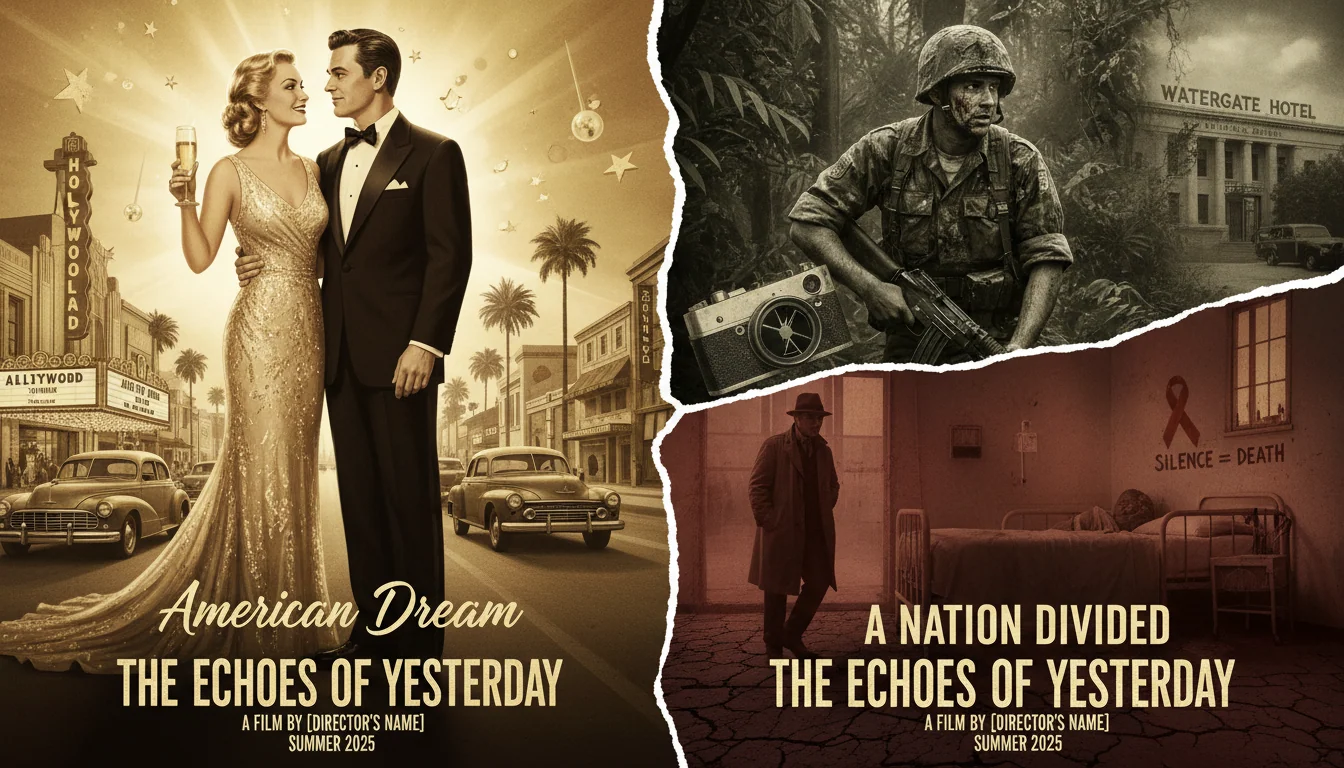
When Forrest Gump opened in July 1994, it became one of the most successful and divisive American films of its decade. Robert Zemeckis's adaptation of Winston Groom's 1986 novel took a fictional simple-hearted Alabama man and ran him through three decades of postwar American history. He shakes hands with three presidents, fights in Vietnam, exposes Watergate, runs across the country, becomes a shrimp boat tycoon, and watches the woman he loves die of AIDS.
The film won six Oscars including Best Picture. It also generated decades of debate over its politics, its representation of the 1960s, and its tendency to fold real history into a single sentimental American story.
So how accurate is the history behind Forrest Gump? The answer is layered: the events are nearly all real, the textures are mostly accurate, and the framing is gently rewritten to fit a particular kind of nostalgic optimism.
What Hollywood Got RIGHT
The Vietnam War sequence
The film's depiction of the Vietnam War is, in many specific details, faithful. The unit Forrest serves in is fictional but the equipment, terrain, monsoons, and sudden ambush style of warfare reflect the experience of infantry soldiers in the Mekong Delta and Central Highlands during 1967 and 1968.
The sequence in which Forrest's platoon is ambushed in heavy jungle and Lieutenant Dan loses his legs is consistent with the routine catastrophe of small-unit combat in that war. The use of helicopters for emergency medical evacuation, the way wounded men were stabilized in the field and flown to better-equipped hospitals, and the experience of arriving stateside in a wheelchair to a country that did not know what to do with returning veterans are all documented.
The military hospital scenes, including the ping-pong therapy and the readjustment difficulties, also reflect real experiences. The Walter Reed sequences, while compressed, capture some of the texture of veteran rehabilitation in the late 1960s.
The anti-war movement
The film's portrayal of the 1967 March on the Pentagon, attended by tens of thousands of Americans, is largely accurate. Forrest's unscripted anti-war remarks at the rally, intercepted by a malfunctioning microphone, are a screenwriter's invention, but the size and mood of the crowd, the speakers' platform, and the presence of veterans, hippies, students, and activists are real.
The Black Panthers depicted in Jenny's apartment are stylized but not fabricated. Their internal disputes, their relationship to white radical groups like the Students for a Democratic Society, and the strain of late-1960s revolutionary activism on personal lives are well-documented.
The Watergate scene
The Watergate sequence, in which Forrest reports flashlights moving in the building across the courtyard from his Howard Johnson hotel room, is fictional in its specific causation. The real discovery of the break-in was made by security guard Frank Wills, who noticed adhesive tape on a door latch in the Watergate complex on the night of June 17, 1972, and called police. The burglars were arrested at the scene.
But the underlying facts, the date, the location, the political consequences, the eventual resignation of President Richard Nixon, are accurate. The film's compression is a comic rewriting of how Forrest accidentally bumps into history, not a misrepresentation of what happened.
The AIDS storyline
The film's portrayal of the AIDS crisis through Jenny's death is one of its most historically grounded elements. Jenny's symptoms, the timeline of her illness, the inability of doctors to do much for her, and the broader social uncertainty around the disease in the late 1970s and early 1980s reflect the experience of countless American women who contracted HIV from sexual partners or drug use during the early years of the epidemic, before safer-sex practices and antiretroviral medication had transformed the disease.
The fact that the film does not name AIDS explicitly, calling it only "some kind of virus," reflects the contemporary uncertainty among ordinary Americans about what the disease was, especially in non-coastal regions like Alabama.
Apple Computer
The film's quick joke that Forrest invests in "some kind of fruit company" and becomes wealthy is essentially accurate. Apple Computer went public in December 1980, and an early investor of Forrest's hypothetical scale would have become extraordinarily wealthy by the early 1990s. The detail is real comedy built on real financial history.
What Hollywood Got WRONG
The Elvis scene
The film's invention that a young Forrest, recovering from leg braces, unintentionally taught Elvis Presley how to dance is not based on any historical claim. Elvis's stage movements emerged during his early career in the mid-1950s and were shaped by gospel performers, country acts, and rhythm and blues musicians he had absorbed in Memphis. There was no boy on a porch.
The integration of the University of Alabama
The film shows Forrest attending the University of Alabama and accidentally being present during the famous June 11, 1963 confrontation between Governor George Wallace and federal officials over the integration of the school. Forrest is shown helping Vivian Malone Jones, one of the two Black students enrolled, by handing her a dropped book.
The event itself is accurate, in that Wallace did stand in the schoolhouse door, was confronted by Deputy Attorney General Nicholas Katzenbach and federalized National Guard troops, and ultimately stepped aside. Vivian Malone Jones and James Hood did enroll. Forrest's specific intervention is fictional and somewhat romanticizes a confrontation that was, by all accounts, far more tense and politically charged than the film conveys.
Forrest meeting three presidents
The film's repeated visits with Presidents Kennedy, Johnson, and Nixon are pure invention. Forrest's various medals and accomplishments would not have produced these White House moments. The visits are a stylistic device for connecting the protagonist to political history, but they have no factual basis.
Hurricane Carmen and shrimp boating
The film shows Forrest's shrimp business succeeding because Hurricane Carmen wipes out competitors in 1974. There was a real Hurricane Carmen that struck Louisiana in September 1974, and it did damage Gulf shrimping. However, the storm did not produce the kind of total industry wipeout the film depicts, and competing fleets recovered relatively quickly. The Bubba Gump Shrimp Company is fictional, although a real restaurant chain by that name was launched in 1996 based on the film.
The cross-country running phase
Forrest's three-and-a-half-year jog across the United States, drawing growing crowds, is fictional. There was no real public figure who matched this exact pattern in the late 1970s, although the era did produce several long-distance runners who drew media attention, and the symbolism of running across America was already a recognizable trope by then.
The visual joke of Forrest inadvertently inspiring the "Have a Nice Day" yellow smiley face and the "Shit Happens" bumper sticker is extended cinematic invention. Both icons existed independently of any one origin moment.
What the film captures, even when it bends facts
Forrest Gump gets the texture of a particular American emotional history right, even when it rearranges specific events. The disorientation of returning Vietnam veterans, the political confusion of the late 1960s, the cynicism that followed Watergate, the early bewilderment around AIDS, and the strange financial luck of late-twentieth-century technology investing are all captured with a degree of accuracy that more solemn films often miss.
The film's willingness to make history feel like something that happened to ordinary people is, in fact, one reason it has endured. Whether you find the result moving or politically problematic depends on your view of how American history should be told.
Historical Accuracy Score: 6/10
Forrest Gump gets the major events right and the textures mostly accurate, but it consistently inserts its protagonist into key moments through fictional coincidences that flatter both Forrest and a particular reading of the country. It is honest about the wounds of Vietnam, the early years of the AIDS crisis, and the cultural sweep of the period. It is dishonest about what an unworldly man from Alabama would actually have experienced of those decades.
What the film gets most right: the texture of the Vietnam War and the early AIDS crisis.
What it gets most wrong: the constant placement of Forrest at the center of events that occurred without him.
The bottom line is that Forrest Gump is a film about American history made for a specific kind of American audience in 1994. The events behind it are mostly real. The framing that ties them together is a fairy tale.
For other American historical events examined through Hollywood, see our fact-checks of Saving Private Ryan and Apollo 13.
Quick Answers
Common questions about this topic
Is Forrest Gump based on a true story?
Forrest Gump himself is fictional. The 1994 film is based on a 1986 novel by Winston Groom. However, the historical events Forrest passes through, including the Vietnam War, the anti-war movement, the Watergate scandal, the founding of Apple Computer, and the AIDS crisis, are all real and depicted with varying degrees of accuracy.
Did Forrest Gump teach Elvis to dance?
No. The scene in which a young Forrest unintentionally inspires Elvis Presley's hip-shaking dance is fictional. Elvis's famous swivel was developed during his early performances in the early 1950s and had multiple influences from gospel, country, and rhythm and blues performers. The boy who supposedly inspired it never existed.
Is the Lieutenant Dan storyline accurate?
Lieutenant Dan is fictional, but the experience he represents, severe wounds in Vietnam and the difficult readjustment to civilian life, is based on documented realities for thousands of veterans. The film's portrayal of military hospitals, prosthetics, and post-traumatic adjustment is broadly faithful to the period, even if Dan himself is invented.
Did the Watergate break-in happen the way the film shows it?
The film shows Forrest accidentally exposing the burglars by reporting flashlights in the Watergate complex from his hotel room. In reality, security guard Frank Wills discovered the break-in after noticing tape on a door latch. Forrest's role is fictional, but the basic facts of the burglary, its date, and its consequences are accurate.

Debate the Accuracy with the Real Figures
Ask the real people what Hollywood got wrong about their lives.
Chat with HistoryJoin the HistorIQly Club
Get smarter about the past.
Weekly stories, deep dives, and exclusive content straight to your inbox.