Gladiator: What Ridley Scott Got Wrong About Marcus Aurelius
Gladiator movie accuracy: Ridley Scott's epic invents its hero and rewrites Commodus's rise. Our fact-check of what the film got right and spectacularly wrong.
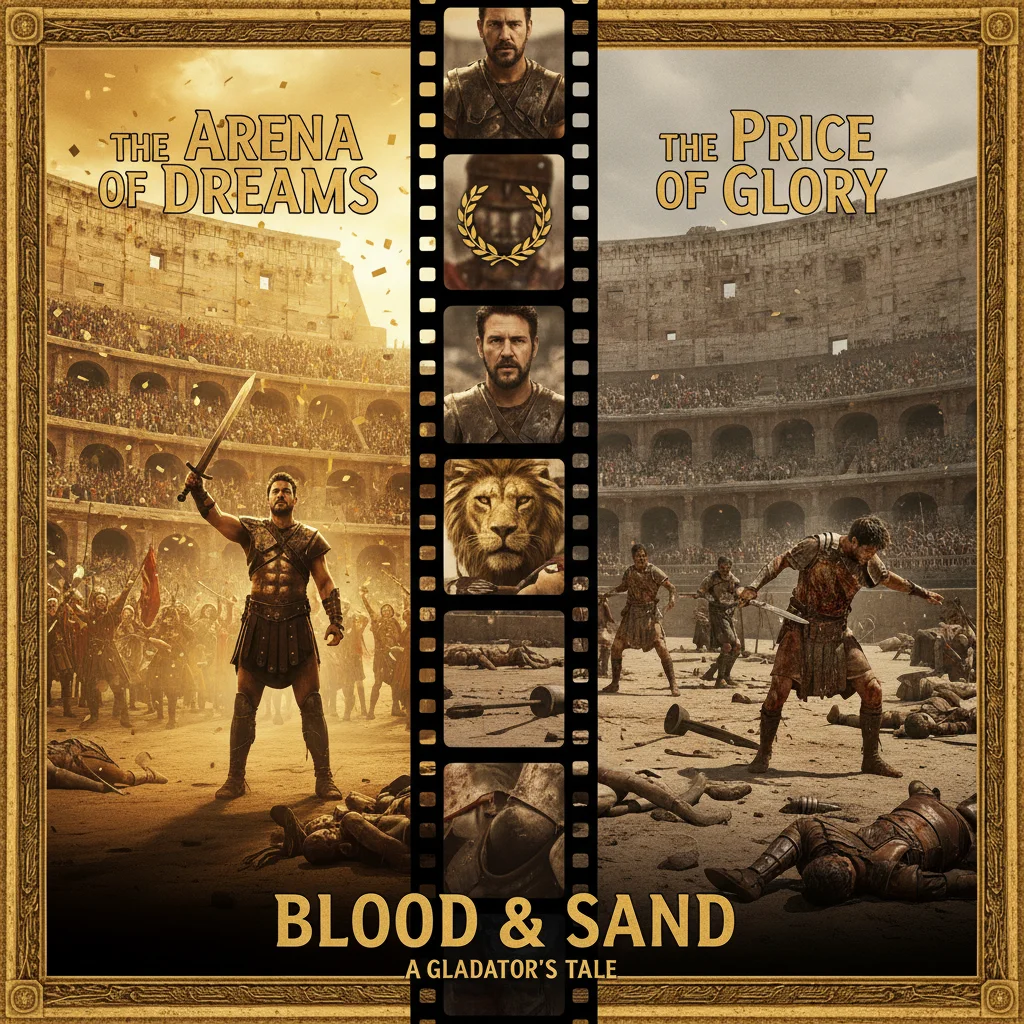
Ridley Scott's Gladiator (2000) is one of the most beloved historical epics of all time. Russell Crowe's portrayal of Maximus Decimus Meridius is iconic. The action is spectacular. Hans Zimmer's score still gives us goosebumps. And that opening line -"At my signal, unleash hell" -is pure cinema magic.
But here's the thing: if you're using Gladiator as your study guide for Roman history, you're going to fail that exam spectacularly.
Let's break down what the movie got wrong, what it got right, and why we should forgive it anyway.
The Big One: Commodus Didn't Kill His Father
In the film, the philosophical emperor Marcus Aurelius plans to restore the Roman Republic, bypassing his unstable son Commodus and naming the general Maximus as his successor. An enraged Commodus smothers his father with a pillow in one of the movie's most powerful scenes.
The reality? Marcus Aurelius died of natural causes (likely the plague) in 180 CE while on campaign in Vindobona (modern-day Vienna). He died peacefully, with Commodus right there beside him -as his legitimate, chosen heir.
Marcus Aurelius never planned to restore the Republic. In fact, he did the opposite: he broke with the practice of adoptive succession (choosing the best man for the job) and instead made his biological son emperor. This was arguably one of his biggest mistakes, but it was his mistake, not a noble plan thwarted by patricide.
Why the movie changed it: Drama. A natural death from plague doesn't pack the same emotional punch as murder. The film needed Commodus to be an unambiguous villain, and patricide certainly achieves that.
Maximus Decimus Meridius: A Complete Fabrication
Here's the awkward truth: Maximus didn't exist. There is no historical record of a General Maximus Decimus Meridius, no beloved commander betrayed by Commodus, no Spanish general-turned-gladiator who won the hearts of Rome.
He's entirely fictional.
But wait -wasn't he based on someone? Sort of. The character draws inspiration from several historical figures:
- Narcissus, Commodus's actual assassin (who was a wrestler, not a gladiator)
- Various generals who served under Marcus Aurelius
- The archetype of the "noble Roman soldier"
Why this works: Sometimes historical fiction needs a protagonist who can move freely through the story. An invented character can witness events, interact with historical figures, and drive the narrative in ways a strictly historical figure couldn't.
The Real Commodus: Bad, But Not That Bad
The film portrays Commodus (brilliantly played by Joaquin Phoenix) as a sniveling, incestuous, cowardly tyrant who fights in the gladiatorial arena out of pure narcissism.
The reality? Commodus was definitely a bad emperor -historians contemporary to his reign condemned him extensively. But the truth is more complex:
What they got wrong:
- The incest angle: There's no historical evidence of an incestuous relationship with his sister Lucilla, though she did conspire against him.
- The cowardice: Commodus was actually quite athletic and personally brave (if wildly inappropriate for an emperor).
- His fighting: He really did fight in the arena, but not the way the film depicts...
What they got right:
- The arena obsession: Commodus genuinely believed himself to be the reincarnation of Hercules and fought in gladiatorial games hundreds of times.
- The megalomania: He renamed Rome "Colonia Commodiana" (Colony of Commodus) and wanted months renamed after his titles.
- The incompetence: He let others run the empire while he played gladiator, leading to corruption and instability.
- The assassination: He was murdered in a conspiracy involving his closest associates (though strangled in his bath, not killed in the Colosseum).
The Gladiatorial Games: Hollywood Meets History
The arena scenes in Gladiator are spectacular cinema. But how accurate are they?
What They Got RIGHT:
1. The spectacle was real Roman gladiatorial games were indeed massive public entertainments, though the Colosseum didn't open until 80 CE, a full century before Commodus.
2. Exotic animals Yes, Romans really did import tigers, lions, elephants, and other animals for arena spectacles. Thousands of animals died in the games.
3. Naval battles The "mock naval battle" in the Colosseum? That actually happened! The Romans flooded amphitheaters for naumachiae (staged sea battles). Engineering flex level: maximum.
4. The thumbs (kind of) The "thumbs up/thumbs down" for life or death is more complicated than the film suggests, and historians debate the exact gesture used. But the crowd and sponsor did determine the fate of defeated gladiators.
5. Gladiators were celebrities Top gladiators really were famous, had fan clubs, and could win their freedom. Some even became wealthy.
What They Got WRONG:
1. The survival rate Film gladiators die constantly. Real gladiatorial combat had a much lower death rate -maybe 10-20%. Dead gladiators meant financial loss for their owners. These were trained athletes, not disposable extras.
2. "Are you not entertained?" Gladiators didn't fight to the death every single time. Many fights ended with a victor and a defeated-but-living opponent. The games were about skill and spectacle, not just slaughter.
3. The opening battle re-enactment That elaborate "Battle of Carthage" re-enactment with chariots and props? While the Romans did stage historical re-enactments, the film's version is pure Hollywood excess.
4. The armor and weapons The film mixes and matches gladiatorial styles anachronistically. Real gladiatorial combat had strict types (murmillo, thraex, retiarius, etc.) with specific equipment. It was more like professional wrestling with different character classes.
What The Film Actually Got Right
Despite the historical liberties, Gladiator captures several truths about ancient Rome:
1. "Bread and circuses" politics
The film's core theme -that entertainment can be used to manipulate the masses and distract from tyranny -is absolutely accurate. The phrase "bread and circuses" (panem et circenses) comes from the Roman satirist Juvenal, describing exactly this phenomenon.
2. The Praetorian Guard's power
The Praetorian Guard really could make or break emperors. Their political influence and willingness to assassinate troublesome rulers is well-documented.
3. The tension between Republic and Empire
While Marcus Aurelius didn't plan to restore the Republic, there was genuine nostalgia among some Romans for the old Republican virtues. The film taps into this real cultural tension.
4. The visual aesthetics
The film's depiction of Roman architecture, clothing, and military equipment is generally quite good. The production design team did their homework.
5. The brutality
Rome was genuinely brutal. Slavery, public executions, gladiatorial combat -all real. The film doesn't shy away from this.
The Verdict: Historical? No. True? Yes.
Here's the thing about Gladiator: it's not a history documentary. It's a myth, a legend, a story about honor, revenge, and resistance against tyranny set in ancient Rome.
And myths can convey truth even when they're not factual.
The film captures something essential about power, corruption, entertainment as political control, and the human desire for freedom and justice. It makes us feel what Rome was like -the grandeur, the cruelty, the moral contradictions -even if the specific events are fiction.
Historical accuracy score: 4/10 Capturing the spirit of Rome: 9/10 Still one of the greatest films ever made: 10/10
Marcus Aurelius didn't plan to restore the Republic. Commodus didn't kill him. Maximus didn't exist. But Gladiator remains a masterpiece -not because it's historically accurate, but because it's emotionally and thematically true.
And honestly? After 2,000 years, Rome probably deserves a good story more than it deserves perfect accuracy.
"What we do in life echoes in eternity."
That line isn't historically accurate either. But damn, it's good cinema.
For more ancient world fact-checks, see our analyses of 300 and Kingdom of Heaven, two films with similarly complex relationships to their historical sources.
Quick Answers
Common questions about this topic
Did Commodus kill his father Marcus Aurelius?
No. In the film, Commodus smothers Marcus Aurelius with a pillow. In reality, Marcus Aurelius died of natural causes - likely the plague - in 180 CE while on campaign in Vindobona, modern-day Vienna. He died with Commodus as his legitimate, chosen heir. Commodus did not murder him to seize power.
Was Maximus Decimus Meridius a real person?
No. Maximus is entirely fictional. There is no historical record of a General Maximus Decimus Meridius. The character draws inspiration from several historical figures - including Narcissus, Commodus's actual assassin, and various generals who served under Marcus Aurelius - but he is a complete invention for the film.
Did Commodus really fight in the gladiatorial arena?
Yes. Commodus genuinely believed himself to be the reincarnation of Hercules and fought in gladiatorial games hundreds of times. The film overstates his cowardice though - Commodus was actually athletic and personally brave, just wildly inappropriate for an emperor. He left others to run the empire while he played gladiator.
How realistic is the Colosseum combat in Gladiator?
The Romans did stage elaborate spectacles with exotic animals and even mock naval battles. However, the film exaggerates the death rate - real gladiatorial combat had closer to a 10-20 percent fatality rate, since dead gladiators meant financial loss for their owners. The film also mixes gladiatorial styles anachronistically; real combat had strict types with specific matched equipment.

Debate the Accuracy with the Real Figures
Ask the real people what Hollywood got wrong about their lives.
Chat with HistoryJoin the HistorIQly Club
Get smarter about the past.
Weekly stories, deep dives, and exclusive content straight to your inbox.