The Setagaya Family Murders: Japan's Most Baffling Unsolved Crime
In Tokyo on New Year's Eve 2000, a killer murdered the Miyazawa family and spent hours at the crime scene before vanishing. The Setagaya murders remain unsolved after 25 years.
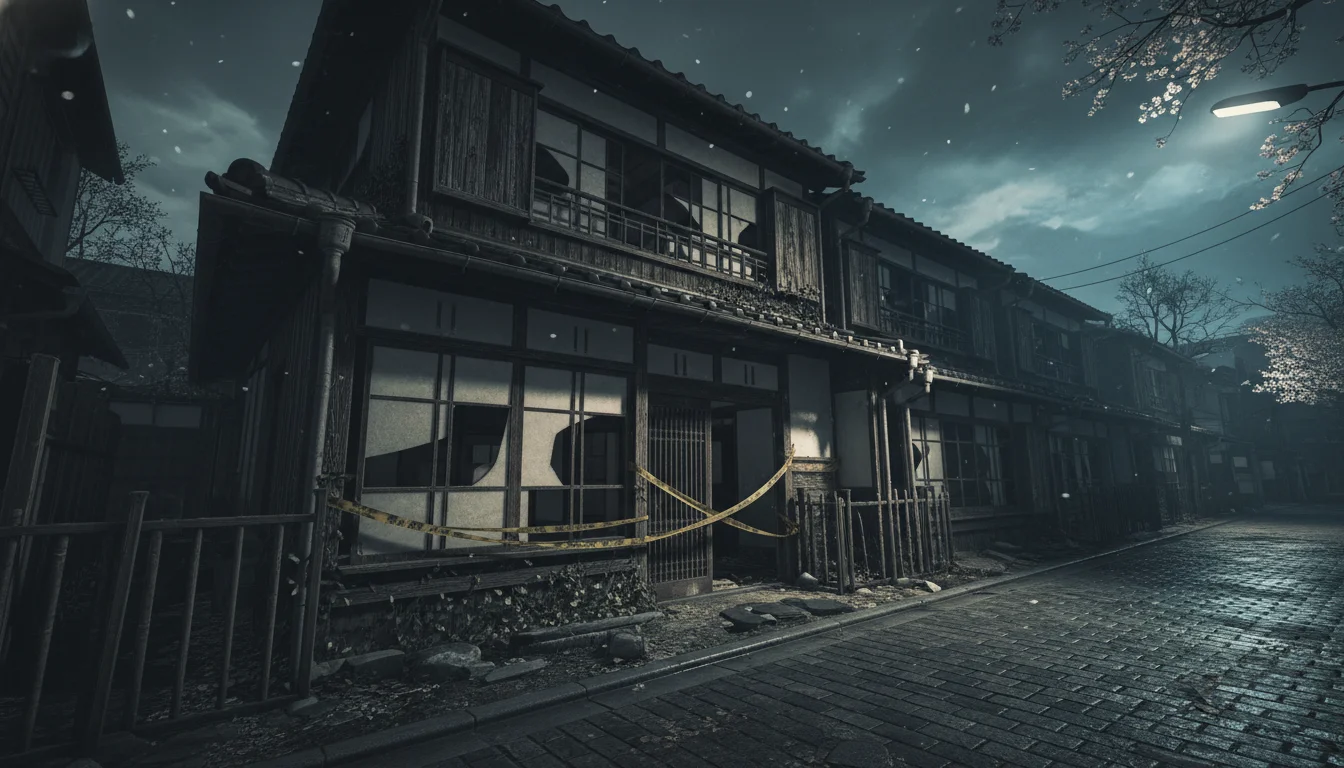
In the final hours before the new millennium dawned, while Tokyo prepared to celebrate the year 2001, a killer climbed through a bathroom window of a quiet family home in the Setagaya district. What followed would become Japan's most infamous unsolved murder - a crime so brazen, so methodical, and so rich in forensic evidence that investigators still struggle to understand how the perpetrator has evaded capture for over two decades.
The Last Night
The Miyazawa family lived an ordinary life in their three-story home bordering Soshigaya Park. Mikio, 44, was a systems engineer. His wife Yasuko, 41, took care of their two children - eight-year-old Niina and six-year-old Rei. Yasuko's mother lived in the house next door.
On the evening of December 30, 2000, Niina visited her grandmother to watch television. It was the last time anyone outside the family would see any of them alive. At 10:38 PM, Mikio logged into his password-protected email - his final recorded activity.
Shortly after midnight, the killer struck.
A Crime That Defies Logic
The murderer entered through an unlocked second-floor bathroom window, removing the fly screen and climbing up via an air conditioning unit. He found six-year-old Rei sleeping in his room and strangled the boy with his bare hands.
Mikio heard the disturbance and rushed upstairs to confront the intruder. A violent struggle ensued. The killer stabbed Mikio repeatedly in the head with a sashimi knife he had brought with him. The blade broke off inside Mikio's skull.
Undeterred, the killer retrieved a santoku knife from the Miyazawas' kitchen and used it to murder Yasuko and Niina. In minutes, an entire family was dead.
But what happened next is what transforms this tragedy into an enduring mystery.
The Killer Who Wouldn't Leave
Most murderers flee immediately. This one stayed.
For somewhere between two and ten hours, the killer remained in the house with the bodies of his victims. He helped himself to four bottles of barley tea from the refrigerator. He ate melon. He consumed four individual ice cream cups. He used the family's computer, connecting to the internet between 1:18 and 1:23 AM.
He used the bathroom and didn't flush.
He treated his wounds from the fight with Mikio using the family's first aid kit. He may have taken a nap on the second-floor sofa, though investigators can't confirm this.
When he finally left, he walked away from the most evidence-rich crime scene in Japanese history - and was never seen again.
Mountains of Evidence, Zero Suspects
The killer left behind his DNA, fingerprints, shoe prints, feces, blood, clothes, a hip bag, gloves, a hat, a scarf, two handkerchiefs, and the broken murder weapon. Investigators have been able to reconstruct nearly everything about him except his identity.
From analyzing his feces, police determined he had eaten string beans and sesame seeds the previous day. The clothes and sashimi knife were traced to stores in Kanagawa Prefecture. His shoes were South Korean-made Slazenger sneakers - only about 130 pairs of his particular shirt were ever manufactured, and investigators have tracked down just twelve buyers.
Perhaps most haunting: trace amounts of sand found in the hip bag came from Edwards Air Force Base in California's Nevada desert, as well as a Japanese skate park.
DNA analysis revealed the killer is male with Type A blood. His genetic profile suggests he is of mixed heritage - maternal DNA indicating possible Southern European or Mediterranean ancestry, paternal DNA showing East Asian descent consistent with Korean, Chinese, or Japanese origins. The Y-chromosome haplogroup appears in one of every four to five Koreans, one in ten Chinese, and one in thirteen Japanese males.
He was young - police now believe he was between 15 and 22 at the time of the murders. He was around 170 centimeters tall, slender, and right-handed.
And yet, despite the largest investigation in Japanese history - involving over 246,000 investigative actions - no match has ever been found.
The House That Still Stands
In an unusual decision, Japanese authorities have preserved the Miyazawa home exactly as it was on that terrible night. The house still stands next to Soshigaya Park, maintained by the Tokyo Metropolitan Police Department as a monument to the case - and a reminder of their failure to solve it.
Every year on December 30, police set up a command post near the site, distributing flyers and appealing for information. Every year, they come up empty.
The case became a catalyst for legal reform. In 2010, Japan abolished its statute of limitations for crimes punishable by death - a change driven in part by public outrage that the Setagaya killer might escape justice simply by running out the clock.
Theories and Questions
Why did the killer stay so long? Was he waiting for something? Searching for something? Or was he simply indifferent to being caught?
Why did he bring his own knife but leave behind so much personal property? The hip bag contained sand from two continents. Who was this person who apparently had connections to both a U.S. military installation and Japanese skate culture?
Some investigators believe the killer was a young foreign student, possibly of mixed Asian-European heritage, who fled Japan after the murders. Others suggest he may have been an illegal immigrant who feared the family might report him. Some theorize he knew the Miyazawas personally.
In December 2021, police announced they had used new technology to identify a person who purchased the same type of knife used in the murders. For a moment, hope flickered. But DNA testing ruled him out.
The Eternal Wait
The Miyazawa case haunts Japan precisely because it should have been solved. The killer left behind everything investigators could possibly need - everything except a name. He ate their food, used their bathroom, browsed their internet, and walked away into the Tokyo night carrying secrets that 25 years of investigation have failed to unlock.
Somewhere in the world, a man in his early forties carries the memories of that night. Perhaps he lives in Japan. Perhaps in Korea. Perhaps in some corner of Europe where his maternal ancestors once lived. Perhaps near Edwards Air Force Base, where sand from his hip bag once blew across the desert.
The Miyazawa home still stands. The police still wait. And the first mystery of the new millennium remains unsolved.
For Japan's other defining unsolved crime, see the Monster with 21 Faces. For a European parallel where a killer's extended time at the scene also left no useful trail, see the Hinterkaifeck murders.

Want to Interrogate the Suspects?
Chat with historical figures and uncover the truth behind history's greatest mysteries.
Start Your InvestigationJoin the HistorIQly Club
Get smarter about the past.
Weekly stories, deep dives, and exclusive content straight to your inbox.