JFK vs. History: How Accurate Is Oliver Stone's Conspiracy Epic?
Oliver Stone's JFK changed how millions saw Dallas, but how much holds up? We check the JFK historical accuracy against what investigators can actually prove.
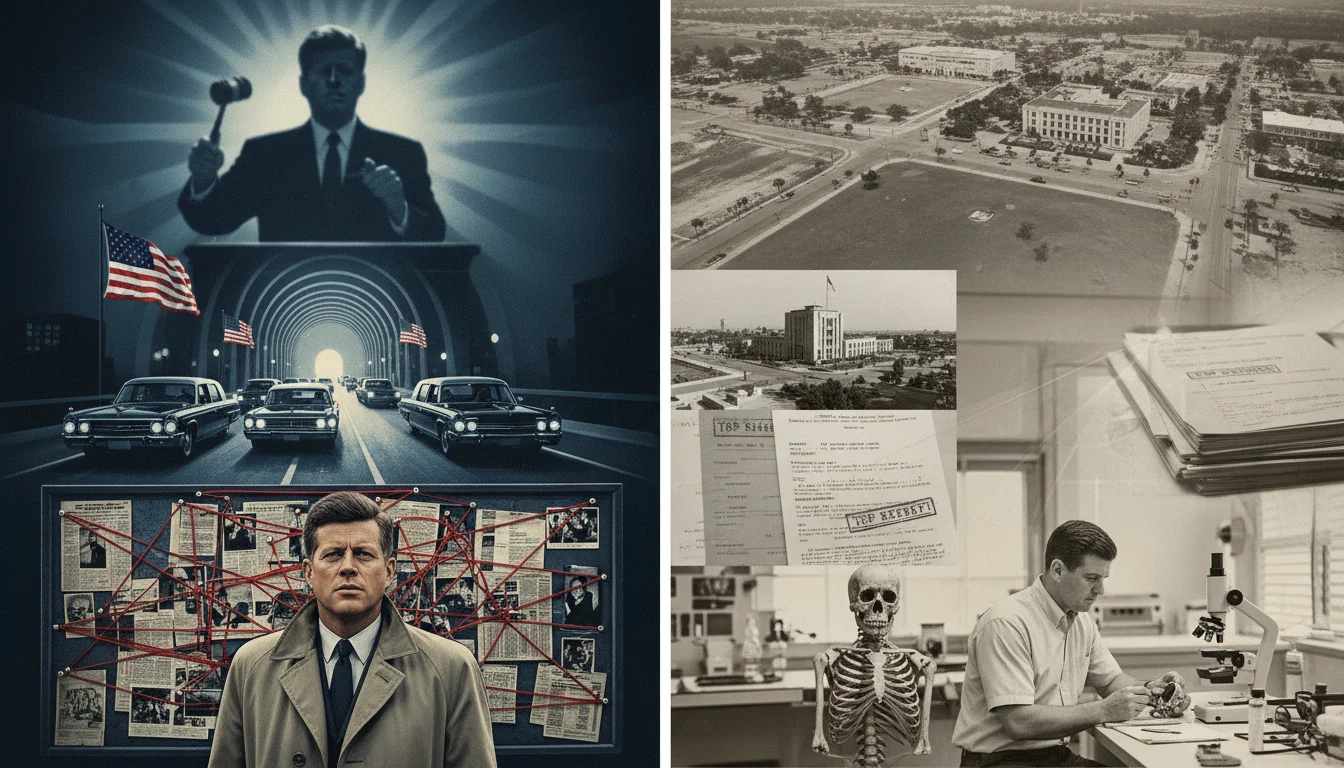
Oliver Stone's JFK (1991) is one of the most persuasive movies ever made, which is precisely why it remains so controversial. It is less a traditional historical drama than a cinematic brief for the prosecution, arguing that President John F. Kennedy was killed by a conspiracy and that New Orleans district attorney Jim Garrison was the man brave enough to expose it.
The film is thrilling, furious, and expertly assembled. It also blurs an important line: the difference between documented history, unresolved mystery, and dramatic speculation.
So how accurate is JFK?
As a portrait of the chaos, suspicion, and institutional mistrust that followed Kennedy's assassination, it is powerful and often honest. As a reconstruction of what investigators can actually prove, it takes major liberties.
What Hollywood Got RIGHT
The assassination really did generate immediate suspicion
One thing Stone absolutely gets right is that many Americans did not calmly accept the official story in 1963. Kennedy was killed in broad daylight, Lee Harvey Oswald was arrested almost immediately, and then Oswald himself was shot live on television by Jack Ruby two days later. That sequence alone made the case feel unstable.
The film captures that atmosphere of disbelief very well. Even before conspiracy literature exploded, many ordinary people suspected something larger was at work. On that emotional level, JFK is historically accurate.
Jim Garrison really did investigate a New Orleans angle
Kevin Costner's character was not invented. Jim Garrison was the district attorney of Orleans Parish, and he really did reopen interest in the Kennedy assassination in the mid-1960s. He believed Oswald was not a lone gunman and that figures in New Orleans, including businessman Clay Shaw and pilot David Ferrie, were tied to a larger plot.
In 1969, Garrison brought Clay Shaw to trial for conspiracy to assassinate Kennedy. That part is real, and Stone is right that Garrison became the most famous public official to openly challenge the Warren Commission's conclusions.
The Warren Commission left many people unsatisfied
The movie treats the Warren Report as incomplete and often unconvincing. That criticism was not invented by Oliver Stone. Over time, scholars, journalists, and later government investigators argued that the original inquiry had serious weaknesses. The House Select Committee on Assassinations in 1979 concluded that Oswald fired the shots that hit Kennedy but also found a probable conspiracy based partly on acoustic evidence, though that evidence later came under heavy criticism.
In other words, the official story has never enjoyed universal trust, and the film is fair to show that the case remained contested.
The film is right about how power protects itself
Even when Stone stretches the evidence, he is tapping into something real: government agencies often protect reputations, limit transparency, and resist embarrassing revelations. JFK helped fuel public pressure for the 1992 JFK Records Act, which required further release of assassination-related records.
That does not prove the movie's central theory, but it does mean the film had a real historical impact. It pushed secrecy itself into the dock.
What Hollywood Got WRONG
Jim Garrison is turned into a cleaner hero than the record supports
Stone presents Garrison as a dogged truth-seeker undermined by hostile elites. The real Garrison was more complicated. His investigation was widely criticized for relying on weak witnesses, speculative leaps, and aggressive tactics. Some people around the case changed stories, contradicted themselves, or made claims that could not be verified.
The movie largely strips away those problems. It wants Garrison to function as the audience's trustworthy guide, so it downplays how messy and fragile much of his actual case was.
The case against Clay Shaw was far weaker than the movie suggests
In JFK, Clay Shaw looks like a polished establishment figure hiding a deadly secret. Historically, Garrison did charge Shaw, but he failed to convict him. The jury acquitted Shaw in less than an hour.
That matters. Stone uses editing, performance, and courtroom rhetoric to make Shaw seem deeply implicated, yet the historical record never produced proof that Shaw participated in a plot to kill Kennedy. Suspicion is not the same thing as evidence, and the film often treats the two as interchangeable.
"Mr. X" is where the movie becomes argument, not history
Donald Sutherland's unforgettable monologue as "Mr. X" is one of the film's most famous scenes. It lays out the case that Kennedy was killed by forces connected to the national security state because he wanted to pull back from Cold War confrontation and Vietnam.
It is also one of the movie's biggest distortions. The character was loosely inspired by military officer L. Fletcher Prouty, but the scene condenses theory, inference, and hindsight into one devastating speech. There is no historical meeting that unfolded that way, and the conclusions presented as near-certainties remain highly disputed.
Stone makes speculation sound like settled fact. It is brilliant cinema, but shaky history.
The movie stacks the evidence in favor of conspiracy
The film dismisses the single-bullet theory, emphasizes the grassy knoll, and presents multiple shooters as the obvious conclusion. But historians and forensic analysts have spent decades arguing over these exact points. The Warren Commission concluded that Oswald acted alone. Later reviews criticized parts of that investigation without replacing it with a clearly proven alternate narrative.
That is the key issue with JFK: it does not merely say the case is unresolved. It presents one highly interpretive theory as if the viewer has watched the mystery being solved.
Composite characters and compressed timelines reshape the story
Like many historical films, JFK combines people, streamlines chronology, and sharpens motives. On its own, that is normal. But here those techniques do more than simplify. They guide viewers toward a verdict.
Witnesses become more confident, connections become tighter, and ambiguities shrink. The result is a movie that feels evidential even when it is partly constructed from conjecture.
JFK Historical Accuracy Score: 5/10
JFK gets high marks for capturing the paranoia, distrust, and unfinished feeling surrounding Kennedy's assassination. It is also honest about one important truth: the official investigation left openings that invited decades of doubt.
But as a guide to what can actually be demonstrated, the film is slippery. It elevates Jim Garrison's theory, softens the weaknesses in his case, dramatizes uncertain claims, and frames disputed interpretations as hard-won revelation.
What the film gets most right: the emotional truth of national suspicion.
What it gets most wrong: the confidence of its conclusions.
The bottom line is that JFK is extraordinary filmmaking and unreliable history. It is essential for understanding how Americans came to feel about the assassination in the late 20th century. It is much less reliable if you want to know what historians can prove happened in Dallas.
For a different political conspiracy film that holds up better to scrutiny, read our All the President's Men vs. History breakdown, or see how Frost/Nixon vs. History handles the Watergate aftermath.
Quick Answers
Common questions about this topic
Did Jim Garrison really investigate the Kennedy assassination?
Yes. Jim Garrison was the district attorney of Orleans Parish, Louisiana, and he did reopen interest in the Kennedy assassination in the mid-1960s. He believed Oswald was not a lone gunman and that figures in New Orleans - including businessman Clay Shaw and pilot David Ferrie - were tied to a larger plot. In 1969, he brought Clay Shaw to trial for conspiracy.
What happened at the real Clay Shaw trial?
Garrison failed to convict Clay Shaw. The jury acquitted Shaw in less than an hour. While the film uses editing and performance to make Shaw seem deeply implicated, the historical record never produced proof that he participated in a plot to kill Kennedy. The trial is widely regarded by historians as a legal failure.
What did the House Select Committee on Assassinations conclude?
In 1979, the House Select Committee on Assassinations concluded that Oswald fired the shots that hit Kennedy but also found probable conspiracy based partly on acoustic evidence from a police dictabelt recording. That acoustic evidence later came under heavy criticism and was largely discredited, but the official lone-gunman story has never enjoyed universal trust.
Who was Mr. X in the JFK film?
Mr. X, portrayed by Donald Sutherland, was loosely inspired by military officer L. Fletcher Prouty. His monologue claims Kennedy was killed by forces connected to the national security state because he wanted to pull back from Cold War confrontation and Vietnam. The scene condenses theory, inference, and hindsight into one speech - no historical meeting of that kind is documented.

Debate the Accuracy with the Real Figures
Ask the real people what Hollywood got wrong about their lives.
Chat with HistoryJoin the HistorIQly Club
Get smarter about the past.
Weekly stories, deep dives, and exclusive content straight to your inbox.