Jimmy Hoffa Disappearance: What Happened to the Teamsters Boss?
On July 30, 1975, Teamsters boss Jimmy Hoffa walked into a restaurant parking lot and was never seen again. Fifty years later, nobody knows where his body is.
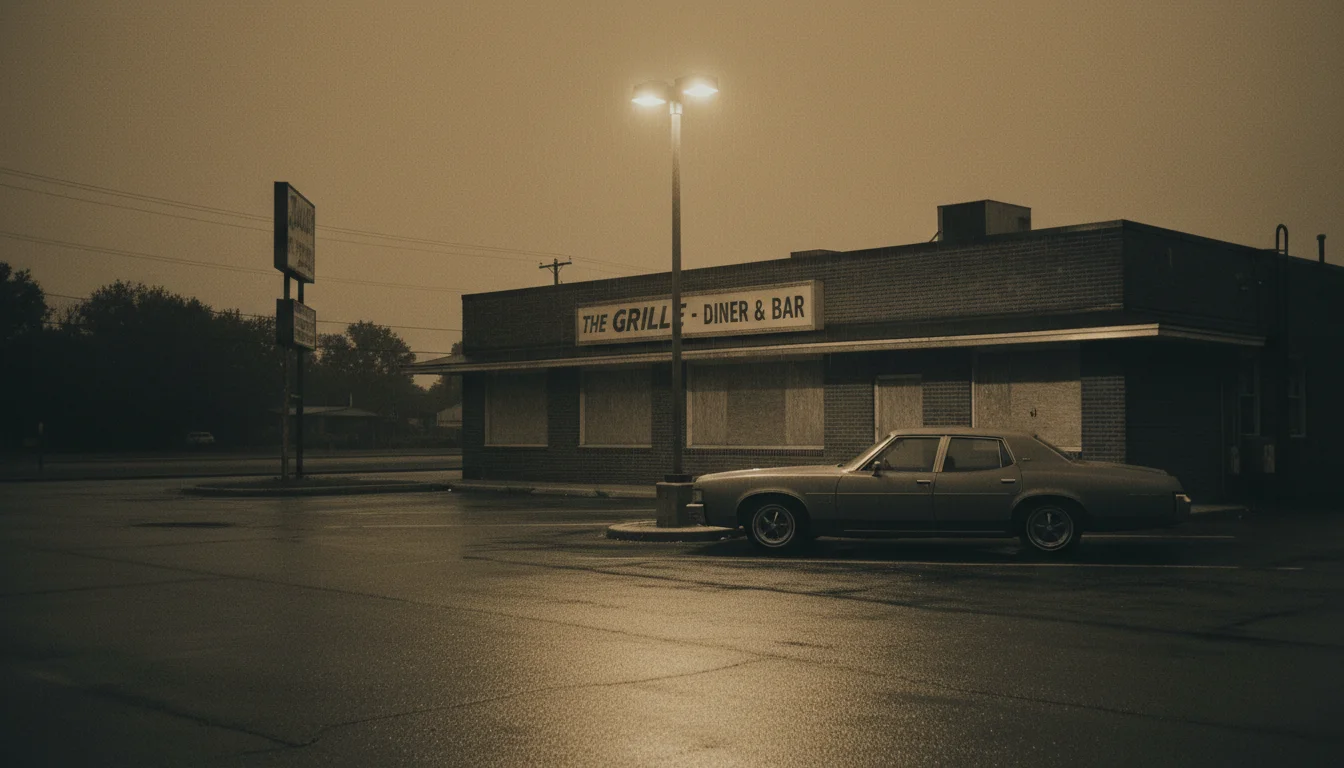
On the afternoon of July 30, 1975, James Riddle Hoffa - former president of the International Brotherhood of Teamsters, convicted felon, pardoned political figure, and arguably the most powerful labor leader in American history - drove his green Pontiac Grand Ville to the Machus Red Fox restaurant in Bloomfield Township, Michigan. He was supposed to meet two men: Anthony "Tony Jack" Giacalone, a Detroit Mafia captain, and Anthony "Tony Pro" Provenzano, a New Jersey Teamster official with deep mob ties.
Hoffa arrived around 2:00 PM. Neither man showed up.
At 2:30, Hoffa called his wife Josephine from a payphone. He was irritated. "Where the hell is Giacalone?" he said. "I'm waiting for him."
That phone call was the last confirmed contact anyone had with Jimmy Hoffa.
The Rise of a Labor Titan
To understand why Hoffa's disappearance sent shockwaves through America, you need to understand the empire he built. Born in Brazil, Indiana, in 1913, Hoffa dropped out of school at 14 and went to work in a warehouse. By 18, he had organized his first strike - refusing to unload a shipment of strawberries until the foreman agreed to better conditions. The strawberries rotted. The foreman caved.
That stubbornness defined his career. Hoffa clawed his way up through the Teamsters with a combination of genuine organizing skill and a willingness to make deals with anyone who could help - including the Mafia. By 1957, he was president of the Teamsters, controlling the largest labor union in America with nearly two million members.
The Teamsters' Central States Pension Fund became Hoffa's true source of power. Under his direction, hundreds of millions of dollars in pension money flowed as loans to Las Vegas casinos, real estate developments, and various ventures connected to organized crime. The fund essentially operated as a private bank for the mob, and Hoffa was the man who controlled the spigot.
This arrangement made Hoffa both indispensable and dangerous. He knew where the money went. He knew who owed whom. And he had the loyalty of the rank-and-file truckers who saw him as a champion of the working man - which, in many ways, he was.
Bobby Kennedy's Obsession
Hoffa's power made him a target. Attorney General Robert F. Kennedy made breaking Hoffa a personal crusade, creating the "Get Hoffa" squad within the Department of Justice. After years of investigation, Hoffa was convicted in 1964 on charges of jury tampering and fraud. He entered federal prison in 1967.
But Hoffa didn't go quietly. He arranged for Frank Fitzsimmons, a loyalist he considered a puppet, to serve as acting Teamsters president. The plan was simple: serve his time, get out, and reclaim his throne.
The plan fell apart. Fitzsimmons turned out to be no puppet. He liked being president. Worse, from Hoffa's perspective, Fitzsimmons proved even more accommodating to the mob than Hoffa had been. The organized crime families that had worked with Hoffa found Fitzsimmons easier to control.
When President Richard Nixon commuted Hoffa's sentence in December 1971, there was a catch - a restriction barring Hoffa from union activity until 1980. Hoffa believed this restriction was part of a backroom deal between Fitzsimmons and the Nixon White House. He spent the next four years fighting to get it overturned, planning his comeback.
The mob didn't want him back.
The Day He Vanished
The meeting at the Machus Red Fox was supposedly about smoothing things over. Hoffa wanted Provenzano's support for his return to power. The two men had once been allies but had fallen out violently during their time together in prison at Lewisburg Penitentiary.
Here is what investigators pieced together: Hoffa was likely picked up in the parking lot by several men, possibly in a maroon Mercury sedan. He may have gotten into the car willingly, believing he was being taken to the actual meeting location. After that, the trail goes cold.
Giacalone claimed he was at a gym getting a massage. Provenzano said he was playing cards at his union hall in New Jersey. Both had alibis. Both were widely disbelieved.
The FBI launched one of the largest investigations in its history. They interviewed hundreds of witnesses. They dug up farms, searched landfills, and tested concrete slabs. They never found a body.
The Theories
Over the decades, an industry of Hoffa theories has developed. Each has its advocates, its evidence, and its holes.
The Renaissance Center Theory: Some investigators believe Hoffa's body was transported to a steel drum and buried in the foundation of Detroit's Renaissance Center, which was under construction at the time. The timing aligned, and several mob-connected figures had involvement in the project. But ground-penetrating radar surveys have never confirmed it.
The New Jersey Theory: In 2004, self-described hitman Richard Kuklinski claimed Hoffa was killed and stuffed into a barrel that was later placed in the foundation of Giants Stadium in the Meadowlands. When the stadium was demolished in 2010, no remains were found.
The Fat Man Theory: Frank Sheeran, a Teamster official and alleged mob hitman, claimed in his deathbook "I Heard You Paint Houses" that he shot Hoffa in a house in Detroit. Sheeran said the body was then cremated at a nearby funeral home. This account became the basis for Martin Scorsese's film "The Irishman." However, forensic evidence found blood at the house Sheeran identified, though DNA testing was inconclusive, and many investigators doubt Sheeran's reliability.
The Oakland County Theory: In 2021, the FBI excavated a site beneath a bridge in Jersey City after a deathbed confession pointed them there. Results were inconclusive. In 2020, a team using ground-penetrating radar at a former landfill in Oakland County, Michigan, detected anomalies consistent with a buried container - but further investigation has not yielded definitive results.
Why It Still Matters
Jimmy Hoffa was declared legally dead in 1982. The men most likely responsible for his murder - Giacalone, Provenzano, and their associates - are all dead themselves. The institutional knowledge of what happened that afternoon has almost certainly died with them.
Yet the case refuses to fade. Every few years, a new lead surfaces. A new excavation begins. A new informant comes forward with a story. The FBI's Detroit field office still lists Hoffa as an active missing persons case.
Part of the fascination is the sheer audacity of it. This wasn't some anonymous victim. Jimmy Hoffa was one of the most recognized figures in America - a man whose face had been on the cover of every major magazine, who had sparred with the Kennedys, who controlled billions in pension funds. And he was simply erased.
The other part is what his disappearance represents. Hoffa existed at the intersection of labor, politics, and organized crime - three forces that shaped 20th-century America in ways we're still reckoning with. His story is the story of how power works in the shadows, how alliances form and fracture, and how even the most powerful men can become liabilities to be disposed of.
Somewhere, Jimmy Hoffa's remains lie hidden. After fifty years of searching, with every major suspect dead, finding them might be the only way this case is ever truly closed. And with each passing year, even that slim possibility grows dimmer.
The most powerful labor leader in American history walked into a parking lot on a summer afternoon and simply ceased to exist. That's the kind of mystery that doesn't let go.
For other disappearances tied to organized crime and political pressure, the Patty Hearst kidnapping overlaps the same 1970s underworld in which Hoffa moved. Brian Shaffer's disappearance is a more recent case where a man walked into a building on camera and was never seen again.
Quick Answers
Common questions about this topic
When and where did Jimmy Hoffa disappear?
Jimmy Hoffa disappeared on July 30, 1975, from the parking lot of the Machus Red Fox restaurant in Bloomfield Township, Michigan. He had driven there to meet mobsters Anthony 'Tony Jack' Giacalone and Anthony 'Tony Pro' Provenzano. At 2:30 PM, Hoffa called his wife Josephine from a payphone, irritated: 'Where the hell is Giacalone?' That was the last confirmed contact anyone had with him.
Why was Jimmy Hoffa so powerful?
Hoffa was president of the International Brotherhood of Teamsters, which represented nearly two million members. His true leverage came from the Teamsters' Central States Pension Fund, which effectively operated as a private bank for the mob. Under Hoffa, hundreds of millions of pension dollars flowed as loans to Las Vegas casinos and mob-connected ventures, making him both indispensable and dangerous to organized crime.
What happened to Jimmy Hoffa?
Nobody knows for certain. Hoffa was almost certainly picked up in the restaurant parking lot by several men, possibly in a maroon Mercury sedan. After that, the trail goes cold. The FBI launched one of the largest investigations in its history, searching farms, landfills, and concrete slabs, but never found a body. Hoffa was declared legally dead in 1982.
Where is Jimmy Hoffa's body supposedly buried?
The most-discussed theories include the Renaissance Center in Detroit (under construction at the time), a site beneath a New Jersey bridge (where an FBI excavation in 2021 was inconclusive), and a Detroit funeral home where hitman Frank Sheeran claimed the body was cremated. None of the searches has produced a confirmed body.

Want to Interrogate the Suspects?
Chat with historical figures and uncover the truth behind history's greatest mysteries.
Start Your InvestigationJoin the HistorIQly Club
Get smarter about the past.
Weekly stories, deep dives, and exclusive content straight to your inbox.