The Killing of Ken McElroy: Shot in Front of 45 Witnesses and Nobody Saw a Thing
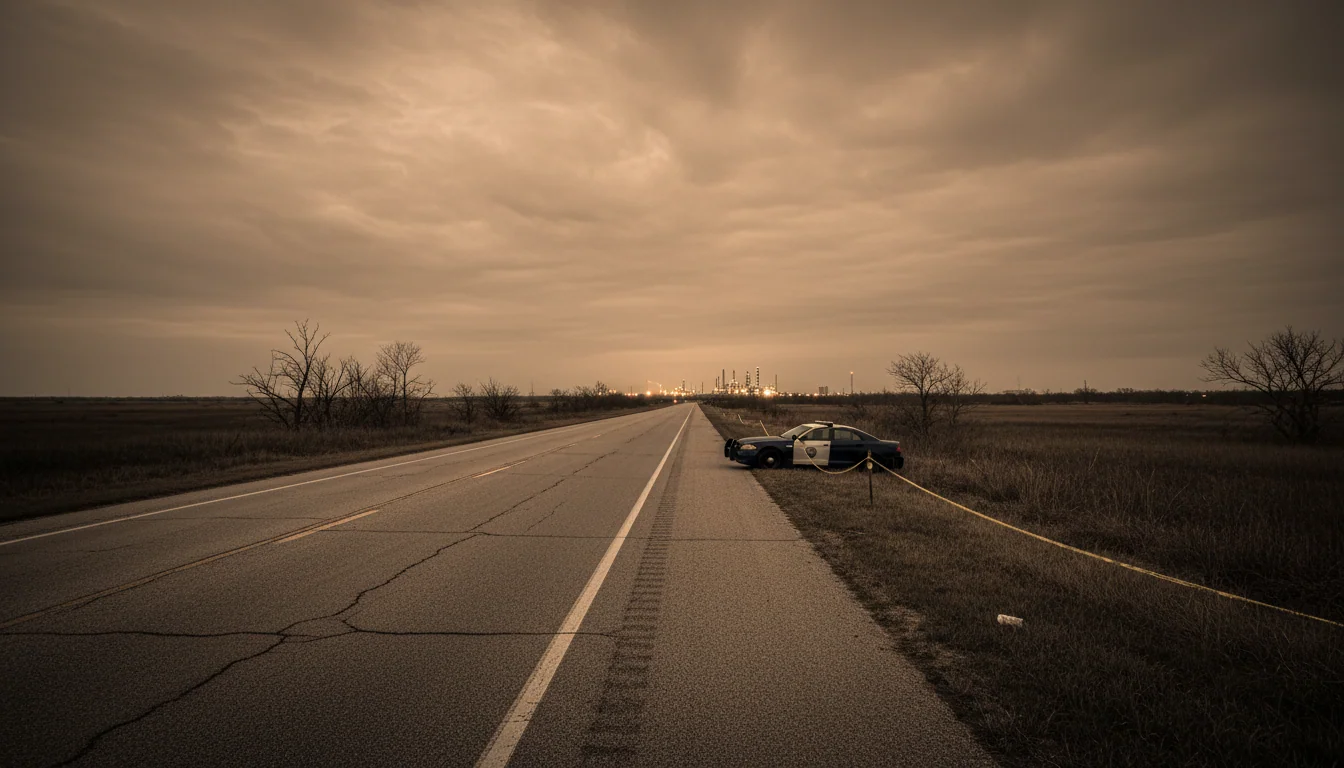
In 1981, Ken McElroy - the town bully of Skidmore, Missouri - was shot in broad daylight by an unknown gunman. Forty-five witnesses. No charges ever filed.
Read Wikipedia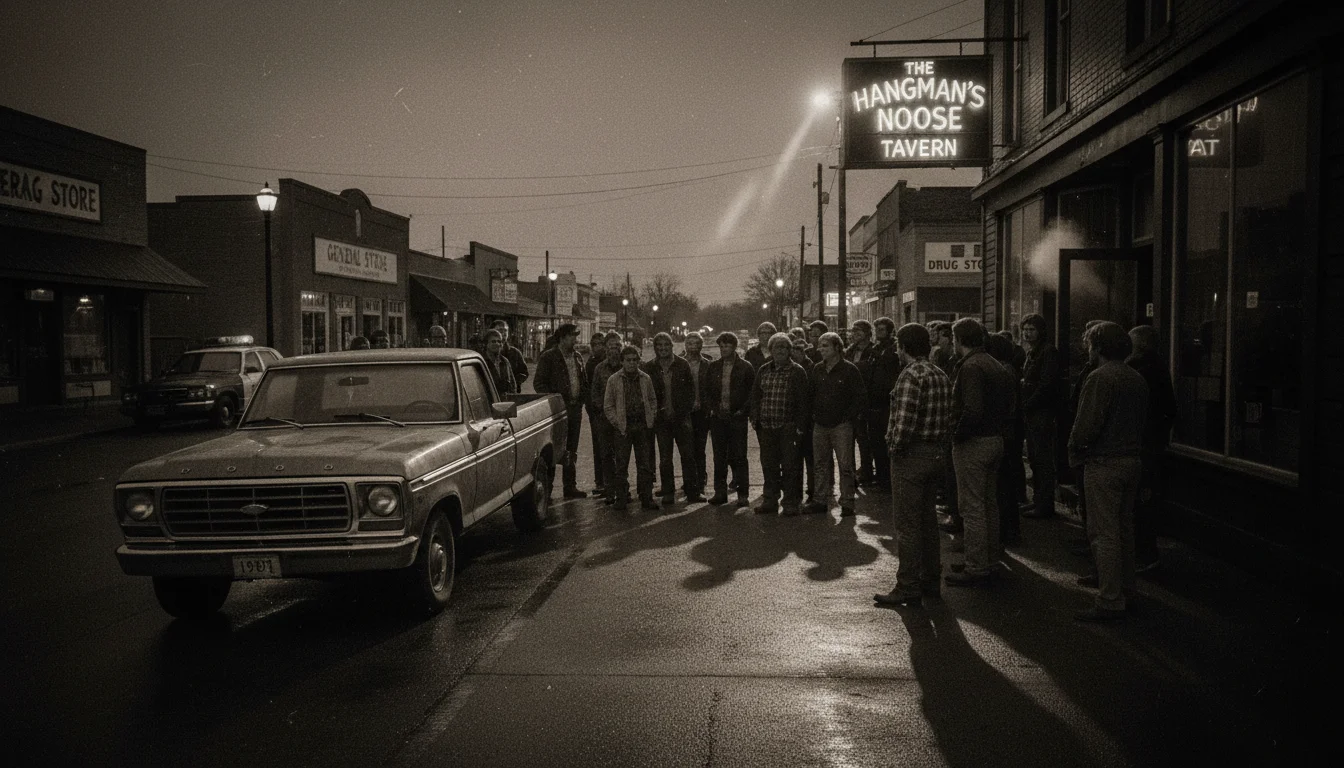
On July 10, 1981, a man named Ken Rex McElroy walked out of the D&G Tavern in Skidmore, Missouri, climbed into his Chevy Silverado pickup truck, and was shot to death in broad daylight. His wife Trena sat beside him. Forty-five townspeople stood watching from the street.
When the sheriff arrived and asked who had done it, no one could say. Forty-five witnesses. Two shooters. At least two different caliber bullets. And not a single person saw anything.
To this day, no one has been charged. The case remains officially unsolved. But everyone in Skidmore knows what happened that day - and why.
The Town Bully
Ken Rex McElroy was born in 1934, one of sixteen children raised on a farm near Skidmore, a tiny town of about 400 people in the rolling farmland of northwest Missouri. From his teenage years, he carved out a reputation as someone not to be crossed.
By the time he reached adulthood, McElroy had been accused of dozens of felonies - theft, arson, assault, cattle rustling, child molestation, statutory rape, and attempted murder. He burned down houses. He shot at least two men. He threatened countless others.
His method was simple and effective: intimidation. McElroy would park outside the homes of his accusers, sitting in his truck for hours, cradling a rifle. He would follow people to work. He would show up at businesses and stare at employees until they quit. Witnesses would suddenly change their stories. Victims would refuse to testify.
He was arrested multiple times but never spent a day in prison. He had a lawyer named Richard McFadin who specialized in continuances and procedural delays. Cases would drag on for years until witnesses disappeared or memories faded. The system, designed to protect the innocent, was weaponized to protect the guilty.
The people of Skidmore lived in fear. And for nearly two decades, there was nothing they could do about it.
The Children
McElroy's personal life was as predatory as his criminal one. He married four women and had numerous girlfriends, many of them teenage girls. His pattern was consistent: he would target young girls from troubled homes, seduce or coerce them, and then marry them - sometimes while still married to someone else.
Trena McCloud was twelve years old when McElroy, then thirty-four, began a relationship with her. When she turned sixteen and became pregnant, her parents filed statutory rape charges. McElroy's solution was to divorce his third wife and marry Trena. In Missouri at the time, a husband could not be compelled to testify against his wife, and vice versa. The charges were dropped.
Trena would later say she was terrified of him. When she tried to leave, he threatened to kill her parents. When she did briefly escape to her family, McElroy burned her parents' house down. She went back.
This was the man Skidmore had been living with for twenty years.
The Final Straw
In 1980, McElroy walked into the Bowenkamp grocery store and accused 70-year-old Ernest "Bo" Bowenkamp - a gentle, well-liked man who had run the store for decades - of mistreating one of McElroy's children. The accusation was baseless. What followed was not.
McElroy returned to the store with a shotgun and shot Bo Bowenkamp in the neck. The elderly grocer survived, barely. For the first time in McElroy's long criminal career, there were multiple witnesses and no way to intimidate all of them.
McElroy was charged with attempted murder. The trial took place in 1981. The jury found him guilty - the first and only conviction in his life. He was sentenced to two years in prison.
But he didn't go to prison. Not yet. His lawyer successfully argued for bail pending appeal. Days after being convicted of shooting an old man in the neck, Ken McElroy was back on the streets of Skidmore. Back in his truck. Back with his guns.
And then he started threatening the Bowenkamps again.
The Meeting
On the morning of July 10, 1981, around sixty residents of Skidmore gathered at the Legion Hall for a meeting about the Ken McElroy problem. The county sheriff had essentially told them he couldn't do anything - McElroy was out on bail, and unless he violated the terms of that bail, there was no legal recourse.
The meeting was tense. People were scared. McElroy had been seen driving past the Bowenkamps' store again, rifle visible in his truck. It felt like a countdown to another shooting.
Someone suggested forming a neighborhood watch. Someone else suggested a petition. The ideas were well-meaning and inadequate. Everyone knew that McElroy didn't respond to petitions.
Then someone spotted McElroy's truck pulling up outside the D&G Tavern, just down the street from the meeting.
One Hundred Feet
The meeting dispersed. Perhaps thirty to forty-five people walked down to the tavern. They didn't go inside. They waited on the street, watching.
Ken McElroy came out of the tavern with his wife Trena. He climbed into his Silverado. Trena got in beside him. McElroy put a cigarette in his mouth and reached for his lighter.
The first shot shattered the driver's side window. The second hit him in the head. More shots followed - at least two different guns fired, probably from opposite sides of the street. McElroy slumped over the steering wheel.
The townspeople stood and watched. No one ran. No one screamed. When it was over, someone walked to a payphone and called the sheriff.
Ken Rex McElroy, fifty-seven years old, was dead. The bullet holes told the story: at least two different calibers, at least two shooters. The whole thing had taken less than a minute.
Forty-Five Witnesses
Nodaway County Sheriff Danny Estes arrived to find Ken McElroy dead in his truck, his wife in shock, and forty-five people milling around the scene. He began asking questions.
"Who shot him?"
No one knew.
"Did anyone see anything?"
No one had.
"Which direction did the shots come from?"
Nobody could say.
Trena McElroy, who had been sitting in the passenger seat, claimed she was too traumatized to identify anyone. Later, she would name two men - Del Clement and a local farmer - as the shooters. But when the FBI and state investigators arrived, they found the same wall of silence.
Every single person who had been standing on that street denied seeing anything. Not the shooters. Not the guns. Not the direction of fire. Nothing. A man had been shot to death from a distance of less than a hundred feet, in broad daylight, in front of four dozen witnesses, and every one of them had apparently been looking the other way.
The Investigation
The FBI investigated for a year. They conducted over 100 interviews. They offered immunity deals. They promised protection for anyone who would talk. No one did.
Trena McElroy filed a civil lawsuit against Del Clement and the town of Skidmore, eventually settling for $17,600. But the settlement included no admission of guilt, and criminal charges were never filed.
A grand jury was convened. It heard testimony. It examined evidence. It returned no indictments.
Richard McFadin, the lawyer who had kept McElroy out of prison for two decades, told reporters he was shocked by the silence. He had never seen anything like it. But he also acknowledged the truth: "There wasn't anyone in that town who didn't feel terrorized by that man."
The case remains officially open. Everyone involved knows it will never be solved.
The Conspiracy of Silence
What happened in Skidmore that day was, in the legal sense, murder. Probably premeditated. Certainly coordinated. At least two people fired weapons, and many more watched it happen without intervening or cooperating with investigators afterward.
But the people of Skidmore didn't see it as murder. They saw it as the only option left when every other option had failed.
Ken McElroy had terrorized their town for twenty years. He had shot their neighbors, burned their houses, threatened their families, and raped their children. The legal system, for reasons ranging from incompetence to corruption to McElroy's own talent for intimidation, had proven completely incapable of stopping him.
They had watched him walk free after shooting a seventy-year-old man in the neck. They had watched him return to the streets of their town, rifle in hand, ready to do it again.
So they did what they felt they had to do. And then they closed ranks.
The Aftermath
Trena McElroy left Skidmore with her children and never returned. She died in 2012. In interviews over the years, she maintained that the shooters should have been prosecuted - that whatever her husband had done, he didn't deserve to be executed in the street.
Del Clement, the man most often named as one of the shooters, never confirmed or denied his involvement. He died in 2009, taking whatever secrets he had with him.
The town of Skidmore never really recovered. The national attention brought reporters, true crime writers, and curious tourists to a community that wanted nothing more than to be left alone. A book was written. A television movie was made. The town that had closed ranks so effectively against outsiders found itself unable to escape the story.
Today, Skidmore has about 250 residents, down from 400 in 1981. The D&G Tavern is long gone. Most of the people who witnessed that day are dead now. The silence they maintained has outlasted them all.
Justice or Murder?
The killing of Ken McElroy forces uncomfortable questions about justice, vigilantism, and the limits of law.
The legal system failed Skidmore spectacularly. A man who had committed dozens of felonies, who had shot people, burned houses, and terrorized families, was allowed to walk free again and again. When the system finally convicted him, it immediately released him on bail to threaten his victim again.
What the townspeople did was illegal. It was murder. Two or more people conspired to kill another human being and executed that plan in cold blood. The community's refusal to cooperate with investigators was obstruction of justice on a massive scale.
But it also worked. After McElroy's death, the terror ended. The Bowenkamps lived out their lives in peace. The families who had been stalked and threatened were no longer afraid. The problem that twenty years of police reports and court appearances had failed to solve was solved in thirty seconds.
There is no clean answer here. The rule of law is foundational to civilization, and vigilante justice is its antithesis. But law means nothing if it cannot protect people from monsters. And Ken McElroy was, by any reasonable measure, a monster.
The people of Skidmore weighed their options and made a choice. They have kept that secret for more than four decades now. They will keep it until the last witness dies.
Some might call that conspiracy. Others might call it justice. The people of Skidmore would probably prefer you just didn't call it anything at all.
For other cases where community silence shielded a killer, see Lizzie Borden on the 1892 Fall River murders where a jury returned a verdict many found baffling, and Belle Gunness on the Indiana serial killer whose neighbors had long suspected the truth.

Want to Interrogate the Suspects?
Chat with historical figures and uncover the truth behind history's greatest mysteries.
Create your free account →No card required. Some figures and features require a paid plan.
Join the HistorIQly Club
Get smarter about the past.
Weekly stories, deep dives, and exclusive content straight to your inbox.