The Texas Killing Fields: Decades of Murders Along I-45
More than 30 women have been found dead along a 25-mile stretch of I-45 between Houston and Galveston since the 1970s. The cluster is too large to be coincidence.
Read Wikipedia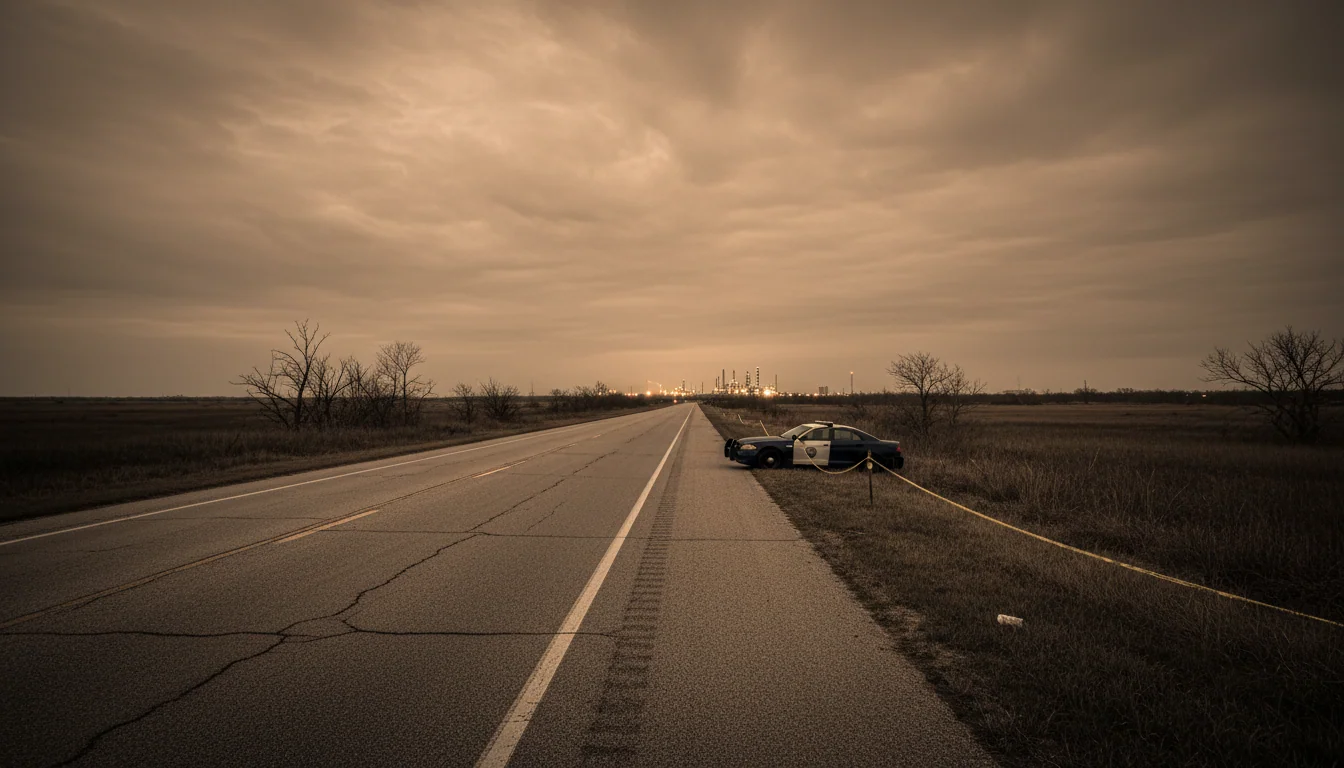
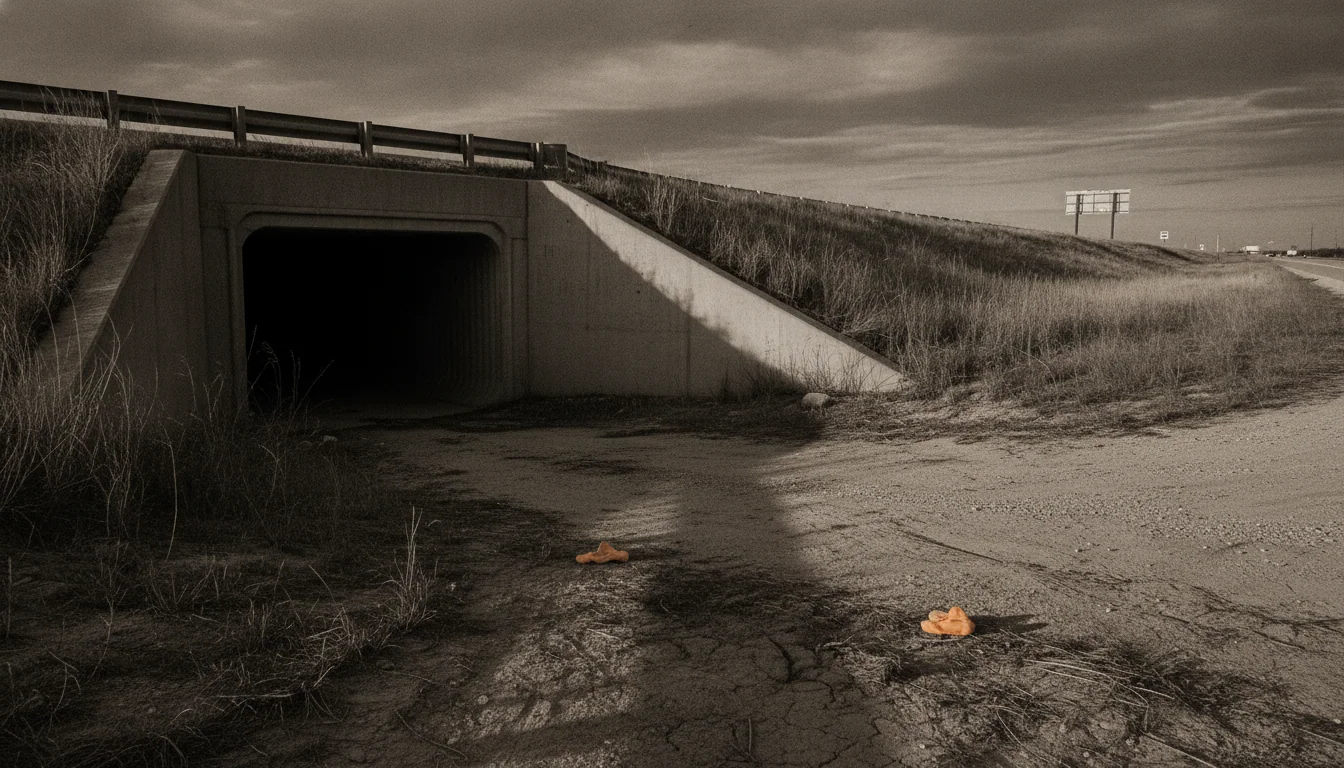
The stretch of Interstate 45 between Houston and Galveston looks unremarkable from the road. Strip malls, gas stations, overpasses, salt grass marshes, and the flat Gulf Coast horizon. Trucks move through it all day and night. Cars pull off at rest areas. It is, by every visible measure, ordinary.
Beneath the ordinary surface, investigators have documented one of the most concentrated patterns of unsolved female homicides in American history. Since the early 1970s, more than 30 women have been found dead or have disappeared without explanation along this 25-mile corridor. The victims range from teenagers to women in their thirties. They come from different backgrounds, different races, different circumstances. What they share is geography: the corridor, the field, the ditches, and the vacant tracts that line one of the busiest interstate segments in Texas.
The field
The most infamous location is a vacant lot in League City, a suburb southeast of Houston. Over more than a decade, investigators and volunteers found the partial remains of at least four women in and around this single field. The remains were not buried. They were left exposed in the grass and scrub, hidden only by the scale of the landscape, which is flat and wide and easy to pass through quickly.
The first confirmed discovery in the field came in the mid-1980s. Over subsequent years, additional remains surfaced during searches, including three sets that remained unidentified for years. These women, known for a long time only as the League City Jane Does, represent one of the specific puzzles within the larger pattern: who killed them, who they were, and whether the same person is responsible for other deaths along the corridor.
Two of the League City Jane Does were eventually identified through advances in DNA technology and genealogical tracing, but the work took decades. The third remained unnamed for many years. The delay between death and identification meant that leads, witnesses, and physical evidence had long since scattered.
The scale of the pattern
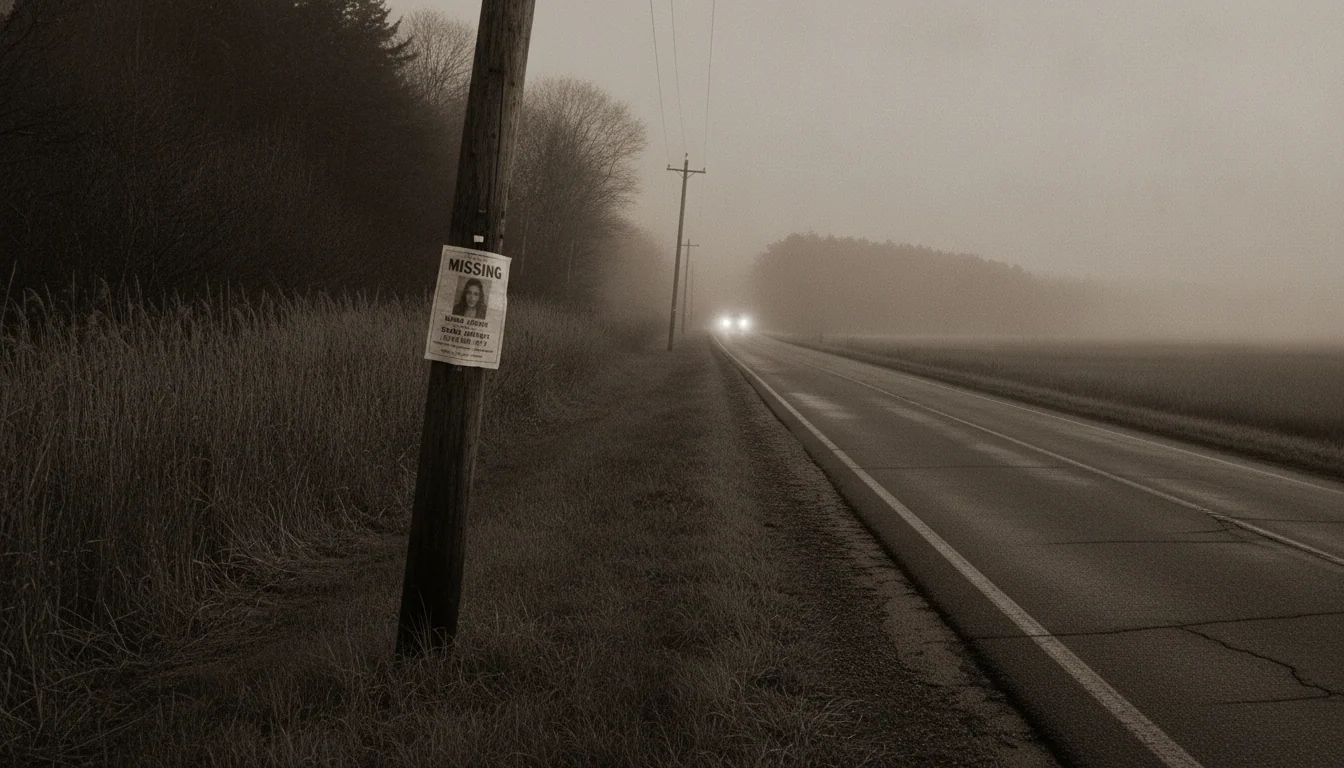
The field is only one data point. The wider pattern extends along I-45 for miles in both directions. Investigators tracking the corridor have documented killings in League City, Webster, Santa Fe, Texas City, and the marshland edges near Galveston Bay. Many of the victims were young women, some of them last seen along the highway itself, at rest stops, at the margins of truck routes.
The pattern drew serious investigative attention beginning in the late 1990s. A joint task force, eventually involving the Texas Rangers, the FBI, and local law enforcement, attempted to establish whether a serial killer or killers had been operating along the corridor. The task force catalogued cases, compared victimology, and looked for forensic connections across agencies that had often worked independently on what each had treated as isolated homicides.
The findings were troubling but inconclusive. Many of the cases appeared connected, but forensic evidence from the 1970s and early 1980s was largely gone. Witnesses had died or could no longer be located. The crime scenes had not been treated as part of a pattern at the time and had not been preserved with that frame in mind.
William Reece and the 1997 cluster
In the summer of 1997, a particularly concentrated group of young women disappeared from the I-45 area. One of the survivors was Sandra Sapaugh, who was abducted by a man in a pickup truck and managed to escape by jumping from the moving vehicle. The description she gave led investigators to William Lewis Reece, a Texas City-area laborer with a prior conviction.
Reece was convicted of the kidnapping of Sapaugh. Investigators then connected him to the murders of several young women who had vanished from the corridor around the same time. Jessica Cain, 17, disappeared from I-45 after attending a theater performance in Houston. Her remains were found years later. Reece was convicted of her murder. He has also been convicted of the 1997 murder of Tiffany Johnston in Oklahoma, a case that established his pattern of predation near highways.
Reece's convictions answered some of the corridor's open files. They did not answer most of them. The murders along I-45 stretch back to the early 1970s, twenty-five years before Reece became active. Whatever Reece did in 1997, the bodies in the field from the 1980s belong to a different chapter. No perpetrator has ever been identified for them.
Tim Miller and what grief built
Tim Miller is a Texas City resident whose teenage daughter vanished and was later found dead in the I-45 area. Miller spent years after her death conducting his own searches, driving the marshlands and vacant lots of the corridor, looking for other missing people whose families had nowhere else to turn.
In 2000, he formalized this work by founding Texas EquuSearch, a volunteer search-and-recovery organization that uses horses, dogs, boats, and hundreds of volunteers to search for missing persons. What began as one father's response to one case became a national organization that has assisted in thousands of searches across the country, including some of the most prominent missing persons cases of the 2000s and 2010s.
Miller has spoken publicly and repeatedly about his belief that the I-45 corridor harbors answers that law enforcement has been slow to pursue. He has argued that the victims along the corridor, some of them women who lived on the margins or were involved in high-risk circumstances, did not receive the investigative attention that other victims would have commanded. This critique is shared by investigators and journalists who have studied the pattern.
Why it remains unsolved
Serial predation along highways presents specific investigative challenges. The victims are often transient, the crime scenes are scattered across multiple jurisdictions, and the killer has access to the road in both directions. Jurisdictional boundaries that were drawn for unrelated administrative reasons cut across a geographic crime pattern, meaning that murders that appear connected on a map may be filed in entirely different agencies with no formal mechanism for comparison.
The I-45 corridor further complicates matters because it has almost certainly involved more than one perpetrator. The time span is too long, the methods too varied, and the identified suspects too different from each other for a single killer to account for everything. What investigators are dealing with is not a serial killer case but a corridor case: a geography that attracts predation, for reasons that include access, isolation, and the vulnerability of some of the people who use the road. The same dynamic gave Long Island's Gilgo Beach its decades-long body count.
Advances in forensic genealogy - the same technique that identified the Golden State Killer and several of the League City Jane Does, and that finally cracked the Colonial Parkway murders cold-case set - have continued to produce new leads in older I-45 cases. Cold case units in multiple Texas jurisdictions maintain active files. The Texas Rangers have kept the corridor cases open and have periodically revisited evidence as new technology becomes available.
The count
The formal count of I-45 corridor murders varies depending on how investigators draw the geographic and temporal boundaries. Researchers and journalists who have studied the pattern most closely have settled on figures above 30 confirmed cases, with additional cases under evaluation. Several victims still carry only a Jane Doe designation. Some cases that appear related cannot be formally linked for evidentiary reasons.
What the number does not capture is the arithmetic of consequence. For every unidentified woman found in a field or a ditch, there is a family somewhere that never learned what happened. Texas EquuSearch receives calls from those families. The task force receives tips. The cold case units maintain their files.
The highway runs. The pattern, so far, remains open.
Quick Answers
Common questions about this topic
What are the Texas Killing Fields?
The Texas Killing Fields refers to a stretch of land near Interstate 45 between Houston and Galveston, particularly around League City, where the bodies of more than 30 women have been discovered since the 1970s. The concentration of unsolved homicides along this corridor has led investigators to suspect one or more serial killers operated in the area across multiple decades.
Who is William Reece?
William Lewis Reece is a convicted killer linked to victims along the I-45 corridor. In 1997 he kidnapped Sandra Sapaugh, who survived by jumping from his truck. He was later convicted of murdering at least two young women connected to the corridor, including Jessica Cain, who disappeared in 1997. Reece is on death row in Texas.
Who founded Texas EquuSearch?
Tim Miller, a Texas City resident whose teenage daughter disappeared and was later found murdered in the I-45 area, founded Texas EquuSearch in 2000 after years of searching for missing persons on his own. The organization became one of the most active volunteer search-and-recovery groups in the United States, assisting in thousands of cases nationwide.
How many victims are connected to the I-45 corridor?
Investigators and journalists have identified more than 30 cases of murdered or missing women connected to the stretch of I-45 between Houston and Galveston since the early 1970s. The exact number varies depending on criteria, and some researchers place the figure higher. Many victims remain unidentified, and the majority of cases have never been solved.

Want to Interrogate the Suspects?
Chat with historical figures and uncover the truth behind history's greatest mysteries.
Create your free account →No card required. Some figures and features require a paid plan.
Join the HistorIQly Club
Get smarter about the past.
Weekly stories, deep dives, and exclusive content straight to your inbox.