Kingdom of Heaven vs History: How Accurate Is Ridley Scott's Crusades Epic?
Kingdom of Heaven historical accuracy reviewed: Saladin and Hattin are solid, but Balian's entire backstory is invented and the religious attitudes are pure 21st century.
Read Wikipedia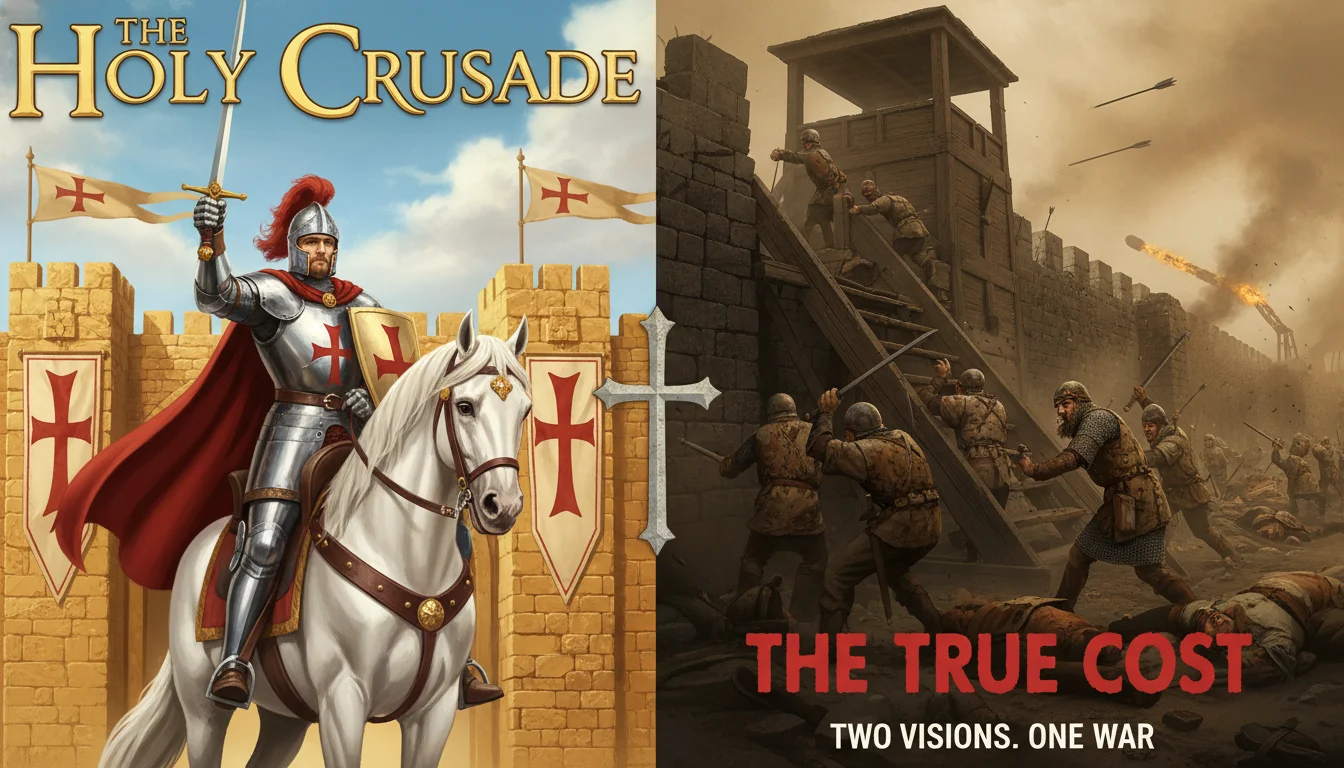
Ridley Scott's 2005 epic "Kingdom of Heaven" transported audiences to the Holy Land during one of history's most turbulent periods - the final days of the Crusader Kingdom of Jerusalem. Starring Orlando Bloom as Balian of Ibelin, the film depicts the fall of Jerusalem to Saladin in 1187. But how much of this sweeping historical drama actually happened?
Let's separate the Hollywood spectacle from the historical reality.
What Hollywood Got RIGHT
Saladin's Honorable Conduct
The film's portrayal of Saladin (Ghassan Massoud) as a chivalrous, honorable opponent is remarkably accurate. When Jerusalem fell in October 1187, Saladin did indeed allow the Christian inhabitants to ransom themselves, rather than massacring them as the Crusaders had done when they captured the city in 1099.
Historical accounts confirm Saladin's generosity. He freed elderly Christians who couldn't pay ransom, released prisoners at the request of Balian and others, and even provided an escort for refugees traveling to the coast. His brother al-Adil freed 1,000 captives, and Saladin matched this gesture. The film captures this magnanimity perfectly.
The Battle of Hattin
The devastating defeat of the Crusader army at the Horns of Hattin in 1187 is accurately depicted as the turning point that sealed Jerusalem's fate. King Guy of Lusignan did lead his army into the waterless desert against wiser counsel, and the resulting disaster was as catastrophic as shown. Saladin captured the True Cross and executed Reynald of Chatillon personally - both events the film portrays.
The Defense of Jerusalem
Balian of Ibelin did organize Jerusalem's defense after Hattin, knighting common men to bolster the depleted garrison. The city's walls were undermined by Saladin's sappers, creating the breach shown in the film. And Balian did negotiate the surrender that saved the population from massacre.
Reynald of Chatillon's Villainy
Reynald (played by Brendan Gleeson) was indeed the provocateur who broke the truce with Saladin by attacking Muslim caravans and pilgrims. His raids on the Red Sea - threatening Mecca and Medina - genuinely outraged the Muslim world and gave Saladin justification for his campaign. The film doesn't exaggerate his warmongering nature.
The Political Dysfunction
The film accurately shows the internal conflicts plaguing the Kingdom of Jerusalem. King Baldwin IV, despite his leprosy, was a capable ruler whose death left a power vacuum. The rivalry between Raymond of Tripoli and Guy of Lusignan, the scheming of the Templars, and the kingdom's fatal divisions are all based on historical reality.
What Hollywood Got WRONG
Balian's Entire Backstory
Here's where historical accuracy takes a significant hit. The real Balian of Ibelin was not a humble blacksmith from France who discovered his noble lineage. He was born into the established Ibelin dynasty, one of the most powerful noble families in Outremer (the Crusader states). He was raised a lord, married to a Byzantine princess (Maria Komnene, widow of King Amalric I), and was a major political player long before Hattin.
The entire journey of discovery - the illegitimate son, the murdered priest brother, the voyage to the Holy Land - is pure fiction. It makes for compelling drama but has no historical basis whatsoever.
The Timeline and Characters
The film compresses and rearranges events significantly. Baldwin IV died in 1185, not immediately before Jerusalem's fall in 1187. His nephew Baldwin V reigned briefly before Guy took the throne. The film's condensed timeline eliminates these transitions entirely.
Sibylla (Eva Green) did marry Guy of Lusignan, but the political circumstances differed from the film's portrayal. And her dramatic death during the siege? Never happened - she actually died in 1190 during the Siege of Acre, years later.
The Hospitaller Knights
The film presents the Hospitallers sympathetically, particularly the character played by David Thewlis. While Hospitallers were indeed more moderate than the bellicose Templars, the film oversimplifies the military orders' roles. Both orders were complex organizations with their own political agendas.
Religious Nuance... or Lack Thereof
Scott's film presents a surprisingly secular perspective on the Crusades, with characters spouting modern-sounding tolerance about religious coexistence. Lines like "What man is a man who does not make the world better?" sound noble but reflect 21st-century sensibilities more than 12th-century mentality.
The real Crusaders were deeply religious - they genuinely believed they were fighting for Christ and their eternal salvation. The film's skepticism about religious motivation, while appealing to modern audiences, misrepresents how medieval people actually thought.
The Siege Itself
The film's spectacular siege sequences, while visually stunning, exaggerate the intensity of the fighting. The historical siege was relatively brief (about two weeks), and while there was combat at the breached walls, it wasn't the prolonged, epic battle depicted on screen. Negotiations began quickly once the walls were compromised.
Tiberias and the Templars
Raymond of Tripoli (called "Tiberias" in the film, played by Jeremy Irons) is portrayed as purely wise and moderate. The real Raymond was more complex - he had actually allied with Saladin at one point and was suspected of treason by many Crusaders. His relationships and motivations were far more tangled than the film suggests.
Historical Accuracy Score: 6/10
Kingdom of Heaven gets the broad strokes right: the political chaos, the honorable Saladin, the disastrous battle of Hattin, and the negotiated fall of Jerusalem. These major historical beats are portrayed with reasonable accuracy.
However, the complete fabrication of Balian's origins, the compressed timeline, and the modernized religious attitudes significantly diminish its historical credibility. Ridley Scott clearly prioritized creating a morally complex hero's journey over strict historical fidelity.
The Director's Cut (50 minutes longer than the theatrical release) actually improves historical accuracy by restoring Sibylla's storyline and adding political context that was stripped from the theatrical version. If you're interested in the history, seek out the extended edition.
The Verdict
Kingdom of Heaven is best viewed as historical fiction inspired by real events rather than a documentary. It captures the tragedy of the Crusader Kingdom's fall and presents a refreshingly nuanced view of both Christian and Muslim perspectives. Saladin emerges as perhaps the most accurately portrayed character - ironic given that he's the "antagonist."
For medieval history enthusiasts, it's a visually spectacular introduction to a fascinating period, but should be supplemented with actual historical reading. The real story of the Crusades is even more complex, morally ambiguous, and ultimately tragic than any Hollywood film could capture.
At least Ridley Scott got one thing absolutely right: when Balian asks Saladin what Jerusalem is worth, and Saladin replies "Nothing... everything" - that paradox perfectly captures why this ancient city has been fought over for millennia.
For more historical films set in the medieval and early modern periods, see The Favourite vs. History and Darkest Hour vs. History.

Debate the Accuracy with the Real Figures
Ask the real people what Hollywood got wrong about their lives.
Create your free account →No card required. Some figures and features require a paid plan.
Join the HistorIQly Club
Get smarter about the past.
Weekly stories, deep dives, and exclusive content straight to your inbox.