Napoleon (2023) vs. History: How Accurate Is Ridley Scott's Controversial Epic?
Napoleon 2023 historical accuracy: French historians called it 'spitting in the face of French people.' We fact-check Waterloo, Josephine, and Scott's choices.
Read Wikipedia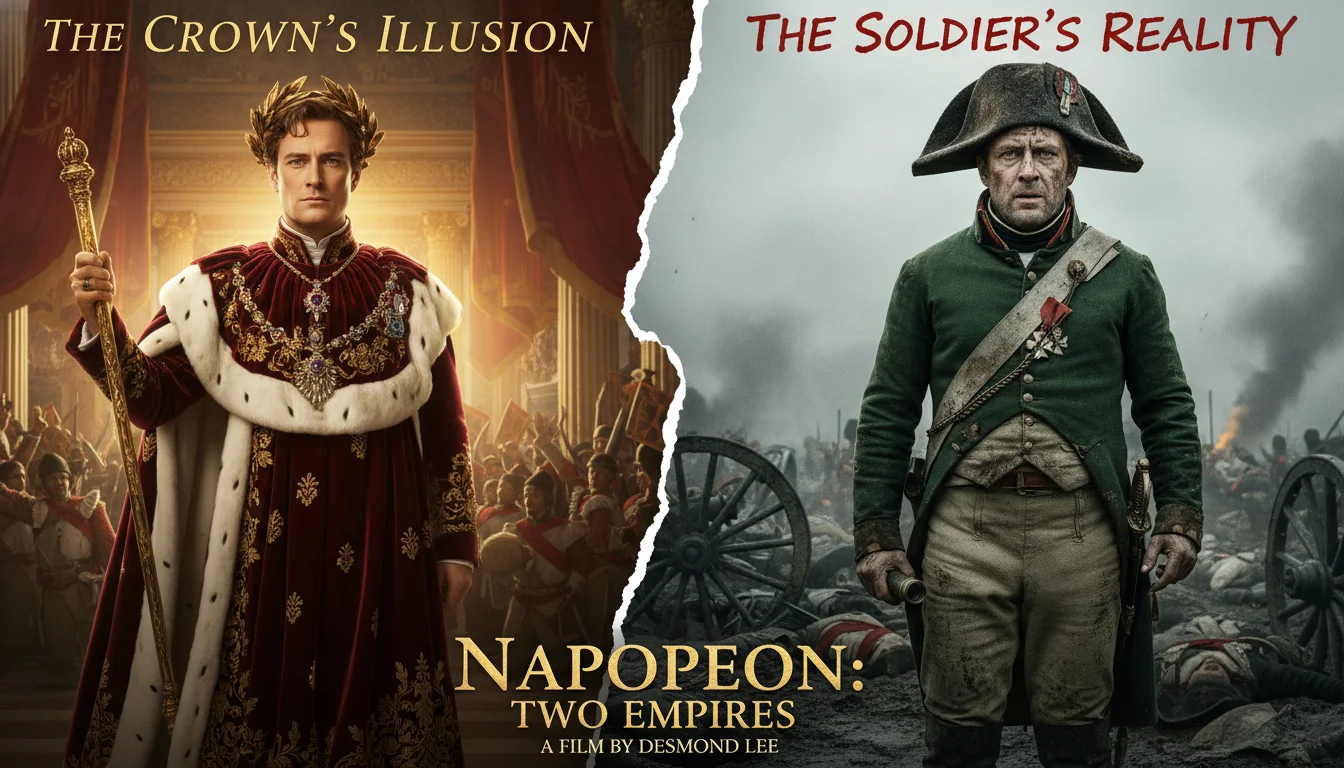
When Ridley Scott released Napoleon in November 2023, he probably expected controversy. What he got was an international incident. French historians called the film "like spitting in the face of French people." British academics labeled it "disjointed, rushed, inaccurate." And when confronted with these criticisms, Scott delivered perhaps the most memorable director's response in cinema history: "Were you there? No? Well, shut the f*** up then."
Bold words from the man who brought us Gladiator. But was Scott's defense justified, or did he create the historical equivalent of a fever dream? Let's examine the Napoleon 2023 historical accuracy and separate Napoleonic fact from Hollywood fiction.
What Hollywood Got RIGHT
The Rise From Obscurity to Emperor
The broad strokes of Napoleon's ascent are accurately portrayed. He did emerge during the chaos of the French Revolution, rising from a relatively minor Corsican noble family to become Emperor of the French. The film correctly shows his progression from artillery officer to general to First Consul to Emperor.
The Coronation Power Move
One of the film's most memorable moments - Napoleon taking the crown from Pope Pius VII and crowning himself - actually happened. On December 2, 1804, in Notre-Dame Cathedral, Napoleon seized the crown and placed it on his own head, symbolizing that he owed his power to no one but himself. This audacious act shocked Europe and perfectly encapsulated Napoleon's ego.
The Napoleon-Joséphine Relationship
The film's central love story gets the emotional dynamics largely right. Joséphine was indeed more worldly and sexually experienced than Napoleon. She did cheat on him (it made the newspapers). He was devastated when he had to divorce her because she couldn't produce an heir. Their complicated, passionate, ultimately tragic relationship forms the emotional core of the film, and that core is historically sound.
The Soldiers Who Wouldn't Shoot
When Napoleon escaped from Elba in 1815, the film shows soldiers sent to capture him instead cheering and joining his cause. This happened. Napoleon's charisma was such that when the 5th Infantry Regiment was ordered to fire on him, he reportedly walked toward them alone and said, "If any of you will shoot his Emperor, he may do so now." Not a single shot was fired. They joined him instead.
The Disastrous Russian Campaign
The film accurately depicts Napoleon's catastrophic 1812 invasion of Russia as a war of attrition that destroyed his Grande Armée. The Russians employed scorched-earth tactics, refusing to give Napoleon the decisive battle he craved. Of the roughly 600,000 men who marched into Russia, fewer than 100,000 made it back.
The Square Formations at Waterloo
Military adviser Paul Biddiss ensured the film's battle tactics were authentic. The British infantry squares used to counter French cavalry at Waterloo - with bayonets pointed outward to terrify horses - are depicted accurately. Historian Dan Snow specifically praised these formations.
What Hollywood Got WRONG
Shooting the Pyramids
In one of the film's most visually striking scenes, French troops fire cannons at the Great Pyramids of Giza. This never happened. Not even close. The Battle of the Pyramids (July 21, 1798) didn't even take place near the pyramids - they were merely a backdrop visible in the distance. When historical advisor Michael Broers pointed this out to Scott, the director reportedly replied, "Well, you laughed, didn't you?"
The myth that Napoleon's soldiers shot the nose off the Sphinx is also false - that damage was documented long before Napoleon's expedition.
Napoleon at Marie Antoinette's Execution
The film shows Napoleon watching Marie Antoinette's guillotining in Paris on October 16, 1793. In reality, he was approximately 520 miles away, commanding forces at the Siege of Toulon. It's not a minor geographical quibble - he literally couldn't have been there.
The Dead Horse Cannonball
In a particularly grotesque scene, Napoleon reaches inside his dead horse at Toulon to retrieve the cannonball that killed it. According to Professor Michael Broers, "the scene never happened in real life." While Napoleon did have horses killed beneath him in battle, there's no record of him performing battlefield surgery on their corpses.
Napoleon Leading Cavalry Charges
The film shows Napoleon personally leading cavalry charges into battle. Historian Dan Snow quickly debunked this: "He never led such a charge." Napoleon was a general and emperor who directed battles from behind the lines, not a medieval knight charging into the fray.
The Wellington Meeting
After Waterloo, the film depicts Napoleon and the Duke of Wellington meeting aboard a warship, showing mutual respect between the two rivals. This never happened. According to Professor Broers, "Napoleon never met the Duke of Wellington." Their legendary rivalry was conducted entirely at a distance.
Joaquin Phoenix's Age
This might seem minor, but it's visually jarring. Joaquin Phoenix was 47 during filming. Napoleon became a general in his 20s, married Joséphine at 26, and led the Egyptian campaign at 29. The film spans decades of Napoleon's life with an actor who appears the same age throughout - decades older than Napoleon was during the early events depicted.
The "You Have Boats" Line
Napoleon's angry outburst to the British ambassador - "You think you're so tough because you have boats!" - is pure fiction. While it captures a certain Napoleonic frustration with British naval superiority, he never actually said it.
Marie Antoinette's Demeanor
The film portrays Marie Antoinette as "fearless and a bit feisty" at her execution. French historian Dr. Estelle Paranque notes she was actually "extremely sad and vulnerable." Her husband had been executed months earlier, and she'd been forced to endure her own son accusing her of incest at her trial. The proud queen depicted in the film bears little resemblance to the broken woman who actually mounted the scaffold.
Historical Accuracy Score: 5/10
Ridley Scott's Napoleon is a frustrating contradiction. The broad narrative arc is historically sound - Napoleon's rise, his battles, his relationship with Joséphine, his downfall. But the details are riddled with inventions, from fabricated meetings to impossible eyewitness accounts to artillery bombardments that never occurred.
Scott's famous defense - "Were you there?" - is problematic because it "negates the whole pursuit of historical knowledge," as historian Guy Walters noted. We don't need to have been present at the Battle of Waterloo to know that Napoleon didn't personally meet Wellington afterward.
The film excels as spectacle. The battle scenes are magnificent, the costumes sumptuous, the emotional arc between Napoleon and Joséphine genuinely affecting. But as history? It's closer to historical fan fiction - taking real characters and real events, then reshaping them into something more cinematically convenient.
French scholar Patrice Gueniffey perhaps said it best: the film is "very anti-French and very pro-British" revisionism. Whether that matters to you depends on whether you're watching for entertainment or education.
If you want to understand who Napoleon really was - not the "petulant man-child" depicted on screen - you might need those 400 books Scott dismisses. Or at least a good documentary. This film gives you the spectacle of Napoleon. The substance? You'll have to look elsewhere.
For other historical epics fact-checked against the record, see 300 vs. History on the Battle of Thermopylae and Braveheart vs. History on William Wallace - both films where cinematic spectacle outpaced historical rigor.

Debate the Accuracy with the Real Figures
Ask the real people what Hollywood got wrong about their lives.
Create your free account →No card required. Some figures and features require a paid plan.
Join the HistorIQly Club
Get smarter about the past.
Weekly stories, deep dives, and exclusive content straight to your inbox.