The King's Speech vs History: What Hollywood Got Right and Wrong
The King's Speech historical accuracy holds up for the Logue-George VI friendship but fails on Churchill, the timeline, and the stammer's true severity.
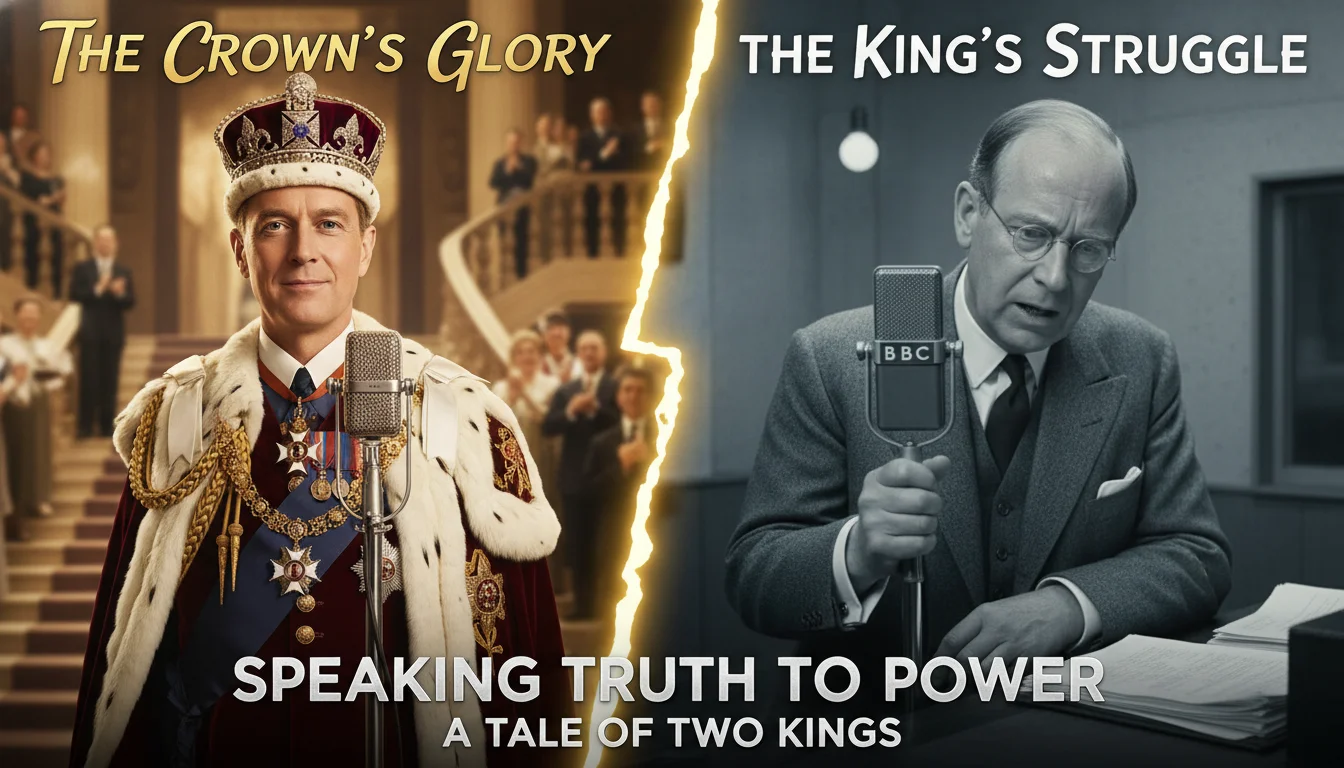
Few films have captured the quiet drama of personal struggle like The King's Speech (2010). Colin Firth's portrayal of King George VI battling his stammer earned him an Academy Award, and the film itself took home Best Picture, Best Director, and Best Original Screenplay. It is a genuinely moving film about courage, friendship, and duty.
But how much of it actually happened? Examining The King's Speech historical accuracy reveals a film that gets the emotional core right while distorting several key facts.
The verdict, as British historian Andrew Roberts bluntly put it, is that the film "gets the story all wrong and is simply bad history." That is a harsh verdict for a movie built on real events, but once you dig into the record, the liberties become hard to ignore.
What Hollywood Got Right
The core relationship was real. King George VI (known to family as "Bertie") genuinely worked with Australian speech therapist Lionel Logue to manage his stammer. Logue was unconventional, informal, and remarkably effective. Their professional bond lasted decades, and Logue was present for every major wartime broadcast. The film captures the warmth and mutual respect of this partnership beautifully.
The abdication crisis happened. Edward VIII did abdicate to marry Wallis Simpson, thrusting his reluctant younger brother onto the throne. The film's depiction of Bertie's dread at inheriting a role he never wanted is well-documented. He genuinely did not wish to be King.
The wartime speech was real and significant. George VI's radio address on September 3, 1939, announcing Britain's entry into World War II, was a defining moment. The nation listened, knowing their King struggled with speech. His determination to deliver that broadcast without faltering was an authentic act of personal courage.
George VI's difficult childhood was genuine. The film shows a man scarred by a harsh upbringing, including being forced to write with his right hand despite being left-handed, and suffering under strict royal protocols. Historical accounts confirm that his childhood was often unhappy, and his stammer likely worsened due to the pressures placed on him.
Lionel Logue's methods were unconventional. Logue really did use relaxation exercises, breathing techniques, and confidence-building that were unusual for the era. He insisted on informality, calling the future King "Bertie" during sessions. This egalitarian approach was radical for 1920s and 1930s Britain.
What Hollywood Got Wrong
The timeline is compressed by nearly a decade. This is the film's biggest distortion. The movie suggests Logue and the Duke of York began working together in the mid-1930s, just a few years before the war. In reality, they started in 1926, a full 13 years before that famous broadcast. By the time war broke out, they had been working together for over a decade. The film compresses this into what feels like two or three years, making the "cure" seem far more dramatic and last-minute than it was.
The stammer was exaggerated. Colin Firth's portrayal shows a man who can barely finish a sentence. In reality, George VI's stammer was relatively mild. Recordings of his speeches before he even met Logue show a man who stuttered occasionally but could deliver coherent public addresses. His 1927 speech to the Australian parliament in Canberra was delivered without stuttering. The film needed a more severe impediment for dramatic purposes, but it overshoots the reality considerably.
Churchill's position on the abdication is reversed. The film portrays Winston Churchill (played by Timothy Spall) as supporting Edward VIII's abdication. The opposite is true. Churchill was one of the most vocal opponents of abdication and actively tried to buy Edward time. He wanted the King to stay on the throne and believed the constitutional crisis could be resolved. Flipping Churchill's stance is one of the film's most egregious historical errors.
The final scene never happened. The film's climax shows Churchill, Archbishop Cosmo Gordon Lang, and Prime Minister Neville Chamberlain gathering at Buckingham Palace to witness the King's wartime broadcast, followed by cheering crowds outside. None of this occurred. As Andrew Roberts noted, these leaders had far more pressing matters on the day war was declared. There were no crowds gathering to congratulate the King on a radio speech. It is pure Hollywood invention.
Edward VIII never mocked Bertie's stammer so cruelly. The film shows Edward taunting his brother with "B-b-b-b-Bertie" and accusing him of wanting the throne. Historical accounts paint a very different picture. The brothers were close, and Edward knew full well that Bertie had no desire to be King. The cruelty was invented to create a clearer villain.
The royal family was not helpless with elevators. An odd scene shows the Duke and Duchess of York unable to operate an elevator, implying they were so pampered by servants that basic machinery baffled them. This is nonsense. Bertie served in the Royal Navy and was mentioned in dispatches at the Battle of Jutland in 1916, operating machinery far more complex than a lift door.
Queen Mary was not so cold. The film depicts George V's wife, Queen Mary, as emotionally distant and chilly. In reality, when the abdication crisis hit, it was to his mother's lap that Bertie went to cry. She was formal in public, as royals of that era were, but she was not the ice queen the film suggests.
Historical Accuracy Score: 5/10
The King's Speech gets the emotional truth right while getting much of the actual history wrong. The core story of a reluctant king overcoming a speech impediment with the help of an unconventional therapist is real and compelling. But the compressed timeline, exaggerated stammer, reversed political positions, and fabricated scenes add up to a film that is, as one critic put it, "brilliant filmmaking, less-than-brilliant history."
It remains a wonderful movie. Just do not mistake it for a documentary.
Sources: The Daily Beast / Hankering for History / The Guardian / TIME
For related wartime films measured against history, see our reviews of Darkest Hour and Dunkirk.

Debate the Accuracy with the Real Figures
Ask the real people what Hollywood got wrong about their lives.
Chat with HistoryJoin the HistorIQly Club
Get smarter about the past.
Weekly stories, deep dives, and exclusive content straight to your inbox.