Schindler's List vs History: What Spielberg Got Right and Wrong
How historically accurate is Schindler's List? We fact-check the 1993 masterpiece - the real Oskar Schindler, Amon Goeth, and 1,200 Jews saved from the Holocaust.
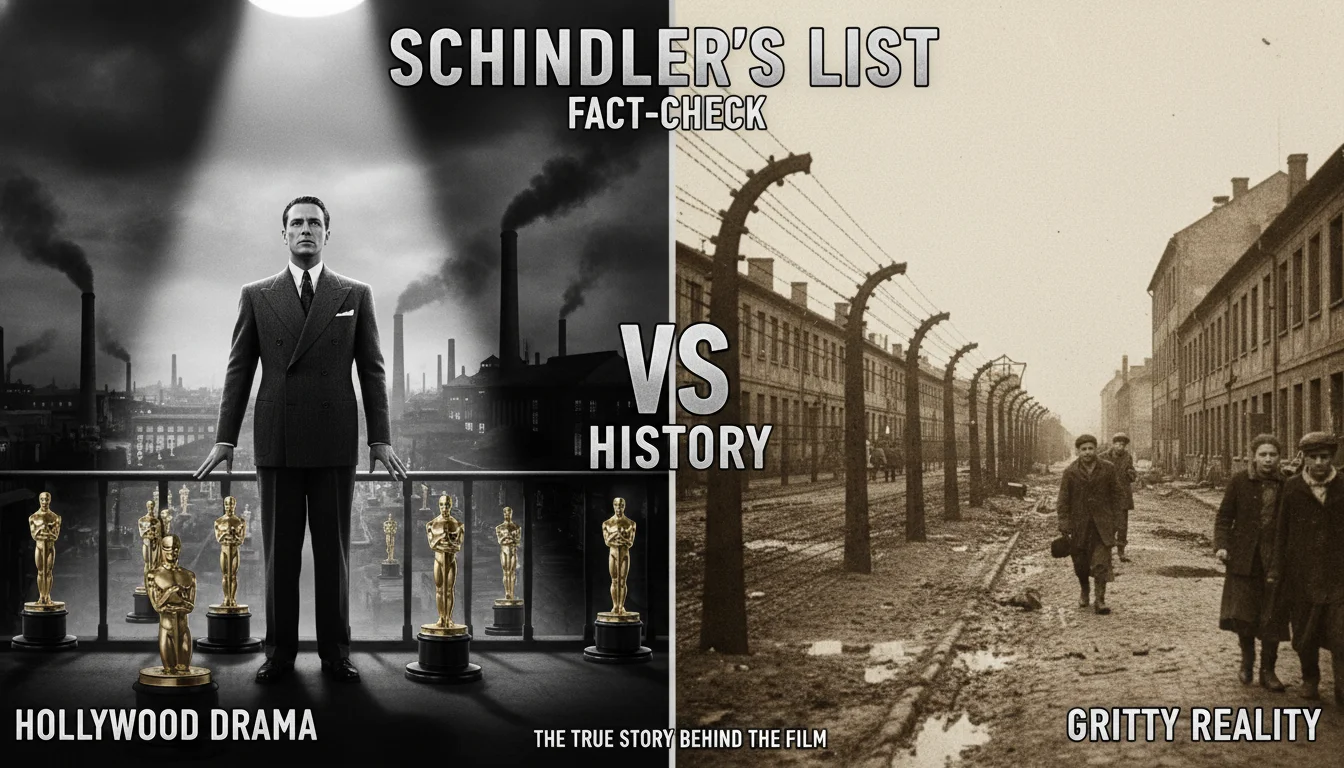
Steven Spielberg's Schindler's List (1993) is widely regarded as one of the most important films ever made. Starring Liam Neeson as Oskar Schindler, Ralph Fiennes as the terrifying Amon Goeth, and Ben Kingsley as Itzhak Stern, the film tells the story of a German industrialist who saved approximately 1,200 Jews during the Holocaust. But how much of this cinematic masterpiece actually happened? Let's separate historical fact from Hollywood storytelling.
What Hollywood Got RIGHT
The Core Story Is Real
The fundamental narrative is true. Oskar Schindler was a real German industrialist and member of the Nazi Party who used his enamelware factory in Krakow to shelter Jewish workers from deportation and death. He really did compile a list of over 1,000 names of Jewish workers he claimed were essential to his factory operations, saving them from the gas chambers. The scale of his rescue, roughly 1,200 lives, is historically documented by survivors themselves.
Amon Goeth's Brutality
Ralph Fiennes' chilling portrayal of Amon Goeth, the commandant of the Plaszow concentration camp, is terrifyingly close to reality. The real Goeth was known for his extreme sadism. Survivor testimonies confirm that he shot prisoners from his balcony, beat inmates to death, and unleashed his dogs on prisoners for sport. If anything, the film may have understated the full extent of his cruelty. Goeth was eventually arrested by the SS themselves in 1944 for theft of Jewish property (not for his violence), and was hanged in 1946 after being convicted of war crimes.
The Liquidation of the Krakow Ghetto
The harrowing sequence depicting the liquidation of the Krakow ghetto on March 13-14, 1943 is based on real events. Approximately 2,000 people were killed during the operation, and roughly 8,000 were sent to Plaszow. Survivor accounts confirm the chaos, the random shootings in the streets, and the desperate attempts to hide. The film's depiction of SS squads dragging families from apartments and executing those who resisted matches survivor testimony closely.
The Girl in the Red Coat
One of the film's most iconic images, a little girl in a red coat wandering through the ghetto liquidation, is based on a real observation. According to Thomas Keneally's book Schindler's Ark, Schindler and his mistress Ingrid were horseback riding on a hill overlooking the ghetto and witnessed the violence below. The real Schindler did describe noticing a small child during the chaos. Spielberg used this as a powerful visual symbol of innocence.
Schindler's Factory Camp
The film accurately shows Schindler establishing a sub-camp on the grounds of his factory to protect his workers. He did this under the pretense of increasing productivity, arguing that the long commute from Plaszow was reducing output. In reality, this factory camp, known as Emalia, provided significantly better conditions than Plaszow. Workers received more food, faced less random violence, and had a genuine chance of survival.
The Shower Scene at Auschwitz
In one of the film's most tense sequences, the women on Schindler's list are mistakenly routed to Auschwitz-Birkenau instead of his factory at Brunnlitz. They are herded into what appears to be a gas chamber, only for real water to come from the showerheads. This actually happened. The women's transport was diverted to Auschwitz, and Schindler had to use bribes and his Nazi connections to get them released and redirected to his Brunnlitz factory.
What Hollywood Got WRONG
Schindler's Transformation Was More Gradual
The film portrays Schindler's shift from war profiteer to savior as a relatively sudden moral awakening, largely triggered by witnessing the ghetto liquidation. In reality, historians believe his transformation was far more gradual and complex. He began helping Jewish workers in small ways early on, and his motivations remained murky even to those closest to him. Schindler himself never clearly explained his reasons, saying only that it was "the right thing to do." The neat narrative arc of the film simplifies a much messier human story.
Itzhak Stern Is a Composite Character
Ben Kingsley's Itzhak Stern, who serves as Schindler's moral conscience and right-hand man throughout the film, is actually a composite of several real people. The real Stern was Schindler's accountant, but many of the scenes attributed to him in the film actually involved other individuals. Key among them was Leopold "Poldek" Pfefferberg, who played a far larger role in real events than the film suggests. Pfefferberg was later instrumental in connecting Keneally with Schindler's story.
How Schindler Met Pfefferberg
The film shows Schindler first meeting Pfefferberg in a church during a sermon. According to Keneally's book, the real meeting happened at Pfefferberg's mother's house, where Pfefferberg nearly attacked Schindler because he mistook him for an SS officer coming to arrest him. The film version is clearly sanitized for dramatic flow.
The Hiring of Jewish Workers
In the movie, Schindler immediately begins hiring Jewish workers because they are cheaper than Polish laborers. In reality, Schindler initially hired Polish workers. It was Stern and others who gradually introduced Jewish workers into the factory over time. The film compresses this timeline to streamline the narrative.
Goeth and Schindler's First Meeting
Spielberg stages the first encounter between Schindler and Goeth at a lavish dinner at Goeth's villa, establishing their relationship through a scene dripping with dark charisma. Historical records indicate they actually first met at a more mundane gathering of local factory owners in an SS office. The film version makes for better cinema but isn't how it happened.
The Emotional Breakdown at the End
The film's climax features Schindler breaking down in tears, lamenting that he could have saved more people, pointing to his car and Nazi pin as things he could have traded for more lives. While emotionally devastating, most historians consider this scene to be largely fabricated or at least heavily embellished. There is no reliable account of Schindler having this specific breakdown. It serves as a powerful emotional capstone, but it prioritizes Hollywood catharsis over documented history.
The Verdict
Historical Accuracy Score: 8/10
Schindler's List is one of the most historically accurate war films ever produced. The broad strokes of the story, Schindler's rescue operation, Goeth's brutality, the horrors of the Krakow ghetto and Plaszow camp, are all firmly grounded in survivor testimony and historical research. Spielberg consulted extensively with survivors during production, and many appear in the film's famous closing sequence at the real Schindler's grave in Jerusalem.
Where the film deviates, it does so primarily for narrative economy: compressing timelines, combining real people into composite characters, and adding emotional peaks that may not have occurred exactly as shown. These are standard filmmaking choices, and they rarely distort the underlying truth.
The film's greatest achievement may be its restraint. In a story where reality was often worse than anything Hollywood could imagine, Spielberg chose to let documented history speak for itself. The result is a film that stands as both a cinematic masterpiece and a largely faithful historical document, a rare combination in the "vs Hollywood" genre.
For anyone wanting to dig deeper, Thomas Keneally's Schindler's Ark (published in the US as Schindler's List) remains the definitive account. Other Spielberg films examined through the same historical lens include The Fabelmans and Saving Private Ryan. The USC Shoah Foundation, which Spielberg founded after making this film, holds over 55,000 testimonies from Holocaust survivors that provide further context to the events depicted.
Quick Answers
Common questions about this topic
Did Oskar Schindler really save around 1,200 Jews?
Yes. Oskar Schindler was a real German industrialist and Nazi Party member who used his enamelware factory in Krakow to shelter Jewish workers from deportation to death camps. He compiled a list of over 1,000 names of Jewish workers he claimed were essential to his operations, saving them from the gas chambers. The rescue of roughly 1,200 lives is documented by the survivors themselves.
How brutal was Amon Goeth in real life?
The real Amon Goeth was arguably even more sadistic than the film portrays. Survivor testimony confirms he shot prisoners from his balcony, beat inmates to death, and set his dogs on prisoners for sport. Goeth was eventually arrested by the SS in 1944 - for theft of Jewish property, not for his violence - and was hanged in 1946 after being convicted of war crimes.
Was the girl in the red coat a real person?
The iconic image is based on a real observation. According to Thomas Keneally's book, Schindler and his mistress were horseback riding on a hill overlooking the Krakow ghetto during its liquidation and witnessed a small child. Spielberg used the red coat as a visual symbol of innocence within the Holocaust's horror, but the girl's specific identity is not firmly documented.
What did Schindler's List get wrong?
The film portrays Schindler's moral transformation as relatively sudden, but historians believe it was far more gradual and complex. Itzhak Stern is a composite character of several real people; the real Stern was Schindler's accountant, but scenes attributed to him often involved Leopold Pfefferberg. Schindler's first meeting with Amon Goeth happened at a mundane gathering of factory owners, not a lavish dinner.

Debate the Accuracy with the Real Figures
Ask the real people what Hollywood got wrong about their lives.
Chat with HistoryJoin the HistorIQly Club
Get smarter about the past.
Weekly stories, deep dives, and exclusive content straight to your inbox.