The Last Samurai vs History: What Tom Cruise's Epic Got Right and Wrong
The Last Samurai historical accuracy: we fact-check Tom Cruise's 2003 blockbuster against the real Satsuma Rebellion of 1877 and the fall of Japan's samurai class.
Read Wikipedia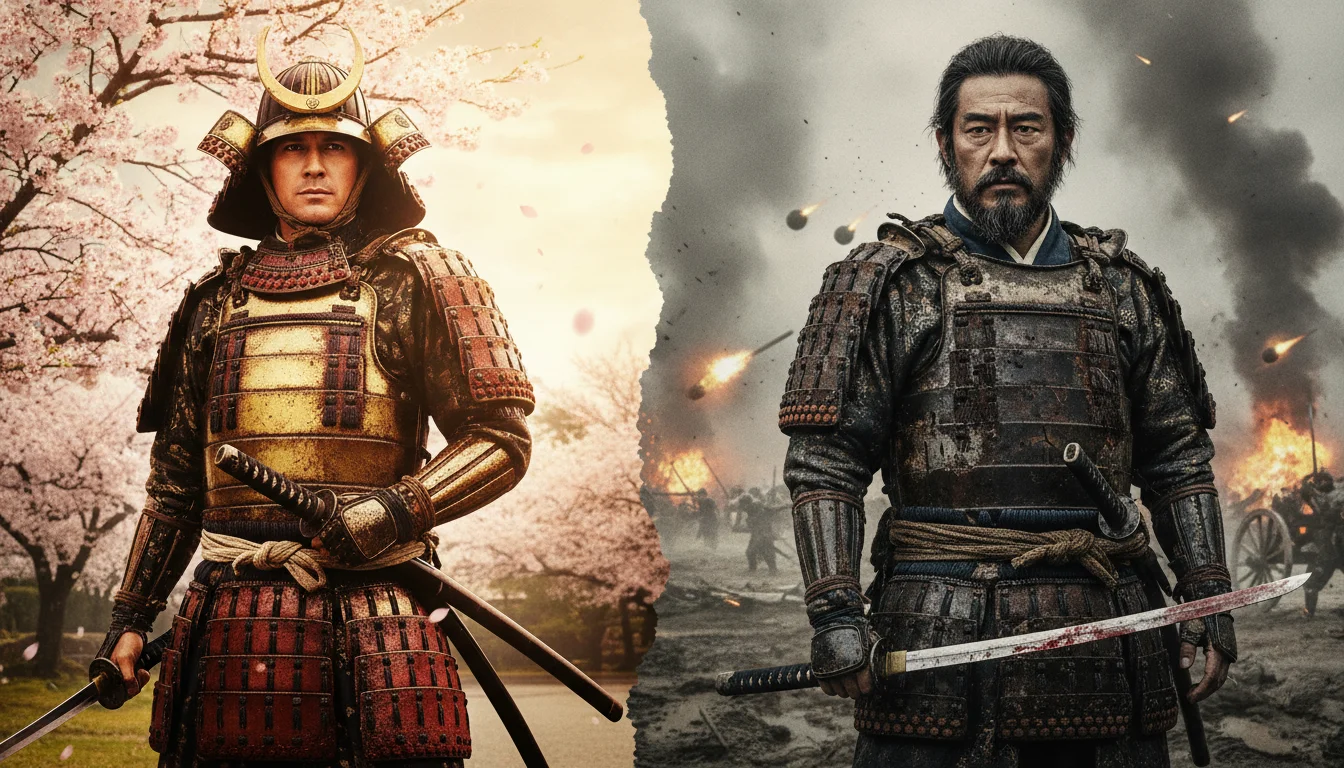
When The Last Samurai hit theaters in 2003, audiences were captivated by Tom Cruise's portrayal of a disillusioned American soldier finding redemption among Japan's warrior class. The film grossed over $450 million worldwide and earned four Academy Award nominations. But how much of this sweeping epic reflects actual history? The Last Samurai's historical accuracy is a more complicated question than the studio's marketing ever admitted.
Let's separate Hollywood myth from Meiji-era reality.
The Historical Backdrop
The film is loosely inspired by the Satsuma Rebellion of 1877, the last major armed uprising against the Meiji government by disaffected samurai. Led by Saigo Takamori - one of the most revered figures in Japanese history - these warriors resisted Japan's rapid westernization and the abolition of their privileged status.
The Meiji Restoration (1868) had overthrown the Tokugawa shogunate and launched Japan on an aggressive path toward modernization. Traditional samurai suddenly found their swords outlawed, their stipends cut, and their entire way of life declared obsolete.
What Hollywood Got RIGHT
The Clash of Old and New Japan
The film accurately captures the fundamental tension of the era. Japan really was undergoing a radical transformation in the 1870s, importing Western military advisors, technology, and institutions at breakneck speed. The samurai class genuinely faced extinction - not through warfare, but through government decree.
Foreign Military Advisors Were Real
While Nathan Algren is fictional, Japan did hire numerous foreign military advisors during this period. The French military mission (1867-1868) helped train the shogunate's forces, while later the Meiji government employed German, British, and American instructors. Jules Brunet, a French officer who fought alongside the shogunate's forces, may have partly inspired Algren's character.
Saigo Takamori's Tragic End
The character of Katsumoto, played magnificently by Ken Watanabe, is clearly based on Saigo Takamori. Like his fictional counterpart, Saigo was a complex figure - a key architect of the Meiji Restoration who later became its most famous opponent. His final stand at the Battle of Shiroyama and his death (likely by ritual suicide after being wounded) mirrors the film's climactic battle.
The Weaponry Divide
The contrast between samurai armed with swords and bows facing conscript soldiers with modern rifles reflects reality. At Shiroyama, Saigo's remaining 300-500 samurai charged government forces armed with Gatling guns and artillery. It was a deliberate, honorable death rather than a viable military strategy.
What Hollywood Got WRONG
The White Savior Problem
Here's the elephant in the room. There was no American cavalry officer who taught the samurai how to fight, found spiritual enlightenment among them, or led their final charge. The Satsuma samurai needed no instruction from outsiders - they were among the finest warriors in Japanese history, with centuries of martial tradition.
Saigo Takamori himself was a brilliant military strategist who had helped modernize Japan's army. The film's premise that an alcoholic American could teach these warriors anything about combat or honor stretches credibility past its breaking point.
The Ninja Attack
That spectacular ninja assault on the village? Pure Hollywood fantasy. By 1877, ninja (shinobi) as a distinct warrior class had been defunct for over two centuries. The Meiji government certainly employed assassins and spies, but they weren't black-clad acrobats scaling walls with grappling hooks.
The Timeline Compression
The film compresses events that occurred over roughly a decade into what seems like a single year. The conscript army's incompetence shown early in the film might reflect the 1860s, but by 1877 the Imperial Japanese Army was a reasonably effective modern force that had already suppressed several samurai uprisings.
Samurai as Noble Pacifists
The film romanticizes samurai as honorable warriors devoted to poetry, meditation, and protecting the innocent. Reality was more complicated. The samurai class had been Japan's military aristocracy for centuries, and their rule wasn't always benevolent. Many supported the rebellion not from spiritual conviction but because modernization threatened their economic privileges and social status.
The Emperor's Change of Heart
The film's ending shows Emperor Meiji moved by Katsumoto's death, seemingly reconsidering Japan's path. In reality, Meiji fully supported the suppression of the Satsuma Rebellion and Japan's modernization continued unabated. Saigo was initially condemned as a traitor before being posthumously pardoned in 1889.
Those Beautiful Samurai Villages
The idyllic mountain village where Algren recovers looks more like a movie set than 1870s rural Japan. While the production design is gorgeous, it presents a sanitized version of Meiji-era village life, omitting the poverty, disease, and harsh conditions that characterized much of rural Japan.
The Bigger Picture
The Last Samurai commits the common Hollywood sin of filtering Asian history through a Western protagonist's eyes. The real story of the Satsuma Rebellion - a complicated tale of political ideology, class conflict, regional identity, and Japan's painful modernization - is arguably more interesting than the fictional one.
Saigo Takamori remains a towering figure in Japan. His statue stands in Ueno Park, Tokyo, and he's been the subject of countless Japanese films, books, and television dramas. He didn't need Tom Cruise to tell his story.
Historical Accuracy Score: 5/10
The Last Samurai gets points for capturing the emotional truth of Japan's traumatic modernization and for its respectful (if romanticized) portrayal of samurai culture. The production values are stunning, and Ken Watanabe delivers a performance that does honor to Saigo's memory.
But the white savior narrative, historical inaccuracies, and Hollywood embellishments ultimately make this a beautiful film about a Japan that never quite existed. It's excellent entertainment, but approach it as historical fiction rather than history.
The Verdict: Watch it for the gorgeous cinematography and Watanabe's powerhouse performance. Just don't cite it in your history thesis.
Want more Hollywood vs History? Check out our breakdowns of Gladiator, Braveheart, and 300.

Debate the Accuracy with the Real Figures
Ask the real people what Hollywood got wrong about their lives.
Create your free account →No card required. Some figures and features require a paid plan.
Join the HistorIQly Club
Get smarter about the past.
Weekly stories, deep dives, and exclusive content straight to your inbox.