The Last of the Mohicans vs. History: How Accurate Is Michael Mann's Frontier Epic?
Last of the Mohicans historical accuracy reviewed: how much of Michael Mann's 1992 film actually happened? We fact-check the French and Indian War classic.
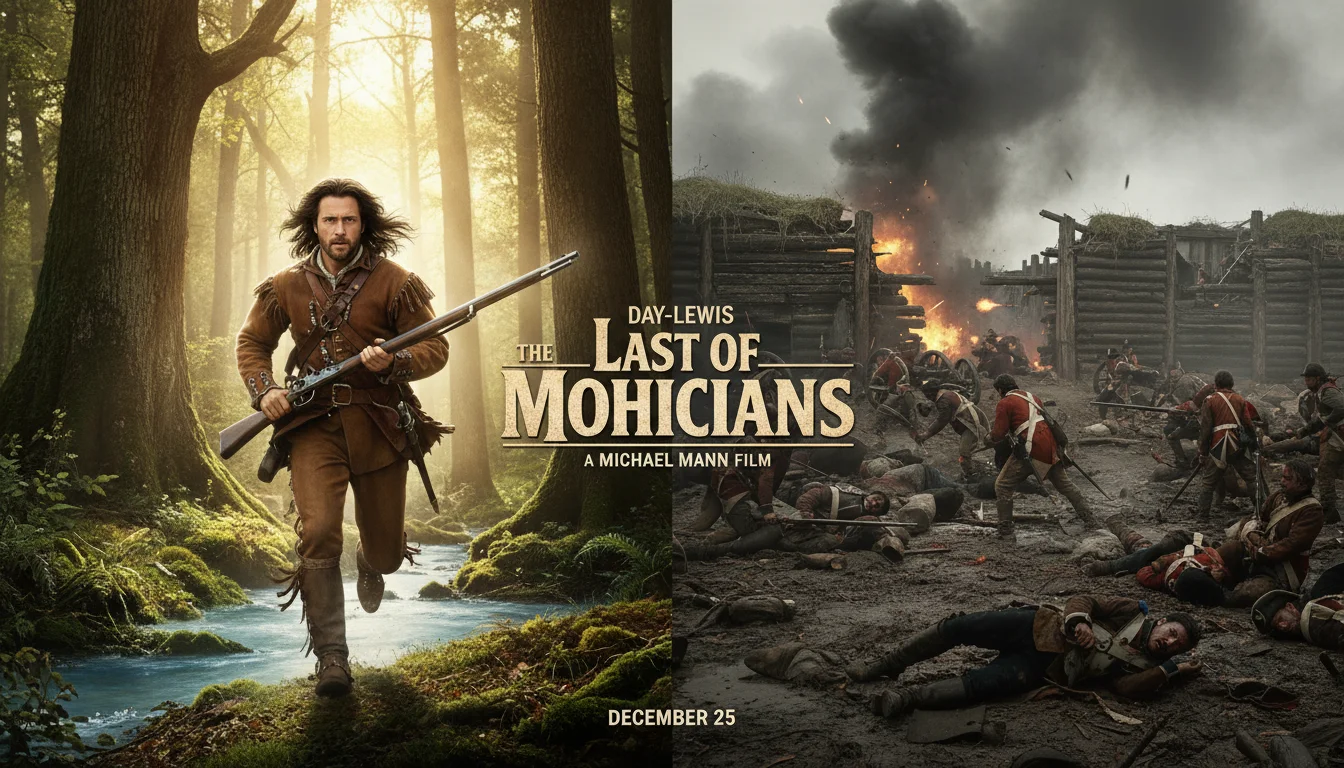
Michael Mann's 1992 adaptation of James Fenimore Cooper's novel remains one of the most visually stunning historical films ever made. Daniel Day-Lewis sprinting through primeval forests, musket fire echoing off mountain valleys, and one of cinema's greatest soundtracks - it's a masterpiece of atmosphere. But beneath the romance and spectacle, how much actual history survives?
Let's separate frontier fact from Hollywood fiction.
The Historical Setting
The film takes place during the French and Indian War (1754-1763), specifically around the siege of Fort William Henry in August 1757. This was a real conflict - part of the larger Seven Years' War that engulfed Europe and its colonial territories. France and Britain were locked in a bitter struggle for control of North America, with various Native American nations allied to both sides.
The basic framework is historically sound. The French, led by General Louis-Joseph de Montcalm, did besiege and capture Fort William Henry on the shores of Lake George in what is now upstate New York. The British garrison, commanded by Lieutenant Colonel George Monro, did surrender after several days of bombardment when promised reinforcements from General Daniel Webb never arrived.
So far, so accurate. But then Hollywood takes the wheel.
What Hollywood Got RIGHT
The Siege of Fort William Henry. The film's depiction of the siege captures the general sequence of events surprisingly well. Montcalm did arrive with a vastly superior force of roughly 8,000 men - including French regulars, Canadian militia, and approximately 2,000 Native American warriors from dozens of different nations. Monro's garrison of about 2,300 was hopelessly outnumbered. Webb, stationed at Fort Edward roughly 14 miles south, did refuse to send reinforcements - a decision that remains controversial among historians.
The Massacre After Surrender. The most harrowing scene in the film - the attack on the departing British column after the surrender - is based on a real and horrific event. On August 10, 1757, as the British garrison marched out under the agreed terms of surrender, Native American warriors allied with the French fell upon the column. Estimates of those killed range from 70 to 200, with hundreds more taken captive. This event became a rallying cry for the British colonies and remains one of the most controversial episodes of the war.
Frontier Material Culture. The film's attention to weapons, clothing, and frontier life earned praise from historians. The long rifles, tomahawks, powder horns, and the distinctive clothing of colonial frontiersmen were meticulously recreated. Day-Lewis famously learned to build canoes, track animals, and load a flintlock on the run during his preparation.
The Colonial Militia Tensions. The film captures a real source of friction - colonial militiamen deeply resented British attempts to conscript them and subject them to regular army discipline. The scenes where Hawkeye argues that frontier families need their men home to defend their farms reflect a genuine and ongoing dispute between colonial settlers and British military authority.
What Hollywood Got WRONG
The Title Itself. The Mohicans (more properly the Mahicans) were never "last" of anything. The film perpetuates the harmful myth that Native American peoples simply vanished. Today, the Stockbridge-Munsee Community of Mohican Indians has over 1,500 enrolled members and is a federally recognized tribe based in Wisconsin. The "vanishing Indian" trope was already outdated when Cooper wrote his novel in 1826.
Colonel Monro's Family. The real George Monro had no daughters at the siege - Cora and Alice Munro are entirely fictional creations from Cooper's novel. The entire romantic plot is pure invention. Monro himself was a capable if unlucky officer, not the somewhat pompous figure shown in the film. He died just three months after the siege, likely from illness compounded by the stress of defeat.
Montcalm's Role in the Massacre. The film portrays Montcalm as somewhat complicit in the massacre, or at minimum guilty of negligence. The historical picture is more complicated. Montcalm had negotiated honorable terms of surrender and was genuinely horrified by the attack. He personally intervened to stop the violence, reportedly baring his chest and telling the warriors to kill him instead. However, historians debate whether he should have foreseen the danger and taken more precautions.
Magua's Revenge Story. Wes Studi delivers a magnificent performance as Magua, but the character is entirely fictional. The real massacre was not driven by one man's personal vendetta against a British officer. The Native American warriors' motivations were complex - many were frustrated at being denied the traditional spoils of war (the surrender terms prohibited looting), and there were deep cultural misunderstandings about what "surrender" meant in European versus Indigenous warfare traditions.
Hawkeye - The White Savior. Nathaniel "Hawkeye" Poe, the adopted white son of a Mohican father, is a fictional character from Cooper's novel. While there were certainly Europeans who lived among Native American communities, the specific character reinforces a problematic "white savior" narrative. The real heroes and victims of this period were overwhelmingly Indigenous people navigating an impossible situation between two European empires that cared nothing for their sovereignty.
The Scale of Native American Involvement. The film simplifies roughly 2,000 warriors from dozens of different nations into essentially two groups - "good Indians" (the Mohicans) and "bad Indians" (Magua's Hurons). In reality, the Native American nations involved had incredibly complex and varied motivations, alliances, and grievances. Reducing this to a simple good-versus-evil binary is one of the film's biggest historical failures.
The Romantic Subplot Timing. The entire love story between Hawkeye and Cora unfolds over what appears to be about two weeks. While frontier romance certainly existed, the film compresses events that historically took place over months into a breathless adventure timeline.
The Verdict
The Last of the Mohicans is a gorgeous film that gets the broad strokes of the Fort William Henry siege right while inventing almost everything else. The central characters are fictional, the romance is fictional, and the motivations driving the plot are dramatically simplified. It excels at evoking the look and feel of 1757 colonial America but stumbles badly in its portrayal of Native American peoples, relying on stereotypes that were already outdated when Cooper wrote the source material nearly 200 years earlier.
Michael Mann created an incredible cinematic experience. But if you want to understand the French and Indian War, the complex world of 18th-century Native American diplomacy, or the real tragedy of Fort William Henry, you'll need to look well beyond this film. For another colonial-era war epic with a similar ratio of spectacle to historical accuracy, see The Patriot vs. history. For a war film that handles prisoner-of-war history more carefully, see The Bridge on the River Kwai vs. history.
Historical Accuracy Score: 5/10
The siege happened. The massacre happened. Almost everything else is romantic fiction wrapped in beautiful cinematography. It earns points for material culture and atmosphere but loses them for perpetuating the "vanishing Indian" myth and reducing complex Indigenous politics to simple adventure-movie archetypes.

Debate the Accuracy with the Real Figures
Ask the real people what Hollywood got wrong about their lives.
Chat with HistoryJoin the HistorIQly Club
Get smarter about the past.
Weekly stories, deep dives, and exclusive content straight to your inbox.