The Last Emperor vs. History: How Accurate Is Bertolucci's Epic?
Last Emperor historical accuracy: how much of Puyi's extraordinary life did Bertolucci's 1987 Oscar-sweeping masterpiece get right, and where did it take liberties?
Read Wikipedia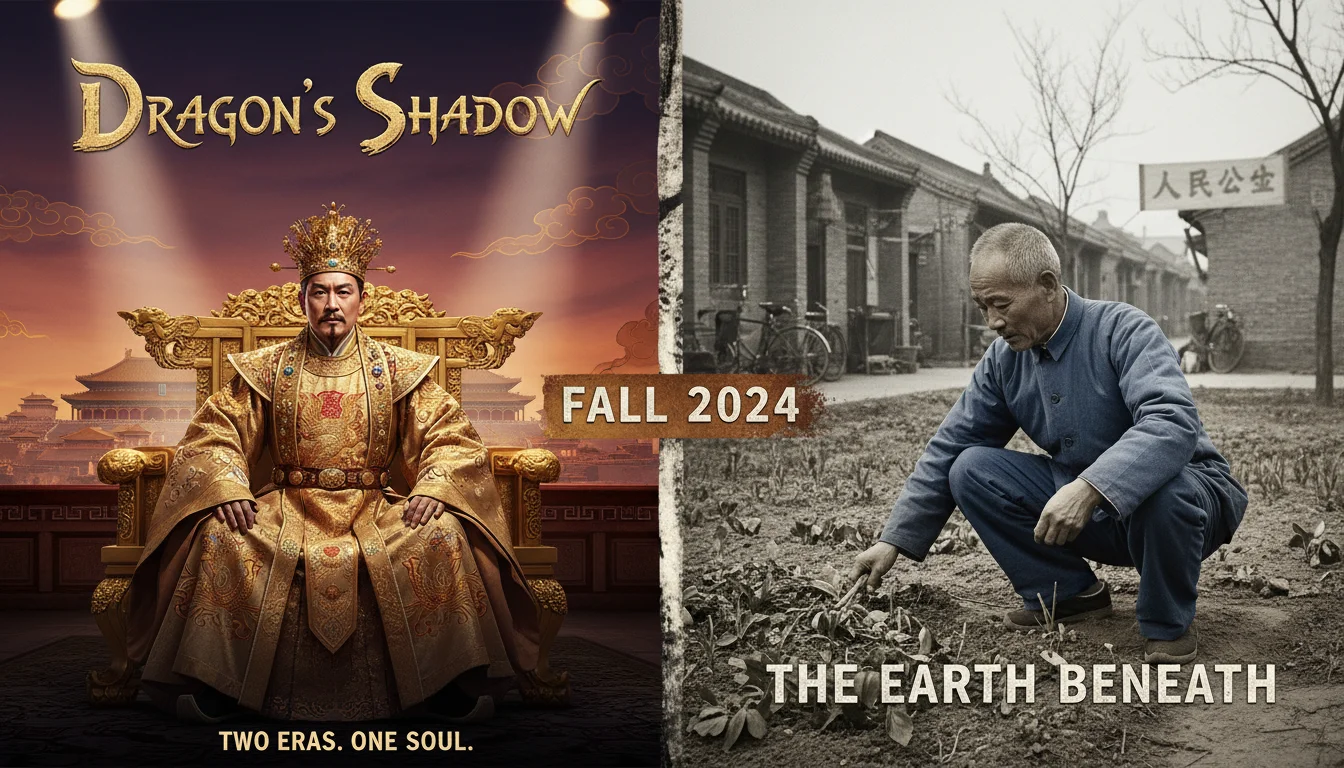
Few lives in history are as dramatic as that of Aisin-Gioro Puyi, the last Emperor of China. Crowned at age two, deposed as a child, puppet ruler of a Japanese state, war criminal, and finally an ordinary citizen tending a garden in Beijing. Bernardo Bertolucci's 1987 film The Last Emperor turned this staggering biography into a nine-Oscar sweep, including Best Picture and Best Director. But filming inside the actual Forbidden City doesn't guarantee historical accuracy. Let's examine what the film got right and what it got wrong.
What Hollywood Got RIGHT
The Coronation at Age Two
The film's iconic opening sequence, where the toddler Puyi fidgets on the Dragon Throne while thousands of courtiers kowtow, is essentially accurate. In November 1908, the Empress Dowager Cixi placed two-year-old Puyi on the throne just one day before she died. His father, Prince Chun, served as regent. Puyi's own autobiography confirms he screamed and cried during the ceremony, and his father had to comfort him with the words "It will be over soon" - a line the film uses to haunting effect.
The Eunuchs and the Forbidden City Bubble
Bertolucci nailed the surreal, hermetically sealed world inside the Forbidden City. Even after the 1912 abdication that ended two thousand years of imperial rule, Puyi continued living inside the palace walls under favorable terms negotiated with the new Republic. He kept his title, his eunuch servants, and his allowance. The film accurately shows this bizarre arrangement where a deposed emperor lived as though nothing had changed while revolution swept the country outside.
Reginald Johnston as Tutor
Peter O'Toole's portrayal of Reginald Johnston, the Scottish academic who became Puyi's tutor, captures the real relationship well. Johnston was indeed hired in 1919 and introduced Puyi to Western ideas, the English language, and even a bicycle. Johnston's own memoir, Twilight in the Forbidden City, confirms he developed genuine affection for his imperial student. The film's depiction of Johnston as a progressive influence who encouraged Puyi to wear glasses (against court tradition) and cut his queue is historically documented.
The Manchukuo Puppet State
The film's portrayal of Puyi's role as puppet emperor of Manchukuo (1934-1945) is largely accurate in tone. The Japanese Kwantung Army did install Puyi as a figurehead ruler in their conquered territory of Manchuria, and he had virtually no real power. His Japanese "advisors" controlled every significant decision. The humiliation Puyi experienced, rubber-stamping documents he hadn't read and performing ceremonies choreographed by his handlers, reflected the actual dynamic described by both Puyi and Japanese officials after the war.
The Re-education and Transformation
Perhaps the most remarkable true element is Puyi's decade in a Chinese Communist re-education prison (1950-1959). The film shows him learning to tie his own shoes, make his bed, and eventually confess his "crimes" before a tribunal. This matches Puyi's autobiography From Emperor to Citizen, where he describes genuinely struggling with basic tasks that servants had performed for him his entire life. He was released in 1959 and became a gardener at the Beijing Botanical Garden, then later a researcher at the Chinese People's Political Consultative Conference.
What Hollywood Got WRONG
The Cricket at the Coronation
That beautiful moment where young Puyi finds a cricket in a box hidden behind the Dragon Throne, and then decades later discovers the same cricket still alive? Pure Hollywood invention. It's a gorgeous narrative device connecting the beginning and end of his life, but there's no historical basis for it. Bertolucci created this as a symbol of endurance and memory.
Wan Rong's Decline
The film shows Empress Wan Rong (played by Joan Chen) becoming an opium addict in Manchukuo, which is accurate. However, the movie significantly compresses and simplifies her tragic story. In reality, Wan Rong's deterioration was far more severe and drawn out. She had a baby (likely fathered by her driver, not Puyi, who was possibly impotent), and the Japanese allegedly killed the infant. She died in 1946 in a Chinese prison, barely recognizable. The film softens this horror considerably.
The Timeline Compression
Bertolucci compressed decades into a manageable narrative, which inevitably distorted events. The film suggests Puyi's expulsion from the Forbidden City in 1924 was a sudden shock. In reality, there had been negotiations and warnings for months. Similarly, the transition from Tianjin playboy to Manchukuo emperor happened over several years of complex Japanese manipulation, not the relatively quick progression the film implies.
The Prison Warden Relationship
The film depicts a specific, almost paternal relationship between Puyi and his prison warden Jin Yuan (based on the real Jin Yuan). While Jin Yuan was real and did oversee Puyi's re-education, the film dramatizes their interactions considerably. The actual process involved group study sessions, collective self-criticism, and far less personal mentorship than the movie suggests. Puyi was one of many war criminals being re-educated, not a special project.
Puyi's Character Arc
The biggest liberty is how the film portrays Puyi as essentially passive and sympathetic throughout. The real Puyi was more complicated. He actively collaborated with the Japanese and initially embraced Manchukuo as a chance to restore Qing glory. His autobiography (written under Communist supervision, which raises its own questions) presents a tidier moral journey than likely occurred. Several historians argue Puyi was more calculating than the film allows, particularly during his Tianjin years when he actively courted Japanese support.
The Ending at the Forbidden City
The film's poignant final scene, where an elderly Puyi visits the Forbidden City as a tourist and sits on the throne one last time, is a dramatic invention. While Puyi did visit the Forbidden City after his release, the specific encounter with the young boy and the cricket callback are fictional. Puyi died of kidney cancer in 1967 during the Cultural Revolution, and his final years were far less peaceful than the film suggests.
The Last Emperor Historical Accuracy Score: 7/10
The Last Emperor earns high marks for capturing the extraordinary sweep of Puyi's life and the emotional truth of his experience. Bertolucci's decision to film inside the actual Forbidden City gives the film an authenticity that no set could replicate. The broad strokes of the historical timeline are correct, and the film's portrayal of Puyi's bizarre, isolated childhood is one of the most accurate depictions of imperial life ever put on screen.
Where it falters is in the simplification of Puyi's moral character and the compression of complex political dynamics into digestible drama. The real story is messier, darker, and more morally ambiguous than the Oscar-winning version. But as an introduction to one of the twentieth century's most extraordinary lives, it remains remarkably faithful to the spirit, if not always the letter, of history.
The Last Emperor won all nine Academy Awards it was nominated for, the last film to achieve a perfect sweep at the Oscars until The Lord of the Rings: The Return of the King matched it in 2004.
For another larger-than-life figure whose biopic plays loose with the record, see our Aviator vs. history breakdown on Howard Hughes. Our Napoleon 2023 vs. history covers another emperor whose Hollywood portrayal sparked historical debate.

Debate the Accuracy with the Real Figures
Ask the real people what Hollywood got wrong about their lives.
Create your free account →No card required. Some figures and features require a paid plan.
Join the HistorIQly Club
Get smarter about the past.
Weekly stories, deep dives, and exclusive content straight to your inbox.