The Mad Trapper of Rat River: The Fugitive Whose Real Name Died With Him
The Mad Trapper of Rat River led a legendary 1931 Arctic manhunt, held off police from a log cabin, and died in a final gunfight without ever revealing his real identity.
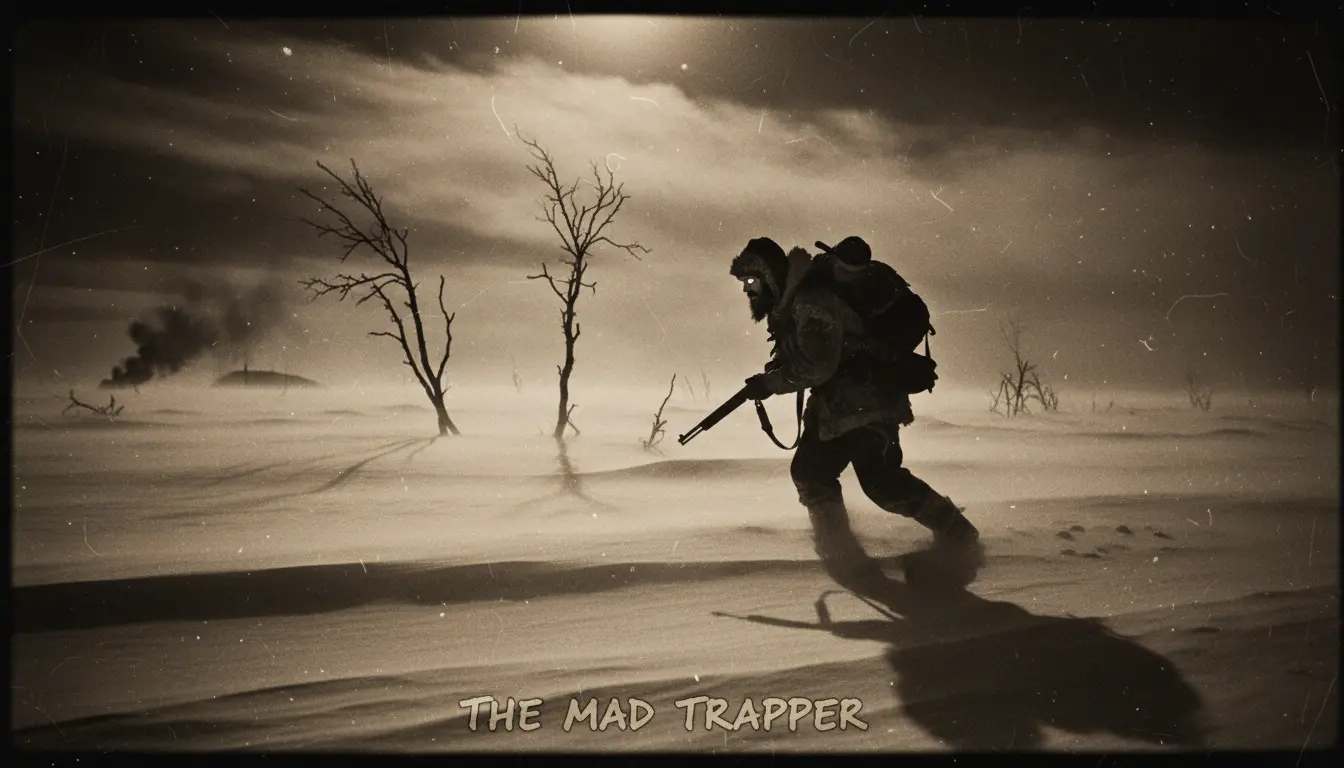
In the winter of 1931, the Northwest Territories became the setting for one of the strangest manhunts in modern history.
A reclusive trapper living near the Rat River was accused of tampering with another man's trap lines. When the Royal Canadian Mounted Police came to question him, he refused to cooperate. When they returned with a warrant, he opened fire.
One officer was killed, another wounded, and the stranger vanished into the Arctic wilderness.
What followed was extraordinary. He held off police from inside a log cabin, escaped after officers dynamited the place, and then led a weeks-long chase across frozen rivers and mountains in brutal winter conditions. Newspapers called him the "Mad Trapper of Rat River."
The name stuck.
The real one never did.
He died in a final gun battle in February 1932, but nearly a century later historians still cannot say with certainty who he was. The man most often called Albert Johnson may never have been Albert Johnson at all.
The Stranger at Rat River
The fugitive appeared in the Fort McPherson region in 1931 and immediately stood out. He trapped alone in a remote cabin about 80 miles from the nearest settlement. He was quiet, intensely private, and not interested in making friends.
That was unusual, but not unheard of. The North attracted drifters, prospectors, veterans, and men trying to disappear. Reinventing yourself was easier on the frontier than in any city.
Still, locals found him unsettling. He gave little away about his past. No one seemed to know exactly where he had come from, what work he had done before trapping, or even whether the name he used belonged to him.
The trouble began when a Hudson's Bay Company trapper accused the stranger of damaging his lines. On December 26, 1931, RCMP officers went to the cabin to question him. He stayed silent.
A few days later they came back with legal authority to search the place.
That is when the case turned violent.
The Cabin Siege
On New Year's Eve, police approached the cabin again. Once more the trapper refused to engage. Then gunfire erupted from inside.
Constable Alfred King was killed. Another officer was badly wounded.
Now the stranger was no longer just a hostile loner in a trapping dispute. He was a suspected murderer facing a full-scale manhunt.
The RCMP laid siege to the cabin, but the trapper proved cool under pressure and a deadly accurate shot. He used the walls of the small log structure for cover so effectively that officers struggled to get close.
Eventually, police brought in dynamite.
After blasting apart the cabin, they expected the standoff to be over. Instead they discovered that the fugitive had escaped through a concealed tunnel and disappeared into deep winter.
That escape is what made the story legendary.
The Great Arctic Manhunt
The pursuit that followed combined old and new worlds. Aircraft were used to spot the fugitive from above, while Indigenous trackers read his trail across the snow below. Few manhunts of the era looked like this.
And few suspects performed like this one.
He traveled astonishing distances in extreme cold, crossing frozen country that would have exhausted well-equipped search parties. He moved fast, stayed elusive, and seemed able to outlast men who had food, numbers, and official backing.
The newspapers turned him into a frontier phantom, part outlaw and part survival machine. Some of that was sensationalism, but the core fact was real: he had survived where most people would have broken.
That made him famous.
It did not make him easier to identify.
The Final Battle
The chase ended on February 17, 1932, near the Eagle River in Yukon.
Tracked into a river valley, the fugitive exchanged fire with police in one last shootout and was killed.
Investigators searched his body and belongings for answers. They found a rifle, money, practical gear, and almost nothing that clearly revealed who he had been before Rat River. There were no reliable personal papers. Fingerprints did not produce a definitive solution. Even in death, he remained mostly anonymous.
Authorities settled on the name Albert Johnson, but the identification was shaky from the start. It may have been an alias, a borrowed name, or simply a label attached to a man nobody really knew.
Who Was He?
That is the heart of the cold case.
Many famous fugitives leave behind a body and a biography. The Mad Trapper left behind a body and a blank space.
Several explanations have been proposed.
A Scandinavian Immigrant
The most common theory is that he was of Scandinavian origin, possibly Norwegian. Witnesses described him as fair-haired, powerfully built, and northern European in appearance. That would fit the migration patterns of the era, when men moved through logging camps, mines, and frontier settlements with little paperwork following them.
But it is only a broad possibility, not an identity.
A Fugitive With a Hidden Past
Another theory is that he was already running from something before he reached the Arctic. His silence, his paranoia, and his refusal to surrender all suggest a man who believed capture would expose more than one crime.
Over the years, researchers have tried to match him to American fugitives and missing men. None of the proposed matches has been strong enough to close the case.
Not Mad at All
The nickname "Mad Trapper" may say more about newspapers than about the man.
Nothing in the record proves insanity. He was defensive, violent, and deeply secretive, but also organized, disciplined, and tactically sharp. That sounds less like madness than extreme distrust. He may have been traumatized, socially broken, or simply determined never to let the state put hands on him again.
A Case for Modern DNA
The most hopeful recent theory is not really a theory about his past, but a method for recovering it. Researchers have long argued that modern forensic genealogy could finally identify him if usable remains are tested against family lines.
There have been occasional claims of progress, but no universally accepted answer has emerged. The mystery remains tantalizingly close to solvable and still unsolved.
Why It Still Haunts Historians
The Mad Trapper story endures because it has everything people want from a cold case: a remote setting, a violent siege, an impossible escape, a final shootout, and a man who seemed to come from nowhere.
But the real reason it lingers is simpler. We know how he fought. We know where he ran. We know how he died.
We do not know who he was when nobody was chasing him.
That missing beginning changes the whole story. Without a real name, there is no full biography, no clear motive, no past to place before the gunfire. There is only a figure stepping into the historical record in the moment of crisis.
Maybe that is exactly what he wanted. Perhaps he went north to erase himself and almost succeeded. Or perhaps the truth was ordinary, and the records that could explain him were just lost.
Either way, the file remains open in the most human sense.
The Mad Trapper of Rat River was killed in 1932.
The man behind the legend was never fully caught. For other cases where a fugitive's identity remains the central unresolved question, the Flannan Isles lighthouse mystery presents a similar blank space at the centre of the record, and the Dyatlov Pass incident shows how extreme wilderness environments can swallow the evidence that would otherwise close the file.

Want to Interrogate the Suspects?
Chat with historical figures and uncover the truth behind history's greatest mysteries.
Start Your InvestigationJoin the HistorIQly Club
Get smarter about the past.
Weekly stories, deep dives, and exclusive content straight to your inbox.