The Spy in the Bag: Gareth Williams and the Death Nobody Can Explain
The spy in the bag Gareth Williams case: MI6 codebreaker found padlocked in his own bathtub. No DNA, no struggle. Fifteen years on, nobody knows how he got there.
Read Wikipedia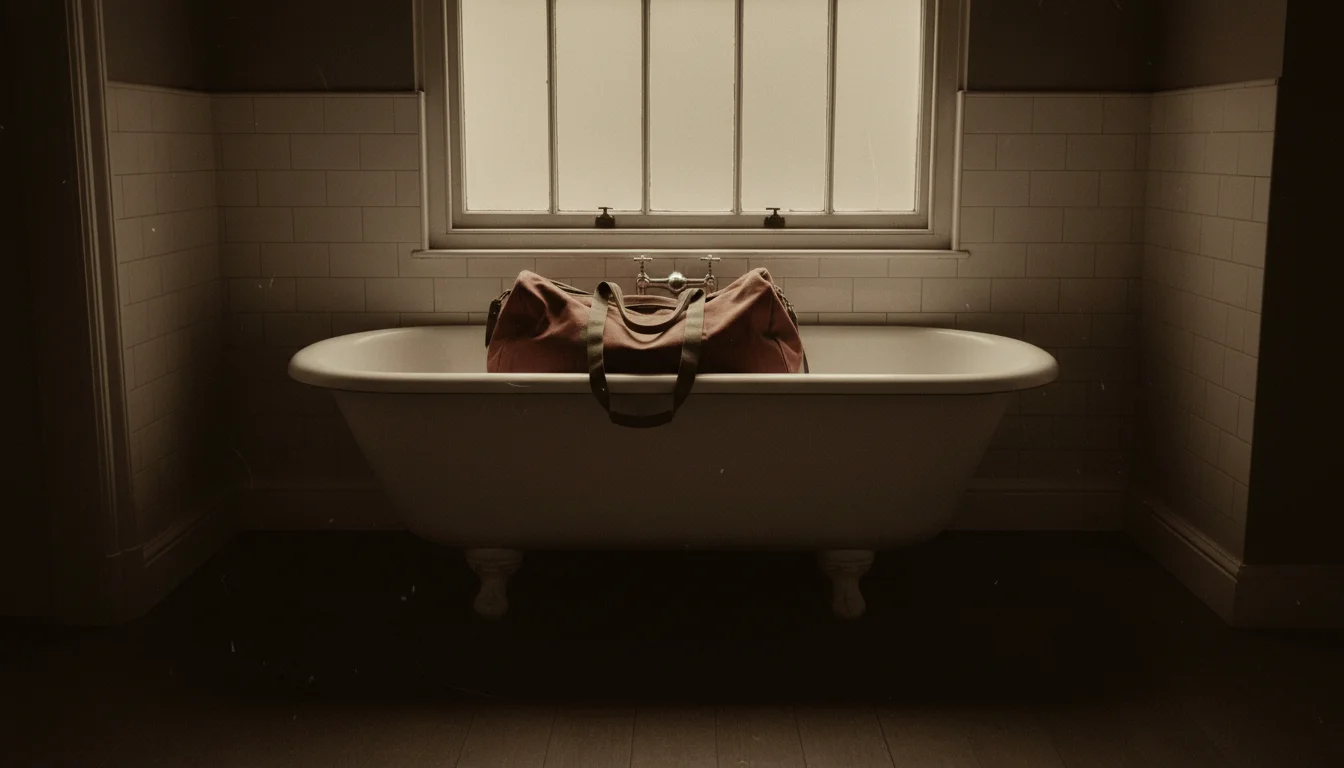
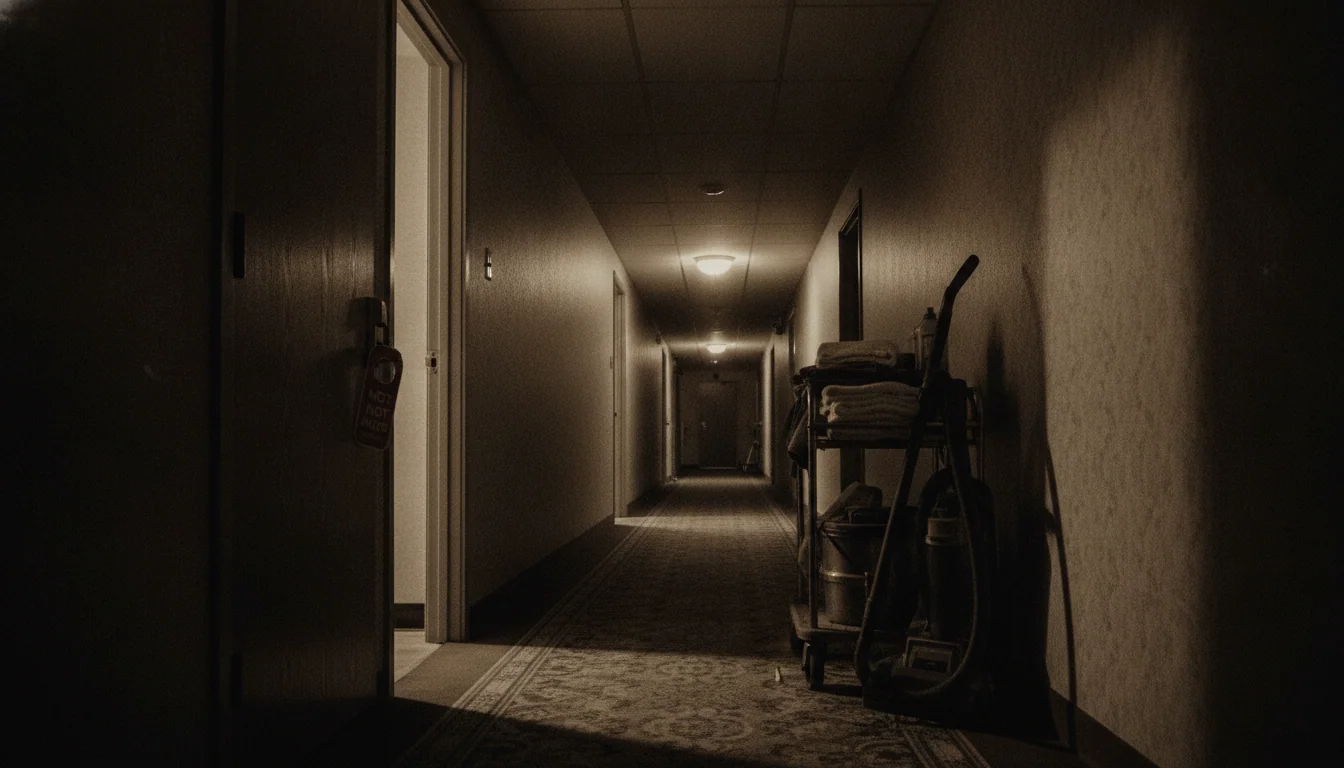
On August 23, 2010, police entered a modest flat in Pimlico, London - just half a mile from MI6 headquarters. They found the heating cranked to maximum despite the August heat. The bathroom door was closed. The lights were off. The shower screen was shut.
Inside the bathtub sat a red North Face holdall bag. It was zipped closed and padlocked from the outside.
Inside that bag was the naked, decomposing body of Gareth Williams - a 31-year-old mathematical genius and MI6 codebreaker. The key to the padlock was found beneath his body.
He had been dead for eight days. His employers at Britain's foreign intelligence service hadn't noticed he was missing.
The Genius Who Solved Every Puzzle Except His Own Death
Gareth Williams wasn't an ordinary analyst. He was the kind of mind that appears once in a generation.
Born in Anglesey, Wales, he sat his math GCSE at age 10 and passed his A-levels at 14. He began a degree at Bangor University while still in secondary school and graduated with a first-class honors at 17. By his early twenties, he held a PhD from the University of Manchester.
GCHQ - Britain's signals intelligence agency - recruited him as a codebreaker in 2001. In 2009, he was seconded to MI6 in London, where he reportedly worked alongside the FBI and NSA on highly sensitive operations involving mobile phone tracking and money laundering networks used by organized crime - including Russian mafia cells.
His colleagues described him as quiet, brilliant, and intensely private. He cycled everywhere. When colleagues went to the pub, he ordered orange juice and left early. He had recently asked to transfer back to GCHQ in Cheltenham, telling friends he didn't enjoy London's "rat race."
He was scheduled to move the month after his death.
Eight Days Missing, Zero Alarms
The last confirmed sighting of Gareth Williams was on August 15, 2010. CCTV captured him at Holland Park tube station. Earlier that day, he'd bought cakes at Harrods and steaks at Waitrose. He'd just returned from a hacking conference in Las Vegas and was due to chair a meeting at MI6 the next morning.
He never showed up.
For eight days, MI6 - one of the most sophisticated intelligence agencies in the world - apparently didn't notice that one of its analysts had vanished. It was only after Williams' sister called GCHQ in distress that anyone investigated.
When police finally entered his flat, they found no signs of forced entry. No evidence of a struggle. Williams' fingerprints weren't on the bag, the padlock, or even the rim of the bathtub. The scene was immaculate - almost surgically clean.
A post-mortem found no injuries, no bruises, no drugs or alcohol in his system. The cause of death was likely carbon dioxide poisoning from being trapped in an airtight space.
But how did he get inside?
The Impossible Puzzle
Here's where the case becomes genuinely baffling.
Peter Faulding, a world-leading confined space specialist, was brought in by police to determine whether Williams could have locked himself in the bag. Faulding - who matched Williams' height and build - attempted to recreate the scenario over 300 times.
He failed every single time.
"Even Harry Houdini himself wouldn't have managed it," Faulding later said.
The mechanics are physically paradoxical: Williams would have had to climb into the bag naked, in a dark bathroom, zip it closed from the inside, then somehow padlock the zipper from the outside - all without leaving a single fingerprint on any surface. The bag was small enough that getting in required near-impossible contortion. Getting the padlock attached would require hands outside the bag at the moment of locking.
A yoga expert also attempted the feat. Also failed.
At the 2012 inquest, coroner Fiona Wilcox concluded that Williams' death was "unnatural and likely to have been criminally mediated." She was "satisfied that on the balance of probabilities, Gareth was killed unlawfully."
The Metropolitan Police Disagreed
Despite the coroner's ruling, Scotland Yard's investigation reached a different conclusion.
In 2013, after a three-year investigation, Detective Chief Superintendent Hamish Campbell announced that police believed Williams "most probably" died alone in a "tragic accident" - possibly related to some kind of sexual experimentation.
The evidence cited: £20,000 worth of unworn women's designer clothing found in the flat, along with an orange wig and internet searches related to bondage. Williams' former landlady in Cheltenham reported once finding him tied to his bedposts.
Critics found this explanation convenient - and deeply inadequate. It explained his possible interest in restraint but didn't explain how he padlocked himself inside a bag without leaving any physical trace.
Faulding claims that during the investigation, a senior officer asked him to rewrite his statement to acknowledge that the scenario was possible. He refused and walked out.
"They wanted to bury this case and leave Gareth's name being tarred," Faulding told the Daily Mail in 2025. "No one in their right mind believes he was on his own. It is a physical impossibility."
The Theories Nobody Can Prove
Without definitive answers, theories have proliferated:
The Russian Connection: Some investigators believe Williams may have stumbled onto intelligence about Russian organized crime - or even a mole within GCHQ. Former KGB agent Boris Karpichkov, who defected to Britain, claimed in 2015 that Russia's SVR (foreign intelligence service) was responsible for Williams' death. His work allegedly involved tracking money laundering networks used by Moscow-based mafia.
The Intelligence Cover-Up: Others suspect British or American intelligence may have silenced Williams after he discovered something sensitive - or threatened to go public with classified information. Nine memory sticks found at his office were only disclosed to police on the final day of the inquest. They were later wiped.
The Third-Party Crime: The coroner's conclusion remains the most straightforward interpretation. Someone else was in that flat. Someone with the sophistication to clean up completely. Whether they were a romantic partner, a professional assassin, or something in between remains unknown.
A Case That Won't Stay Closed
Scotland Yard reopened the investigation in 2021 using modern forensic technology on items of interest, including a towel found at the scene. But in February 2024, they announced - again - that "no new DNA" had been found and there was no evidence disproving their theory that Williams died alone.
The case is now officially closed.
But for Gareth Williams' family, and for anyone who's studied the bizarre circumstances of his death, the official explanation remains deeply unsatisfying. A mathematical genius who spent his career solving puzzles died in a configuration that puzzle experts say is physically impossible - and we're supposed to believe it was an accident.
Fifteen years after that August afternoon in Pimlico, the spy in the bag Gareth Williams case remains one of Britain's most disturbing unsolved mysteries. Someone knows how he ended up padlocked inside that holdall.
They've never said a word.
For more baffling British cold cases, the Flannan Isles lighthouse mystery presents three men who vanished from a locked station with no explanation, and the Frederick Valentich disappearance is another case where the physical evidence never led to answers.

Want to Interrogate the Suspects?
Chat with historical figures and uncover the truth behind history's greatest mysteries.
Create your free account →No card required. Some figures and features require a paid plan.
Join the HistorIQly Club
Get smarter about the past.
Weekly stories, deep dives, and exclusive content straight to your inbox.