The Mary Celeste: History's Most Famous Ghost Ship
The Mary Celeste ghost ship mystery began in 1872 when a seaworthy vessel was found drifting in the Atlantic with all ten souls vanished and cargo untouched.
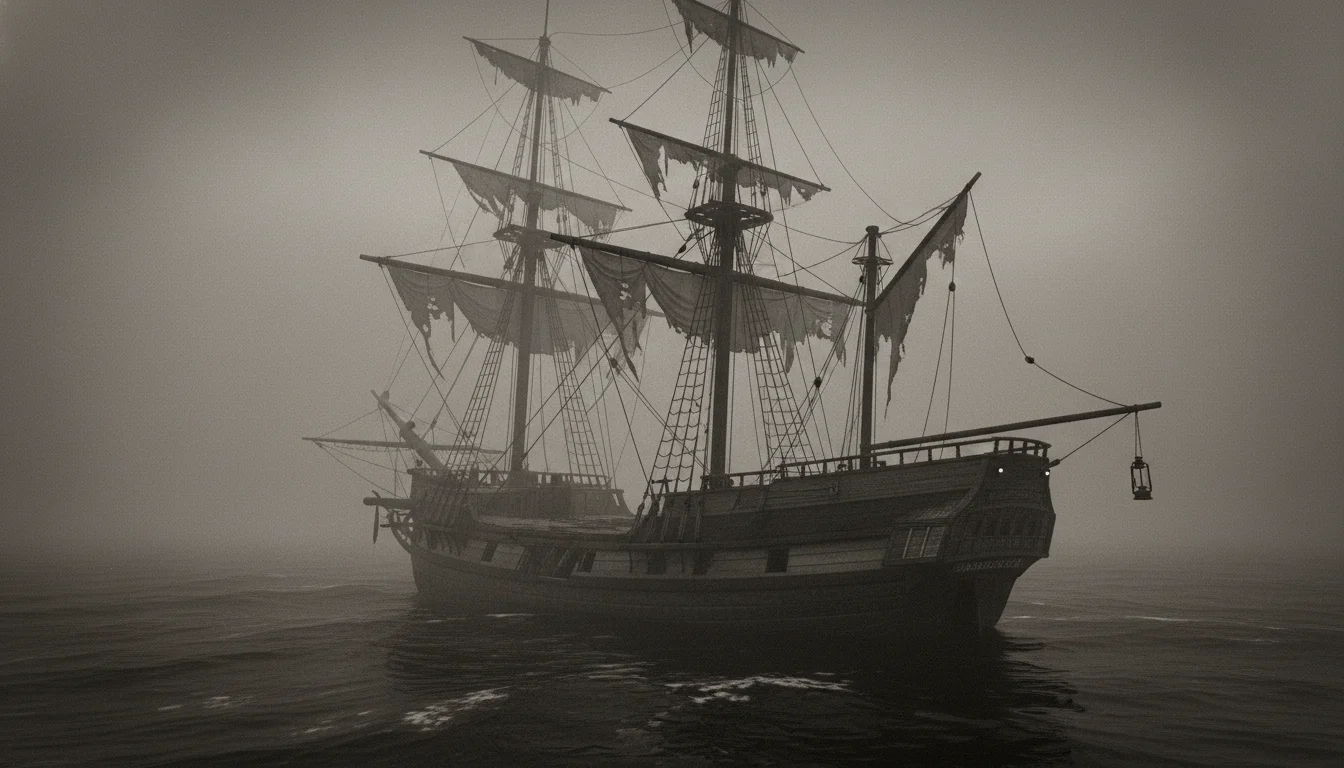
On December 4, 1872, the British brigantine Dei Gratia spotted a ship drifting erratically near the Azores in the Atlantic Ocean. Captain David Morehouse recognized the vessel immediately - it was the Mary Celeste, commanded by Captain Benjamin Briggs, whom he reportedly knew, at least casually. The two ships had departed New York just days apart, both headed for Europe.
Morehouse sent a boarding party to investigate. What they found would become one of history's most enduring maritime mysteries.
A Ship Without a Soul
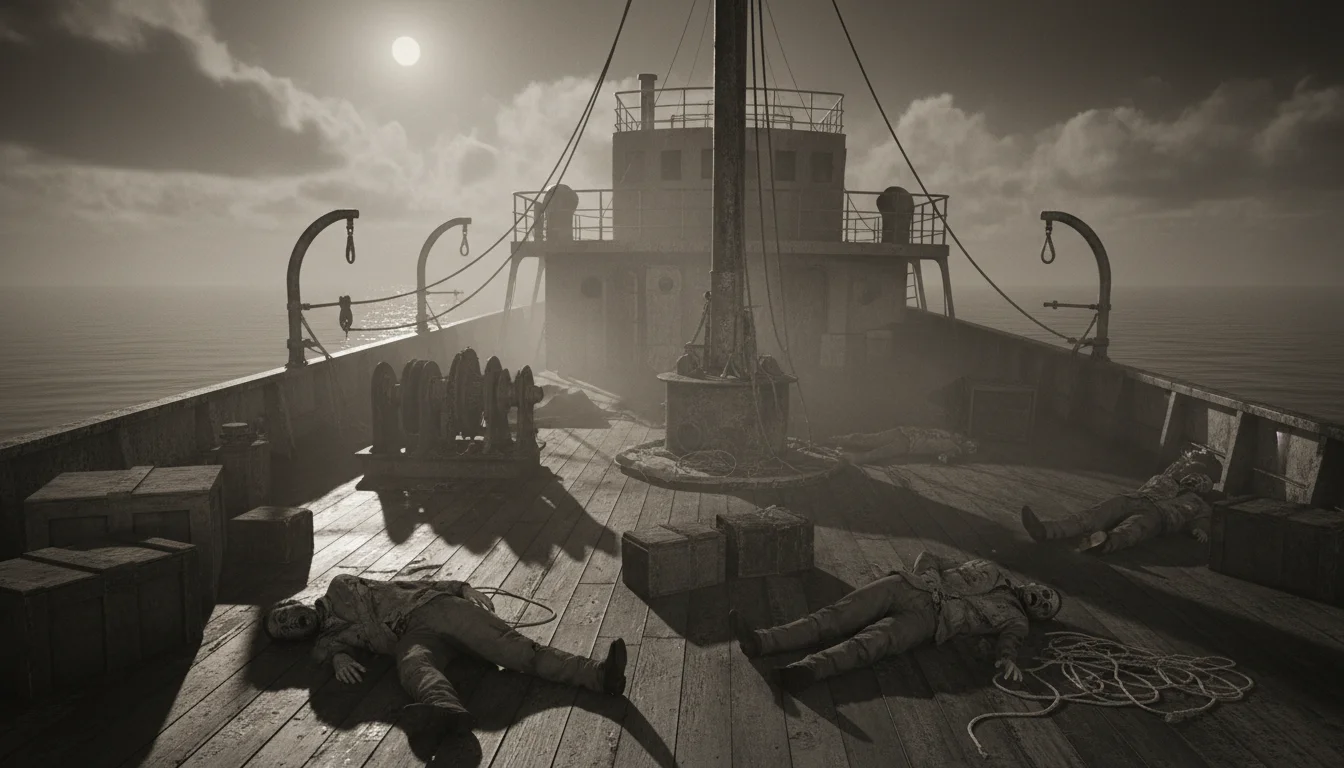
The Mary Celeste was seaworthy. Her sails were partially set, though some were damaged. Below deck, everything appeared orderly. The cargo - 1,701 barrels of commercial alcohol bound for Genoa - sat mostly undisturbed. Personal belongings remained in the cabins. Captain Briggs's navigational equipment was missing, but his logbook remained, with the final entry dated November 25, nine days earlier.
The crew's pipes and tobacco pouches lay where they had been left. Six months' worth of food and fresh water remained aboard. Yet every single person had vanished.
Gone were Captain Briggs, his wife Sarah, their two-year-old daughter Sophia, and seven crew members. The ship's only lifeboat was missing, and a single rope trailed from the stern into the water.
The People Who Disappeared
Benjamin Briggs was no reckless sailor. At 37, he was an experienced captain from a Massachusetts seafaring family. His father was a sea captain, and two of his brothers also became sea captains. He had been sailing since childhood and owned shares in the Mary Celeste herself.
Sarah Briggs, 31, had accompanied her husband on previous voyages. She was an accomplished musician who brought a melodeon aboard to pass the time. Their daughter Sophia had been born during one of these journeys. The couple's seven-year-old son, Arthur, had stayed behind in Massachusetts with his grandmother - a decision that would save his life.
The seven crew members included first mate Albert Richardson, second mate Andrew Gilling, steward Edward Head, and four German sailors. All were experienced seamen with good reputations.
What the Evidence Revealed
The boarding party from Dei Gratia noted several unsettling details. Water had flooded parts of the ship, with about three and a half feet in the hold. The ship's pump was found disassembled on deck, suggesting the crew may have been attempting to repair it before they left.
A makeshift sounding rod - a piece of wood tied with rope, used to measure water depth in the hold - lay on the deck. This suggested someone had recently checked how much water the ship was taking on.
The ship's clock was not functioning, and the compass was damaged. Most significantly, the fore and lazarette hatches were found open, their covers lying beside them on the deck, though the main hatch cover was still secure.
Two cargo hatches had been pried up, exposing the barrels of alcohol below. When the cargo was eventually unloaded in Genoa, nine barrels were found empty.
Theories That Don't Hold Water
The mystery immediately captured public imagination, and theories multiplied. Many can be dismissed.
Piracy makes no sense. Pirates take valuables. The cargo was intact. The crew's personal effects remained. Nothing of value was missing except the people themselves.
Mutiny is equally unlikely. Briggs was known as a fair captain, and the crew had just been paid. There was no sign of violence - no bloodstains, no damage consistent with a struggle. And mutineers who seize a ship don't then abandon it.
Insurance fraud was briefly suspected, but the Mary Celeste was worth more afloat than as salvage. Briggs had invested his own money in the vessel. The theory requires all ten people to coordinate a conspiracy and then successfully disappear forever.
Sea monsters and supernatural explanations require no serious consideration.
The Alcohol Hypothesis
One of the most widely discussed explanations centers on the cargo itself. The Mary Celeste carried 1,701 barrels of commercial alcohol - not drinking alcohol, but industrial-grade denatured spirits. Nine barrels were later found empty.
Here's one scenario that fits the evidence:
In the days before November 25, rough seas damaged some barrels. Alcohol vapor - highly flammable and potentially explosive - began accumulating in the hold. Briggs or his crew opened the hatches to ventilate. Perhaps they saw or smelled something alarming.
Fearing an imminent explosion, Briggs made a fateful decision. He ordered everyone into the lifeboat, intending to trail behind the ship at a safe distance until he was certain the danger had passed. He took his navigation equipment and chronometer - essential for finding their way to shore if needed.
The crew secured the lifeboat to the Mary Celeste with a rope. They waited.
Then something went wrong. The rope parted - perhaps from strain, perhaps from fraying against the ship's hull. The Mary Celeste sailed on under her partially set sails. The overloaded lifeboat, carrying ten people including a toddler, drifted away.
Without navigation equipment, in open Atlantic waters, they had no chance. Not a single body was ever recovered.
What We Know We Don't Know
The alcohol explosion theory, while compelling, has problems. Alcohol vapor requires specific conditions to explode, and no scorching or blast damage was found aboard. Some historians argue the fumes would more likely have simply evaporated through the ventilated hatches.
Alternative theories propose a waterspout (a tornado at sea) that briefly terrified the crew, or a seaquake that caused temporary flooding and panic. Some suggest Briggs feared the ship was sinking after a faulty sounding rod gave an exaggerated water depth reading.
The truth is that we will never know. The Mary Celeste herself continued sailing for another twelve years under various owners before finally being deliberately wrecked in a separate insurance fraud scheme off Haiti in 1885. That captain was caught and arrested, unlike whatever force claimed her original crew.
A Family Lost to the Sea
In Marion, Massachusetts, young Arthur Briggs waited for parents and sister who would never return. He eventually learned his family had simply vanished - no bodies, no wreckage from the lifeboat, no final message.
The sea had simply taken them. The Flannan Isles lighthouse mystery produced a near-identical scene twenty-eight years later: a station found abandoned, no sign of struggle, no bodies, no answer.
Arthur grew up and became a businessman, not a sailor. He never learned what happened to his family. Neither has anyone else in the 153 years since the Mary Celeste was found drifting empty through the Atlantic swells.
Some mysteries refuse to be solved. Like Amelia Earhart's disappearance over the Pacific decades later, the evidence points in a direction without arriving at an answer. The water keeps its secrets, and ten people remain forever missing somewhere between New York and the Azores - victims of a danger so immediate that they abandoned a perfectly good ship, and so total that not one of them survived to explain why.
The Mary Celeste remains the most famous "ghost ship" in maritime history. Despite numerous investigations and theories, no definitive explanation has ever been established for the disappearance of all ten people aboard.

Want to Interrogate the Suspects?
Chat with historical figures and uncover the truth behind history's greatest mysteries.
Start Your InvestigationJoin the HistorIQly Club
Get smarter about the past.
Weekly stories, deep dives, and exclusive content straight to your inbox.