The Max Headroom Incident: The Most Terrifying 90 Seconds in Television History
The Max Headroom broadcast intrusion: on November 22, 1987, someone hijacked two Chicago TV stations with a disturbing transmission that has never been explained.
Read Wikipedia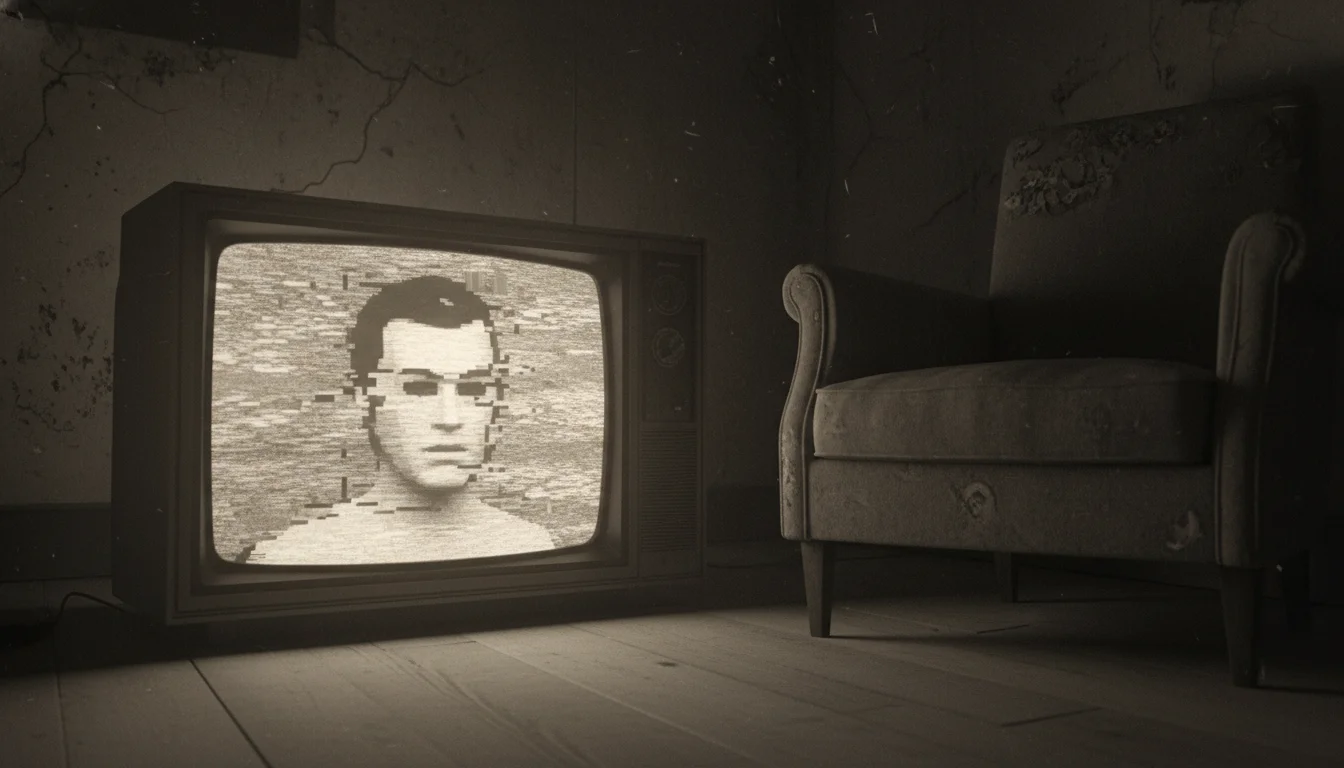
On the evening of November 22, 1987, the Max Headroom broadcast intrusion put something unprecedented on live television in Chicago. During a sports broadcast on WGN-TV, the screen suddenly went black. Then a figure appeared - someone wearing a Max Headroom mask, standing in front of a piece of spinning corrugated metal. For about 30 seconds, the masked intruder bobbed and swayed while the audio produced nothing but static. Then, as abruptly as it began, regular programming returned.
The engineers at WGN scrambled to understand what had happened. Before they could, the hijacker struck again.
The Second Intrusion
Two hours later, at 11:15 PM, PBS affiliate WTTW was airing an episode of Doctor Who. Mid-episode, the signal was hijacked again. This time, the audio worked.
What followed was ninety seconds of deeply unsettling television.
The person in the Max Headroom mask - the same one from the earlier intrusion - appeared against the same crude backdrop. But now viewers could hear them. The voice was distorted, the speech disjointed and bizarre. The figure rambled about Coca-Cola and the New Coke disaster. They held up a Pepsi can and made crude jokes. They mentioned WGN sportscaster Chuck Swirsky. They hummed the theme from Clutch Cargo, an obscure 1950s cartoon.
Then things got weirder.
The intruder bent over. Someone off-camera - apparently a woman - began spanking them with a flyswatter. The masked figure moaned and screamed. And then the signal cut back to Doctor Who, mid-scene.
Millions of viewers had just witnessed something no one could explain. The case sits alongside other infamous American unsolved mysteries of the era like the D.B. Cooper hijacking and the Frederick Valentich UFO disappearance.
Why Was This Possible?
To understand the intrusion, you need to understand 1987 broadcasting technology. Television stations transmitted their signals via microwave links to the Sears Tower (now Willis Tower), which then broadcast them to the Chicago area. These microwave signals were not encrypted. In theory, someone with the right equipment and enough power could overwhelm the legitimate signal with their own.
But theory and practice are different things.
The FCC estimated that overpowering a broadcast signal would require significant technical expertise and specialized equipment - likely including a powerful transmitter, a large dish antenna, and detailed knowledge of the exact frequencies being used. This wasn't something an amateur could pull off with RadioShack parts.
The hijacker didn't just succeed once. They succeeded twice in one night, on two different stations, each using different transmission equipment and frequencies. This suggested either an extraordinary level of technical sophistication or inside knowledge of how Chicago's broadcast infrastructure worked.
The Investigation
The FCC launched an immediate investigation. The FBI got involved. The stakes were high: broadcast signal intrusion was a federal crime carrying potential penalties of up to $100,000 in fines and a year in prison. The FCC was desperate to demonstrate that the airwaves were secure.
They failed.
Despite interviewing dozens of people, examining the equipment at both stations, and following every lead, investigators never identified the perpetrator. The case went cold.
Over the years, various theories emerged. Some suspected the hijacker was a disgruntled broadcast engineer with access to transmission equipment. Others pointed to the elaborate production elements - the costume, the scripted references, the accomplice - as evidence of a coordinated group effort. The references to Chuck Swirsky and Clutch Cargo suggested someone with specific knowledge of Chicago media culture.
In 2010, a poster on Reddit claimed to know who was responsible, identifying two brothers from a group of Chicago phreakers (telephone system hackers) and tech enthusiasts who were active in the 1980s. The poster provided convincing details about the technical capabilities required and the social scene that could have produced such people. But they never provided proof, and the alleged perpetrators were never officially identified or charged.
Why Max Headroom?
The choice of Max Headroom was significant. In 1987, Max Headroom was a cultural phenomenon - a computer-generated TV host character (actually an actor in prosthetic makeup) who appeared in music videos, a TV series, and Coca-Cola commercials. The character represented cutting-edge technology and media satire. He was a symbol of the intersection between entertainment and dystopia.
For someone making a statement about television's power and vulnerability, Max Headroom was the perfect mask to wear.
The references in the broadcast also suggested intentionality. The Coke/Pepsi joke was a clear dig at the New Coke disaster that had embarrassed Coca-Cola two years earlier. The Clutch Cargo reference was so obscure that it seemed designed to confuse rather than communicate. The whole production felt like an inside joke - one whose punchline only the perpetrators understood.
The Legacy
The Max Headroom incident remains the most famous example of broadcast signal intrusion in American television history. It demonstrated that the infrastructure people trusted to deliver news and entertainment into their homes was vulnerable to hijacking. It showed that someone with enough knowledge and determination could commandeer the airwaves and force millions of people to watch whatever they wanted to show them.
In the years since, broadcast security has improved dramatically. Digital signals are encrypted. Multiple redundancies protect against intrusion. The analog vulnerabilities that made the 1987 hijacking possible no longer exist.
But the identity of the person behind the Max Headroom mask remains unknown.
The FCC file is still technically open. The statute of limitations for the federal charges has long since expired. If the hijackers are still alive, they're free to confess without legal consequence.
They never have.
Watching It Today
You can still find the complete footage online. Watching it decades later, with the context of modern horror and internet culture, the video retains its power to unsettle. The distorted voice. The swaying figure. The crude spanking sequence. The abrupt cuts. Nothing about it feels like a prank. It feels like looking through a window into something you weren't supposed to see.
For ninety seconds on a Sunday night in 1987, someone turned the familiar glow of television into something alien and disturbing. They did it to prove they could. And then they disappeared back into the static, leaving behind only questions and a mask.
Nearly four decades later, we still don't know who was behind it. We may never know.
The Max Headroom incident stands as a reminder that some mysteries don't get solved. Some people get away with it. And some pranks leave marks that don't fade.

Want to Interrogate the Suspects?
Chat with historical figures and uncover the truth behind history's greatest mysteries.
Create your free account →No card required. Some figures and features require a paid plan.
Join the HistorIQly Club
Get smarter about the past.
Weekly stories, deep dives, and exclusive content straight to your inbox.