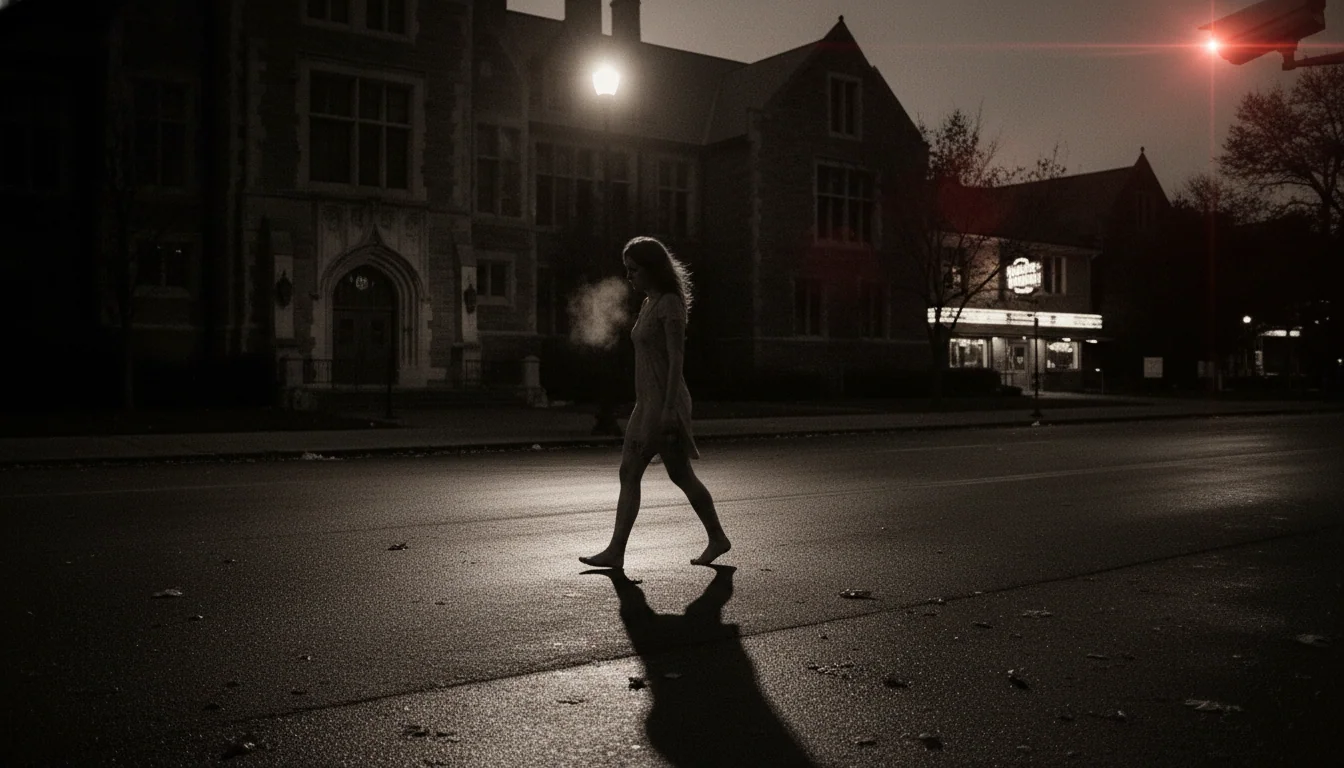
Orange Socks: Texas's Forty-Year Jane Doe
In 1979, a young woman was found dead beside I-35 near Georgetown, Texas, identified only by her orange socks. She stayed nameless for over four decades.
Read Wikipedia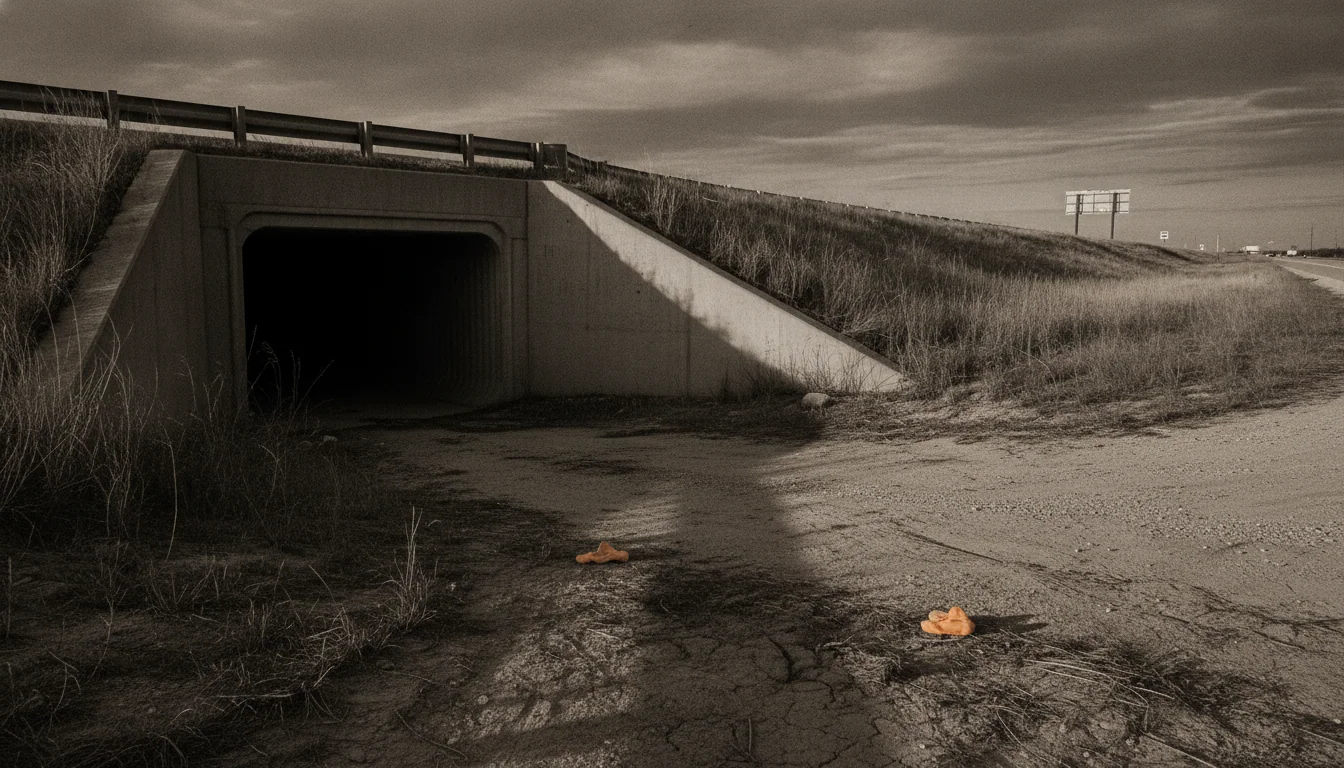
A young woman's body was found in a drainage culvert off a Texas highway in the fall of 1979, and the only thing anyone could say about her with confidence was the color of her socks. No name, no missing-person report that matched, no dental records anyone could locate. Just orange cotton socks and a case file that would sit open for more than forty years.
A Body Beside the Highway
In late October 1979, a work crew or passerby (accounts of exactly who first spotted her vary) came across human remains in a culvert along the frontage of Interstate 35 near Georgetown, Texas, a growing town north of Austin in Williamson County. She was young, likely in her late teens or twenties, and had been dead for some time before discovery, which complicated efforts to determine cause of death and preserve identifying features.
She was naked except for a single pair of orange socks. There was no purse, no jewelry with an inscription, no scrap of identification of any kind nearby. Investigators canvassed the area, checked missing-persons bulletins across the region, and came up empty. She was booked into the system the way countless unidentified victims are: with a case number and a nickname coined by the people working her file. She became "Orange Socks."
Interstate 35 running through central Texas was, and remains, a major transportation corridor connecting Laredo to Dallas and points north. Officers who worked the case have noted that the interstate made the area a place where a victim could be transported from somewhere else entirely and left with no local connection to trace. That single fact turned a routine identification effort into a search with no obvious starting point.
The Henry Lee Lucas Complication
In the early 1980s, the case took a turn that would define - and arguably distort - its history for decades. Henry Lee Lucas, a drifter with a long criminal record, was arrested in Texas and began confessing to an extraordinary number of murders, eventually claiming responsibility for several hundred killings across the country. Among the confessions attributed to him was the killing of the woman known as Orange Socks. He was convicted in connection with her death and, according to widely reported accounts, received a death sentence for it at one point, later commuted.
Here is where caution is essential. Lucas's confessions were investigated at length by a Texas Attorney General task force in the late 1980s, and the conclusion that emerged was damning: a substantial number of his claimed murders could not have been committed by him, given travel-time records, work schedules, and other physical evidence. Some confessions appeared to have been fed to him, deliberately or not, by investigators eager to close cold cases, and Lucas himself was known to recant and re-confess depending on who was asking and what he thought they wanted to hear. He is now widely regarded by journalists, researchers, and many of the law enforcement officials who reviewed the files as one of the least reliable sources in the history of American criminal confessions.
None of this proves Lucas had nothing to do with the Orange Socks case specifically. It also does not prove he did. What it means, in practical terms, is that a conviction resting heavily on a Lucas confession should be read with real skepticism rather than treated as a settled account of what happened beside that highway in 1979. Several of the murders Lucas confessed to, including at least some tied to Texas cold cases, have since been reassigned to other suspects or reopened entirely once the unreliability of his claims became clear. Whether the Orange Socks case belongs in that category is a question that, as far as public reporting shows, has not been definitively answered.
Four Decades Without a Name
Whatever the truth of who killed her, the woman herself remained unidentified. That is the part of this story that tends to get lost when the conversation shifts to Lucas and his confessions: a person with a family, a childhood, a name that meant something to somebody, spent over forty years catalogued in a database as Jane Doe, orange socks, Williamson County, 1979.
Cases like hers depended for decades on the slow, unglamorous work of comparing dental charts, skeletal estimates of age and stature, and missing-persons flyers mailed between jurisdictions that often did not talk to each other. A young woman who went missing from a state far from Texas, or who had no family actively searching, or whose disappearance was never reported at all, could vanish from the record twice over: once in life, and once again in the paperwork.
Organizations that track unidentified remains, including NamUs (the National Missing and Unidentified Persons System), were built in later years specifically to close these gaps, cross-referencing dental, DNA, and skeletal data across states. For cases as old as this one, though, even a national database is only as useful as the biological material preserved from the original examination, and evidence handling standards from 1979 were nowhere near what they are today.
Genetic Genealogy Changes the Math
The tool that has cracked open dozens of similarly cold identification cases in recent years is forensic genetic genealogy: extracting usable DNA from old remains, building a profile, and searching it against consumer genealogy databases to find distant relatives, then working backward through family trees to a name. It is the same method that identified the Golden State Killer suspect and has since been applied to a long list of unidentified victims and unsolved homicides from the 1970s and 1980s.
Genealogy groups and forensic labs have taken on cases exactly like Orange Socks, and reporting in recent years has indicated renewed efforts to extract a viable DNA profile from her remains and pursue a genealogical match. Given how the field has developed, it is plausible that new leads on her identity have surfaced or may yet surface. Any specific name attached to her case should be treated as provisional unless confirmed directly by the Williamson County authorities or the medical examiner's office responsible for her remains, since public reporting on cold-case identifications sometimes moves faster than official confirmation.
Why She Still Matters
It is tempting to file this case away as a grim footnote to the Henry Lee Lucas saga, one more confession in a list too long to fully verify. That framing does her a disservice. The core, undisputed fact of this case has nothing to do with Lucas: a young woman died and was left along a Texas highway wearing only a pair of socks, and no one came forward to say they knew her.
That absence, more than the disputed confession attached to her file, is the real mystery. Somewhere, whether in 1979 or in the years before it, a family stopped hearing from a daughter, a sister, a friend, and for reasons the record does not explain, no one connected that silence to the unidentified woman found off I-35. Cases like hers are a reminder that the machinery of identification, however advanced it becomes, only works when someone is looking. For over four decades, in her case, it seems no one quite was.
Her file remains open. Whether the name eventually attached to it holds up to scrutiny, the questions the case raises about how women slipped through cracks in missing-persons systems in the 1970s, and how easily a false confession could calcify into official fact, are worth sitting with regardless of how her identity resolves. She was more than a nickname assigned by strangers processing a case number. The socks were simply all that was left to work with.
Quick Answers
Common questions about this topic
Why was she called Orange Socks?
Investigators gave her the nickname because the only clothing on her body when she was found in October 1979 was a pair of orange socks. With no name and no missing-person match, the nickname became the only identifier attached to her case for decades.
Was Henry Lee Lucas guilty of her murder?
Lucas confessed to killing her in the early 1980s and was convicted, but his confession record is now widely regarded by investigators and journalists as unreliable, since he claimed responsibility for hundreds of murders he could not have committed. Whether he had any real connection to this death is disputed and unresolved.
Where was she found?
Her body was discovered in a drainage culvert just off Interstate 35 near Georgetown, Texas, north of Austin, in October 1979.
Is she still unidentified?
For more than forty years she had no name. Advances in forensic genetic genealogy have reopened cases like hers, and investigators have pursued new leads on her identity in recent years, though any identification should be treated as provisional until officially confirmed by authorities.

Want to Interrogate the Suspects?
Chat with historical figures and uncover the truth behind history's greatest mysteries.
Create your free account →No card required. Some figures and features require a paid plan.
Join the HistorIQly Club
Get smarter about the past.
Weekly stories, deep dives, and exclusive content straight to your inbox.