Origins of Soap: Who Invented It and When
The origins of soap trace to a Babylonian clay tablet from 2200 BC: fat, ash, water. The full history of cleanliness from ancient Sumer to the Victorian factory.
Read Wikipedia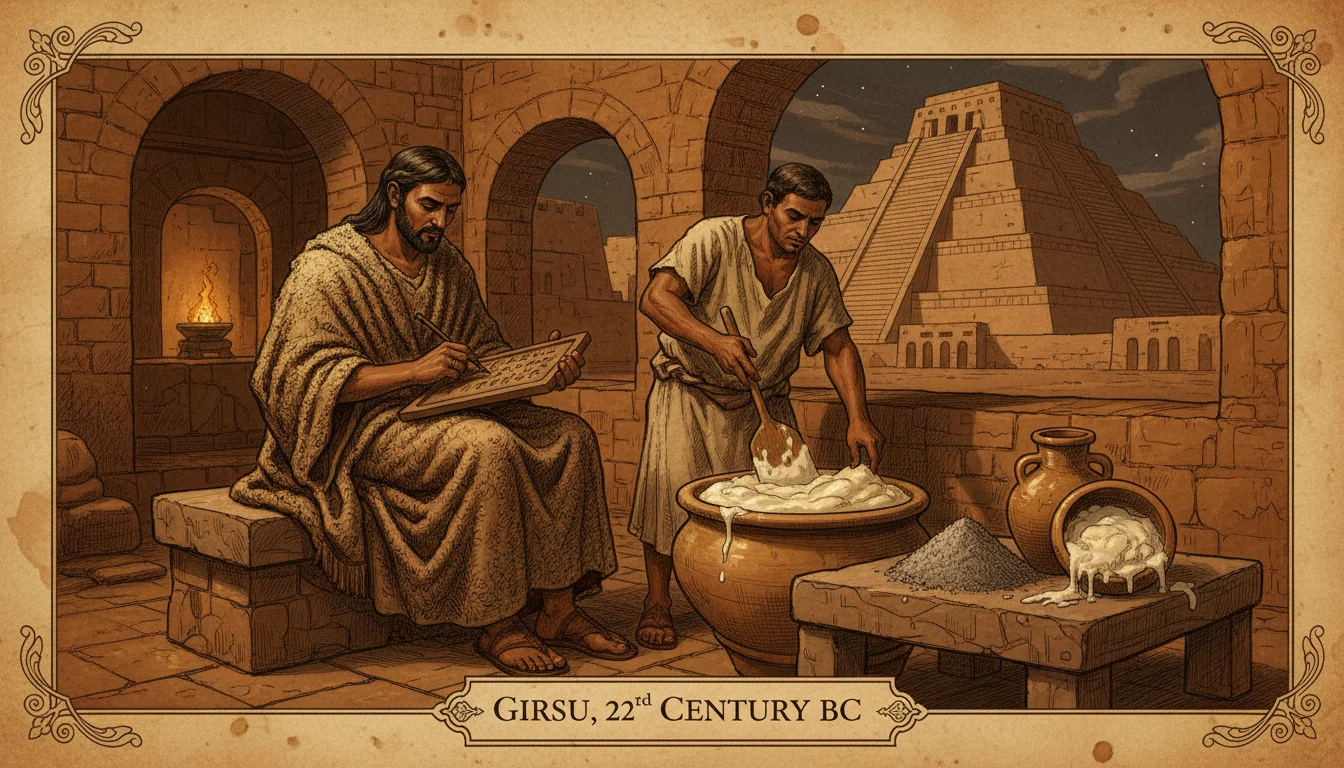
The popular story of soap goes something like this: ancient peoples did not really bathe; the Romans invented public baths but no actual soap; the Middle Ages stopped washing entirely; and a 19th-century chemist somewhere finally produced the bar in your shower. It is a tidy narrative. It is also wrong on every single beat.
Soap is one of the oldest manufactured substances in human history. The recipe is documented on clay tablets from before the pyramids. Egyptian temple workers used a version of it. Phoenicians traded it across the Mediterranean. Romans wrote about it as a Gallic and Germanic specialty. Medieval Aleppo perfected the bar form. The genuine modern revolution, the part where soap became cheap enough for ordinary people to use daily, did not happen until the 1790s and was a story of industrial chemistry rather than hygiene philosophy.
The history of soap is, in a real sense, the history of how humans have understood dirt.
The clay tablet from Girsu
The oldest surviving soap recipe is incised on a Sumerian clay tablet, dated to roughly 2200 BC, recovered from the temple precinct at Girsu in southern Mesopotamia, in what is now southeastern Iraq. The tablet is administrative rather than scientific: it records the quantities of materials a temple workshop was using. The recipe is straightforward. Mix oils or fats with the alkaline ash from certain plants and water, heat the mixture, and the result is a substance that can be used to wash wool, clean leather, and rub on skin.
The chemistry, which the Sumerians did not know in modern terms but had clearly worked out by experiment, is saponification. Fats are triglycerides, three fatty-acid chains attached to a glycerol backbone. Wood ash and certain plant ashes contain potassium and sodium hydroxide, which break those bonds and convert the fatty acids into water-soluble salts. Those salts are soap molecules. Once dissolved in water, they have a polar end that bonds with water and a non-polar end that bonds with grease, allowing the grease to be rinsed away.
The Sumerians did not need the chemistry to do the procedure. They had inherited the knowledge from much older traditions of working animal fat and ash, possibly going back to the Neolithic. The 2200 BC tablet is the earliest documentation, but the actual practice almost certainly predates it by millennia.
Egypt, Phoenicia, and the wool industry
Egyptian medical papyri from around 1500 BC, including the Ebers Papyrus, describe washing the body with a mixture of animal fats and alkaline salts, especially natron, a naturally occurring sodium carbonate mined from the Wadi Natrun in the western delta. Egyptian temple workers, priests preparing for ritual, and embalmers all used these preparations for ritual purity. Whether the result was true saponified soap or simply a fat-and-alkali wash that cleaned by mechanical action is unclear, but the practice was widespread.
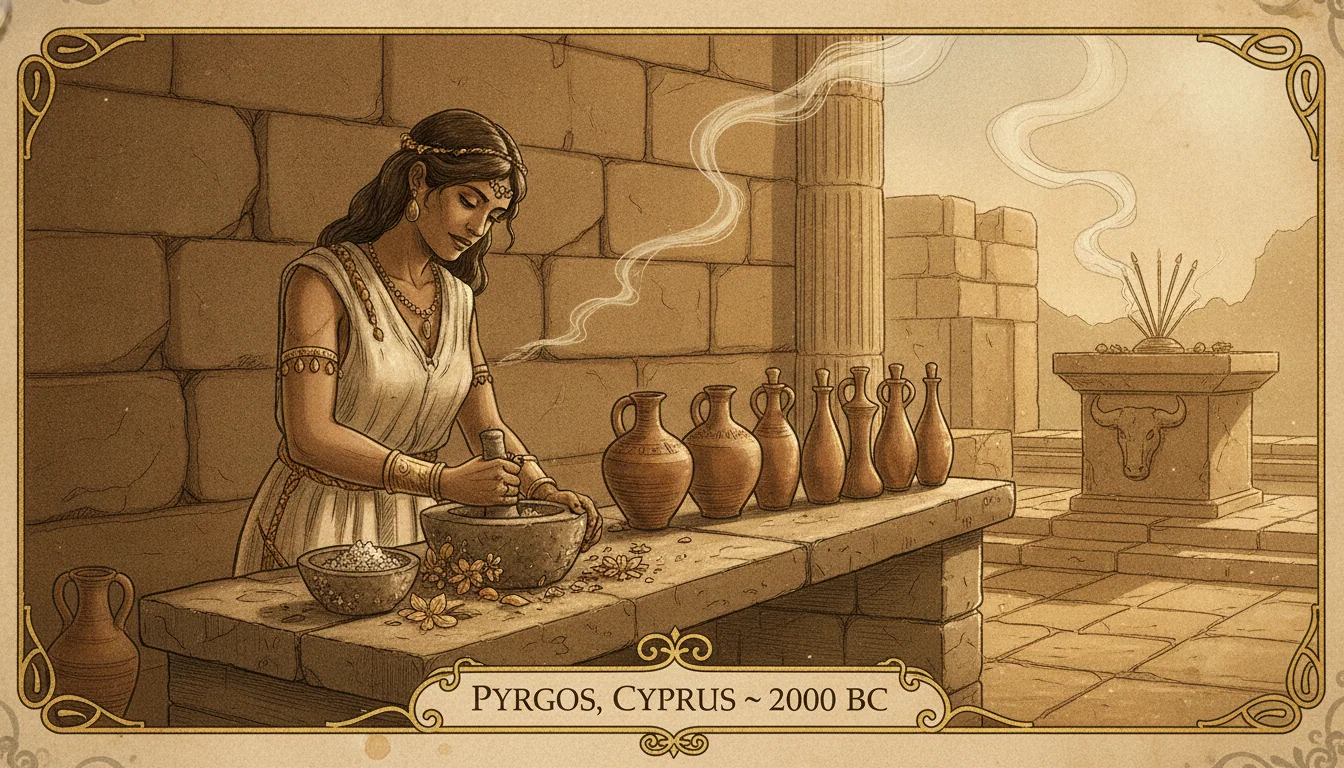
Phoenician traders, the great maritime middlemen of the eastern Mediterranean, carried both the recipes and the materials between Egypt, the Levant, Cyprus, and the Greek world. By the time the Iron Age was underway, soap-making was a known craft from Tyre and Sidon to Carthage.
The early industry was driven less by personal hygiene than by textiles. Wool, the dominant fabric of the Mediterranean and Near Eastern economies, must be cleaned of its natural lanolin grease before it can be dyed or woven into fine cloth. Soap, applied during the fulling process by workers walking on the wet wool in clay tubs, did this efficiently. The earliest commercial soap-making was, in effect, an industrial chemical for the wool trade.
Pliny and the Gallic invention
The first detailed Latin source on soap as a personal product is Pliny the Elder's Natural History, written in the 1st century AD. Pliny describes sapo as a Gallic invention, made by combining tallow and the ashes of beech wood, and used by men and women alike to dye their hair red. He treats it as a barbarian curiosity rather than a Roman product.
The Romans themselves bathed by oiling the skin, rubbing it with a metal scraper called a strigil to lift the mixture of oil, sweat, and dirt, and then rinsing. The great public bath complexes, the Baths of Caracalla, the Baths of Diocletian, were not soaped venues. They were hot-cold-tepid sequences of immersion, sweat, and oil.
But the soap habit drifted east through the empire, and by the 2nd century AD soap was being sold in the markets of Pompeii. By the late Empire, the medical writer Galen, working in Pergamon in the 2nd century AD, recommended soap not only for cleaning but for treating certain skin conditions. By the time of the Byzantine east, soap was a standard household product in the eastern Mediterranean.
Aleppo and the bar revolution
The genuine refinement of soap into a hard, long-lasting, transportable bar happened in the early medieval Islamic world, and most prominently in Aleppo. The Syrian city, sitting on the eastern Mediterranean trade routes, had abundant olive oil from the surrounding hills, abundant laurel from coastal forests, and a well-developed alkali industry that produced lye from the ash of the salt-tolerant glasswort plant, soda ash from the Wadi Natrun connection, and increasingly from purpose-grown industrial crops.
Aleppo soap, made by cooking olive oil with lye for days, adding laurel oil at the end of the cook, and pouring the hot soap into open pits to set, is essentially the same recipe used today. The bars are cut from the cooled soap, stamped with the maker's mark, and aged for six months to a year in dry stone storerooms. The resulting product is hard, mild, long-lasting, and trades well. By the 12th century, Aleppo soap was being exported throughout the Mediterranean and to Western Europe by Crusader-era merchants.
The Aleppo technique spread west. By the late Middle Ages, the cities of Castile (especially in Spain), Marseille (in southern France), Genoa, and Venice were all producing olive-oil bar soaps in conscious imitation of Aleppo. Castile soap and Marseille soap became European standards. The hard-soap industry of Europe between roughly 1300 and 1700 is, almost entirely, a direct descendant of the Aleppo workshops.
The medieval bath, the early modern dirt
The widespread modern belief that medieval Europeans stopped washing is one of the most durable historical myths and one of the most clearly wrong. Medieval European cities had public bathhouses, called stews in English. Soap was a normal household product. Cosmetic and toiletry inventories from the 12th and 13th centuries include scented soaps. The expense was real, but bathing itself was unremarkable.
What did happen, and what got retrospectively projected backwards onto the entire medieval period, was the early modern collapse of public bathing between roughly 1500 and 1700. Three forces drove it. The Black Death and successive plague epidemics caused authorities across Europe to close public baths as suspected sites of contagion. The Protestant and Catholic Reformations brought a new moralism about public nudity that further damaged the bathhouse trade. And a peculiar Renaissance medical theory, drawing on humoral medicine, held that warm water opened the skin's pores to disease, making bathing actively dangerous. The result was that early modern Europe was significantly dirtier than the High Middle Ages had been.
By the 17th century, the European elite was washing primarily with linen, not water: a clean white shirt was understood to absorb sweat and grease and be replaced frequently, while the body underneath was simply not washed. This is the era that produced the popular image of unwashed history, and 19th-century writers, embarrassed by their own period's predecessors, projected the practice backwards onto the entire medieval millennium.
The industrial revolution: cheap soap
The genuine modern transformation came in 1791, when the French chemist Nicolas Leblanc patented a process for manufacturing soda ash (sodium carbonate) from common salt. Before the Leblanc process, soap-making had been limited by the availability of plant or wood ash as a source of alkali. With cheap industrial soda ash, soap-making could scale dramatically.
The next century saw the soap industry become one of the foundational industries of the chemical revolution. William Hesketh Lever, founder of what became Unilever, opened his Port Sunlight soap works on Merseyside in 1888. American manufacturers Procter and Gamble, founded in Cincinnati in 1837, expanded enormously on the back of cheap industrial soap during and after the American Civil War. By 1900, soap was a manufactured commodity available in every grocery and pharmacy in Europe and North America.
The germ theory of disease, accepted in the 1880s and 90s, supplied the marketing logic that turned soap from a useful household product into a moral imperative. Late Victorian advertising, especially the famous Pears Soap campaigns, fused cleanliness with civilization and respectability. The modern habit of daily soap-and-water personal washing dates from this period.
What got remembered, what got forgotten
The Sumerian temple tablet, the Egyptian natron baths, the Aleppo bar workshops, the long medieval tradition of European stews, all got compressed in the popular memory into a single false story: ancient people were dirty, Romans almost figured it out, the medievals went back to being dirty, and the Victorians finally invented modern hygiene.
The actual sequence is harder to memorize but easier to defend. Soap is at least 4,000 years old. The recipe has not fundamentally changed. The bar form was perfected in Syria in the early Middle Ages. Western Europe was at its filthiest in the Renaissance and Baroque eras, not the Middle Ages. And the only thing the 19th century actually invented was the price point. The chemistry was already there.
The next time someone tells you Victorians taught the world to wash, you can answer that the origins of soap stretch back two thousand years before Rome, and the only thing the Victorians taught was how to sell it at scale.
For more on ancient inventions with surprisingly deep roots, see our entries on the origins of glass and the origins of tea.
Quick Answers
Common questions about this topic
When was soap first invented?
The earliest documented soap recipe survives on a Sumerian clay tablet from roughly 2200 BC, found at the city of Girsu in southern Mesopotamia. It describes mixing animal fat, water, and the ash of certain plants to produce a substance used for washing wool and cleaning skin. Egyptian, Phoenician, and Roman sources confirm the basic recipe was known across the ancient Near East and Mediterranean by the second millennium BC.
Did the Romans actually use soap?
Yes, but not the way we use it. Romans bathed using olive oil and a metal scraper called a strigil that removed dirt and dead skin. Soap, called sapo by Pliny the Elder, was known by the 1st century AD as a Gallic and Germanic invention used mostly for cleaning hair and laundry. It became more common for personal washing in the late Roman Empire, especially in the eastern provinces.
Who invented modern bar soap?
The Syrian city of Aleppo, working in the early medieval Islamic world, perfected hard bar soap made from olive oil, laurel oil, and lye derived from wood ash. By the 12th century, Aleppo soap was exported across the Mediterranean. Marseille, Castile, and Venice copied the technique. Modern industrial soap making began with the 1791 Leblanc process for manufacturing soda ash, which made cheap factory soap possible for the first time.
Why did Europeans stop washing in the Middle Ages?
They did not, despite the popular myth. Medieval Europeans bathed regularly in public bathhouses called stews and used soap for hair, laundry, and skin. Bathing declined in early modern Europe between roughly 1500 and 1700 because of a combination of plague-era closure of public baths, religious moralism about nudity, and a Renaissance medical theory that warm water opened the pores to disease. The dirty Middle Ages is a 19th-century invention. The Renaissance was actually filthier.

Ask the Inventors Themselves
Chat with the people who were there when familiar things began.
Create your free account →No card required. Some figures and features require a paid plan.
Join the HistorIQly Club
Get smarter about the past.
Weekly stories, deep dives, and exclusive content straight to your inbox.