The Revenant vs. History: How Accurate Is Iñárritu's Survival Epic?
Checking The Revenant historical accuracy: DiCaprio won an Oscar for the role, but how much of Hugh Glass's bear attack and 200-mile crawl to safety actually happened?
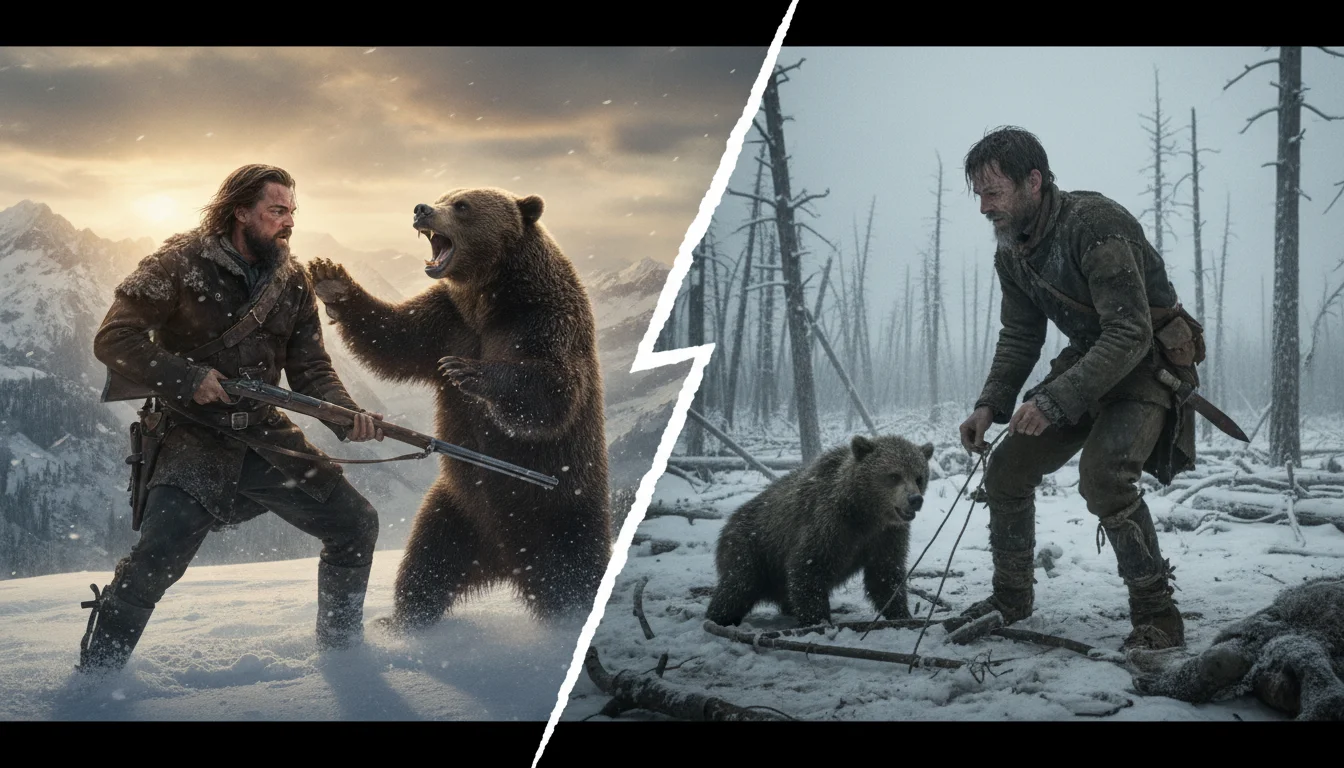
Alejandro González Iñárritu's 2015 epic The Revenant earned Leonardo DiCaprio his long-awaited Academy Award and grossed over $500 million worldwide. The film depicts frontiersman Hugh Glass surviving a brutal bear attack in 1823, being left for dead by his companions, and crawling hundreds of miles through the wilderness seeking revenge.
It's a remarkable story. But how much of it actually happened?
What Hollywood Got Right
The Bear Attack Really Happened
Hugh Glass was indeed mauled by a grizzly bear in August 1823 while serving as a scout for the Rocky Mountain Fur Company expedition led by Andrew Henry. The attack occurred near the Grand River in present-day South Dakota. Contemporary accounts describe Glass as being "torn nearly all to peases" with wounds so severe that his companions expected him to die within hours.
He Was Abandoned
After the attack, the expedition couldn't afford to wait for Glass to die. Henry offered payment to two volunteers who would stay behind with Glass until he passed, then give him a proper burial. John Fitzgerald and a young man (more on him later) accepted. But when Fitzgerald grew concerned about hostile Arikara Indians in the area, he convinced his companion to leave Glass - taking his rifle, knife, and other supplies with them.
The Crawl Was Real (Mostly)
Glass survived. According to various accounts, he set his own broken leg, allowed maggots to eat his gangrenous flesh to prevent infection, and began crawling toward civilization. He reportedly traveled over 200 miles to Fort Kiowa, surviving on roots, berries, and the rotting carcass of a dead bison calf. The journey took approximately six weeks.
What Hollywood Got Wrong
The Son Never Existed
The film's emotional core involves Fitzgerald killing Glass's half-Pawnee son, Hawk, providing Glass's motivation for revenge. This is entirely fictional. Historical records indicate Glass had no son - Native American or otherwise - on the expedition. The character was invented to give the story higher emotional stakes and a clearer revenge narrative.
Fitzgerald Wasn't a Villain
John Fitzgerald, played by Tom Hardy as a murderous sociopath, was a real person. But he wasn't the monster the film depicts. He was simply a frontiersman who made a pragmatic (if morally questionable) decision to abandon a dying man rather than risk his own life waiting for the inevitable. There's no evidence he tried to kill Glass or murdered anyone. Fitzgerald later served at Fort Atkinson and died in the 1830s - never having been punished for leaving Glass.
The Revenge Never Happened
In the film, Glass finally confronts Fitzgerald in a brutal fight, leaving him to die at the hands of Arikara warriors. In reality? Glass eventually caught up with Fitzgerald at Fort Atkinson, but Fitzgerald had joined the Army by then. Killing a soldier would have meant execution, so Glass reportedly said something like "settle it with your conscience" and walked away. No knife fight. No dramatic confrontation. Just a bitter acceptance of circumstances.
The Timeline Was Compressed
The film suggests everything happens in a single brutal winter. In reality, Glass's crawl to Fort Kiowa occurred in late summer through early fall 1823. His pursuit of Fitzgerald and the other man who abandoned him (Jim Bridger) took months and involved multiple legs of travel across the frontier.
Jim Bridger's Role
The film implies only Fitzgerald abandoned Glass. Actually, Jim Bridger - who would later become one of the most famous mountain men in American history - was the younger man who stayed behind with Fitzgerald. Bridger was reportedly just 17 or 18 at the time, and Glass apparently forgave him due to his youth when they later met. The film largely writes Bridger out to simplify the narrative.
Historical Accuracy Score: 5/10
The Revenant historical accuracy score of 5/10 reflects a film that captures the spirit of Glass's incredible survival story and gets the broad strokes right: bear attack, abandonment, remarkable crawl to safety. The wilderness setting is brutally authentic, and the film's depiction of 1820s frontier life feels genuine.
But the core dramatic elements - the murdered son, the villainous Fitzgerald, the bloody revenge - are fictional. The real story is impressive enough: a man survived a grizzly mauling and crawled 200 miles through hostile territory on sheer willpower. Hollywood apparently didn't think that was dramatic enough.
The Legend vs. The Man
Hugh Glass lived until approximately 1833, when he was killed by Arikara warriors on the Yellowstone River. His story was already legendary during his lifetime, appearing in newspaper accounts and dime novels that embellished details with each retelling.
In a way, The Revenant continues that tradition. Every generation adds to the Hugh Glass myth, making it bigger, more dramatic, more cinematic. The real man was extraordinary - a survivor whose determination still inspires 200 years later.
But he probably would have been bemused by the Oscar-winning film that bears his story. All that crawling, all that suffering, and what did DiCaprio's Glass get in the end? Revenge against a man who, in real life, Glass simply chose to forgive.
Sometimes Hollywood needs a villain more than history provides one.
For more Hollywood vs. history breakdowns, see our fact-checks on Gladiator and Saving Private Ryan.

Debate the Accuracy with the Real Figures
Ask the real people what Hollywood got wrong about their lives.
Chat with HistoryJoin the HistorIQly Club
Get smarter about the past.
Weekly stories, deep dives, and exclusive content straight to your inbox.