Tetris vs. History: How Accurate Is the Apple TV+ Tetris Biopic?
The Tetris 2023 movie accuracy verdict: the Cold War licensing battle is real, but the KGB car chases and spy-thriller scaffolding are pure Hollywood invention.
Read Wikipedia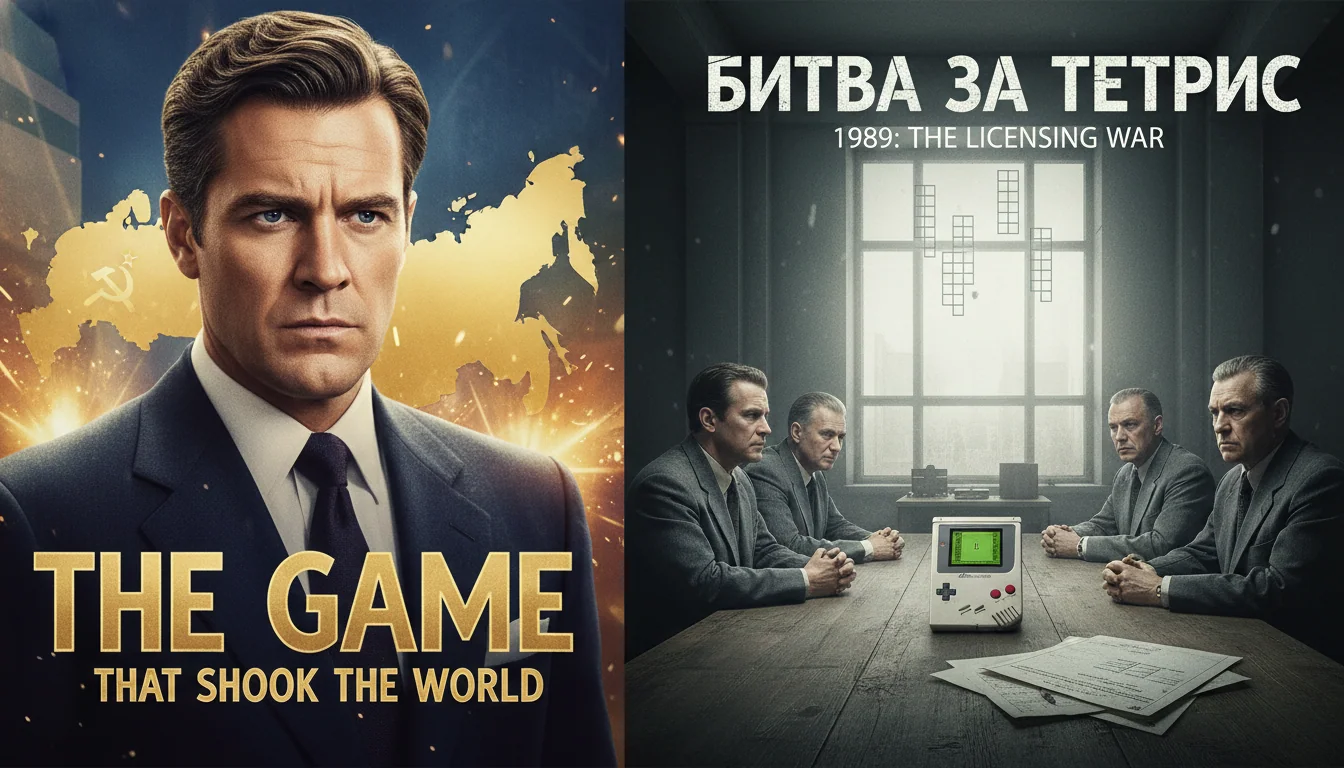
The story of how Tetris left the Soviet Union was genuinely strange. A puzzle game created by a Moscow computer scientist passed through a chain of sub-licenses so tangled that at least four companies simultaneously believed they held rights they did not actually have, and the legal battle that sorted it out reshaped the global video game market. A thriller writer could not have invented the underlying situation.
Jon S. Baird's 2023 Apple TV+ film did not need to invent it. And then it went ahead and invented quite a lot of it anyway.
The core story of Tetris is real. The spy-thriller scaffolding surrounding it is almost entirely fictional. Understanding which is which requires some history.
What Hollywood Got RIGHT
Alexei Pajitnov created the game and saw almost none of the early profits
Alexei Pajitnov was a software engineer and puzzle enthusiast working at a Soviet computing research institute in Moscow when he created Tetris in June 1984. He was experimenting with pentomino puzzles, the shapes made of five connected squares, and adapted them into seven-piece tetrominoes because the screen was too small to display pentominoes clearly. He built the first playable version on an Electronika 60 computer in a matter of weeks.
The film gets this right. It also correctly depicts Pajitnov signing over his rights to the Soviet government, which meant he received no royalties from the game for years. His friendship with Henk Rogers, which began during the Moscow negotiations and lasted decades - they eventually cofounded the Tetris Company together in 1996 - is also real and is one of the more genuinely moving elements of both the film and the actual history.
The licensing chain was chaotic
By 1988, Tetris had passed through a sequence of rights agreements that looked clean on paper and was actually riddled with gaps. Robert Stein, a British software entrepreneur, had negotiated with ELORG (Elektronorgtechnica, the Soviet state technology export agency) for PC and related platform rights. He had then sublicensed to Mirrorsoft in the United Kingdom and Spectrum Holobyte in the United States, both controlled through Robert Maxwell's media empire and run day-to-day by his son Kevin Maxwell. Mirrorsoft had further sublicensed to Atari's consumer division, which believed it held console rights. Nintendo was being pitched Tetris by multiple parties, several of whom had questionable or incompatible claims.
The film depicts this tangle accurately in broad terms. The competing Western companies, each convinced they had signed the necessary papers, are all genuinely present in the history.
Henk Rogers went to Moscow and found ELORG held the actual authority
Rogers had licensed a Famicom cartridge version of Tetris for the Japanese market through Bullet-Proof Software, his Tokyo-based company. Recognizing that Nintendo's upcoming handheld would need compelling software, he traveled to Moscow in January 1989 to secure the handheld rights - which turned out to be unallocated because Stein's original agreement with ELORG had covered only IBM-compatible computers. ELORG officials confirmed this directly during Rogers' visit: the console and handheld categories were still in Soviet hands.
Nintendo's Minoru Arakawa and Howard Lincoln also traveled to Moscow for parallel negotiations. Rogers, Arakawa, and Lincoln all genuinely went to the Soviet Union, navigated real bureaucratic obstacles under real time pressure, and secured a deal that made Tetris the launch title for the Game Boy. This part of the story the film reconstructs with general accuracy.
Tetris really was the Game Boy's defining product
Nintendo released the Game Boy in April 1989 in Japan, bundled with Tetris rather than the originally planned Super Mario Land. The decision reflected a genuine assessment that Tetris would appeal more broadly than a Mario platformer to the demographic Nintendo wanted to reach. The film is correct that securing the handheld rights was commercially critical, and that without Rogers' intervention the licensing dispute might have tied up the product in litigation for years.
What Hollywood Got WRONG
The KGB chase sequences are invented
The most dramatically memorable scenes in the film involve Rogers being pursued through Moscow by KGB agents in an automotive chase, having his hotel room monitored under obvious surveillance, and operating as if under genuine threat of arrest or worse. This is almost entirely a fictional construction.
Rogers has discussed his 1989 Moscow trip in interviews over the years. He describes it as legally risky - he was operating in a Soviet bureaucracy without proper clearances, his visa situation was uncertain - but the active KGB pursuit, the car chases, and the implication of physical danger to his person are thriller-movie additions with no reported basis in what actually occurred. The real obstacles were bureaucratic, not cinematic.
Rogers' nationality is glossed over
The film presents Rogers with deliberate ambiguity but frames him in ways that suggest an American-style entrepreneurial maverick taking risks in Soviet territory. The real Rogers was Dutch by birth (born in Amsterdam), had grown up partly in the United States and partly in the Netherlands, and by 1989 had been a Japanese resident for years, running a Japanese software company. His perspective on the Soviet Union and on the deal he was negotiating was that of a Japan-based entrepreneur, not an American one. The distinction matters because it shaped how he approached the negotiations and why he was positioned to notice the handheld rights gap in the first place.
The Maxwell family drama is heavily simplified
Robert Maxwell's son Kevin Maxwell ran Mirrorsoft, and the family's involvement in the licensing chain was real and consequential. The film uses Kevin Maxwell as something close to a villain, his aggressive pursuit of the rights creating much of the dramatic tension. The commercial conflict was genuine, but it played out through lawyers, contracts, and licensing negotiations rather than the confrontational scenes the film stages. Robert Maxwell himself is rendered with strokes broad enough to flatten a complicated and genuinely troubling media figure into a near-cartoon antagonist.
Arakawa and Lincoln's visit is exaggerated
The film depicts Arakawa, Nintendo of America's president, being briefly threatened or detained during his Moscow trip. The real visit by Nintendo's representatives involved difficult negotiations with Soviet officials but not the physical confrontations the film stages. Both men went to Moscow, both navigated real bureaucratic resistance, and the negotiations were genuinely high-stakes - but the drama was commercial, not physical.
The timeline compression is extreme
The actual Tetris licensing battle stretched over many months in 1988 and 1989, involving multiple rounds of legal correspondence, parallel negotiations in several countries, and the intervention of courts in Britain and the United States. Atari's Tengen division had released an unlicensed NES version that was eventually recalled by court order - a legal proceeding that took months. The film compresses all of this into what feels like days of frantic activity, which is dramatically necessary but obscures how grinding and iterative the actual process was.
Historical Accuracy Score: 6.5/10
Tetris (2023) gets the underlying business reality right: the licensing chaos was genuine, ELORG held real authority that the Western companies had failed to properly engage, Rogers' trip to Moscow was real and consequential, and the Game Boy's commercial success with Tetris as its defining title is one of the pivotal moments in gaming history. The friendship between Rogers and Pajitnov, and the years Pajitnov spent unable to profit from his own invention, are faithfully depicted and constitute the film's most affecting material.
What the film gets wrong is its genre. The story of Tetris is a story about intellectual property law, Cold War bureaucracy, and the collision of Soviet state control over creative output with Western commercial hunger. That story is genuinely fascinating. The filmmakers decided it needed car chases and KGB surveillance to hold an audience, and those additions invented a thriller that did not happen in place of one that did.
What the film gets most right: the commercial stakes, ELORG's actual authority, and the Rogers-Pajitnov friendship.
What it gets most wrong: the spy-thriller action sequences have almost no basis in fact, and they crowd out the genuinely strange true story.
The underlying saga is worth knowing. The game that sold the Game Boy was created by a Soviet programmer who couldn't profit from it, licensed through a chain of agreements none of which held up to scrutiny, and rescued by a Dutch entrepreneur based in Tokyo who flew to Moscow in January and found a gap nobody had noticed. That story did not need a car chase.
For other tech-business biopics put to the accuracy test, see Blackberry vs. History and The Social Network vs. History.
Quick Answers
Common questions about this topic
Who created Tetris?
Alexei Pajitnov, a Soviet computer scientist, created Tetris in 1984 while working at the Dorodnitsyn Computing Centre, a research arm of the Soviet Academy of Sciences in Moscow. He built the first version on an Electronika 60 as a programming exercise inspired by pentomino puzzles. He did not profit from the game for years, as the rights belonged to the Soviet government.
Who was Henk Rogers in real life?
Henk Rogers is a Dutch-Indonesian game developer born in Amsterdam who by 1989 had been based in Japan for years, running a software company called Bullet-Proof Software. He discovered Tetris at the 1988 Consumer Electronics Show in Las Vegas and traveled to Moscow in January 1989 to secure handheld rights for Nintendo's upcoming Game Boy. The film depicts him ambiguously but leans toward an American-entrepreneur framing that does not quite fit his actual background.
Did the KGB really chase Henk Rogers through Moscow?
No. Rogers' 1989 Moscow trip involved tense bureaucratic negotiations with Soviet officials, not car chases with KGB agents. He has described the trip as legally and professionally risky, but the thriller elements - the pursuit, the physical danger, the spy-movie confrontations - are Hollywood inventions with no reported basis in what actually happened.
How accurate is Tetris (2023) overall?
The film is broadly accurate about the commercial stakes and the core players but heavily fictionalized in its thriller-genre scaffolding. The central fact - that multiple Western companies held questionable licenses and that ELORG controlled the real rights - is real. The KGB car chases, assassination-level threats, and dramatically staged confrontations are invented.

Debate the Accuracy with the Real Figures
Ask the real people what Hollywood got wrong about their lives.
Create your free account →No card required. Some figures and features require a paid plan.
Join the HistorIQly Club
Get smarter about the past.
Weekly stories, deep dives, and exclusive content straight to your inbox.