The Texarkana Moonlight Murders: The Phantom Killer Who Terrorized a Border Town
Texarkana Moonlight Murders: in 1946 a hooded Phantom Killer stalked lovers' lanes, killing five and vanishing. The case inspired the slasher genre and stays unsolved.
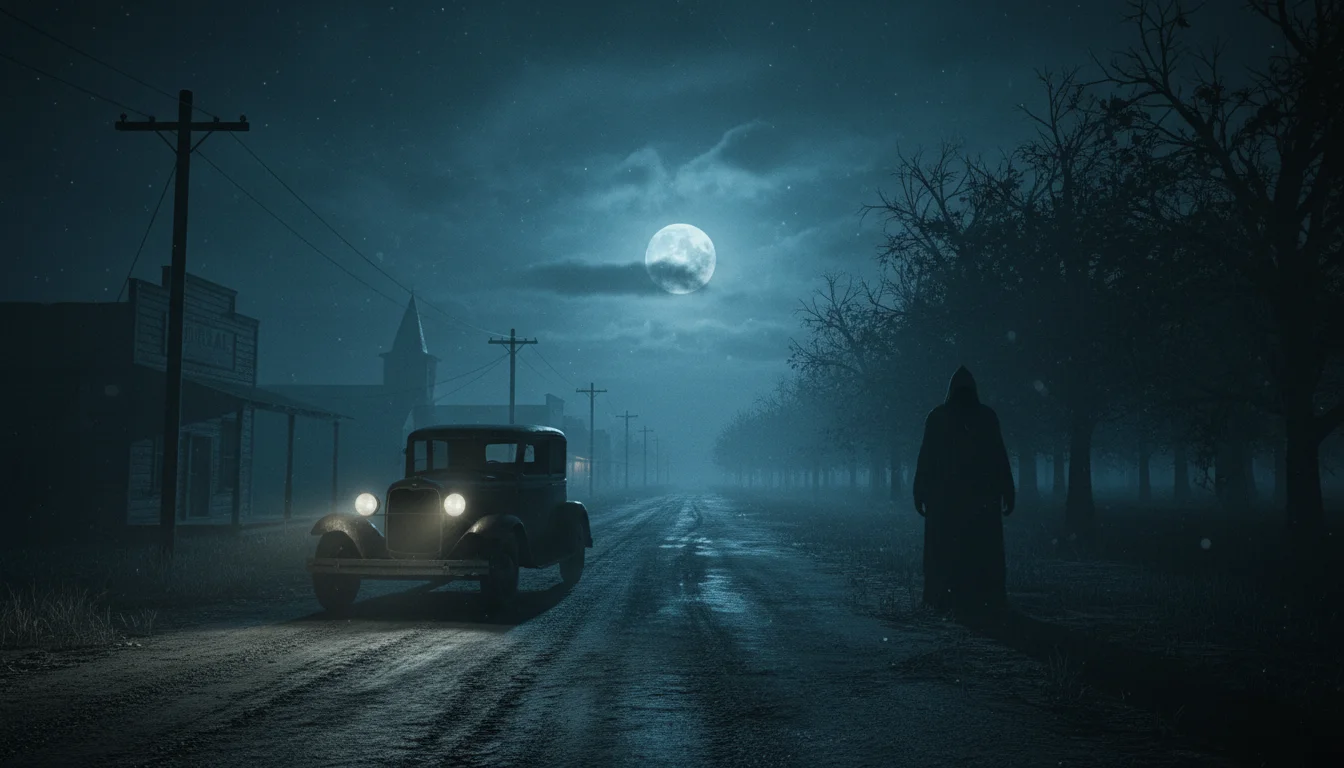
In the spring of 1946, the twin cities of Texarkana - straddling the Texas-Arkansas border - became hunting grounds for a killer who would never be caught. Over ten weeks, a hooded figure stalked young couples parked on remote roads, attacking eight people and killing five. The newspapers called him the Phantom Killer. The locals called it the Reign of Terror. Eight decades later, we still don't know his name. (For other American serial killers who slipped away from investigators, see the Alphabet Murders of Rochester and the Axeman of New Orleans.)
The First Attack: February 22, 1946
Jimmy Hollis, 25, and Mary Jeanne Larey, 19, had parked on a quiet road near Texarkana. Around 11:45 PM, a man approached their car. He wore a white hood over his face with holes cut for his eyes - a detail that would haunt survivors and define the case.
The attacker ordered Hollis out of the car, then beat him savagely with a heavy object. When Larey tried to flee, the man caught her, sexually assaulted her with the barrel of a gun, and left both victims for dead in a ditch.
Miraculously, both survived. But their descriptions of the hooded assailant did little to help investigators. In 1946, forensic science was primitive. There was no DNA analysis, no criminal databases, no way to match the attack to a known offender.
Police dismissed it as a random assault. They were wrong.
Escalation: The Murders Begin
March 24, 1946 - Exactly three weeks later, the Phantom struck again. Richard Griffin, 29, and Polly Ann Moore, 17, were found dead in Griffin's Oldsmobile on a lovers' lane near Spring Lake Park. Both had been shot in the back of the head. Moore's body showed signs of sexual assault. The killer had waited patiently, watching them from the darkness.
April 14, 1946 - Three weeks to the day, Paul Martin, 16, and Betty Jo Booker, 15, were attacked after leaving a VFW dance. Martin's body was found on a dirt road, shot four times. Booker's body wasn't discovered until the next morning, a mile and a half away in a grove of trees. She had been shot twice in the face. Her saxophone case lay nearby - she'd been a musician playing at the dance.
The three-week pattern wasn't lost on investigators. Neither was the escalating brutality.
A Town in Terror
By April, Texarkana was gripped by hysteria. Residents bought out every gun in local stores. Hardware shops sold out of locks. Families slept in shifts, someone always awake and armed. Young couples abandoned lovers' lanes entirely. The Arkansas Gazette reported that "weights were placed on the doors of cars so that they wouldn't open."
Texas Ranger Captain M.T. "Lone Wolf" Gonzaullas arrived to lead the investigation - a legendary lawman who'd survived gunfights, raids, and the Texas oil boom's worst violence. He brought modern techniques: systematic interviews, detailed crime scene analysis, a coordinated regional manhunt. Over 400 suspects were questioned. None fit.
The Final Attack: May 3, 1946
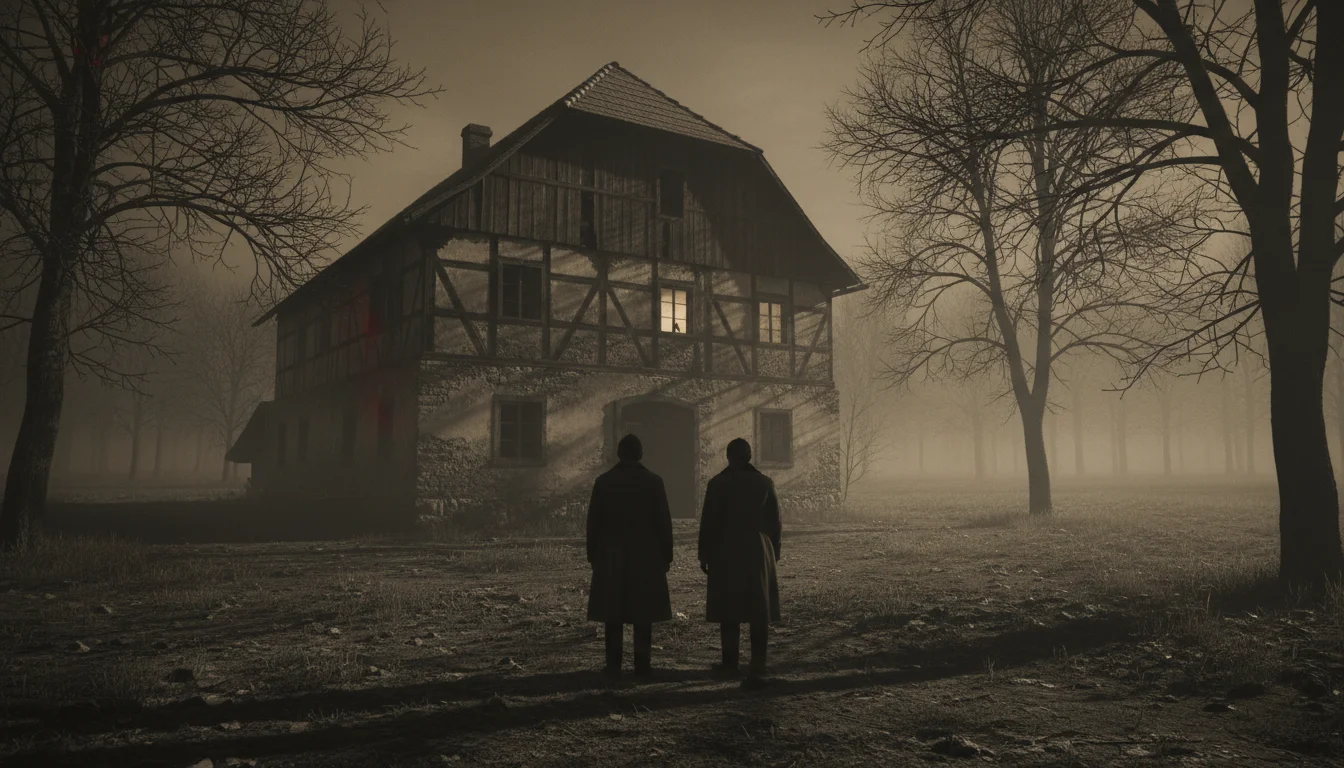
Virgil Starks, 36, was sitting in his farmhouse reading the newspaper when a bullet crashed through his window, striking him in the head. His wife Katie, 35, heard the shot and ran to find her husband dying. Then she saw the hooded figure at the window.
Two more bullets hit Katie in the face as she tried to flee. But she survived. Bleeding profusely, teeth shattered, she crawled to a neighbor's house and pounded on the door until help came.
This attack broke the pattern. It wasn't a lovers' lane. The victims weren't young. The killer had stalked a home. Yet investigators connected it to the Phantom through the timing, the hood, and the ballistic evidence that seemed to match earlier crime scenes.
The Investigation's Collapse
Gonzaullas and his team pursued hundreds of leads. They arrested several suspects who ultimately had alibis. They investigated rumors of KKK involvement, drifters, Army deserters, even a woman whose husband was a person of interest.
Their best lead: Youell Swinney, a car thief and petty criminal whose wife, Peggy, told police he was the Phantom. She claimed to have been present during one of the attacks. But Texas law at the time prohibited a wife from testifying against her husband, and Peggy Swinney recanted her statement multiple times, making her unreliable.
Swinney was convicted of car theft and sentenced to life as a habitual offender. He died in prison in 1994, never charged with murder. Many investigators remained convinced he was their man. But conviction and certainty aren't the same thing.
The Pattern's End
After May 3, the attacks stopped. No explanation, no final victim, no resolution. The Phantom simply vanished.
Several theories attempt to explain the cessation:
- The killer died or was imprisoned for another crime. If Swinney was the Phantom, his 1946 arrest for car theft would explain the sudden stop.
- The killer moved. Serial offenders sometimes relocate, and similar unsolved murders occurred in other states during subsequent years.
- The increased police presence and armed populace made hunting too dangerous. Unlike most serial killers, perhaps this one had strong survival instincts.
- The killer was never local. Some investigators believed he was a transient who passed through Texarkana and moved on.
Cultural Shadow
The Texarkana murders inspired the 1976 film "The Town That Dreaded Sundown," which dramatized the attacks and became a cult classic. The movie cemented the killer's image - the burlap hood, the lurking presence, the attacks on parked cars - into American horror iconography.
Film scholars argue that the Texarkana case helped birth the slasher genre. The masked killer stalking lovers, the "final girl" survivor, the seemingly unstoppable evil - elements that would define "Halloween" and "Friday the 13th" trace roots to the Phantom's actual crimes.
Every year, Texarkana screens the original film at a local park. Audiences sit in their cars, watching a movie about a killer who hunted people in cars, in the same city where it actually happened. It's a strange form of community therapy, or perhaps exorcism.
What Remains Unknown
The Texarkana case is particularly frustrating because it's solvable. Evidence exists. The crimes were extensively documented. Bullets were recovered. Witness descriptions, while imperfect, provide parameters.
Modern DNA testing could potentially extract genetic material from surviving evidence - if that evidence has been properly preserved for eighty years. The Texarkana Police Department and Bowie County Sheriff's Office maintain files on the case, though both agencies acknowledge that many physical items have been lost to time and bureaucratic transitions.
In 2016, researcher James Presley published "The Phantom Killer: Unlocking the Mystery of the Texarkana Murders," making a comprehensive case for Youell Swinney's guilt. The book convinced many readers, though definitive proof remains elusive.
The Question That Endures
Who was the Texarkana Phantom? Was he Swinney, a known criminal whose wife placed him at the scenes? Was he someone never suspected, someone who blended back into ordinary life after his spring of violence? Did he die young, carrying his secret to an anonymous grave? Or did he live long, perhaps reading the newspaper accounts, watching the movie, remembering?
Five people are dead because of him. Three others bear scars - physical and psychological - from surviving his attacks. Eight decades of their families' grief, of a community's unease, of a mystery that refuses to resolve.
The Phantom wore a hood. We still can't see his face.
In Texarkana, every spring brings memory. The azaleas bloom, the weather warms, and somewhere in the collective consciousness, a hooded figure still watches from the treeline, waiting for couples to park in lonely places.
The case remains open. The Phantom remains free. The terror remains unresolved.

Want to Interrogate the Suspects?
Chat with historical figures and uncover the truth behind history's greatest mysteries.
Start Your InvestigationJoin the HistorIQly Club
Get smarter about the past.
Weekly stories, deep dives, and exclusive content straight to your inbox.