The Northman vs. History: How Accurate Is Robert Eggers' Viking Epic?
Our guide to the northman historical accuracy separates Norse fact from Hollywood fiction - how closely did Robert Eggers' brutal Viking epic mirror the real history?
Read Wikipedia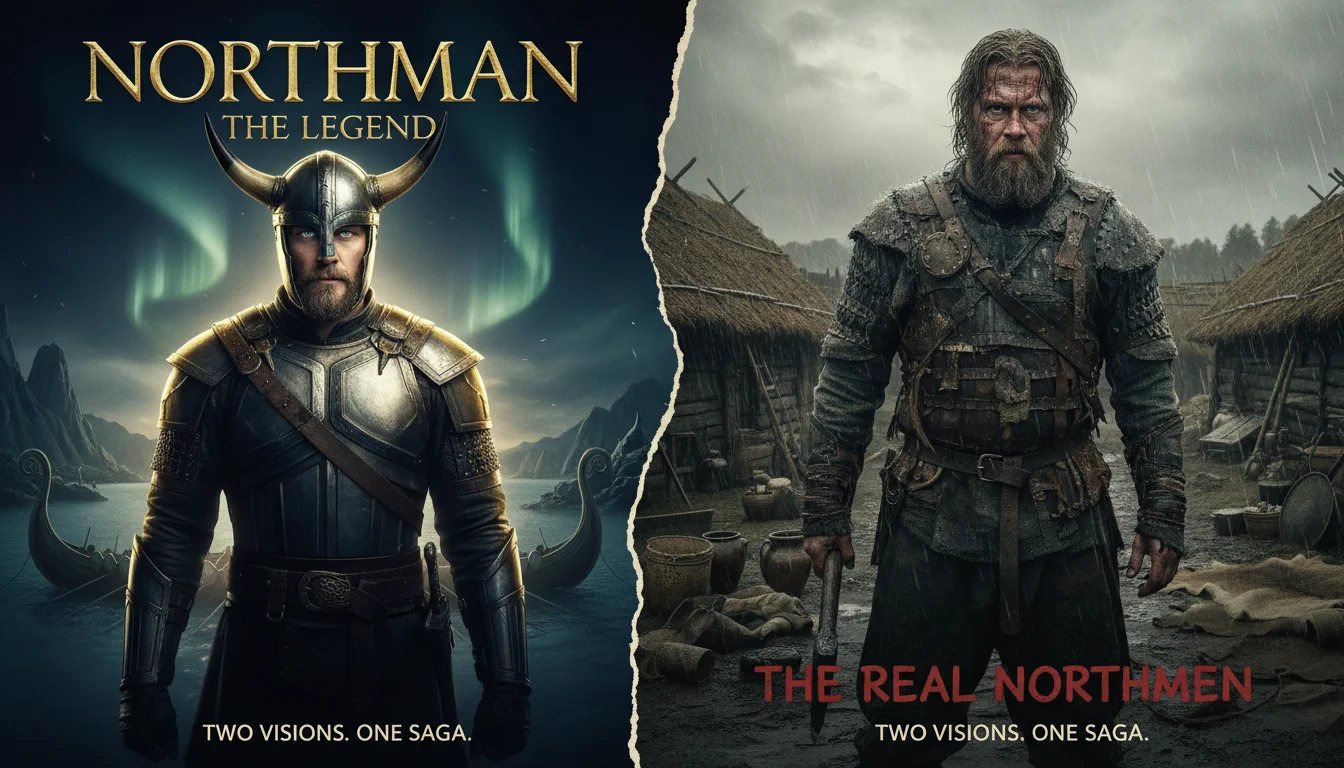
Robert Eggers doesn't make historical films - he creates time machines. With The Northman (2022), the director of The Witch and The Lighthouse set out to accomplish something audacious: create "the most historically accurate Viking film of all time." Working alongside archaeologist Neil Price from Uppsala University and Icelandic author Sjón, Eggers constructed a brutal vision of 10th-century Scandinavia that feels less like a movie and more like a portal to a vanished world.
But did he succeed on the northman historical accuracy question? Let's separate the Norse fact from the Hollywood fiction.
What Hollywood Got Right
The Legend of Amleth Itself
The story of Amleth - the prince who witnesses his father's murder by his uncle and vows revenge - isn't a Viking fantasy. It's a genuine Norse folktale first written down by Danish historian Saxo Grammaticus around 1200 CE, though it existed in oral tradition long before. Yes, this is the same tale Shakespeare would later adapt into Hamlet. The name "Amleth" itself means "stupid" in Old Norse - a reference to the prince feigning madness to survive his uncle's suspicions. Eggers didn't invent this story; he returned it to its Viking roots.
Berserker Warriors
Those wolf-skin-wearing warriors howling before battle? Entirely authentic. The Norse berserkers (from "berserkr" meaning "bear shirt") and their wolf-warrior counterparts, the Úlfhéðnar, were real elite fighters dedicated to Odin. Historical sources describe them entering trance-like states before combat, believing they transformed into animals. The film correctly shows this as a shamanic war dance rather than drug-induced rage - modern historians largely reject the theory that berserkers fought while intoxicated, since you can't be an elite bodyguard of kings while tripping on mushrooms.
The Material Culture
This is where Eggers truly shines. Nearly every artifact on screen - the weapons, jewelry, clothing, and tools - is based on archaeological finds. The mask worn by Willem Dafoe's character during the initiation ritual? A replica of an actual archaeological discovery with Loki's face scratched into it. The mysterious rattle used in ceremonies? Based on Viking-era finds that scholars believe were used to ward off evil spirits. Even the burial mound scene contains items deliberately aged to appear centuries older than the film's setting - a detail Eggers insisted on even though audiences would never consciously notice it.
Norse Religion and Cosmology
The film presents Viking spirituality on its own terms, refusing to explain or apologize for beliefs that might seem alien to modern viewers. The references to the Norns (fate-spinners), Odin's ravens, the Tree of Kings (connected to Yggdrasil), and the cult distinctions between Odin-worshippers (warriors and kings) and Freyr-worshippers (farmers and settlers) all reflect genuine Norse beliefs. Even the Valkyrie vision Amleth experiences mirrors actual Norse conceptions of these warrior-spirits who chose the slain.
Icelandic Settlement
The film's depiction of Iceland as a refuge for displaced Norsemen is historically accurate. When Fjölnir loses his stolen kingdom and flees to Iceland, he's following a well-documented pattern - the unsettled volcanic island became a haven for those driven from their homelands, where they could carve out new lives as farmers. The relative poverty of Fjölnir's Icelandic farm compared to his former kingdom reflects the harsh realities of settlement life.
The Blood Sacrifice Ritual
The blót ceremony - where animal blood is sprinkled about with twigs - comes directly from historical sources. The film's costume designer Linda Muir made a brilliant observation: the Vikings couldn't have performed these bloody rituals in their everyday clothes. So the film shows them wearing special "sacrifice clothes" stained with old blood, like priestly vestments. This wasn't in any historical source - it was logical deduction that scholars now consider probably correct.
What Hollywood Got Wrong
The Coming-of-Age Ceremony
The underground wolf-ritual where young Amleth and his father crawl on all fours, howl, and drink hallucinogenic beverages is the film's most speculative invention. While individual elements are grounded - the ritual chamber is based on an actual Orkney burial site, the henbane-laced drink reflects archaeological finds in possible shamans' graves - no historical source describes anything like this specific ceremony. Eggers admits it's "the most hypothetical thing in the film." It feels authentic because every component is researched, but the combination is creative speculation.
The Shrunken Head Oracle
When Amleth consults a shaman who uses the preserved head of Heimir the Fool to deliver prophecies, this draws from Norse mythology where Odin keeps the mummified head of the god Mímir for similar purposes. However, there's no evidence Vikings actually practiced head preservation or that they believed mortal seers' heads could prophesy after death. It's mythology made literal.
The Blood-Vision Family Tree
Those stunning visuals where Amleth touches blood and sees a cosmic tree with his ancestors hanging from its branches? Pure cinematic invention. The Oseberg tapestry does show an arboreal structure with hanging bodies, and Norse sagas do begin with extensive genealogies, but there's no evidence Vikings believed you could access ancestral visions through blood contact. As Eggers admitted: "Not that I know of!"
Some Timeline Compression
The film's portrayal of the Rus Vikings at the trading outpost compresses what was actually a centuries-long process of Scandinavian settlement and integration with Slavic peoples. The brutal raid sequence, while viscerally authentic in its violence, represents a somewhat simplified version of how Viking incursions actually operated.
Historical Accuracy Score: 8/10
The Northman represents something rare in historical filmmaking: a movie that takes the past seriously enough to present it on its own terms. Robert Eggers didn't want to make Vikings relatable to modern audiences - he wanted to make modern audiences uncomfortable visitors in a truly alien world.
The film's historical consultant Neil Price said it best: "You are in their world, not in ours." The supernatural elements - the Valkyries, the seeress, the blood visions - aren't presented as special effects but as genuine experiences for people who believed in them absolutely. Whether those visions are "real" is left to the viewer, just as it would have been ambiguous to the Vikings themselves.
Where the film invents, it invents intelligently. The underground wolf ceremony may not appear in any source, but every piece of it connects to something archaeologically or textually verified. The result is a movie that might not be perfectly "accurate" in the documentary sense but achieves something more valuable: authenticity.
If a Viking-age time traveler watched The Northman, they might quibble about details. But they would recognize themselves - their gods, their fears, their understanding of fate and blood and vengeance. For a Hollywood film, that's as close to time travel as we're likely to get.
The Northman is available for streaming. For those interested in Viking history, Neil Price's book "Children of Ash and Elm" (2020) served as a major source for the film's historical detail. For more on the world it depicts, see our time traveler's guide to Viking Scandinavia, 900 AD and our historical accuracy breakdown of Dunkirk for another benchmark of how war films handle the past.

Debate the Accuracy with the Real Figures
Ask the real people what Hollywood got wrong about their lives.
Create your free account →No card required. Some figures and features require a paid plan.
Join the HistorIQly Club
Get smarter about the past.
Weekly stories, deep dives, and exclusive content straight to your inbox.