The Patriot vs. History: Revolutionary War Historical Accuracy
The Patriot historical accuracy: how much of Mel Gibson's Revolutionary War epic actually happened? We separate colonial fact from Hollywood fiction.
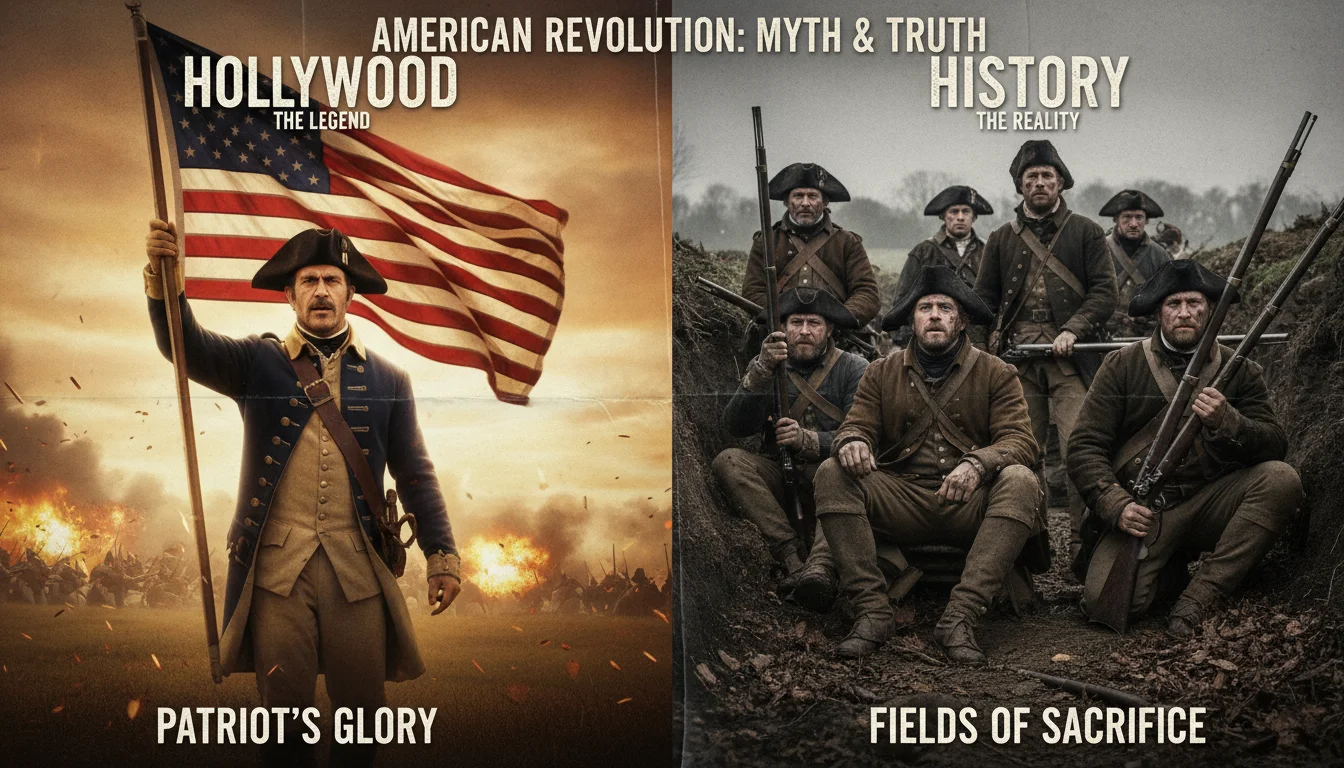
Roland Emmerich's "The Patriot" (2000) starring Mel Gibson gave audiences a visceral look at the American Revolutionary War. With its brutal battle scenes and deeply personal revenge narrative, the film became a summer blockbuster. But how much of it actually happened? Let's separate revolutionary fact from Hollywood fiction.
What Hollywood Got Right
The Brutality of the Southern Campaign
The film's depiction of the savage nature of the Southern campaign is surprisingly accurate. The war in the Carolinas was indeed a vicious civil war between Patriots and Loyalists, with atrocities committed by both sides. Neighbor fought neighbor, and the conflict tore communities apart in ways the Northern campaigns never did.
Guerrilla Warfare Tactics
Benjamin Martin's hit-and-run tactics mirror the actual strategies employed by Francis Marion, the "Swamp Fox," and other partisan leaders. These irregular forces frustrated British conventional warfare by striking supply lines, ambushing patrols, and disappearing into the swamps and forests. The British genuinely struggled to counter these tactics.
The Battle of Cowpens
The climactic battle closely resembles the actual Battle of Cowpens (1781), one of the war's most tactically brilliant American victories. General Daniel Morgan's strategy of using militia in the front lines - expecting them to fire two volleys then retreat - was revolutionary and decisive. The film captures the essence of this unconventional approach.
British Use of Loyalist Units
The film correctly shows the British employing Loyalist American units. By some estimates, as many as 50,000 Americans fought for the Crown during the war - a fact often overlooked in popular history. The war truly was a civil conflict among colonists.
Period Weaponry and Uniforms
Credit where due - the production designers did excellent work recreating the muskets, rifles, and uniforms of the era. The distinction between smoothbore muskets and American long rifles, plus their tactical implications, is accurately portrayed.
What Hollywood Got Wrong
The Composite Character Problem
Benjamin Martin is a fictional mashup of several historical figures - primarily Francis Marion, Thomas Sumter, Andrew Pickens, and Daniel Morgan. While this is understandable for storytelling, it creates a superhero where history had many skilled but human leaders.
Colonel Tavington's War Crimes
Jason Isaacs' villainous Colonel Tavington is loosely based on Banastre Tarleton, a real British cavalry commander. However, the film goes overboard. Tarleton was aggressive and controversial, but there's no evidence he locked civilians in churches and burned them alive - a scene that horrified British historians and prompted diplomatic complaints. The "Tarleton's Quarter" massacre at Waxhaws was brutal, but nothing like the systematic atrocities depicted.
General Cornwallis as a Buffoon
The film portrays Lord Cornwallis as a pompous aristocrat, almost comedic in his frustration. In reality, Cornwallis was one of Britain's most capable generals - competent, respected by his men, and a genuine military threat. His Southern campaign nearly succeeded.
Benjamin Martin's Backstory
The film gives Martin a dark past fighting in the French and Indian War. While atrocities occurred in that conflict, the specific events referenced don't match any documented history. It's pure fiction designed to give Gibson's character moral complexity.
The Timeline Compression
The film compresses years of warfare into what feels like months. Major battles that occurred years apart seem to happen in quick succession. The war lasted eight years - the film suggests a far shorter conflict.
Church Burning - Never Happened
The infamous church burning scene has no historical basis. While both sides committed war crimes, there's no record of British forces locking civilians in a church and setting it ablaze. This pure invention angered historians and descendants of actual Revolutionary War figures.
The Final Battle Fantasy
The climactic battle mixes elements from Cowpens, Guilford Courthouse, and pure imagination. The personal combat between Martin and Tavington is Hollywood invention - Tarleton survived the war and lived until 1833, dying peacefully in England.
African Americans in the Continental Army
The film shows a former slave fighting alongside Martin's militia with the promise of freedom. While Black soldiers did serve in the Continental Army - approximately 5,000 fought for American independence - South Carolina actually prohibited Black enlistment. The film sidesteps the deep irony of fighting for "freedom" while maintaining slavery.
Historical Accuracy Score: 5/10
"The Patriot" captures the emotional intensity and guerrilla nature of the Southern campaign while inventing villains cartoonishly evil and heroes implausibly noble. The battlefield tactics are reasonably accurate, but the characters range from composites to pure fiction.
The film's greatest sin is making Banastre Tarleton into a Nazi-like war criminal. Tarleton was harsh, yes - but the church burning and systematic civilian murders are fabrications that dishonor both sides of the actual conflict.
As entertainment, "The Patriot" delivers spectacle and emotion. As history, it's a revenge fantasy loosely draped over real events. The Revolutionary War was complex, with genuine grievances and atrocities on both sides. The film simplifies this into a black-and-white morality tale.
Watch it for the battle scenes and Gibson's intensity. Just don't cite it in your history paper.
For other Hollywood films fact-checked against the historical record, Argo vs. History examines the CIA's Canadian Caper, and Apocalypto vs. History covers Mel Gibson's other controversial historical epic.
The American Revolution deserves better than cartoon villains - it was a complex civil war that shaped a nation, fought by flawed humans on both sides.

Debate the Accuracy with the Real Figures
Ask the real people what Hollywood got wrong about their lives.
Chat with HistoryJoin the HistorIQly Club
Get smarter about the past.
Weekly stories, deep dives, and exclusive content straight to your inbox.