The Post vs. History: How Accurate Is Spielberg's Press Freedom Epic?
The Post historical accuracy: how faithful is Spielberg's Pentagon Papers film? Katharine Graham's real decision, the NY Times rivalry, and what Hollywood embellished.
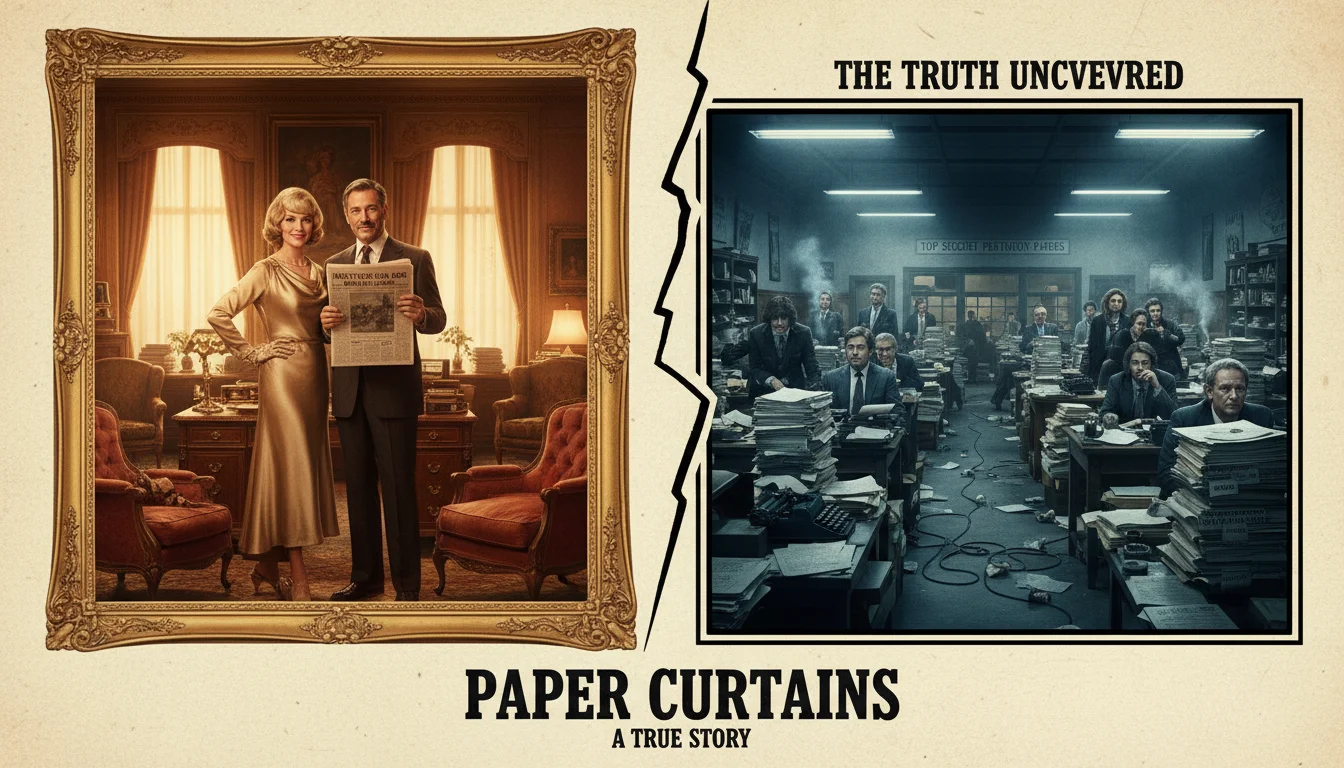
The Post historical accuracy has been debated since the film's 2017 release, with journalists noting its generous portrait of the paper's role in the Pentagon Papers story. When Steven Spielberg assembled Meryl Streep, Tom Hanks, and a story about press freedom during the Trump administration, the timing felt anything but accidental. The Post (2017) tells the story of how The Washington Post published the Pentagon Papers in 1971, focusing on publisher Katharine Graham's decision to risk everything for the truth.
It's a rousing celebration of journalism standing up to power. But how much did Hollywood compress, embellish, or flat-out fabricate? Let's separate the newsprint from the noise.
What Hollywood Got RIGHT
Katharine Graham's Impossible Position
The film accurately portrays the extraordinary pressure Graham faced as one of the few women leading a major American newspaper. Her husband Philip, who had run the Post, committed suicide in 1963 after battling mental illness. Katharine stepped into a role no one expected her to fill - including herself.
"Far from troubling me that my father thought of my husband and not me, it pleased me," Graham wrote in her memoir Personal History. "It never crossed my mind that he might have viewed me as someone to take on an important job at the paper."
The film captures this self-doubt convincingly. Streep's Graham is hesitant, interrupted in meetings, second-guessed by male advisers. This wasn't Hollywood drama - it was 1971 reality.
The IPO Timing Was Real
The stakes were genuine. The Washington Post was about to go public when the Pentagon Papers story broke. Publishing classified documents could tank the stock price, invite government prosecution, and potentially destroy the company.
"We had announced our plans and not sold the stock," Graham told NPR in 1997. "So we were particularly liable to any kind of criminal prosecution from the government."
This wasn't manufactured tension. Graham was gambling not just with the paper's reputation but with its survival as a business.
The Chaotic Documents
Yes, the journalists really did camp out in Ben Bradlee's library sorting through disorganized papers. After leaker Daniel Ellsberg was forced to find a new outlet once the Times was enjoined, he sent the documents to the Post in a cardboard box - out of order, missing page numbers.
National editor Ben Bagdikian flew from Boston to Washington with the box beside him. The Post bought him an extra plane seat for the papers. Graham noted it was "an expense the Post didn't mind paying."
The Birthday Phone Call
Graham did receive the Pentagon Papers on her birthday, June 17, 1971. And she was hosting a party when she got the call asking for her final decision on publication. The film's most dramatic moment - Graham making the choice while guests milled around - is essentially accurate.
The Supreme Court Victory
The case did go all the way to the Supreme Court. The justices ruled 6-3 in favor of the newspapers, finding the government hadn't proven that publishing the Papers posed a genuine national security threat. This victory established crucial precedent for press freedom.
What Hollywood Got WRONG
The Post Wasn't the Hero of This Story
Here's the uncomfortable truth the film glosses over: The New York Times broke this story. The Times published first, took the initial legal hit, and faced the unknown consequences. By the time the Post got involved, the genie was already out of the bottle.
"At The New York Times, colleagues feel that this is a New York Times story," noted Times journalist Cara Buckley. "They broke the Pentagon Papers."
When the Post published, they knew the worst-case scenario - they'd seen it happen to the Times. The risk was real, but it wasn't the leap into darkness the film suggests.
Nixon as Mustache-Twirling Villain
This is the film's biggest historical distortion. The movie portrays Richard Nixon as the antagonist trying to suppress truth to protect himself. But here's the thing: Nixon wasn't even mentioned in the Pentagon Papers. The study covered 1945-1967 - before he took office.
The Papers exposed the lies of John F. Kennedy and Lyndon Johnson, Nixon's political rivals. If Nixon wanted to boost his own image, he could have gleefully let publication proceed and watched his predecessors get roasted.
Nixon's initial reaction was actually to do nothing. Secretary of State Henry Kissinger convinced him that allowing the leak would set a dangerous precedent for future classified information. Nixon was also trying to end the Vietnam War diplomatically - leaking classified documents about ongoing negotiations could undermine those efforts.
None of this makes Nixon right. The public deserved the truth. But the film's portrayal of him as simply trying to hide crimes doesn't match the historical record. The Watergate break-in, which the film references at the end, happened a year later and was entirely unrelated to the Pentagon Papers.
Arthur Parsons Never Existed
Bradley Whitford plays Arthur Parsons, a Post board member who opposes Graham at every turn, questioning whether a woman can make tough decisions. It's a compelling antagonist.
He's also completely fictional. Parsons is a composite character invented to represent sexism Graham faced. While that sexism was real, creating a fake villain to personify it is pure Hollywood.
Graham's Real Reaction
In the film, Graham agonizes over the decision, weighing every angle with trembling gravity. The real Graham was more casual about it - at least initially.
"It never occurred to me that anything would happen to us, and I thought we were going to go ahead and publish," Graham recalled. When she finally did have to make the call, her response was hardly the dramatic movie moment: "I really gulped... I just said, 'Oh, go ahead.'"
She was worried, certainly. But she wasn't the paralyzed, near-breakdown figure Streep portrays. Graham was tougher than the film gives her credit for.
The Party Wasn't at Her House
Minor detail, but the film shows Graham receiving the Papers during a party at her home. She was actually at dinner with Robert McNamara at journalist Joe Alsop's house for her birthday - not hosting a farewell party for an employee.
The Bigger Picture
The Post is a well-made film with excellent performances. Streep earned an Oscar nomination. The tension is genuine even when the history is compressed. But it commits a common Hollywood sin: simplifying a complicated story into clear heroes and villains.
The real story is messier. The Times deserves more credit. Nixon was more complex than a cardboard villain. Graham was braver than the film shows - she didn't need to be portrayed as perpetually uncertain to be heroic. And the fictional antagonist Parsons represents real sexism that would have been better served by showing actual incidents rather than inventing a character.
Daniel Ellsberg, who leaked the Papers and faced 115 years in prison under the Espionage Act, had his charges dropped only when it emerged that the government had illegally broken into his psychiatrist's office and wiretapped him without a warrant. The real story of government overreach was actually worse than what the film shows.
Historical Accuracy Score: 6/10
The Post captures the emotional truth of a pivotal moment in press freedom while rearranging the facts to serve a cleaner narrative. The core story - that the Post took a real risk publishing classified documents, and that the Supreme Court upheld the principle of press freedom - is accurate.
But the film inflates the Post's role, oversimplifies Nixon, and invents characters and situations for dramatic convenience. It's good cinema, but as history, it's more editorial than front page.
If you want the full story, read Katharine Graham's Personal History. She's more interesting than the movie version of herself.
For more on how Hollywood handles Nixon-era Washington, see All the President's Men vs. History on the Watergate reporting, and Frost/Nixon vs. History on the 1977 interviews where Nixon finally faced public questioning.

Debate the Accuracy with the Real Figures
Ask the real people what Hollywood got wrong about their lives.
Chat with HistoryJoin the HistorIQly Club
Get smarter about the past.
Weekly stories, deep dives, and exclusive content straight to your inbox.