Time Traveler's Guide to 1920s Paris
Survival guide to 1920s Paris: what to wear, where to drink, who to avoid, and why the Roaring Twenties felt like one long party everyone knew couldn't last.
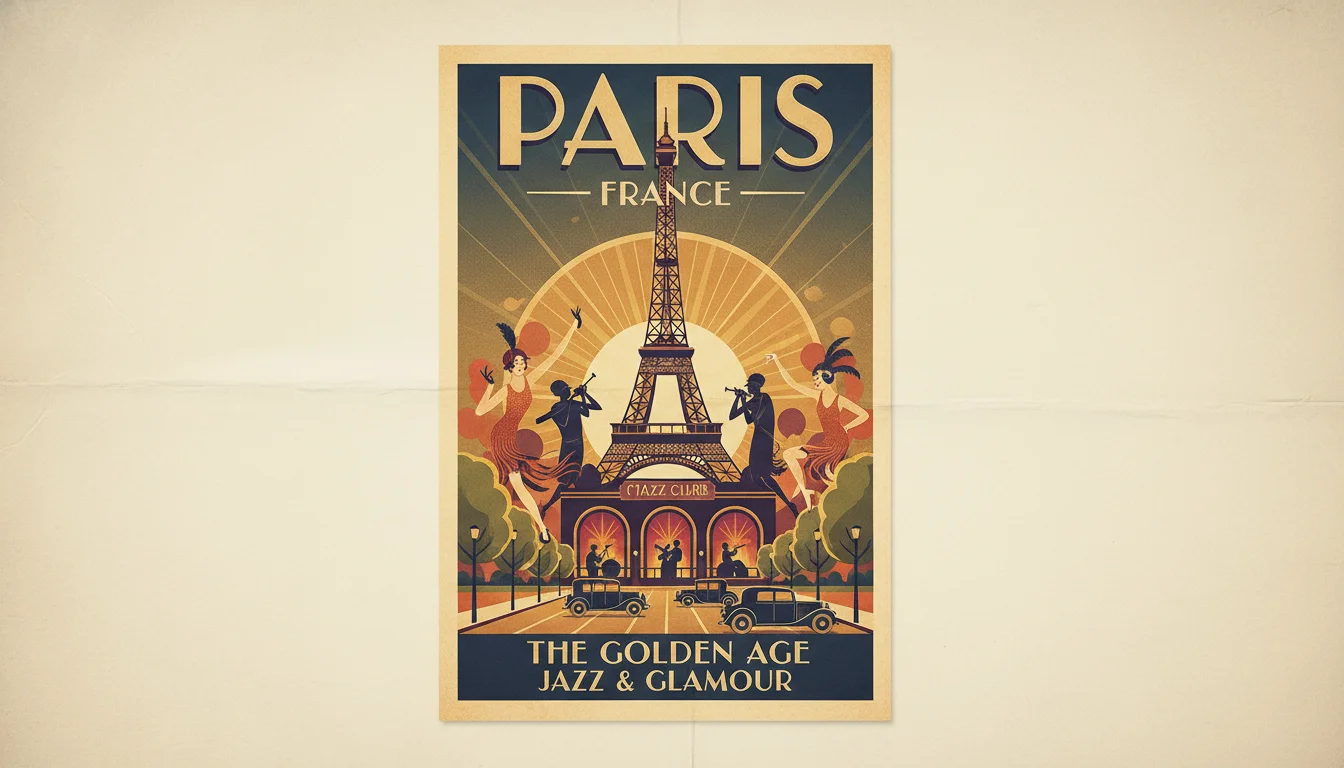
So you've set the dial to Paris, 1920s. Excellent choice. You're about to walk into arguably the greatest party in human history - a city buzzing with jazz, absinthe, artistic revolution, and an almost reckless optimism that only makes sense when you remember everyone just survived a world war. Here's how to blend in, stay alive, and have the time of your life.
When Exactly Are We Talking?
The sweet spot is 1924-1928. Early enough that the party is in full swing, late enough that post-war reconstruction isn't blocking every street. The 1925 Exposition Internationale des Arts Decoratifs is happening, Art Deco is exploding everywhere, and the franc is weak against the dollar - meaning if you brought American currency, you're basically rich.
Avoid 1929. You know why.
What to Wear
Men: Ditch anything synthetic. You want wool trousers (high-waisted, wide-legged), a cotton dress shirt, suspenders, and a felt hat. A fedora works for everyday, a boater for summer. Lose the sneakers immediately. Leather oxfords or brogues only. If you show up in a t-shirt, people won't think you're eccentric - they'll think you're in your underwear.
Women: This is the era of the flapper, but not every woman in Paris dresses like one. For daytime, a drop-waist dress hitting just below the knee is safe. Silk stockings rolled below the knee are fashionable. Short hair (the bob) is trendy but still controversial - older Parisians will stare. For evening, beaded dresses, long cigarette holders, and an attitude of casual sophistication.
Universal rule: Hats. Everyone wears hats. Going hatless in 1920s Paris is like going shoeless in a modern restaurant. Just... don't.
Where to Stay
If you have money (and you should, given the exchange rate), book a room at the Hotel Lutetia on the Left Bank. It's where the artistic crowd mingles with the well-heeled. A decent room runs about 50 francs a night - roughly $2 in 1925 American money.
On a budget? Pension hotels in the Latin Quarter offer rooms for 10-15 francs. They're small, the plumbing is creative, and the walls are thin enough to hear your neighbor's opinions about Dadaism at 3 AM. Consider it atmosphere.
What to Eat (and Drink)
Paris in the 1920s is a food paradise, even by modern standards. Here's your daily plan:
Breakfast: Head to any cafe for a cafe creme and a croissant. This will cost you almost nothing and tastes better than anything in the 21st century because the butter is extraordinary and nobody has heard of margarine.
Lunch: Find a brasserie. Order the plat du jour - usually a meat dish with vegetables and bread for 5-8 francs. The portions are generous. The wine is cheaper than water, and nobody judges you for drinking at noon. In fact, they judge you for NOT drinking at noon.
Dinner: Splurge at Le Dome or La Rotonde in Montparnasse. These are where the expatriates and artists eat. You might end up sitting next to Ernest Hemingway, who is perpetually broke but always at the best restaurants. A full dinner with wine runs 15-25 francs.
Drinks: Absinthe is legal again (the ban is loosely enforced). Champagne flows freely. The cocktail culture is just arriving from America. Try a Sidecar at the Ritz Bar - Harry MacElhone practically invented it here.
Warning: The water. Stick to bottled or boiled. Parisian tap water in the 1920s is not your friend.
The Social Scene
This is why you came. 1920s Paris is the greatest concentration of creative talent in modern history, and most of them are approachable because nobody is famous yet - at least not the way they will be.
Montparnasse is the epicenter. The cafes along Boulevard du Montparnasse - Le Select, La Rotonde, Le Dome, La Closerie des Lilas - are basically open-air offices for the world's future literary canon. Hemingway, Fitzgerald, Gertrude Stein, Ezra Pound, and James Joyce all drink here. Buy them a round and they'll talk to you for hours.
Montmartre is for nightlife. The Moulin Rouge is still operating but is past its 1890s peak. Better options: the Lapin Agile for folk music and cheap wine, or any of the jazz clubs where Black American musicians - fled from US segregation - are creating something extraordinary. Josephine Baker arrives in 1925 and immediately becomes the most famous woman in Paris.
The Shakespeare and Company bookshop on Rue de l'Odeon (not its current location) is run by Sylvia Beach. She published Joyce's Ulysses when nobody else would. The shop is a lending library, post office, and social club for English-speaking writers. Walk in, browse, and you're part of the scene.
Dangers and Things to Avoid
The police. Paris police in the 1920s are not gentle. Street protests (there are many - labor unrest is constant) can turn violent quickly. If you see a crowd forming and hear La Marseillaise, walk the other direction.
Pickpockets. The Metro opened in 1900 and by the 1920s is a pickpocket paradise. Keep your valuables in inside pockets. The Pigalle district is particularly notorious.
The wrong politics. France in the 1920s is politically volatile. Far-right leagues, communist agitators, and everyone in between are loudly arguing in every cafe. As a time traveler, you know where all this leads. Resist the urge to warn anyone - they won't believe you, and you'll end up in an asylum.
Cars. Traffic laws are more like traffic suggestions. Automobiles are everywhere and drivers are absolutely unhinged. Cross streets like your life depends on it, because it does.
Tuberculosis. Still very much a thing. The romantic image of the pale, coughing artist isn't romantic when you're the one coughing. Avoid poorly ventilated, crowded spaces for extended periods. (Easier said than done in Montmartre jazz clubs, admittedly.)
Must-See Experiences
-
The Eiffel Tower at night. Citroen has plastered its name in lights down the side of the tower as an advertisement. It's garish and magnificent and everybody has an opinion about it.
-
A day at the races. Longchamp racecourse on a Sunday afternoon is where Paris goes to see and be seen. Dress well. Bet small. Drink champagne.
-
The Louvre. It's less crowded than in your time. You can actually stand in front of the Mona Lisa without 400 smartphones blocking your view. She doesn't have bulletproof glass yet.
-
A Left Bank bookstall. The bouquinistes along the Seine have been selling books from green boxes for centuries. You'll find first editions for centimes that would be worth thousands in your time. Stock up.
-
Sunday in the Luxembourg Gardens. Parisians strolling, children sailing toy boats in the fountain, old men playing chess. Some things about Paris never change.
Quick Survival Tips
- Learn basic French. Parisians are more tolerant of bad French than no French.
- Carry cash only. Coins are heavy - the 1920s franc comes in bewildering denominations.
- Tipping: 10% is standard. Leave it on the table.
- Don't mention the war unless someone else does first. It's been less than a decade and everyone lost someone.
- The Metro closes at midnight. After that, you're walking or haggling with a taxi driver.
- Sunday is sacred. Most shops close. Plan accordingly.
The Vibe
Here's the thing about 1920s Paris that no history book fully captures: the sheer relief of it. These people survived the most devastating war in history. A generation of young men was nearly wiped out. And now, somehow, life goes on - louder, faster, more colorful than before. The jazz is playing, the champagne is pouring, and everyone is determined to live while they can.
It's beautiful. It's fragile. And if you know what's coming in 1939, it's heartbreaking.
Enjoy every minute. They certainly did.
For more time-travel guides to cities at their confident peak, see A Time Traveler's Guide to Belle Epoque Paris, 1900 and A Time Traveler's Guide to Belle Epoque Buenos Aires, 1900.

Need Advice from Someone Who Lived There?
Get firsthand accounts from people who actually lived through these moments in history.
Ask Them YourselfJoin the HistorIQly Club
Get smarter about the past.
Weekly stories, deep dives, and exclusive content straight to your inbox.