A Time Traveler's Guide to Belle Époque Paris
Everything you need to know before visiting Belle Époque Paris in 1900, the most glittering city during Europe's most dazzling era.
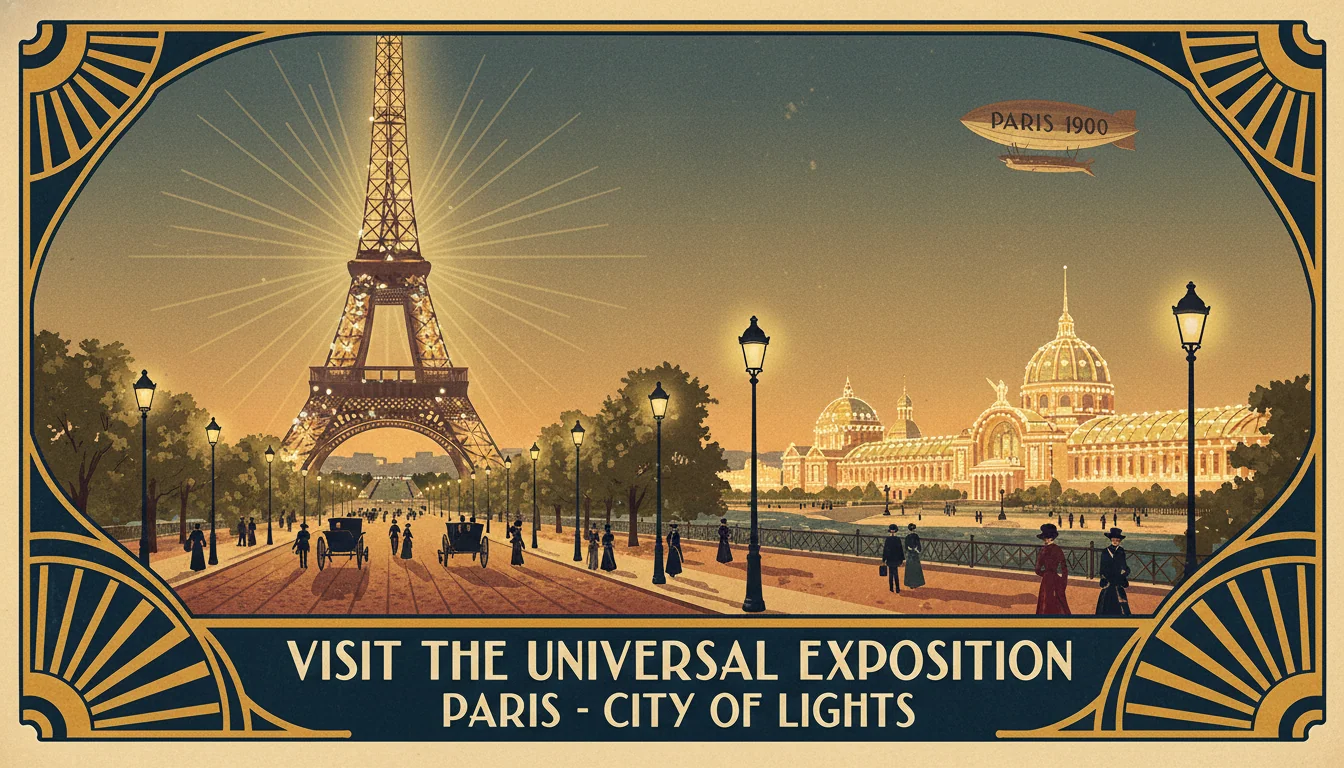
If you only ever take one trip to a glittering, doomed city, make it Paris in the year 1900. The Universal Exposition has just opened. The Métro is brand new. Electric lights are being switched on across the boulevards. Posters by Toulouse-Lautrec wallpaper the alleys around the Moulin Rouge. The aristocracy still throws parties as if there will be no twentieth century, and the artists in Montmartre are quietly inventing the one that is about to arrive.
It is also a city of horse manure, tuberculosis, brutal class divisions, and a recent corruption scandal called the Dreyfus Affair that is still tearing French society apart. So before you click your watch into 1900, here is your practical guide to surviving, blending in, and enjoying a visit to Belle Époque Paris.
First, know what kind of place you're entering
Belle Époque Paris is not a museum. It is a working city of about 2.7 million people, in the middle of an enormous economic and cultural boom that began roughly in 1871 after the disaster of the Franco-Prussian War and that nobody yet knows will end with the First World War in 1914. The city is rich in self-confidence, in finance, in culture, and in raw inequality.
Your safest cover story is that you are a foreign visitor from Britain, Switzerland, or the United States, attending the Exposition Universelle. The fair is the perfect alibi. Roughly 50 million people will visit Paris during 1900, and many of them will not speak French well. You can be vague about your home address, fluent in dollars or pounds, and politely confused about local customs.
Do not pretend to be French unless you actually are. Parisians of 1900 will spot a fake French accent before you have finished your first sentence.
Dress like you belong
Modern clothing will give you away within seconds. The Belle Époque has absolutely specific silhouettes, and almost everyone in public is wearing them.
For men, your basic kit is:
- a dark wool three-piece suit, jacket buttoned high
- a stiff white shirt with a detachable collar
- a dark necktie or cravat
- polished leather shoes
- a hat. Always a hat. A bowler in the morning, a top hat for evening, a straw boater in summer
For women, things are more demanding:
- a long, ankle-sweeping skirt
- a fitted blouse with a high collar
- a corset (you will hate it; this is non-negotiable for plausibility)
- gloves whenever you are out of the house
- an enormous hat, often with feathers, ribbons, or even an entire artificial bird
Avoid bright synthetic dyes, modern fabrics, zippers, sneakers, or anything with visible logos. Carry a small purse or a beaded reticule, not a backpack. Leave the watch on your wrist back in the future. Pocket watches are correct.
Get used to the streets
Paris in 1900 is a city of horses, mud, and noise. There are about 100,000 horses working the city at any given time, pulling cabs, omnibuses, delivery wagons, and private carriages. The streets are paved, but they are layered with manure, urine, and the runoff of constant rain.
The first line of the Paris Métro opened on July 19, 1900. You can ride it from Porte de Vincennes to Porte Maillot for a fixed fare. It is small, dim, slightly damp, and exhilarating. You should ride it at least once. Do not, however, expect anything close to modern transit hygiene.
For longer journeys, take a horse-drawn omnibus or a hansom cab. Negotiate the fare before you get in. If you want to look like a sophisticated visitor, hail a fiacre, a small two-horse cab. Tip lightly but consistently.
Three places you absolutely must visit
The Exposition Universelle
The 1900 World's Fair stretches along the Seine from the Champ de Mars to the Esplanade des Invalides. It introduces the world to talking films, the diesel engine, escalators, and Art Nouveau as a coherent style. The Pavillon Bleu and the Vieux Paris reconstruction are unmissable. The Grand Palais and Petit Palais are brand new. So is the Pont Alexandre III.
Buy your entry ticket in the morning, walk the central avenues by midday, and try to be inside the Palace of Electricity at dusk when the lights come on. It is the most spectacular thing happening in the world that year.
The Moulin Rouge
The Moulin Rouge in Montmartre is at its peak. The cancan is now a fully professionalized stage performance, the dancers are minor celebrities, and Toulouse-Lautrec has made the cabaret immortal in his posters. The clientele is mixed: tourists, journalists, aristocrats slumming, artists, sex workers, and the occasional spy.
You can visit safely as a foreigner. Do not act shocked at anything. The Moulin Rouge of 1900 is exactly as performative and commercial as it appears, and the moral panic around it is largely manufactured.
The Bouquinistes along the Seine
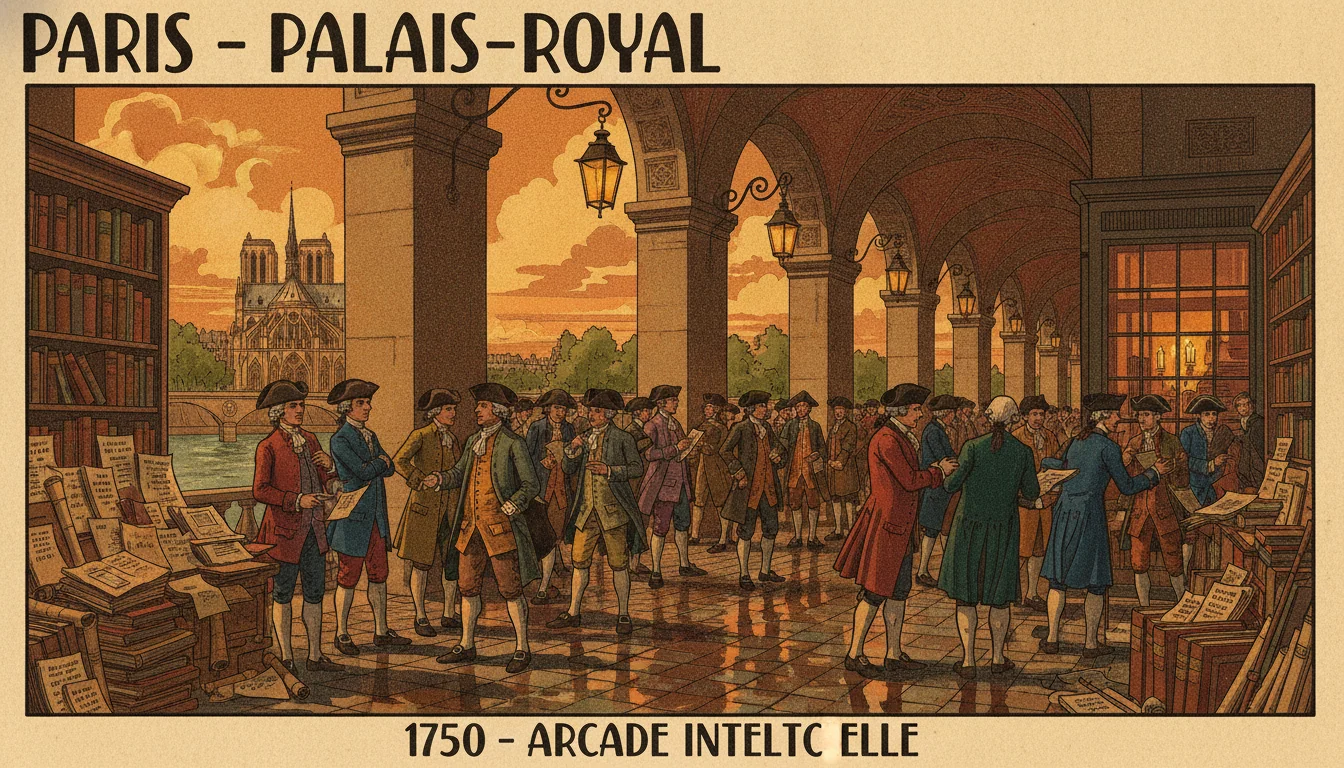
Walk the riverside between Pont Neuf and Pont Royal at midmorning. The green wooden boxes of the bouquinistes are full of secondhand books, prints, and pamphlets, and the booksellers will haggle politely. This is one of the few places in Paris where you can browse for an hour without anyone wanting to be paid in advance.
What to eat, what to drink
Food in Belle Époque Paris ranges from the spectacular to the dangerous. At the high end, this is the era of Auguste Escoffier, who is currently revolutionizing professional cooking at the Hotel Ritz. At the low end, the meat counters of the outer arrondissements still sell cuts that will make you sick if you don't know what you're doing.
Safe choices for a visitor:
- a table d'hôte meal in a respectable bourgeois restaurant
- a steak frites at a brasserie like Lipp on the Boulevard Saint-Germain
- bread, cheese, and wine bought separately and assembled at a park bench
- coffee and a pastry at a café that has been operating for at least 30 years
Things to avoid:
- shellfish in summer
- water from public fountains in poor neighborhoods
- absinthe in unmarked bottles. Real absinthe is fine; counterfeit absinthe in 1900 is laced with colorants that can blind you
- unrefrigerated cream
Politics, money, and what not to mention
Paris in 1900 is still recovering from the Dreyfus Affair, the agonizing miscarriage of justice in which a Jewish army captain named Alfred Dreyfus was wrongfully convicted of treason. The case has split French society into Dreyfusards and anti-Dreyfusards. Émile Zola has fled to England. Public conversation about the affair is fraught.
If someone brings it up, listen. Do not commit yourself. If pressed, vaguely express support for justice and move the conversation toward the Exposition. Do not under any circumstances make a casual joke about Jewish life in France in 1900. The atmosphere is poisoned.
Other topics to avoid: the Paris Commune of 1871, recent French colonial military actions in Africa and Indochina, and the sexual lives of any specific aristocratic family. Acceptable topics: the Métro, the Tour Eiffel, the new electric lighting, fashion, theatre, and the weather.
Currency is the franc. Tip lightly but visibly in coins. Hide bills inside a money belt under your clothing. Pickpockets in 1900 are professional, well-organized, and will spot a tourist's purse from across a busy boulevard.
Health and survival
You should arrive vaccinated against everything modern medicine offers. Tuberculosis is the leading cause of death in the city. Cholera outbreaks have ended, but typhoid and dysentery are still common. Drink only bottled mineral water, table wine, or properly brewed coffee and tea. Wash your hands obsessively before eating. Avoid public baths.
Carry a small flask of clean water for emergencies and a handkerchief for the dust. The streets have moments of breathtaking elegance and moments of overwhelming smell.
What not to do under any circumstances
Let me save you from the classic mistakes.
Do not:
- mention the First World War, the Russian Revolution, or any politics after 1900
- explain the germ theory of disease to a doctor (they know; some of them disagree)
- praise Germany loudly in any restaurant
- sing anything from after 1900
- claim to be a journalist if you are not prepared to be questioned politely about which paper you write for
- enter the Latin Quarter at night unless you are with a local
- attempt to photograph anyone without explicit permission
Most importantly, do not warn anyone about August 1914. Belle Époque Paris is a city that does not yet know what is coming, and that is part of why it is so beautiful to visit. Do not break that for them, or for yourself.
The experience you should not miss
If you can manage just one moment in 1900 Paris, take it on the rooftop terrace of the Galeries Lafayette in the early evening. The new electric streetlights are coming on across the boulevards. The Eiffel Tower is illuminated. Carriages move along the Avenue de l'Opéra. A military band is playing somewhere. People are speaking French quickly, drinking small glasses of wine, lighting cigarettes, laughing.
For about 90 minutes, the city looks exactly like every painting you have seen of it, only louder and more alive. You are watching the last years of a particular kind of European confidence, the last great moment when Paris believed it was the center of the world.
Pack lightly, dress carefully, and tip in coins. Belle Époque Paris is not easy to do well, but it is one of the most rewarding stops on any time-travel itinerary. If your interests run to another European city at a turning point, our guide to Lisbon in 1495 covers the Portuguese capital on the eve of empire, and Revolutionary Paris in 1793 shows the same city at its most dangerous. Just try not to mention 1914.

Need Advice from Someone Who Lived There?
Get firsthand accounts from people who actually lived through these moments in history.
Ask Them YourselfJoin the HistorIQly Club
Get smarter about the past.
Weekly stories, deep dives, and exclusive content straight to your inbox.