Visiting Revolutionary Paris in 1793: A Time Traveler's Survival Guide
A traveler's guide to revolutionary Paris in 1793: navigate the Reign of Terror without losing your head. Essential tips for blending in during a deadly year.
Read Wikipedia
Congratulations, intrepid time traveler! You've chosen to visit Paris during what historians politely call "The Reign of Terror." Between September 1793 and July 1794, approximately 17,000 people were officially executed, with another 10,000 dying in prison without trial. But don't let that discourage you - with proper preparation, you can witness one of history's most transformative moments and keep your head firmly attached to your shoulders.
When and Where Are We Going?
You're arriving in Paris during the autumn of 1793. The monarchy has fallen, Louis XVI and Marie Antoinette have met Madame Guillotine, and the Revolution has entered its most radical phase. The Committee of Public Safety, led by Maximilien Robespierre, rules France with an iron fist. Every citizen is a potential suspect. Every conversation could be your last.
The good news? You're witnessing the birth of modern democracy, the metric system, and really great political speeches. (If you want to see how the same city looks after the Terror, our guides to Belle Epoque Paris around 1900 and 1920s Paris make natural follow-ups.)
What to Wear (Blend In or Die)
Absolutely forbidden:
- Silk anything (marks you as an aristocrat)
- Powdered wigs (guillotine bait)
- Knee breeches with stockings (known as "culottes" - wearing these makes you a literal enemy of the sans-culottes)
- Any jewelry whatsoever
- Expensive fabrics or bright colors
What you should wear:
- Long trousers (pantalons) - this is the defining fashion of the Revolution
- A short jacket called a "carmagnole"
- A red liberty cap (bonnet rouge) - never leave home without it
- Wooden clogs (sabots) for that authentic working-class look
- The tricolor cockade pinned to your hat or chest - this is MANDATORY
Pro tip: Look slightly dirty and disheveled. Cleanliness suggests you have servants, and servants suggest you have money, and money suggests you're an enemy of the people.
What to Eat (And What to Avoid)
Paris is experiencing food shortages, so don't expect fine dining. The average Parisian survives on:
- Bread - The staple of revolutionary life. Just don't complain about the quality, or you might be reported for counter-revolutionary attitudes
- Soup - Usually thin, often made with whatever vegetables are available
- Wine - Still plentiful and cheap. The Revolution hasn't touched the vineyards yet
- Chestnuts - A common street food
Avoid:
- White bread (pain blanc) - This is aristocrat food. Stick to the coarse brown bread like everyone else
- Expensive cuts of meat - Even if you find them, eating well attracts suspicion
- Sugar - Rare and associated with the colonial slave trade, which the Revolution officially opposes
The revolutionary government has imposed price controls (the "Maximum"), so food prices are regulated - but this also means hoarding and black markets are everywhere.
Social Customs and Taboos
Always do:
- Address everyone as "Citizen" (Citoyen) or "Citizeness" (Citoyenne) - NEVER "Monsieur" or "Madame"
- Use "tu" (informal you) with everyone - "vous" is considered aristocratic
- Attend revolutionary festivals and appear enthusiastic
- Denounce others before they denounce you (just kidding... mostly)
- Know the words to "La Marseillaise" and "Ca Ira"
Never do:
- Mention God favorably - The Revolution has replaced Catholicism with the Cult of the Supreme Being
- Express sympathy for the royal family
- Question any decision of the Committee of Public Safety
- Speak with a foreign accent (you'll be suspected as a spy)
- Have any documents written in a foreign language
The tricky part: Revolutionary politics change daily. Today's hero is tomorrow's traitor. The Girondins who led the Revolution last year are now being executed. Keep your opinions vague and your enthusiasm loud.
Dangers to Watch Out For
-
The Revolutionary Tribunal - This court processes suspected enemies of the state at terrifying speed. Trials last minutes. There's no defense attorney. The verdict is almost always guilty.
-
The Committee of General Security - The secret police. They have informants everywhere. Your neighbors, your landlord, the woman at the market - anyone could be reporting to them.
-
Denunciations - Citizens are encouraged to report suspicious behavior. Old grudges, business rivalries, romantic jealousy - all become grounds for accusation.
-
The September Massacres aftermath - Mob violence can erupt at any moment. If a crowd forms, join it or disappear quickly.
-
Your own accent - French regional accents are fine, but any hint of foreign origin is extremely dangerous.
Must-See Attractions
Despite the danger, Paris offers incredible historical experiences:
-
The Place de la Revolution (formerly Place Louis XV, now Place de la Concorde) - This is where the guillotine does its work. Public executions draw huge crowds. Morbid, yes, but historically significant.
-
The Tuileries Palace - Once home to the royal family, now the seat of the National Convention.
-
The Jacobin Club - Where Robespierre and other radical leaders meet. Visitors are allowed, but keep your mouth shut.
-
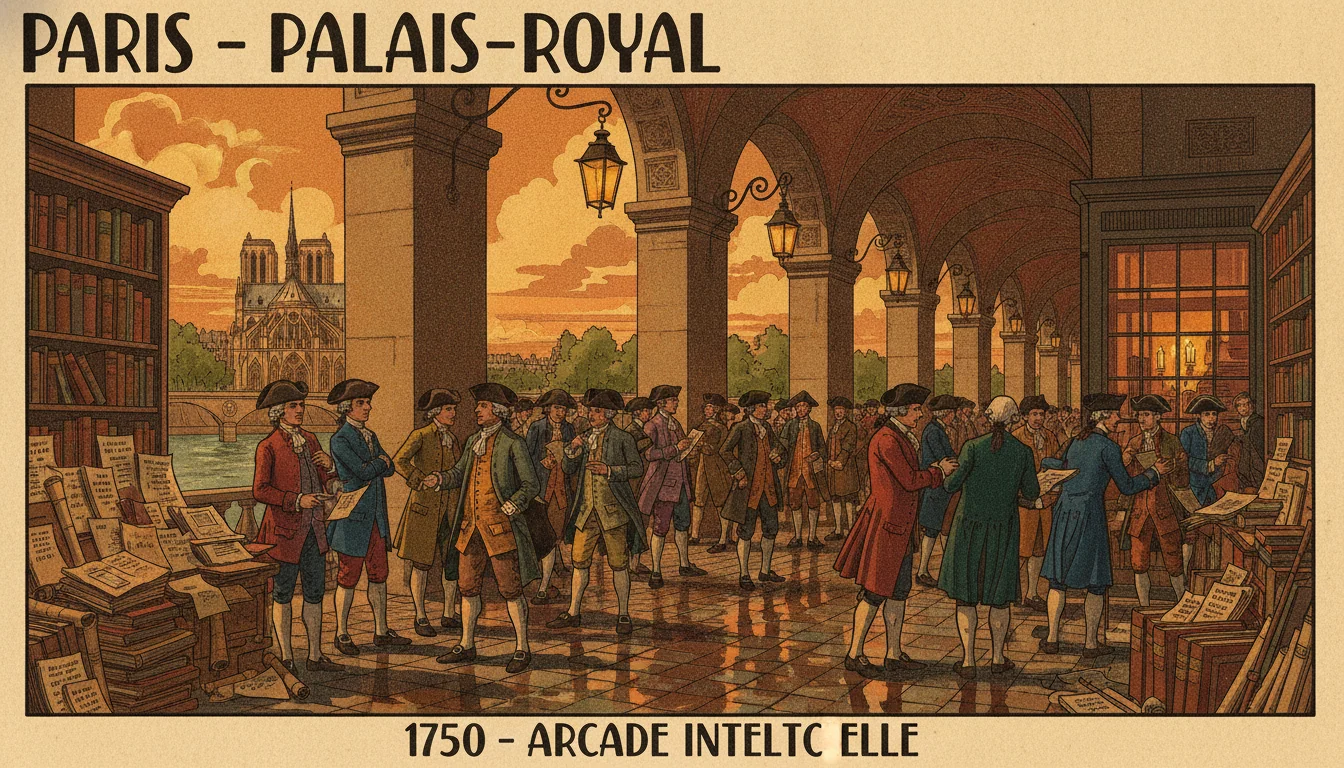
The Palais-Royal - Still a center of Parisian social life, though considerably more egalitarian than before.
-
Notre-Dame Cathedral - Recently "de-Christianized" and renamed the Temple of Reason. Quite a sight.
How to Survive and Thrive
Short-term survival:
- Get a Certificate of Civic Spirit (certificat de civisme) from your local section committee. Without it, you cannot work, travel, or exist legally.
- Attend every required revolutionary meeting and celebration.
- If arrested, remain calm. Many people are released after questioning. Panic equals guilt.
If things go wrong:
- The countryside is safer than Paris. Many suspected aristocrats are hiding in rural areas.
- Revolutionary courts are actually less deadly outside Paris.
- If you absolutely must flee, try to reach Switzerland or the United States.
Exit strategy: Your return portal should be set no later than July 26, 1794. On July 27 (9 Thermidor), Robespierre himself will be arrested, and he is guillotined the next day, ending the Terror. Wait too long and you might get caught in the chaos.
Final Thoughts
Visiting Revolutionary Paris is like watching a train wreck in slow motion - horrifying, yet impossible to look away. You're witnessing the violent birth of modern politics, where ideas about liberty, equality, and popular sovereignty are being tested in blood.
The men and women of 1793 genuinely believed they were creating a better world. Many of them died for that belief - some as martyrs, some as victims of the very revolution they started. It's messy, terrifying, inspiring, and deeply human.
Just remember: Keep your head down (so you can keep it on), cheer for liberty loudly, and whatever you do, don't mention that you know how this all ends.
Bonne chance, Citizen Time Traveler. The Revolution needs you... or at least, it won't notice one more face in the crowd.
Vive la Republique!

Need Advice from Someone Who Lived There?
Get firsthand accounts from people who actually lived through these moments in history.
Create your free account →No card required. Some figures and features require a paid plan.
Join the HistorIQly Club
Get smarter about the past.
Weekly stories, deep dives, and exclusive content straight to your inbox.