Time Traveler's Guide to Ancient Thebes, 1250 BC
Your survival guide to Ancient Thebes, 1250 BC: navigate Ramesses II's world of towering temples, Nile rituals, and a social hierarchy where one wrong move ends badly.
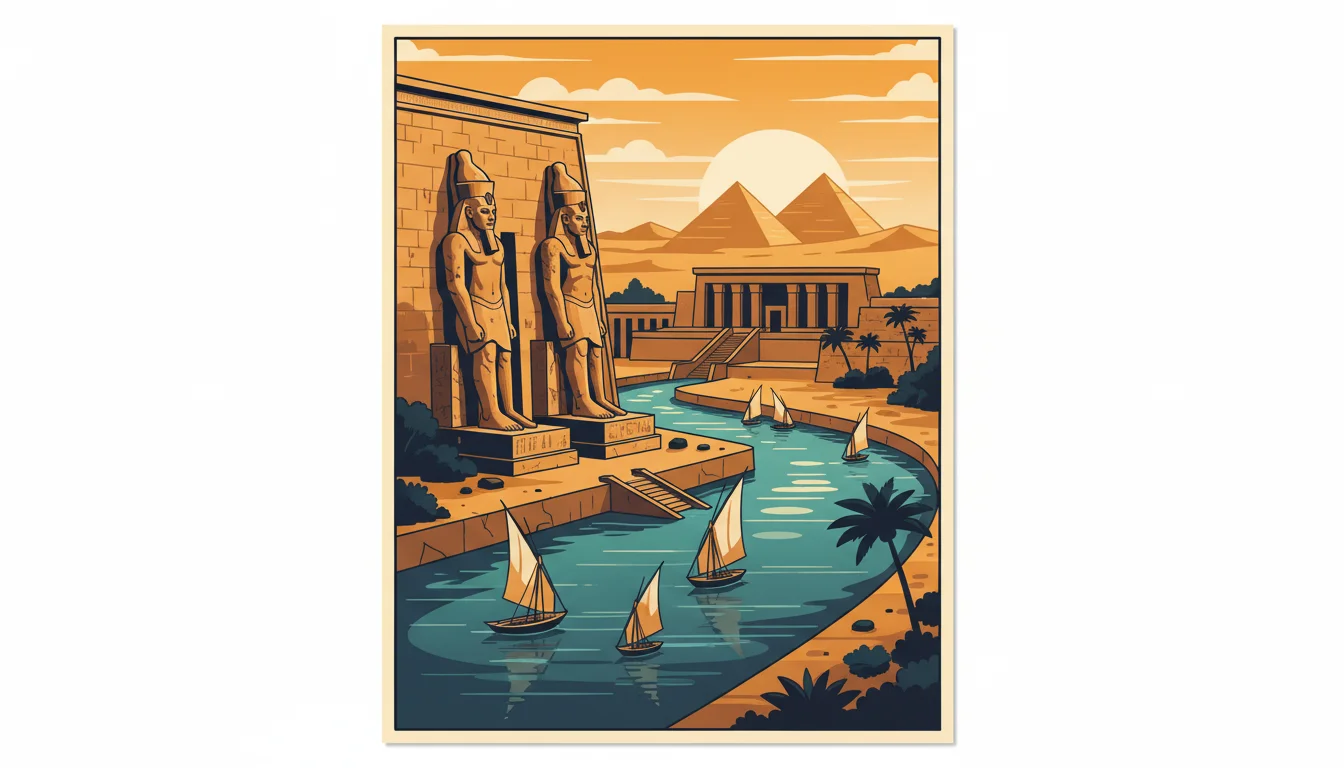
You've arrived in Waset - what Greeks will later call Thebes - during the reign of Ramesses the Great. The Nile flows wide and brown beside you. Colossal statues tower over sandstone temples. Incense smoke drifts from a thousand altars. Welcome to the most powerful civilization on Earth at the height of its glory.
Here's how to survive your visit without ending up as a sacrifice to Osiris.
When You Are
It's approximately 1250 BC. Ramesses II has been pharaoh for roughly thirty years and has another thirty to go. He's already fought the Hittites to a draw at Kadesh, married multiple queens (including a Hittite princess to seal the peace), and fathered somewhere between 50 and 100 children. His building projects are legendary - Abu Simbel, additions to Karnak, the Ramesseum.
This is New Kingdom Egypt at its zenith. The economy is booming. Trade flows from Nubia, the Levant, and beyond. The empire stretches from Syria to Sudan. You've picked an excellent time to visit.
What to Wear
Your modern clothes will mark you as an outsider immediately. Here's what Egyptians actually wear:
Men: A white linen kilt (shendyt) reaching anywhere from mid-thigh to ankle depending on your social class. Higher status means more elaborate pleating. Going bare-chested is normal for workers, but officials and priests wear longer robes.
Women: A tight-fitting linen sheath dress (kalasiris), often white but sometimes dyed. It can be worn with or without shoulder straps. Wealthy women add elaborate beaded collars and gold jewelry.
Everyone: Sandals made from papyrus or leather. Bare feet are common for laborers. Shaved heads are practical (lice, heat), with wigs worn for formal occasions. Both sexes wear kohl eyeliner - it's not cosmetic vanity but protection against the brutal sun and flies.
What to Eat
Egyptian cuisine is better than you might expect:
Bread: The staple food. Dozens of varieties from coarse barley loaves to fine wheat bread for the wealthy. Warning: Egyptian bread contains sand and grit from the grinding process. Your teeth will suffer on an extended stay.
Beer: Not optional. Egyptians drink beer instead of water (which is often unsafe). It's thick, nutritious, mildly alcoholic, and consumed at every meal. Workers receive beer rations as part of their wages.
Meat: Beef for the wealthy, fish and fowl for everyone else. The Nile teems with tilapia, perch, and catfish. Hunting provides duck and geese. Pork exists but is considered lower-class.
Vegetables: Onions, garlic, leeks, lettuce, cucumbers, and celery. Legumes (lentils, chickpeas) provide protein for those who can't afford meat.
Fruit: Dates, figs, and grapes. Pomegranates if you have money.
Avoid: Asking for sugar (it doesn't exist here), coffee (won't reach Egypt for 2,500 years), or anything resembling a menu. You eat what's available.
Social Rules That Could Save Your Life
The Pharaoh Is a God
This is not metaphor. Ramesses II is literally considered a living god - the earthly manifestation of Horus and son of Ra. Speaking ill of him, touching his belongings without permission, or failing to prostrate yourself in his presence could mean death.
Ma'at Is Everything
Ma'at is the concept of cosmic order, truth, and justice. Everything in Egyptian society is structured to maintain ma'at. Disrupting social harmony - through dishonesty, violence, or chaos - is both criminal and religiously wrong.
Know Your Place
Egypt has rigid social hierarchies: pharaoh, royal family, priests, scribes, soldiers, artisans, farmers, slaves. Moving between classes is nearly impossible. Accept your assumed position and don't challenge those above you.
Women Have More Rights Than You'd Expect
Egyptian women can own property, initiate divorce, run businesses, and testify in court. They're still expected to manage households, but they're not chattel. Treat Egyptian women with respect - they may have more legal standing than you assume.
Religion You Need to Understand
The Egyptian pantheon is complex, but these gods matter most in Thebes:
Amun-Ra: King of the gods, patron of Thebes. The enormous Karnak temple complex is his home. Show appropriate reverence.
Osiris: God of the dead and resurrection. Every Egyptian hopes to be judged favorably in his hall after death.
Isis: Wife of Osiris, goddess of magic and motherhood. Extremely popular - you'll see her imagery everywhere.
Horus: The living pharaoh is his incarnation. Falcon-headed, associated with kingship and sky.
Set: God of chaos, storms, and the desert. Feared but not evil - the relationship between Set and Horus is complicated.
Don't mock the gods. Don't question the gods. And definitely don't desecrate temples.
Where to Go
Karnak Temple Complex
The largest religious structure on Earth (and will remain so for another 1,500 years). Miles of processional ways, forests of columns, sanctuaries within sanctuaries. The Great Hypostyle Hall alone has 134 massive pillars. You could spend days exploring and never see everything.
The Valley of the Kings
Across the Nile, in the western desert, pharaohs are being buried in elaborate underground tombs. Access is restricted, but if you can get there, you're walking past treasure that will fund museums for millennia.
The Ramesseum
Ramesses II's mortuary temple, still under construction during your visit. Massive statues of the pharaoh, elaborate reliefs depicting his victories, and hundreds of workers creating what Shelley will later call "Ozymandias."
Dangers to Avoid
Crocodiles: The Nile is full of them. Sobek, the crocodile god, is worshipped precisely because crocodiles are terrifying. Don't swim.
Scorpions and snakes: Cobras, vipers, and death stalker scorpions are common. Watch where you step and sleep under elevated platforms when possible.
Sunstroke: The Egyptian sun is brutal. The shaved heads and linen clothing aren't fashion - they're survival.
Tomb raiders: Grave robbery is a capital offense, but it happens constantly. Don't get caught near restricted areas or you'll be assumed complicit.
Politics: Royal courts are dangerous places full of intrigue. Keep your head down and avoid involvement in succession disputes.
Getting Home
Ancient Thebes is intoxicating - the grandeur, the sophistication, the sense of being at the center of the ancient world. Ramesses II will reign for another three decades, building monuments that will outlast nearly everything else humans create.
But remember: you're in a society that considers the afterlife more important than this one. Every temple, every tomb, every ritual is preparation for death. The Egyptians are looking forward to their next life with more enthusiasm than this one.
Maybe that's the real lesson of Thebes: build your monuments well, because time comes for everyone. Even the great Ramesses will become a mummy in a museum someday - his eternal rest interrupted so tourists can gawk at his preserved remains.
At least he got 90 years to enjoy being a god first.
For other ancient Mediterranean cities, our guide to Pompeii in 79 AD covers a very different kind of sudden end. If the Persian Empire interests you, visiting Achaemenid Persepolis in 500 BC is a contemporary of the later Egyptian empire and just as extraordinary.

Need Advice from Someone Who Lived There?
Get firsthand accounts from people who actually lived through these moments in history.
Ask Them YourselfJoin the HistorIQly Club
Get smarter about the past.
Weekly stories, deep dives, and exclusive content straight to your inbox.