Time Traveler's Guide to Ancient Athens, 450 BC
Ancient Athens daily life in 450 BC: democracy invented by people who excluded women and slaves, Socrates annoying everyone in the agora, and plague always five years away.
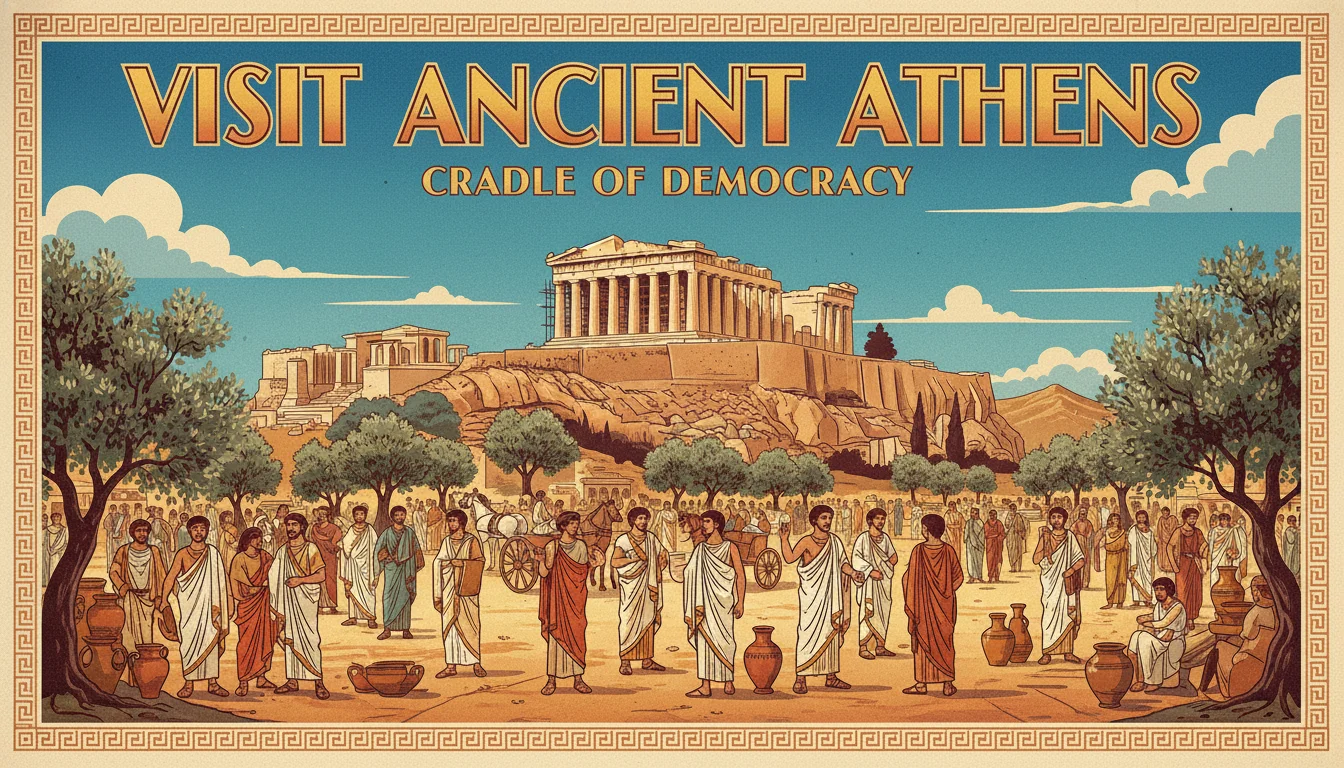
Welcome to Athens, 450 BC - the intellectual capital of the known world. Pericles is about to launch construction on the Parthenon, Socrates is annoying people in the agora, and democracy is still a radical experiment. You've picked arguably the most influential city in human history at its absolute peak. Here's how to survive it.
Getting Your Bearings
Athens sits in the Attic peninsula, surrounded by rocky hills and bathed in Mediterranean sun roughly 300 days a year. The city is smaller than you'd expect - maybe 250,000 people including the surrounding countryside, with somewhere between 30,000 and 60,000 adult male citizens (historians disagree on the exact number) who actually get to vote. The rest? Women, children, foreigners (called metics), and enslaved people. Democracy has some fine print.
The Acropolis dominates the skyline, still scarred with rubble from the Persian sack of 480 BC. Pericles is pushing a massive building program through the Assembly, and in a few years workers will break ground on what will become the most famous building in Western history. For now, the summit is largely bare.
Below the Acropolis, the Agora spreads out as the city's beating heart - part marketplace, part courthouse, part social media feed. This is where everything happens.
What to Wear
Clothing is mercifully simple. Men wear a chiton, which is basically a rectangular piece of linen pinned at the shoulders and belted at the waist. Over that, you can drape a himation, a larger cloth worn like a toga's more relaxed cousin. Colors matter - undyed linen marks you as ordinary, while saffron yellow or Tyrian purple screams money.
Women wear a longer chiton called a peplos, often with elaborate folding at the top. Going barefoot is common in summer, but leather sandals are standard for walking the rocky streets.
One critical note: if you show up clean-shaven, people will think you're either very young or very strange. Beards are essentially mandatory for adult men. Also, bring your own razor because you won't find one here.
What You'll Eat
Breakfast is basically nothing - a chunk of bread dipped in wine. Athenians eat their main meal in the evening, and it's simpler than you'd think for a "golden age."
The staples are barley bread, olives, olive oil, figs, cheese (mostly goat), and fish. Lots of fish. Athens is a naval power, and the port of Piraeus supplies the city with fresh catch daily. Meat is rarer and usually reserved for religious festivals, when animals are sacrificed and the community shares the cooked offering.
Wine is everywhere, but nobody drinks it straight - that's considered barbaric. They mix it with water, usually two or three parts water to one part wine. The host at a symposium (drinking party) decides the ratio, and a strong mix signals a wild night ahead.
Try the kykeon if you're feeling adventurous - a thick drink made from barley, water, herbs, and sometimes goat cheese. It tastes like a smoothie designed by committee, but the locals love it.
Ancient Athens Daily Life and Customs
The Athenian day starts at dawn and effectively ends at sunset since artificial lighting is expensive and dim. Men spend their mornings in the Agora conducting business, arguing about politics, and exercising at the gymnasium. Yes, gymnasium means "place of nakedness" - athletic training happens completely nude. Oil your body before exercising and scrape the grime off with a curved tool called a strigil afterward.
Women from citizen families are expected to stay home, managing the household. This is one of the most restrictive aspects of Athenian life. The "freest" society in the ancient world is deeply unfree for half its population.
Slavery is everywhere and deeply embedded in daily life. Enslaved people work in homes, silver mines, workshops, and even some government positions. It's one of the hardest things a modern visitor will confront.
Religion is practical, not mystical. Sacrifice an animal, pour libations of wine, and the gods keep things running. Miss the rituals and your neighbors will talk. The great festivals - Panathenaea, Dionysia, Eleusinian Mysteries - are part religious ceremony, part city-wide party.
Don't Miss
The Future Parthenon Site - Construction hasn't started yet, that's three years off, but the Acropolis is being cleared of Persian War rubble in preparation. The optical illusions eventually built into the architecture (slightly curved columns, subtle tilts) won't be fully understood for another 2,300 years.
The Theater of Dionysus - Catch a tragedy by Sophocles or Euripides, or if comedy is more your speed, Cratinus is writing plays so vulgar they'd make a modern stand-up comedian blush. Performances start at dawn and run all day during the Dionysia festival.
The Agora - Find Socrates. He's the stocky, snub-nosed man asking people questions they can't answer. He doesn't charge for his teaching (unlike the Sophists), and a conversation with him will be the most frustrating and enlightening experience of your trip. Fair warning: he doesn't know when to stop.
Piraeus Harbor - Walk down to see the Athenian fleet, the triremes that defeated Persia at Salamis just 30 years ago. These warships are the backbone of Athenian power, and watching 170 rowers drill in formation is genuinely impressive.
A Symposium - If you can wrangle an invitation to a private drinking party, take it. Reclining on couches, philosophical debate, music, poetry, and wine flowing all night. This is Athenian culture at its most intimate.
Dangers to Watch For
Disease - A devastating plague will hit Athens around 430 BC. If you're visiting close to that date, plan your exit carefully. It killed roughly a quarter of the population, including Pericles himself.
Legal trouble - Athens is litigious. Citizens sue each other constantly, and as a foreigner (metic), your legal protections are limited. Don't insult anyone publicly unless you want to end up in court.
Ostracism - Each year, citizens can vote to exile someone for ten years by scratching a name on a pottery shard (ostrakon). It's supposed to prevent tyranny, but sometimes it just punishes people who are too popular. Stay humble.
The silver mines at Laurion - Thousands of enslaved workers labor in horrific conditions extracting the silver that funds the Athenian fleet. Don't wander there by accident - it's one of the ancient world's most brutal places.
Street navigation - Athens has no grid system. Streets are narrow, winding, and often covered in refuse. There's no sewage system worth mentioning. Bring sturdy sandals and watch your step, especially at night.
Useful Phrases
- "Chaire" (KAI-reh) - Hello/Rejoice (standard greeting)
- "Kalimera" - Good morning (still used in modern Greek)
- "Xenos eimi" - I am a stranger/foreigner
- "Pou estin he agora?" - Where is the agora?
- "Oinon, parakalō" - Wine, please
The Bottom Line
Athens in 450 BC is one of history's greatest paradoxes. A society that invented democratic ideals while excluding most of its population. A city that produced Socrates, the Parthenon, and tragedy, all while running on slave labor and imperial tribute from other Greek cities. It's messy, brilliant, hypocritical, and unforgettable.
Just don't tell Socrates you know the future. He'll spend six hours proving you don't really know anything at all.
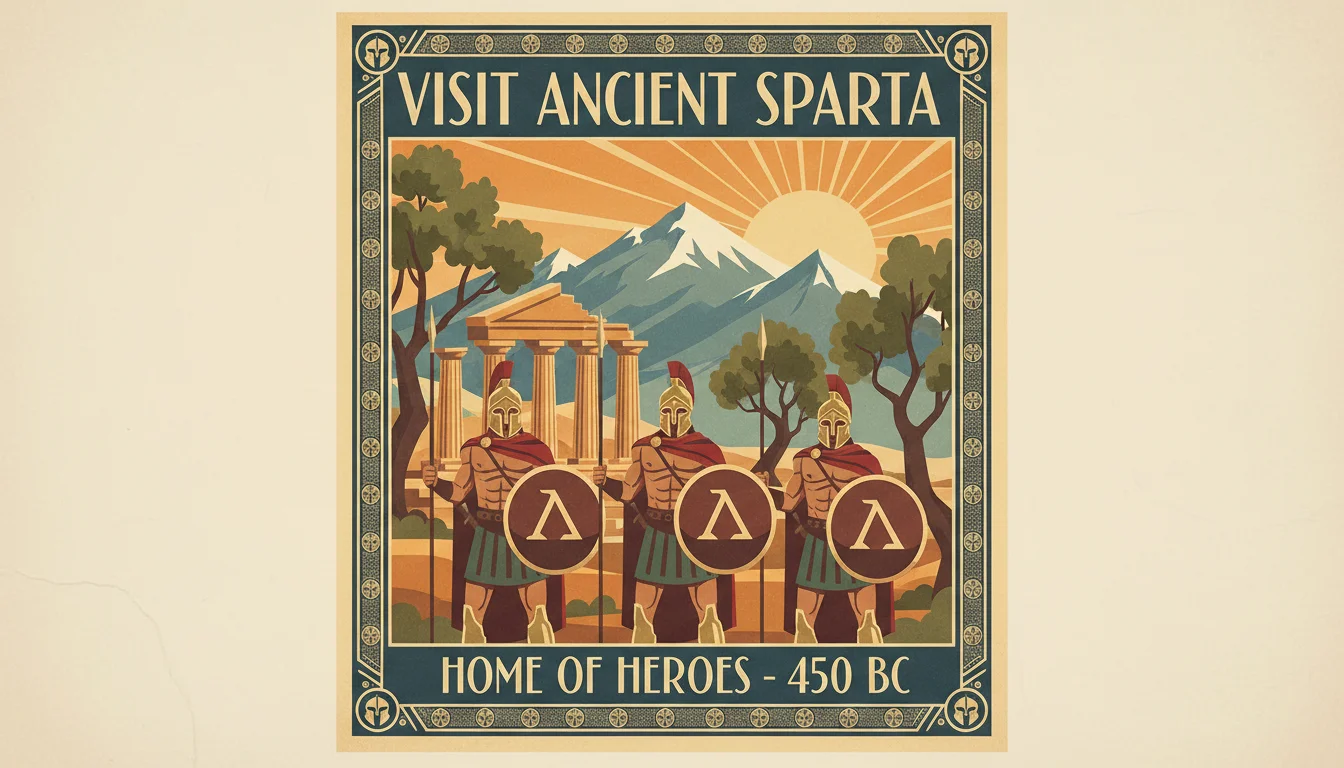
For the Greek world from different vantage points, our guide to Ancient Sparta, 450 BC shows Athens' great rival across the Peloponnese, and 300 vs. History checks how Hollywood handled the earlier clash at Thermopylae that defined the Greek world Pericles inherited.

Need Advice from Someone Who Lived There?
Get firsthand accounts from people who actually lived through these moments in history.
Ask Them YourselfJoin the HistorIQly Club
Get smarter about the past.
Weekly stories, deep dives, and exclusive content straight to your inbox.