Time Traveler's Guide to Ancient Sparta, 450 BC
Your guide to Ancient Sparta in 450 BC: survive the world's most disciplined military state. What to wear, where not to go, and why to skip the black broth.
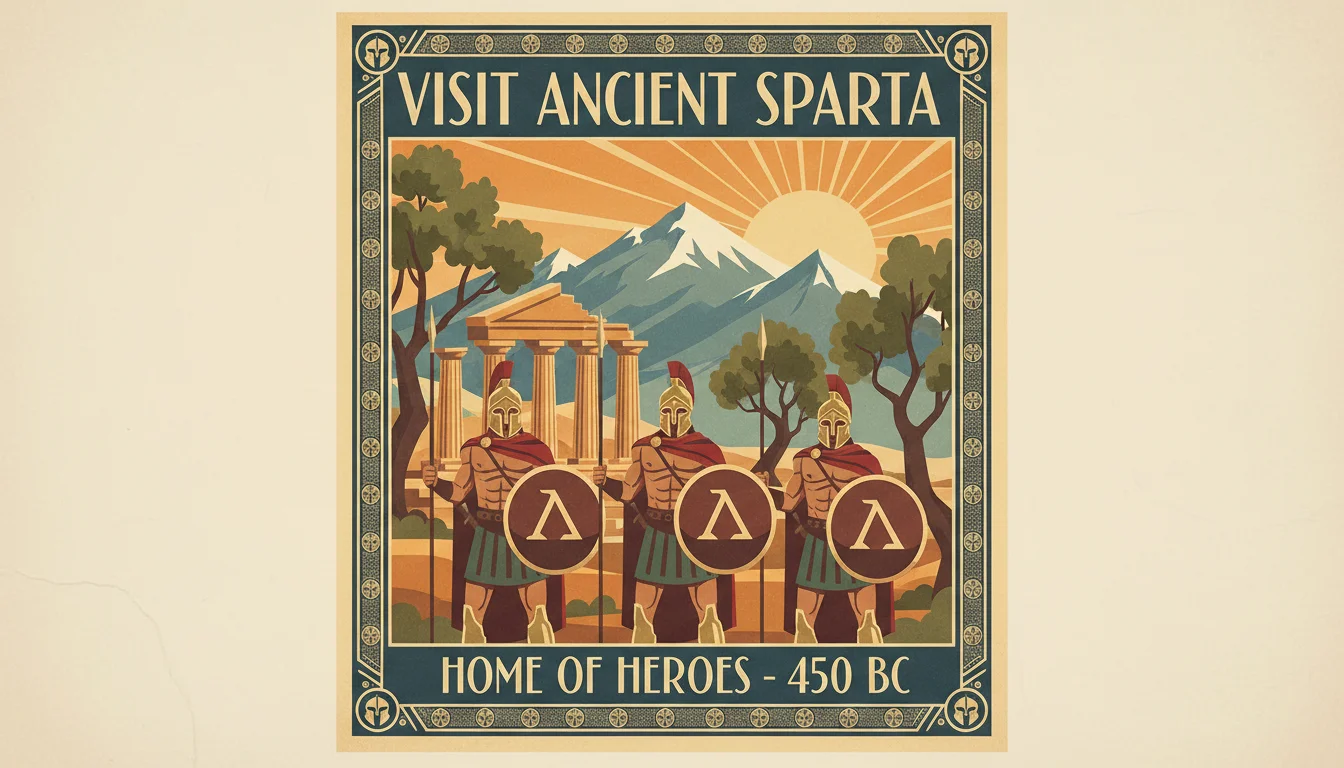
You've just materialized on the dusty banks of the Eurotas River in the Lacedaemon valley. Congratulations - you've arrived in Ancient Sparta, the most intimidating city-state in the Greek world at the peak of its power. It's 450 BC, five years after the Spartans helped crush the Persian invaders at Plataea, and their reputation as invincible warriors has never been higher.
But here's the thing about Sparta: it's not like visiting Athens, with its chattering philosophers and tourist-friendly Agora. This is a military compound disguised as a city. Make the wrong move, and you'll discover firsthand why everyone in Greece fears these people.
First Impressions: Where Are All the Walls?
The first thing you'll notice is what's missing. Unlike every other Greek city, Sparta has no defensive walls. When someone once asked why, King Agesilaus reportedly gestured at his soldiers: "These are Sparta's walls."
This isn't bragging - it's policy. The Spartans believe walls make citizens soft. Their defense is the terror they inspire. It's working. No enemy army has marched into this valley in living memory.
The city itself will disappoint anyone expecting Athenian grandeur. There's no Parthenon here, no gleaming marble temples. Sparta is a loose collection of five villages with modest public buildings. Thucydides would later write that if Sparta were abandoned, future generations would never believe it was a great power. He's right - it looks more like a permanent military camp than a capital.
The Social Order: Know Your Place
Before you explore, you need to understand who's who. Get this wrong and you could cause a diplomatic incident - or worse.
Spartiates (The Equals): These are the full citizens, the legendary warriors. There are maybe 8,000 of them, all male, all descended from the original Dorian conquerors. They own land but never work it. Their entire lives, from age seven until death, revolve around military training and communal living. They're the ones in the red cloaks.
Perioikoi (Dwellers Around): Free non-citizens who handle all the commerce, craftsmanship, and trade that Spartiates consider beneath them. They serve in the army as light infantry and can be quite wealthy. They'll be your main point of contact for anything you need to buy.
Helots: The enslaved population that does all the actual work - farming the land, cooking the food, serving the Spartiates. They vastly outnumber their masters, perhaps seven to one. The Spartans live in constant fear of a helot revolt. Every year, the ephors (elected officials) formally declare war on the helots, making it legal to kill any who seem troublesome. This is not a good time to be mistaken for a helot.
What to Wear
Your modern clothes will mark you as either a barbarian or someone very interesting. For safety, adopt local fashion:
For men: A simple wool chiton (tunic), ideally in red or dark colors. Spartans consider bright dyes and elaborate clothing effeminate - that's for Athenians. Keep it plain. A rough wool cloak (himation) completes the look. Go barefoot if you can stand it; Spartan men pride themselves on toughened feet.
For women: Here's something unusual - Spartan women have more freedom than anywhere else in Greece. They wear shorter chitons than Athenian women, leaving their thighs partly exposed (scandalous!). They exercise in public, own property, and speak their minds. Other Greeks call them "thigh-flashers" and consider them shameless. Spartan women consider everyone else weak and boring.
What NOT to wear: Gold jewelry, elaborate hairstyles, or anything suggesting wealth. Spartans use iron bars as currency specifically to discourage luxury. Looking rich here isn't impressive - it's suspicious.
Where to Stay
This is tricky. There are no inns in Sparta. The Spartiates live in mess halls (syssitia) with their military units until age 30, then with their families. Visitors are rare and viewed with suspicion.
Your best option is to present yourself to the Perioikoi community on the outskirts. Identify yourself as a trader from a distant Greek colony - Cyrene or Massalia work well. Bring something useful to trade. The Perioikoi handle all foreign commerce and may offer hospitality in exchange for news from abroad.
If you're extremely lucky (or well-connected), a Spartiate might offer xenia - ritual guest-friendship. This is sacred and inviolable. Your host would be obligated to protect and feed you. But earning this requires an impressive introduction or a compelling reason for your visit.
What to Eat (Brace Yourself)
Spartan cuisine is legendary - for all the wrong reasons. The Spartiates eat their meals communally in the syssitia, and visitors occasionally get invited. If you do, prepare yourself.
The signature dish is melas zomos - black broth. It's made from pork, blood, and vinegar, cooked into a dark, murky soup. One visitor from Sybaris (a city famous for luxury) tasted it and said, "Now I understand why Spartans don't fear death." He wasn't complimenting the chef.
Other staples include:
- Barley bread (coarse and filling)
- Cheese and figs
- Wild game (boar, deer)
- Wine, but heavily diluted with water
Portion sizes are deliberately modest. Every Spartiate contributes food to his mess hall from his land. Those who can't contribute lose their citizenship - a fate worse than death.
The Perioikoi eat better, ironically. Visit their markets for fish from the coast, olive oil, honey cakes, and wine that isn't watered down to nothing.
The Agoge: Don't Stare
If you see packs of young boys running through the countryside, barefoot and half-naked regardless of season, that's the agoge - Sparta's legendary education system. All Spartiate boys enter at age seven and won't emerge as full citizens until age 30.
The agoge is deliberately brutal:
- One cloak per year, regardless of weather
- Food strictly rationed (stealing is encouraged - getting caught is punished)
- Constant physical competition and fighting
- Systematic humiliation to destroy ego and build group loyalty
At age 18, the most promising youths join the Crypteia - a secret police that hunts helots at night. This is both a rite of passage and population control.
Do not attempt to photograph, sketch, or interfere with any aspect of the agoge. The Spartans are extremely protective of their training methods. Outsiders who show too much interest tend to disappear.
Must-See (Carefully)
The Sanctuary of Artemis Orthia: Here you can witness one of Sparta's strangest rituals - teenage boys being whipped at the altar while trying not to cry out. This endurance contest honors Artemis and proves Spartan toughness. It draws crowds. Keep your expressions neutral.
The Tomb of Leonidas: The hero of Thermopylae fell ten years ago defending the pass against Xerxes' Persians. His remains (or what the Spartans claimed were his remains) were brought here. It's a modest monument, but the respect it commands is palpable.
The Platanistas: A grove of plane trees where young Spartans fight brutal mock battles. No weapons allowed, but gouging, biting, and kicking are fine. Injuries and occasional deaths are accepted. Watch from a safe distance.
The Dancing Floor: Open area where Spartan girls train in athletics and dance. This shocks other Greeks - unmarried women exercising nearly nude in public! The Spartans believe this produces healthier mothers and stronger babies.
Dangers to Avoid
The Crypteia: These young men have legal permission to kill helots without consequence. They're also deeply paranoid. Don't wander alone at night, especially in rural areas.
Appearing weak: The Spartans have official inspectors who examine newborn babies. Those deemed unfit are exposed on Mount Taygetus. While this won't apply to you, displaying obvious physical weakness or cowardice will earn contempt at best.
Getting involved with helots: Any appearance of sympathizing with or organizing helots will be treated as inciting rebellion. The punishment is death.
Overstaying your welcome: Sparta periodically expels all foreigners (xenelasia). If announced, leave immediately. They're not joking.
Asking too many questions: Spartans are famously laconic - they use few words. Excessive curiosity about their military, training methods, or population numbers marks you as a potential spy.
Essential Phrases
Spartans respect brevity. Practice these:
- "Ē tan ē epi tas" - "With your shield or on it" (What mothers tell sons going to war - return victorious or dead)
- "Molon labe" - "Come and take them" (Leonidas's response when Xerxes demanded the Spartans surrender their weapons)
- "Homoioi" - "Equals" (How Spartiates refer to each other)
When asked your business, keep answers short. Elaborate explanations are considered barbarian.
What to Bring Home
Iron currency bars (obeloi): Worthless elsewhere but historically fascinating. Sparta deliberately uses inconvenient money to discourage trade.
A red cloak (if you can acquire one): The signature Spartiate color. Getting one legitimately is nearly impossible, but the Perioikoi sometimes sell imitations.
Stories: What you've seen here is the most unique society in the ancient world. A total commitment to military excellence, a terrifying system of social control, and a culture that genuinely believes dying in battle is the greatest honor.
Final Advice
Sparta in 450 BC is at its peak - the undisputed military superpower of Greece. But look carefully and you'll see the cracks. The citizen population is declining (war deaths, strict citizenship rules, unequal land distribution). The helots grow more restless each generation. The very system that made Sparta great is slowly strangling it.
In seventy years, a Theban general named Epaminondas will shatter Spartan military supremacy at Leuctra. The helots will be freed. The empire will crumble. But right now, in this moment, Sparta is exactly what it set out to be: a society forged for war, hard as iron, and absolutely terrifying.
Keep your answers short. Your head down. Your opinions silent.
For companion guides to the ancient Greek world, our guide to Mycenae in 1300 BC covers the Bronze Age citadel that gave Homer his heroes, and our guide to Achaemenid Persepolis in 500 BC shows the Persian empire that Sparta helped define.
And whatever you do, don't ask for seconds of the black broth. They'll know you're lying.

Need Advice from Someone Who Lived There?
Get firsthand accounts from people who actually lived through these moments in history.
Ask Them YourselfJoin the HistorIQly Club
Get smarter about the past.
Weekly stories, deep dives, and exclusive content straight to your inbox.