Time Traveler's Guide to Cahokia, 1150 AD
Pack copper beads and sturdy sandals for Cahokia in 1150: North America's largest pre-Columbian city, where 20,000 people built pyramids larger than those at Giza.
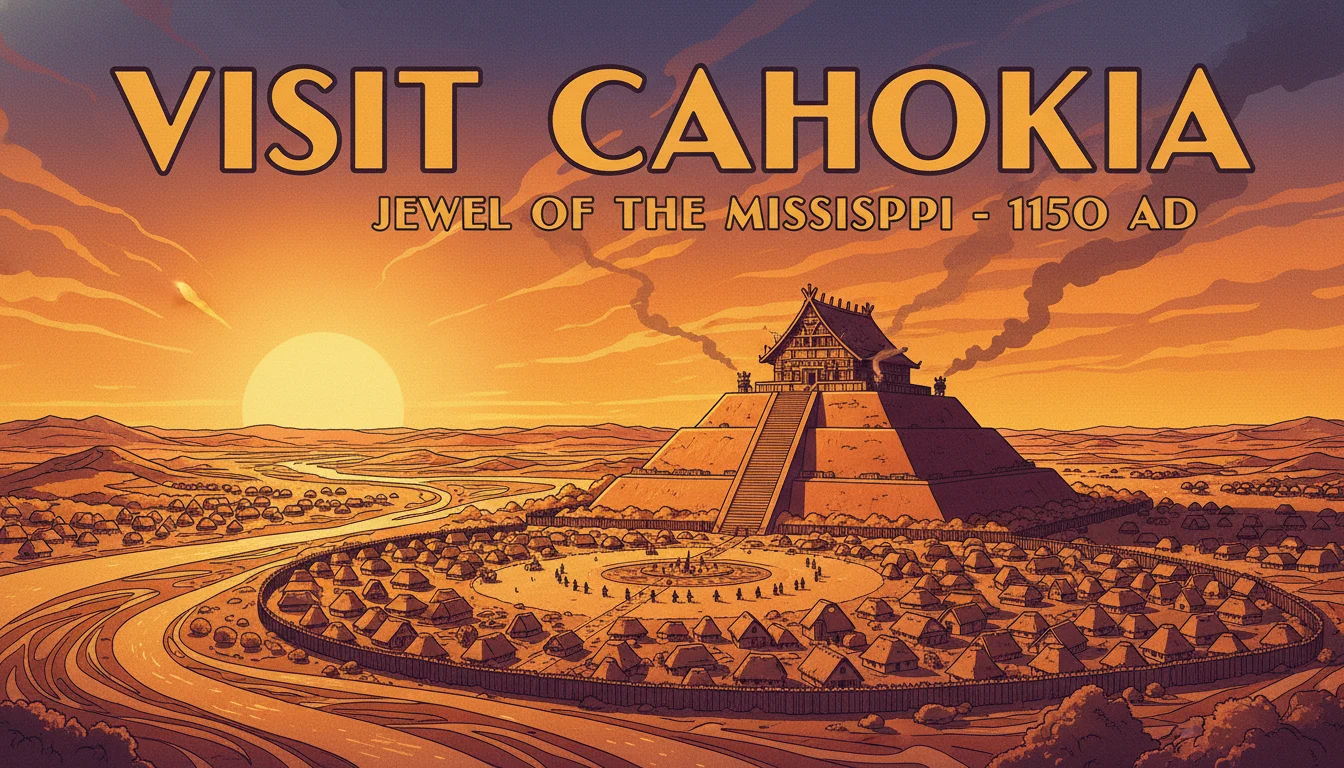
Welcome to Cahokia, the Manhattan of the Mississippi - a sprawling metropolis that shouldn't exist according to most history books. While Europeans were building cathedrals, North Americans were raising earthen pyramids. By 1150 AD, this city housed more people than London. (For other pre-Columbian American capitals worth a time-travel detour, see our guides to Teotihuacan around 400 AD and Olmec La Venta around 900 BC.)
Pack light. You'll need copper for trade, strong legs for climbing mounds, and an open mind. Let's go.
When and Where
Year: 1150 AD (peak population)
Location: Mississippi River floodplain, near modern-day St. Louis, Illinois
Population: ~20,000 in the city; ~50,000 in greater metro area
Weather: Hot, humid summers; cold winters. Spring and fall are your safest bets.
Language: Mississippian (no written record survives; bring a phrasebook if you can find one)
What to Wear
Forget buckskin and feathers - that's frontier nonsense. Cahokians are urban sophisticates.
Men: Breechcloth or knee-length tunic, leather belt. Copper ear spools mark status. Tattoos are common (geometric patterns, animal motifs). Go barefoot in summer; moccasins in winter.
Women: Wraparound skirt, perhaps a short cape. Shell bead necklaces, copper bracelets. Hair worn long, often in a bun. Mothers carry infants in cradleboards on their backs.
Status symbols: Shell beads from the Gulf Coast, copper from Lake Superior, mica from the Appalachians. If you're loaded, wear a feathered headdress or falcon-dancer regalia.
Don't wear: European-style clothing (won't exist for 300+ years). Avoid black and white body paint unless you're a priest or warrior - colors matter here.
What to Eat
Cahokian cuisine is built on the Three Sisters: corn, beans, squash. Add fish, deer, waterfowl, nuts, and berries. It's carb-heavy and surprisingly good.
Street food highlights:
- Corn cakes - grilled on hot stones, sometimes stuffed with beans
- Venison stew - slow-cooked with squash and wild onions
- Roasted fish - catfish and bass from the Mississippi, smoked over hickory
- Sunflower seed cakes - nutty, dense, filling
Drinks:
- Black drink - caffeinated tea made from yaupon holly; ritual beverage, tastes bitter
- Corn beer - mildly alcoholic, consumed at feasts
- Water - from the river (boil it first)
Skip if squeamish: Dog meat (ceremonial dish). Turtles and frogs (common protein).
What you'll miss: No tomatoes, potatoes, or chocolate (Mesoamerican crops not yet traded this far north). No beef, pork, or chicken (no domesticated animals except dogs and turkeys).
Where to Stay
Hotels don't exist, but Cahokia has a thriving housing market.
Commoner housing: Rectangular wattle-and-daub homes with thatched roofs. Walls plastered with clay. One or two rooms. Central fire pit. Expect to share with extended family.
Elite housing: Larger homes on raised platforms near Monks Mound. Wooden palisades, private courtyards. Access to servants.
Traveler tip: Arrive during a festival (spring planting, fall harvest) and offer trade goods (copper, shells, exotic feathers). You'll likely be hosted by a family in exchange for stories from your "distant homeland."
Climate control: Homes are smoky and dark. No windows (just doorways with hide flaps). Summer is sweltering; winter requires constant fire-tending.
Must-See Landmarks
1. Monks Mound
The centerpiece - a terraced earthen pyramid rising 100 feet tall, covering 14 acres at the base. It's the largest prehistoric earthwork in the Americas.
At the summit: the Great Chief's residence, a massive wooden structure painted red and white. If you're not elite, you're not getting up there. But the view from the plaza below is worth it.
2. Woodhenge
A massive timber circle - basically American Stonehenge. Used for astronomy and calendrical rituals. Stand at the center during the equinox and watch the sun rise perfectly aligned over a marker post. Druids would be jealous.
3. Grand Plaza
40 acres of flat, packed earth where thousands gather for rituals, markets, and chunkey games. Think Roman Forum meets Super Bowl parking lot.
4. The Palisade
A 2-mile-long wooden wall encircling the ceremonial core. Watchtowers every 70 feet. Either Cahokia has enemies, or the elite really value privacy.
5. Rattlesnake Mound
Smaller pyramid aligned with the stars. Climb it at night (if guards allow) for a panoramic view of the city's glow from hundreds of fires.
Customs and Etiquette
Hierarchy matters. Cahokia is stratified. Elite families control trade, religion, and politics. Commoners farm, craft, and build. Don't challenge authority unless you want to end up in a ritual sacrifice (rare, but it happens).
Chunkey is life. This is THE sport. Players roll a stone disk across the plaza and throw spears at where they think it will stop. Gambling is fierce. Fortunes change hands. Don't play unless you're good - losing badly is shameful.
Body art = identity. Tattoos indicate clan, occupation, achievements. If someone stares at your bare skin, they're trying to figure out who you are.
Gift economy. Trade works through reciprocity, not cash. Offer tobacco, copper, or exotic shells. Expect gifts in return. Refusing a gift is an insult.
Death rituals. If you attend a funeral, bring grave goods (pottery, tools, beads). Elites are buried in mounds with retainers (yes, human sacrifice). Commoners get simpler burials in cemeteries outside the city walls.
Respect the priests. They wear elaborate falcon regalia, control the sacred fires, and communicate with the spirit world. Don't interrupt ceremonies.
Dangers to Avoid
-
Disease. Dense urban living + no modern sanitation = tuberculosis, parasites, dysentery. Boil your water. Avoid eating raw fish.
-
Social tension. Cahokia's population is in decline by 1200 AD. Resource strain, political instability, and factional conflict are brewing. Keep a low profile.
-
Flooding. The Mississippi is unpredictable. Spring floods can wipe out homes and crops. Build on high ground.
-
Violence. The palisade isn't decorative. Raids from rival groups happen. If you hear war drums, head indoors.
-
Ritual politics. If you're invited to a ceremony involving fire, drums, and a lot of chanting, observe from the back. Some rituals involve hallucinogens (datura, jimsonweed). Don't partake unless you're ready for a vision quest.
Language Tips
No written Mississippian survives, so communication is tricky. Try these basics (reconstructed from later Siouan and Algonquian languages):
- Greetings: Gesture with open palm, slight bow. Smile. Don't stare.
- Trade: Point to goods, use hand signals for quantity. Numbers are gestural.
- Respect: Lower your gaze around chiefs. Stand when elites enter.
Learn the chunkey rules - everyone speaks chunkey.
How to Blend In
- Carry a shell gorget (ceremonial necklace) - marks you as a person of some standing.
- Master chunkey. Even mediocre players earn respect.
- Know your constellations. Cahokians track the stars obsessively. Impress someone by predicting the solstice.
- Offer tobacco. It's sacred. Share it generously.
- Don't ask about the palisade. It's a touchy subject (Why was it built? Who are they afraid of?).
The Real Mystery
Here's what historians still don't know: Why did Cahokia collapse?
By 1350 AD, the city is abandoned. Theories include:
- Environmental degradation (deforestation, soil erosion)
- Political instability (elite overreach, rebellion)
- Climate change (droughts, floods)
- Epidemic disease
If you're there in 1150 AD, you're witnessing the peak - but also the beginning of the end. Pay attention. Maybe you'll solve the mystery.
Souvenir Ideas
- Shell beads - currency and art
- Copper ear spools - status symbols
- Chunkey stones - polished discs, beautifully crafted
- Pottery - red-slipped jars with intricate designs
- Mica sheets - imported from Appalachia, used in ceremonies
Final Thoughts
Cahokia is proof that "civilization" wasn't a European invention. While Paris had 25,000 people, Cahokia had 20,000. While London was building Westminster Abbey, Cahokians were raising Monks Mound.
Then it vanished.
No written records. No conquistadors. Just silence.
If you visit, pay attention. Walk the Grand Plaza. Climb the mounds. Watch the chunkey games. This city will disappear in 200 years, and for centuries, settlers will assume these earthworks were built by a "lost race."
They weren't lost. You're standing in their capital.
Don't blink.

Need Advice from Someone Who Lived There?
Get firsthand accounts from people who actually lived through these moments in history.
Ask Them YourselfJoin the HistorIQly Club
Get smarter about the past.
Weekly stories, deep dives, and exclusive content straight to your inbox.