Time Traveler's Guide to Edo Tokyo, 1700
Survive and thrive in Edo Tokyo, the world's largest city during Japan's golden age of peace: samurai etiquette, street food, bathhouse culture, and how not to get killed.
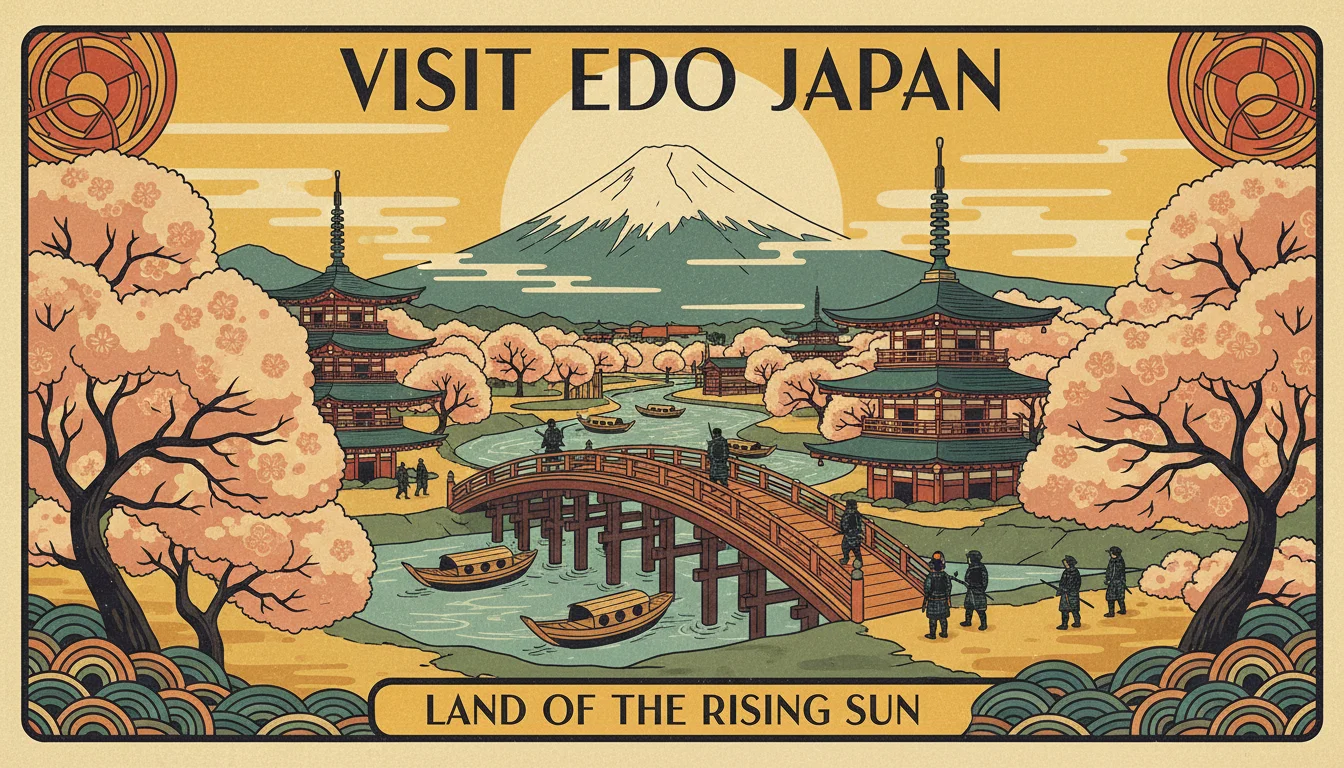
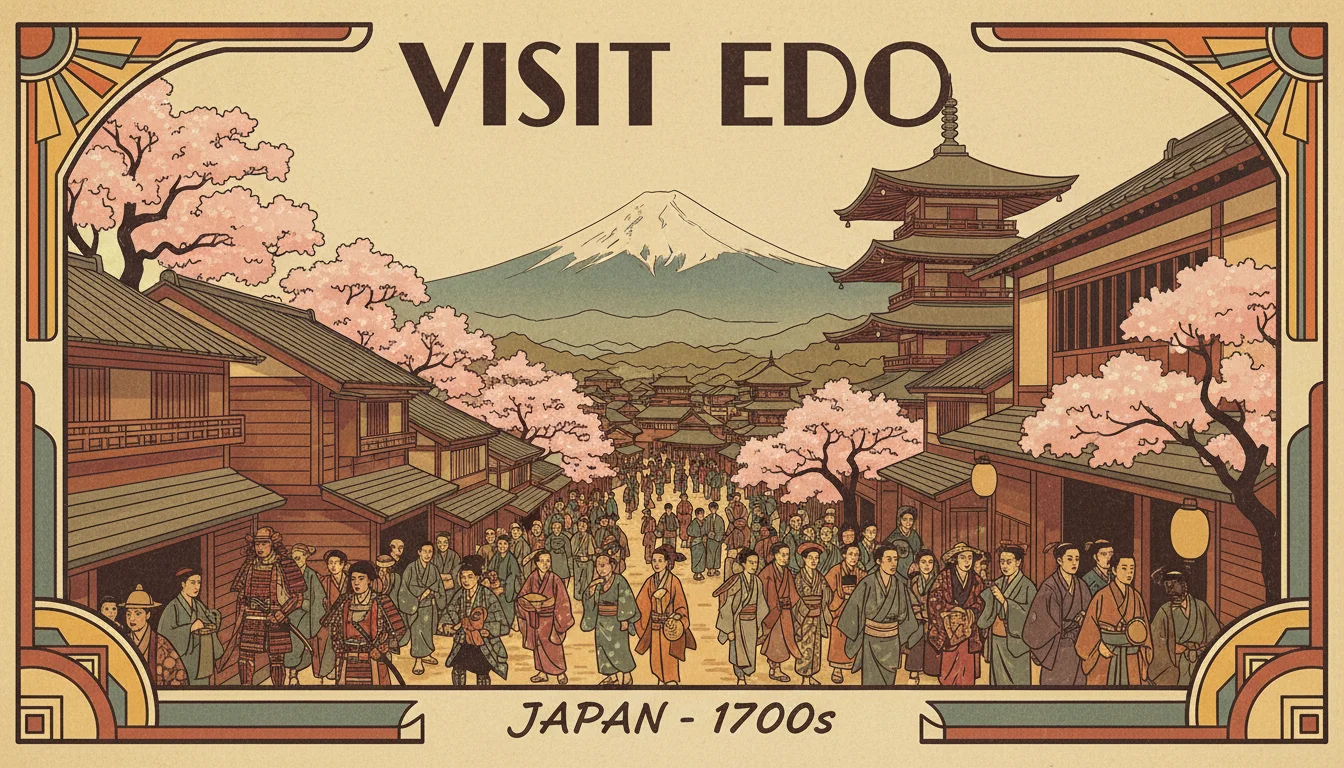
Welcome to Edo - the city the West doesn't know exists yet. With over a million residents, it's arguably the largest city on Earth right now, bigger than London or Paris. The Tokugawa shogunate has kept Japan sealed from the outside world for decades, and honestly? The place is thriving because of it. Here's how to survive your visit without accidentally committing a capital offense.
Getting Your Story Straight
Japan is in full sakoku (closed country) mode. Foreigners are essentially illegal. Your best bet is to pose as a merchant from Osaka - the accent differences are noticeable, but people will chalk up your odd speech to being from the countryside. Arriving by boat along the Sumida River is less conspicuous than walking in through one of the checkpoints on the five great highways.
Whatever you do, do not claim to be Christian. The shogunate stamped out Christianity with extreme prejudice. If someone hands you a bronze plaque depicting the Virgin Mary and asks you to step on it (fumie), step on it enthusiastically.
What to Wear
Clothing marks your social class instantly, and dressing above your station is a punishable offense.
Safe choices: A simple cotton kimono in dark blue or brown with a plain obi belt. Wooden geta sandals for dry weather, straw waraji sandals for walking longer distances. Men should shave the top of their heads and tie back the remaining hair in a chonmage topknot - this is non-negotiable if you want to blend in.
What to avoid: Bright silks and elaborate patterns are reserved for the wealthy merchant class (who are technically the lowest social rank but practically the richest). Anything red or purple screams "look at me" in ways you don't want. Never, ever wear a sword unless you're samurai. That's two swords, specifically - one long, one short. Wearing them without authorization is a fast track to execution.
Social Rules That Will Save Your Life
The class system here isn't a suggestion. From top to bottom: samurai, farmers, artisans, merchants. In practice, merchants run the economy, but pretending otherwise keeps everyone alive.
Bowing: When a samurai procession passes, get off the road and bow. Low. If a daimyo (feudal lord) and his entourage come through, kneel and press your forehead to the ground. Samurai technically have the right of kirisute gomen - permission to cut down any commoner who disrespects them. It's rarely exercised, but "rarely" is not "never."
Shoes: Remove them before entering any building. Every building. No exceptions. The threshold between outside and inside is sacred.
Chopsticks: Never stick them upright in rice (funeral ritual). Never pass food chopstick-to-chopstick (also funeral ritual). Basically, anything that reminds people of death ceremonies will clear a room fast.
What to Eat
Edo's street food scene is spectacular. The city essentially invented fast food culture because so many residents are single men (the sankin-kotai system means samurai rotate between Edo and their home provinces, often without families).
Must-try:
- Sushi - but not what you're imagining. Edo-period sushi is hayazushi - vinegared rice topped with fish, pressed into molds. It's bigger, more like a rice ball with fish on top. Absolutely delicious.
- Soba noodles - buckwheat noodles served hot or cold. Slurping loudly is not just acceptable, it's expected. It cools the noodles and shows appreciation.
- Tempura - Portuguese missionaries introduced frying batter before they got kicked out, and Japan perfected it. Street vendors sell skewered tempura vegetables and shrimp.
- Unagi - grilled freshwater eel, glazed with sweet soy sauce. Considered essential for stamina, especially in summer.
Avoid: Meat is technically taboo (Buddhist influence), though people quietly eat wild boar and call it "mountain whale" (yama kujira). Don't ask too many questions about the "medicine shops" selling mysterious dried meats.
Drink-wise, sake is everywhere and ranges from rough to refined. Tea is the sophisticated choice. Water from public wells is generally safe - Edo's water infrastructure is genuinely impressive, with a system of wooden aqueducts feeding the city.
Where to Go
Nihonbashi Bridge - the literal center of Japan. All distances in the country are measured from this point. The fish market here (ancestor of Tsukiji) is chaos at dawn - hundreds of vendors, the freshest seafood you'll ever taste, and enough noise to wake the dead.
Yoshiwara - the licensed pleasure quarter, walled off in the northern marshes. It's equal parts entertainment district, cultural hub, and human tragedy. The top-ranking oiran courtesans are celebrities - poets, musicians, fashion icons. But the system runs on indentured servitude, and the lower ranks endure genuinely grim conditions. Visit the kabuki theater nearby instead if you want entertainment without the moral weight.
Senso-ji Temple - Asakusa's massive Buddhist temple complex. The Nakamise shopping street leading up to it is lined with vendors selling toys, sweets, and souvenirs. It feels remarkably like a modern tourist trap, except it's 1700.
Public bathhouses (sento) - social hubs where class barriers temporarily dissolve. Scrub thoroughly before entering the communal tub. The water will be shockingly hot. Mixed bathing is still common in 1700, though the shogunate keeps threatening to ban it.
Dangers
Fire. Edo is built almost entirely of wood and paper. Major fires sweep through the city regularly - locals call them "the flowers of Edo" with dark humor. The Great Fire of Meireki in 1657 killed over 100,000 people and destroyed half the city. Know your evacuation routes. Wide roads and rivers are your firebreaks.
Earthquakes. The Kanto region sits on multiple fault lines. Buildings are designed to flex rather than resist, but the aftereffects - fires, flooding - are the real killers.
The law. Punishments are severe and public. Theft can mean execution. Arson definitely means execution (by burning, naturally). The neighborhood watch system (goningumi) means five households are collectively responsible for each other's behavior. Your neighbors are literally incentivized to report you.
Getting lost. Edo's layout is deliberately confusing - the Tokugawa designed it as a defensive maze. Streets curve, dead-end, and double back. The castle sits at the center in a spiral of moats. Carry a woodblock-printed map and learn to navigate by landmarks, not street names (most streets don't have them).
Money
The currency system is beautifully complicated. Gold koban for large transactions, silver bu for medium ones, copper mon for daily purchases. A bowl of soba costs about 16 mon. A night at a decent inn runs 200 mon. Exchange rates between gold, silver, and copper fluctuate constantly, which is why Edo's money changers are some of the richest people in the city.
Your Best Day in Edo
Wake at dawn. Walk to Nihonbashi for the fish market chaos. Eat grilled eel for breakfast (trust me). Stroll through the merchant districts of Nihonbashi-dori, browse the bookshops selling ukiyo-e woodblock prints. Afternoon tea ceremony if you can wrangle an invitation - otherwise, hit a sento bathhouse. Evening: catch a kabuki performance at one of the Nakamura-za theaters. The shows run all day, but evening performances have the best energy. End the night at a riverside izakaya with sake and tempura, watching lanterns reflect on the Sumida River.
Just remember: bow to the samurai, take off your shoes, and for the love of everything sacred, don't stick your chopsticks upright in the rice.
For other stops in Japan's long history, see Visiting Heian Kyoto, 1000 and Visiting Sengoku Japan, 1560.
Safe travels, time traveler. Edo is waiting.

Need Advice from Someone Who Lived There?
Get firsthand accounts from people who actually lived through these moments in history.
Ask Them YourselfJoin the HistorIQly Club
Get smarter about the past.
Weekly stories, deep dives, and exclusive content straight to your inbox.