A Time Traveler's Guide to Edo Tokyo, 1700
Survive and thrive in Edo Tokyo, 1700 - the world's largest city at its peak, during Japan's golden age of peace, kabuki, sushi, and samurai etiquette.
Read Wikipedia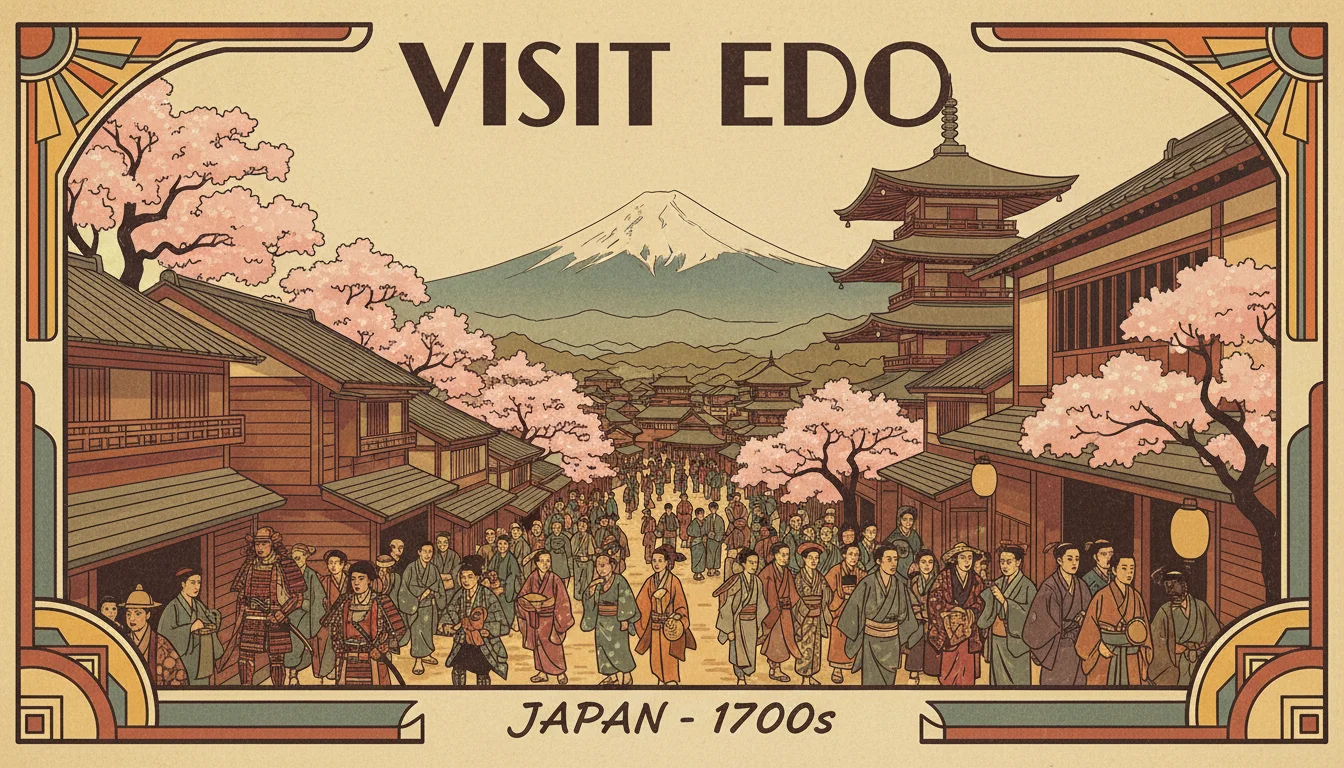
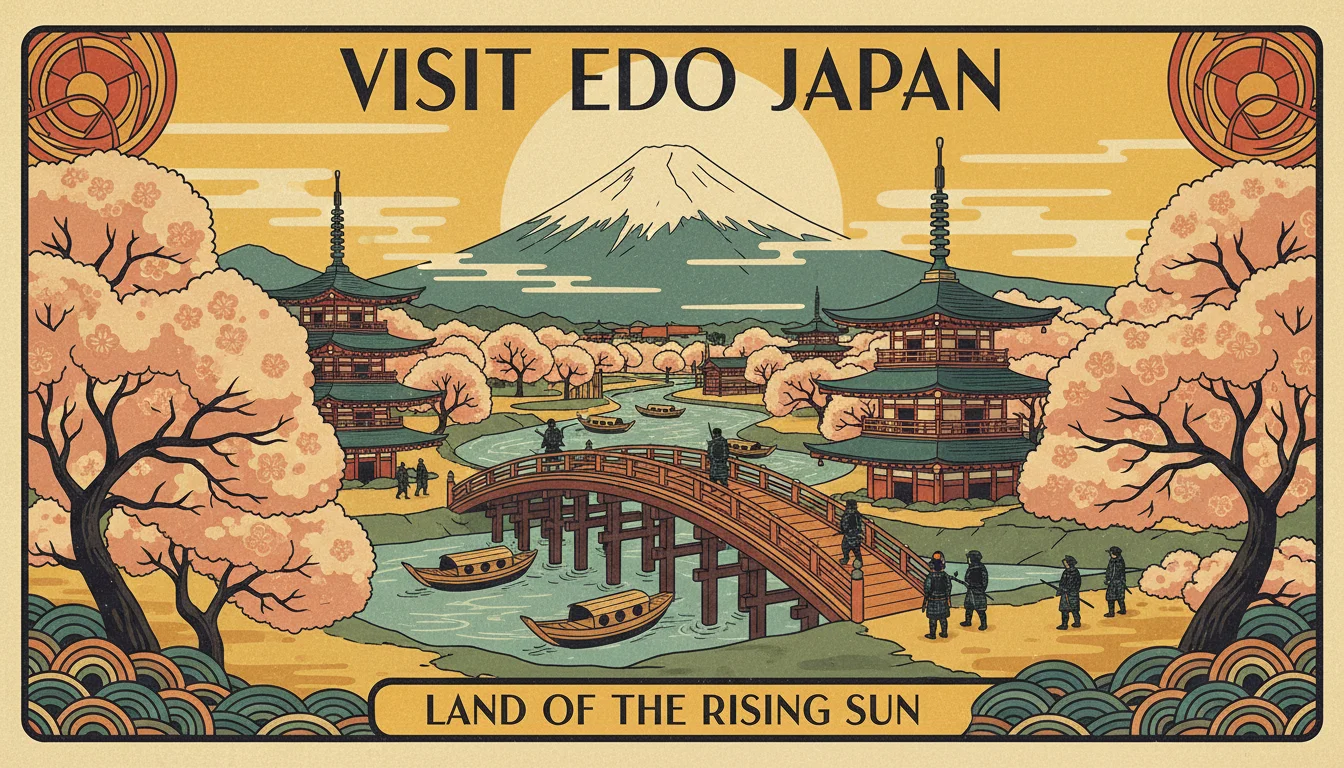
You've just materialized in Edo, the year 1700. Congratulations - you're standing in the largest city on Earth. Over one million people live here, making London and Paris look like provincial towns. The Tokugawa shoguns have kept Japan at peace for nearly a century, and the result is an explosion of art, food, theater, and very specific rules about literally everything.
Here's how to survive (and actually enjoy) the world's first modern metropolis.
What to Wear
Forget whatever you packed. Your first stop is a used clothing shop in Nihonbashi. Everyone wears kimono, and the rules are absolute. Cotton or hemp for commoners. Silk is reserved for the samurai class, and wearing it without the right to will get you noticed by the wrong people.
Men tie their obi sash at the waist. Women tie theirs higher, just below the chest. Left side always crosses over right - right over left is how you dress a corpse. Get this wrong and people will literally back away from you.
Footwear depends on the weather. Wooden geta clogs for rain and mud (Edo's streets are notoriously soggy). Straw zori sandals for dry days. Go barefoot indoors, always. No exceptions.
One more thing: if you're male, you'll need to shave the top of your head and pull the remaining hair into a topknot called a chonmage. No topknot marks you as either a monk, a criminal, or deeply suspicious. Pick your poison.
What to Eat
Edo in 1700 is a food paradise. The city basically invented fast food culture because most residents are single men (laborers, merchants, samurai on rotation) who don't cook.
Start your morning at a street stall with miso soup and rice. For lunch, find a soba noodle stand - buckwheat noodles served cold with dipping sauce are everywhere and cost almost nothing. Slurp loudly. This is not rude. It's expected.
Sushi exists but not the kind you're imagining. Edo-period sushi is fermented rice pressed with vinegar and topped with fish from Tokyo Bay. It's closer to a rice cake than a California roll. Still delicious.
For a real treat, visit a yatai (food cart) near Ryogoku Bridge at night. Grilled eel glazed with sweet soy sauce, tempura fried in sesame oil, and sweet dango dumplings. Tea is everywhere and always free at shops.
Avoid drinking unboiled water. The Kanda and Tamagawa aqueducts supply the city, but contamination is common. Stick to tea, sake, or water from a reputable teahouse.
How to Behave
Edo runs on etiquette, and breaking it ranges from embarrassing to fatal. The rigid class system puts samurai at the top, followed by farmers, artisans, and merchants (in that order, though merchants are secretly the richest).
When you encounter a samurai on the street, step aside and bow. If a daimyo lord's procession passes, kneel. Failure to show respect gives samurai the legal right to cut you down on the spot - a practice called kirisute gomen. It doesn't happen often, but often enough.
Never hand someone something with one hand. Always use two. Never point at people. Never step on the threshold of a doorway. Remove your shoes before stepping onto tatami mats. Bow when greeting anyone, and bow deeper for higher-ranking people.
Money is complicated. Gold coins (koban) for large purchases, silver (chogin) for medium, and copper (mon) for daily shopping. A bowl of soba costs about 16 mon. A night at a decent inn runs 200 mon. Convert before you buy.
The Dangers
Edo's number one enemy is fire. The city is built almost entirely of wood and paper, and fires are so frequent they're called "Edo's flowers." The Great Meireki Fire of 1657 killed over 100,000 people - that memory is still fresh. Know where the nearest wide street or river is. When fire bells ring, run toward water.
Crime exists despite the shogunate's iron grip. Pickpockets work the crowds at festivals and theater districts. The pleasure quarter of Yoshiwara, while legal and regulated, is designed to separate you from your money with ruthless efficiency.
Earthquakes strike without warning. Edo sits on some of the most active fault lines in the world. Buildings are designed to flex rather than stand rigid, but tsunami risk along the bay is real.
Getting sick is dangerous. Edo medicine mixes genuine herbal knowledge with treatments that might alarm you (moxibustion involves burning herbs on your skin). Smallpox circulates periodically. Stay clean, eat well, and hope for the best.
What to See
Nihonbashi Bridge is the literal center of Japan - all distances are measured from this point. The fish market here (ancestor of Tsukiji) is a sensory assault at dawn: tuna, sea bream, octopus, and shellfish piled high while merchants scream prices.
Kabuki theater in the Nakamura-za is unmissable. Performances run all day. The actors are celebrities, their faces printed on woodblock posters all over town. All roles are played by men, including female parts (performed by specialists called onnagata). The audience shouts the actors' names during dramatic moments. Join in.
Senso-ji Temple in Asakusa is the city's spiritual heart. The approach is lined with shops selling charms, snacks, and souvenirs. Light incense, toss a coin, and pray. Even if you're not religious, the atmosphere is electric.
Sumida River is Edo's highway. Hire a small boat for a few mon and float past the rice warehouses, fire watchtowers, and pleasure boats strung with paper lanterns. In summer, fireworks displays (hanabi) light up the sky - a tradition that started after a devastating plague, meant to comfort the spirits of the dead.
If you can time your visit for the New Year, do it. The entire city shuts down for days of feasting, temple visits, and games. Kite-flying competitions fill the sky. It's the closest thing to pure joy a feudal city can produce.
Final Survival Tip
Learn three phrases: "Sumimasen" (excuse me/sorry), "Ikura desu ka" (how much?), and "Arigatou gozaimasu" (thank you very much). Politeness isn't optional here - it's infrastructure. The entire city of one million people functions because everyone follows the rules.
Edo in 1700 is noisy, crowded, flammable, and obsessed with etiquette. It's also creative, delicious, beautiful, and unlike anything else on the planet. The Tokugawa peace has given this city permission to perfect the art of living, and it shows in every bowl of noodles, every kabuki performance, and every carefully tied obi.
Just remember: left over right. Always left over right.
For more time-travel guides to Asia's great capitals, see our visits to Heian Kyoto in 1000 AD and Vijayanagara Hampi in 1500.

Need Advice from Someone Who Lived There?
Get firsthand accounts from people who actually lived through these moments in history.
Create your free account →No card required. Some figures and features require a paid plan.
Join the HistorIQly Club
Get smarter about the past.
Weekly stories, deep dives, and exclusive content straight to your inbox.